Artwork
Desiderius Erasmus
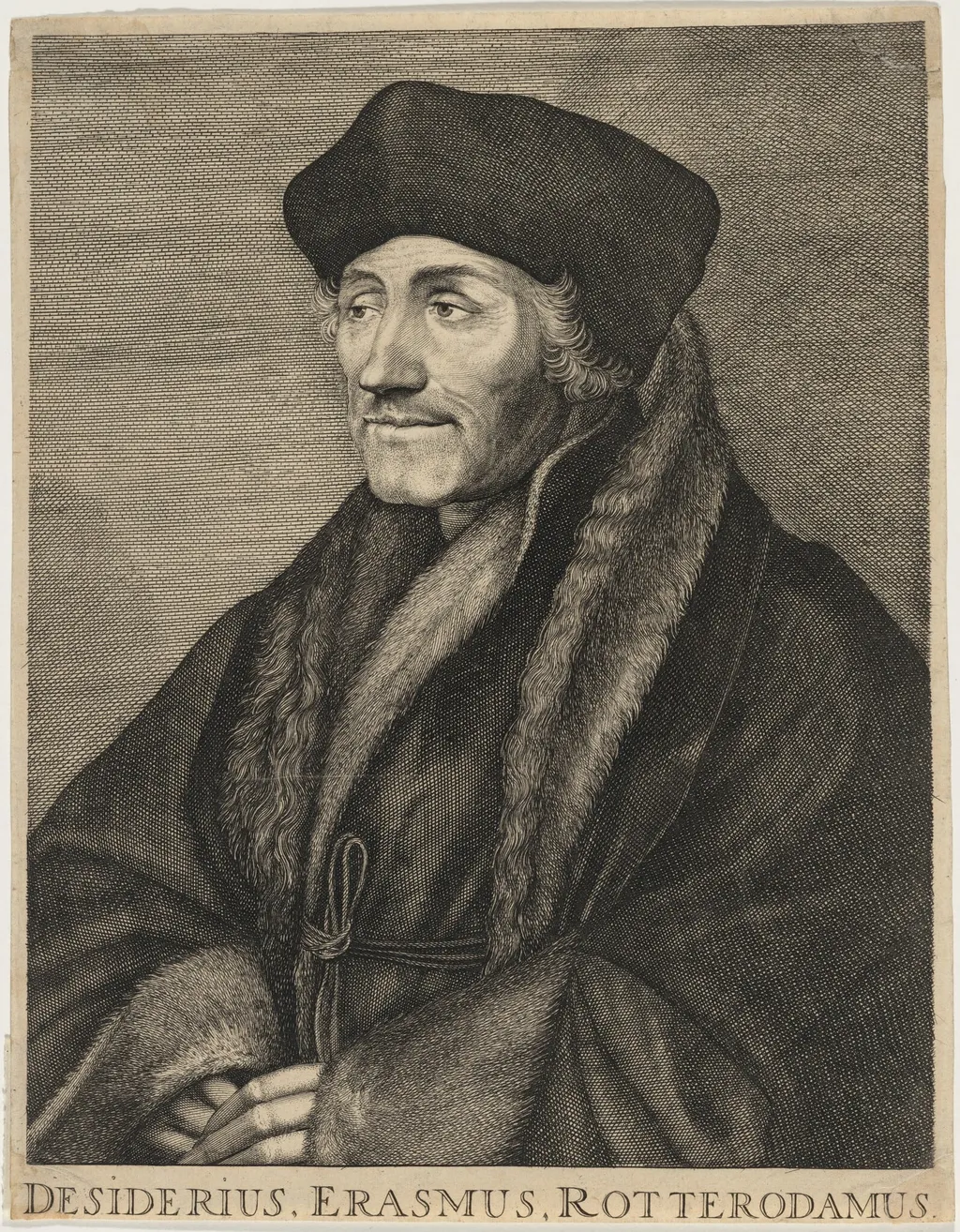
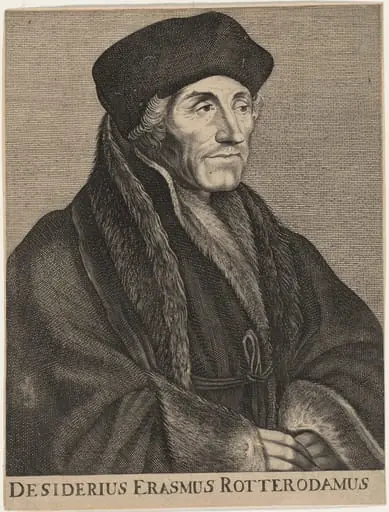
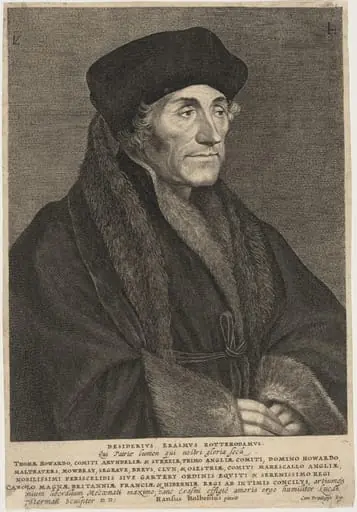
Desiderius Erasmus is an ink print by the Renaissance artist Lucas Emil Vorsterman. It dates from 1635 and is held in the collection of the National Gallery of Art.
About this work
Overview
The composition is restrained, set against a neutral gray field that focuses attention on the sitter’s expression and attire.
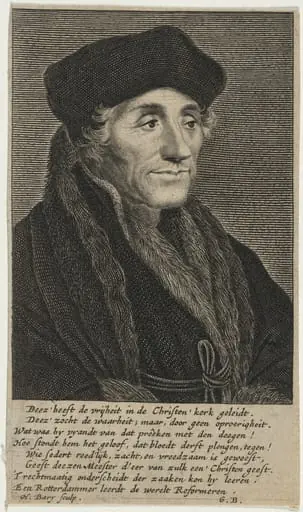
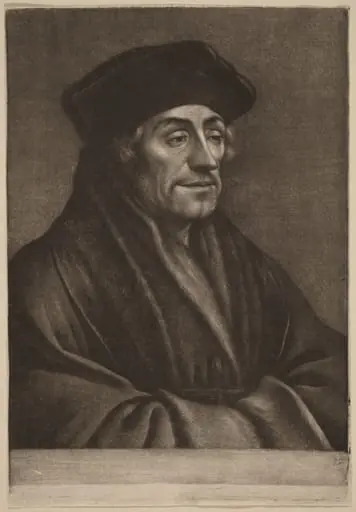
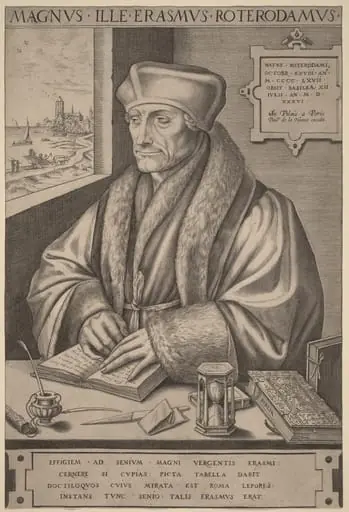
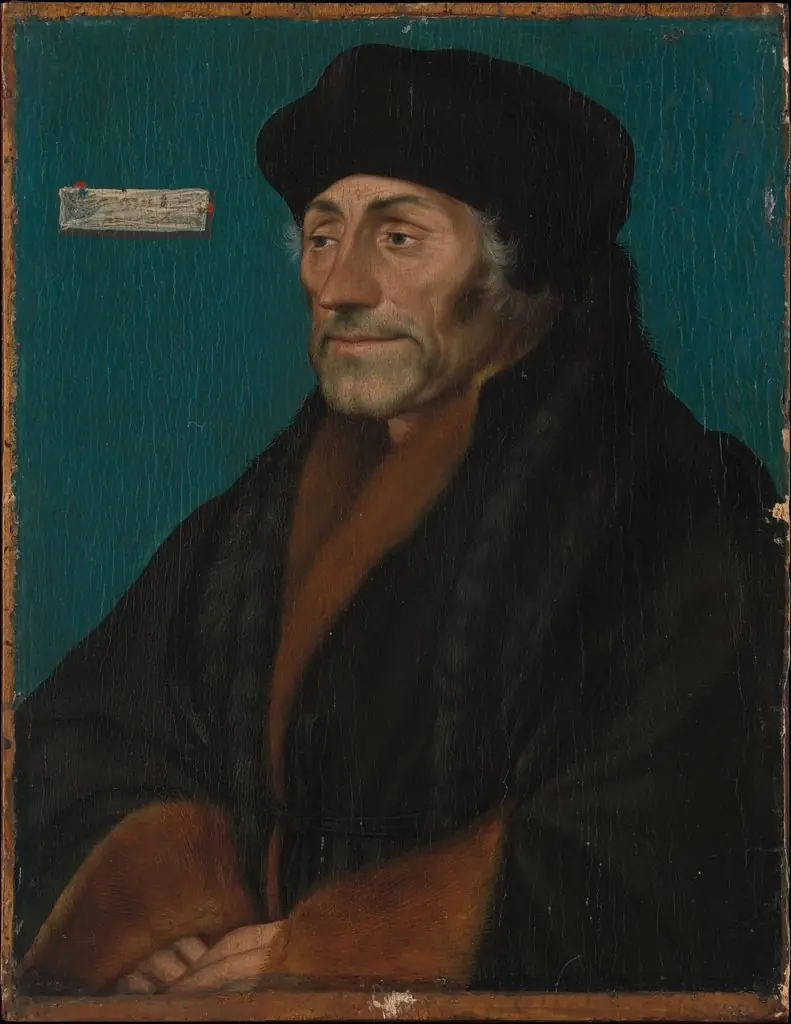
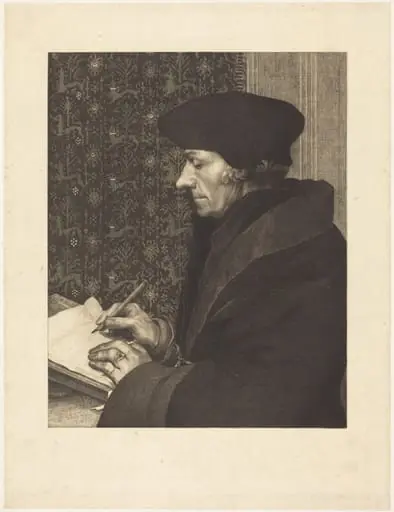
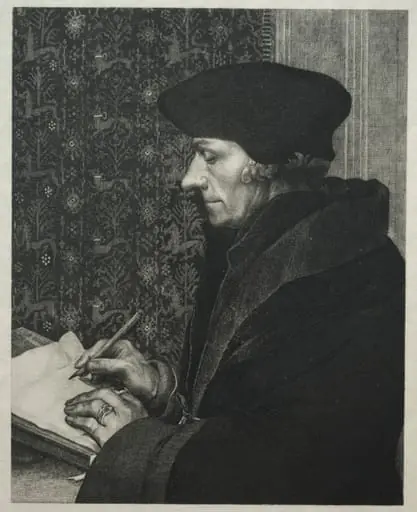
This 1635 engraving by Lucas Emil Vorsterman depicts the Dutch humanist Desiderius Erasmus. Rendered in fine linear detail, the portrait captures him in a three-quarter view, facing left with hands gently clasped. The composition is restrained, set against a neutral gray field that focuses attention on the sitter’s expression and attire. The medium—engraving on metal—was a standard technique for reproducing portraits in early 17th-century Europe.
Subject & Meaning
Erasmus, a leading intellectual of the Northern Renaissance, is portrayed with quiet dignity. His fur-lined coat and modest hat suggest scholarly status rather than aristocratic wealth. The furrowed skin around his eyes and mouth conveys age and contemplation, aligning with his reputation as a thoughtful critic of religious and educational institutions. His gaze, directed away from the viewer, implies introspection, reinforcing his identity as a writer and philosopher.
Technique & Style
Vorsterman employed fine, controlled lines to model form and texture, characteristic of engraving. The curls of Erasmus’s white hair, the folds of his coat, and the subtle shading of his face were achieved through incised grooves on a copper plate, inked and pressed onto paper. The technique allowed for precise detail and tonal gradation, reflecting the Northern European tradition of portraiture that valued realism over idealization.
History & Provenance
Created in 1635, the engraving was likely made to disseminate Erasmus’s image decades after his death in 1536. Vorsterman, a Flemish artist active in the Netherlands and England, often reproduced portraits of notable figures for scholarly audiences. This print may have been part of a broader effort to preserve and circulate the likenesses of humanist thinkers during the early Baroque period.
Context
Erasmus remained a symbol of intellectual independence well into the 17th century, even as religious conflicts reshaped Europe. His portraits were reproduced widely to affirm his legacy among Protestant and Catholic scholars alike. This engraving reflects the enduring cultural authority of humanist ideals, transmitted through print culture that prioritized clarity and accuracy over ornamentation.
Legacy
The engraving contributed to the visual canon of Erasmus, influencing later depictions in books and academic settings. Its restrained style and emphasis on character over grandeur set a precedent for scholarly portraiture. Though not widely known today, it remains a documented example of how print media sustained the memory of Renaissance thinkers beyond their lifetimes.
Artist & collection
Artist
etching and engraving by Lucas Vorsterman II, NGA 10762), B1977.14.10539 - Yale etc