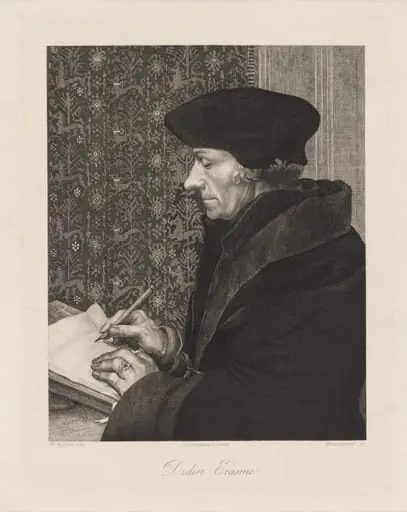
Artwork
Desiderius Erasmus
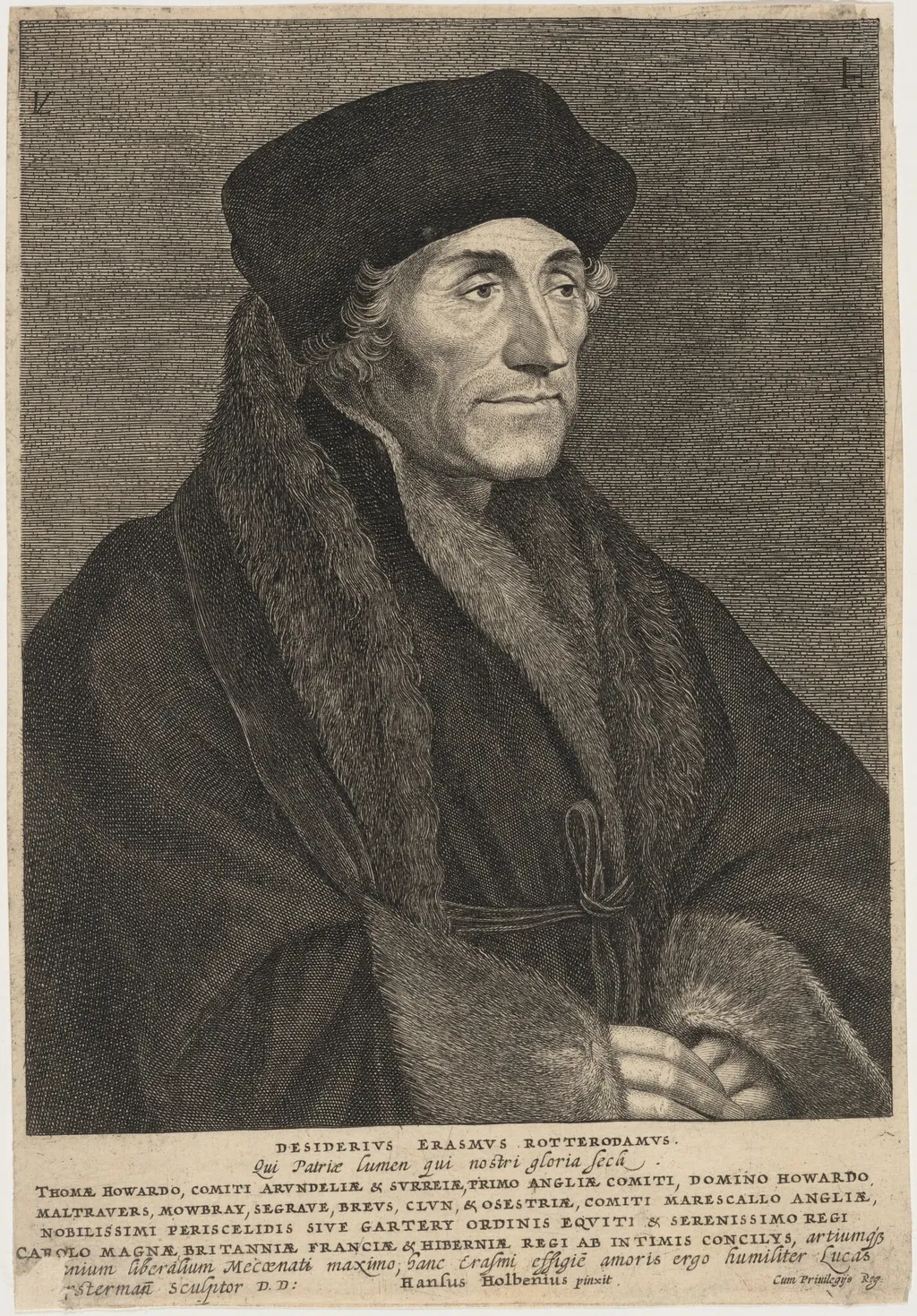
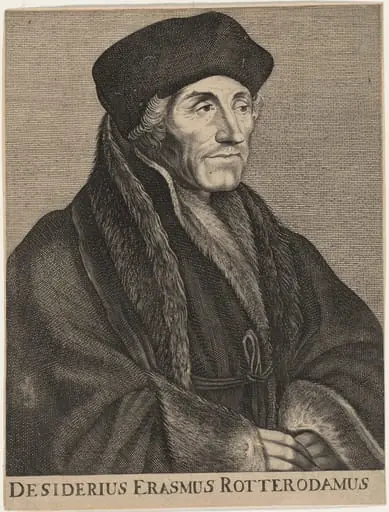
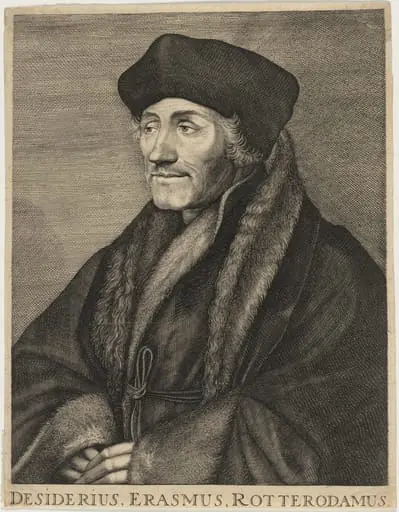
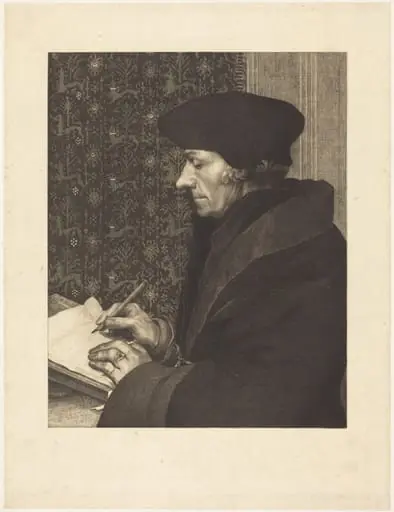
Desiderius Erasmus is an ink print by the Renaissance artist Lucas Emil Vorsterman. It dates from 1635 and is held in the collection of the National Gallery of Art.
About this work
Overview
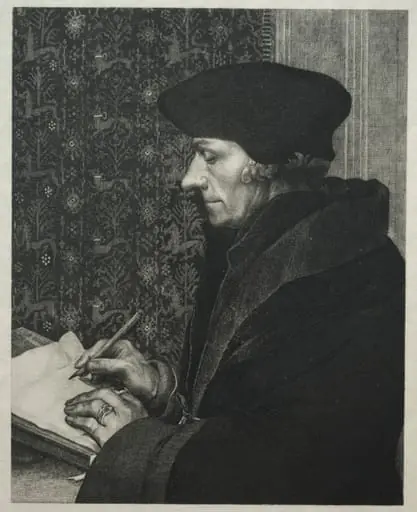
Created in 1635, this black-and-white engraving by Lucas Emil Vorsterman depicts the Dutch humanist Desiderius Erasmus.
Created in 1635, this black-and-white engraving by Lucas Emil Vorsterman depicts the Dutch humanist Desiderius Erasmus. Rendered in fine linear detail, the portrait captures Erasmus in profile, his gaze directed away from the viewer. The composition emphasizes stillness and introspection, characteristic of scholarly portraiture of the period. The medium relies on incised lines on a metal plate to produce tonal variation and texture.
Subject & Meaning
Erasmus, a leading intellectual of the Northern Renaissance, is portrayed not as a clergyman or noble, but as a thinker. His fur-lined collar and modest hat suggest learned dignity rather than wealth. Clasped hands convey contemplation, while his direct yet distant gaze evokes the quiet authority of a man shaped by scholarship and reform. The image aligns with humanist ideals, valuing intellect over ceremonial display.
Technique & Style
Vorsterman employed the engraving technique, using a burin to carve precise lines into a copper plate. Fine, controlled strokes model the texture of his beard and fur collar, while hatching creates subtle gradations of light and shadow. The absence of color focuses attention on form and expression. This method, common in 17th-century printmaking, allowed for detailed reproduction and wide dissemination of scholarly likenesses.
History & Provenance
The engraving was made nearly a century after Erasmus’s death, reflecting his enduring influence in European intellectual circles. Vorsterman, a Flemish artist active in the Dutch Republic, often reproduced portraits of notable figures for printed collections. This work likely served as a frontispiece or standalone print, circulated among scholars and collectors seeking visual representations of humanist ideals.
Context
In the early 17th century, printed portraits of past thinkers were increasingly valued as cultural artifacts. Erasmus, though deceased, remained a symbol of critical thought and religious reform. His image, reproduced in engravings like this one, helped sustain his legacy amid ongoing theological debates. Such prints functioned as both memorials and tools for intellectual identity in an era before photography.
Legacy
This engraving contributed to the visual canon of Erasmus, shaping how later generations imagined the humanist scholar. Its restrained style and emphasis on intellectual presence influenced subsequent portrait prints of thinkers. Though not widely known today, it remains a representative example of how print culture preserved and transmitted the faces of early modern intellectuals.
Artist & collection
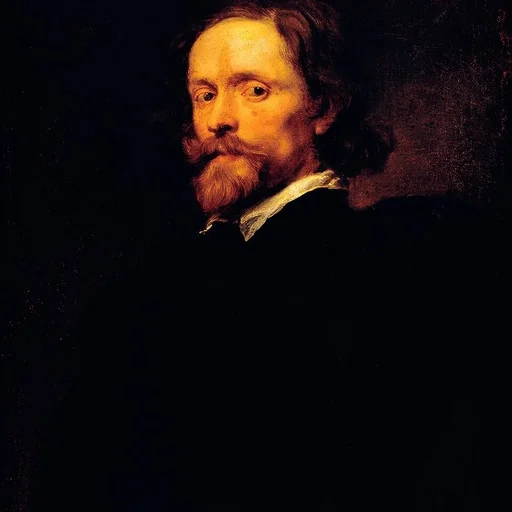
Artist
etching and engraving by Lucas Vorsterman II, NGA 10762), B1977.14.10539 - Yale etc