Artwork
Erasmus
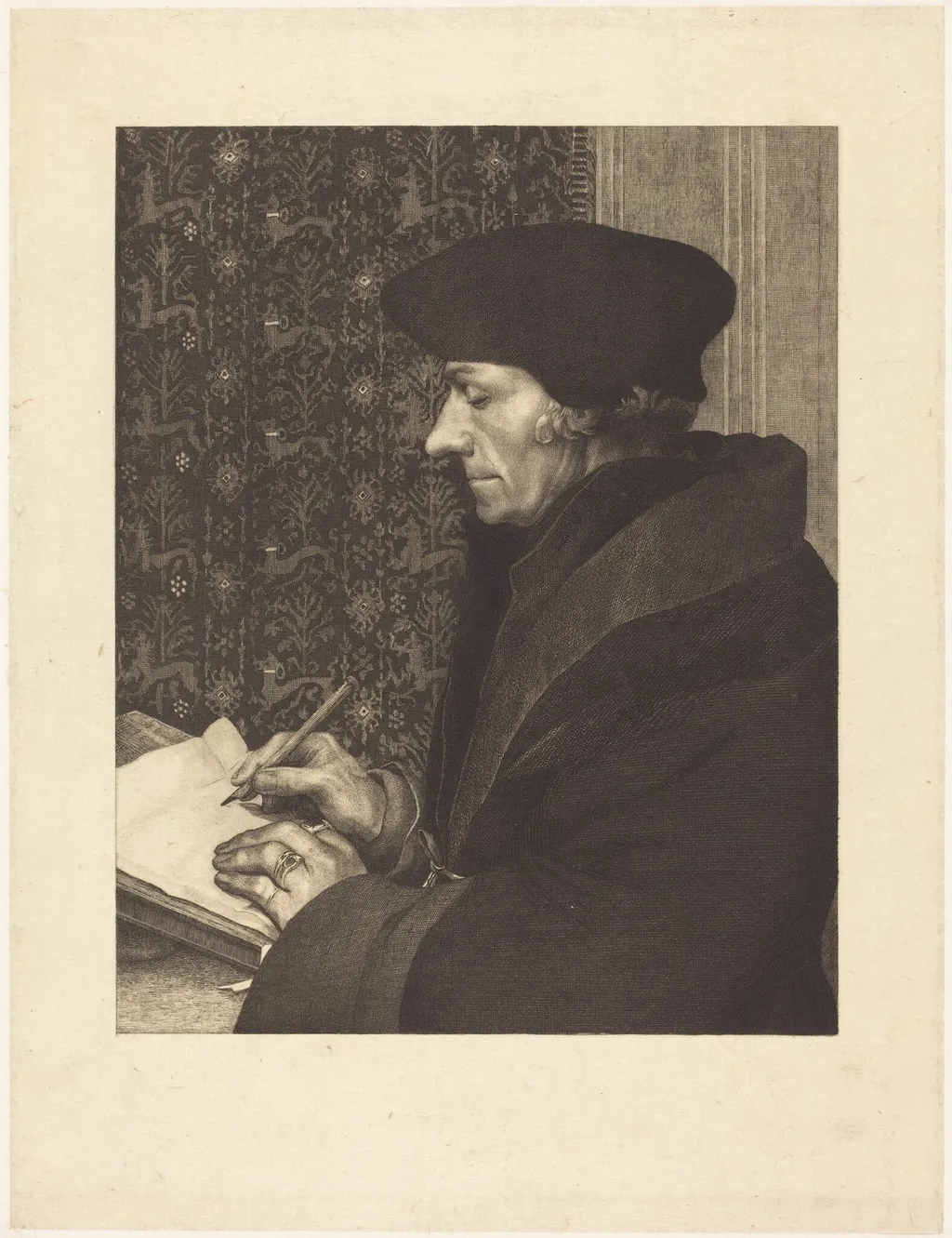
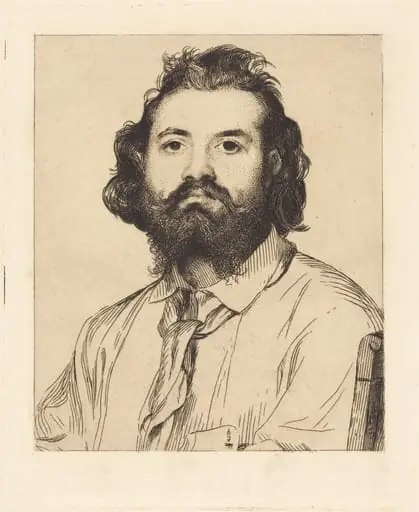
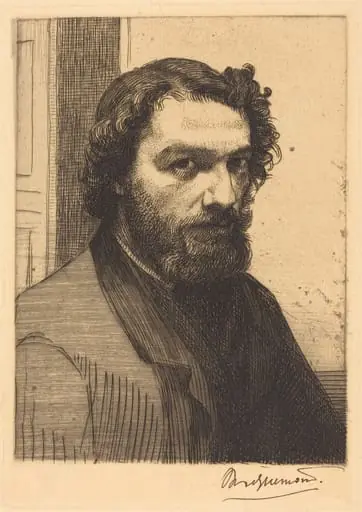
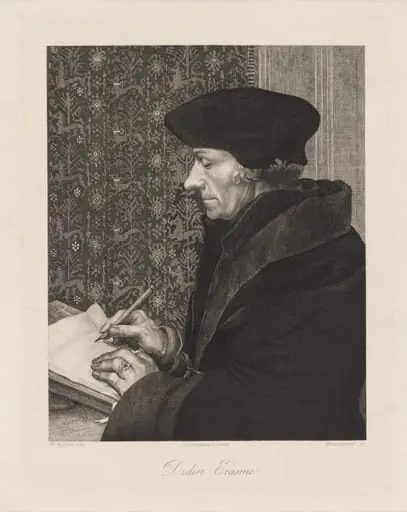
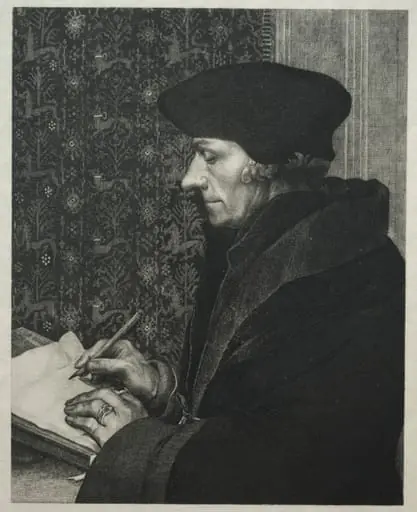
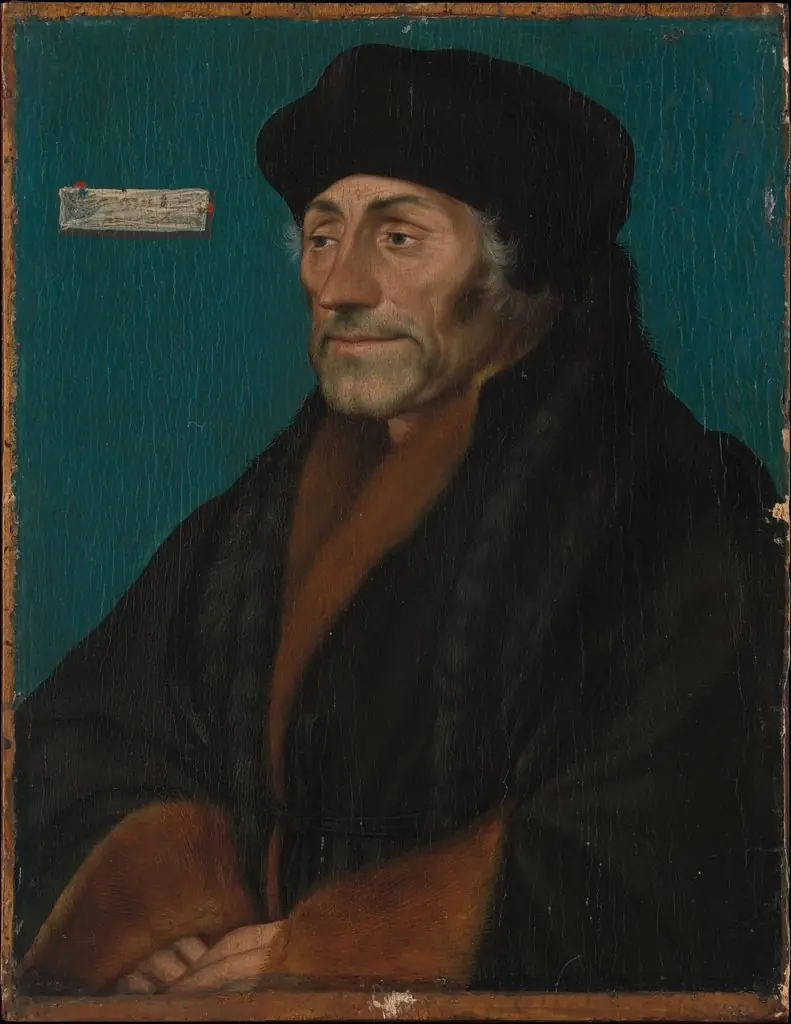
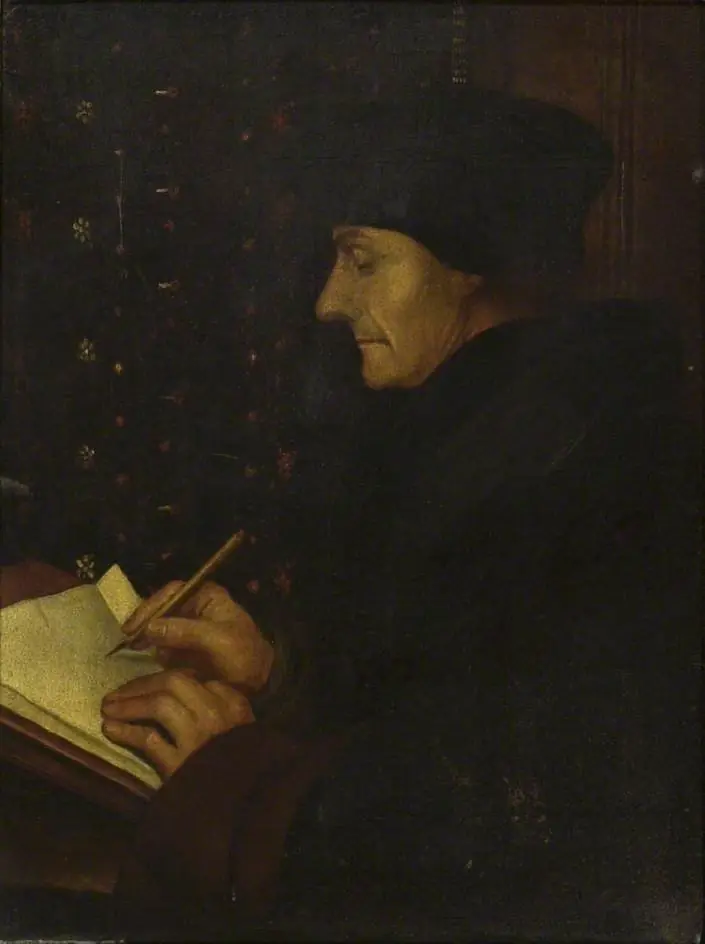
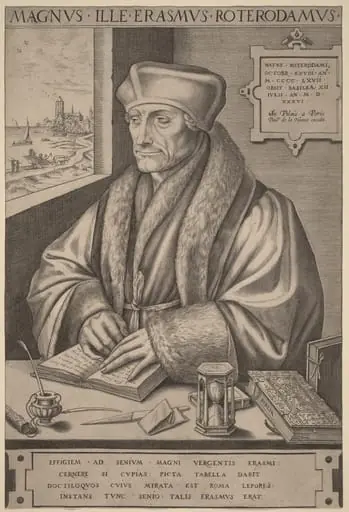
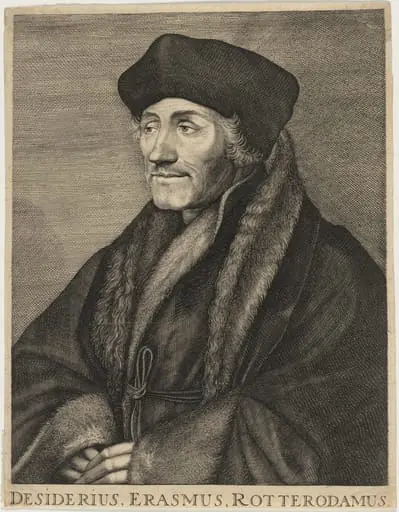
Erasmus is an ink print by the Impressionist artist Félix Bracquemond. It dates from 1863 and is held in the collection of the National Gallery of Art.
About this work
Overview
Félix Henri Bracquemond produced this 1863 etching on chine collé as part of his broader effort to elevate printmaking in 19th-century France.
Félix Henri Bracquemond produced this 1863 etching on chine collé as part of his broader effort to elevate printmaking in 19th-century France. The work depicts the humanist scholar Erasmus in a moment of quiet concentration, rendered with fine linear precision. Bracquemond’s choice of materials—wove paper layered with delicate chine collé—enhanced the tonal subtlety and texture of the image, reflecting his technical innovation in the medium.
Subject & Meaning
The portrait captures Desiderius Erasmus, the Renaissance scholar, engaged in scholarly labor by candlelight. His bowed head and focused hands suggest deep intellectual immersion. The dim illumination and detailed background pattern frame him as a solitary thinker, evoking the quiet dignity of humanist study. Bracquemond’s selection of Erasmus aligns with 19th-century European reverence for Enlightenment ideals and the written word.
Technique & Style
Bracquemond employed etching to achieve fine, controlled lines, carving into a metal plate with acid to create intricate details in the fabric and the scholar’s attire. The use of chine collé allowed him to bond thin, delicate paper to a heavier support, enhancing the print’s tonal range and surface richness. The composition emphasizes texture over dramatic contrast, favoring quiet realism over theatricality.
History & Provenance
Created in 1863, the print emerged during a period when Bracquemond was actively promoting etching as a serious artistic medium. He collaborated with publishers and printers to refine reproductive techniques, influencing contemporaries such as Manet and Degas. While the print’s early ownership is undocumented, its technical sophistication ensured its inclusion in later collections of French graphic art.
Context
Bracquemond’s interest in Japanese prints informed his approach to line and composition, aligning with the broader Japonisme movement in France. His work in ceramics and printmaking reflected a cross-disciplinary ethos, where artistic boundaries were fluid. This portrait of Erasmus fits within a wider 19th-century revival of interest in Renaissance humanism, reimagined through modern print techniques.
Legacy
Bracquemond’s etchings, including this one, contributed to the renaissance of printmaking as an independent art form in France. His technical innovations and advocacy helped shift perceptions of prints from mere reproductions to original works. Though less known than his wife Marie, his influence on his peers and the medium’s evolution remains a significant part of 19th-century artistic practice.
Artist & collection

Artist
Félix Henri Bracquemond (French pronunciation: ; 22 May 1833 – 29 October 1914) was a French painter, etcher, and printmaker.