Artwork
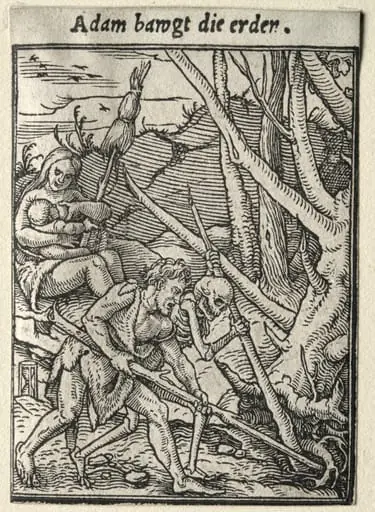
The Dance of Death: Adam Tilling the Earth
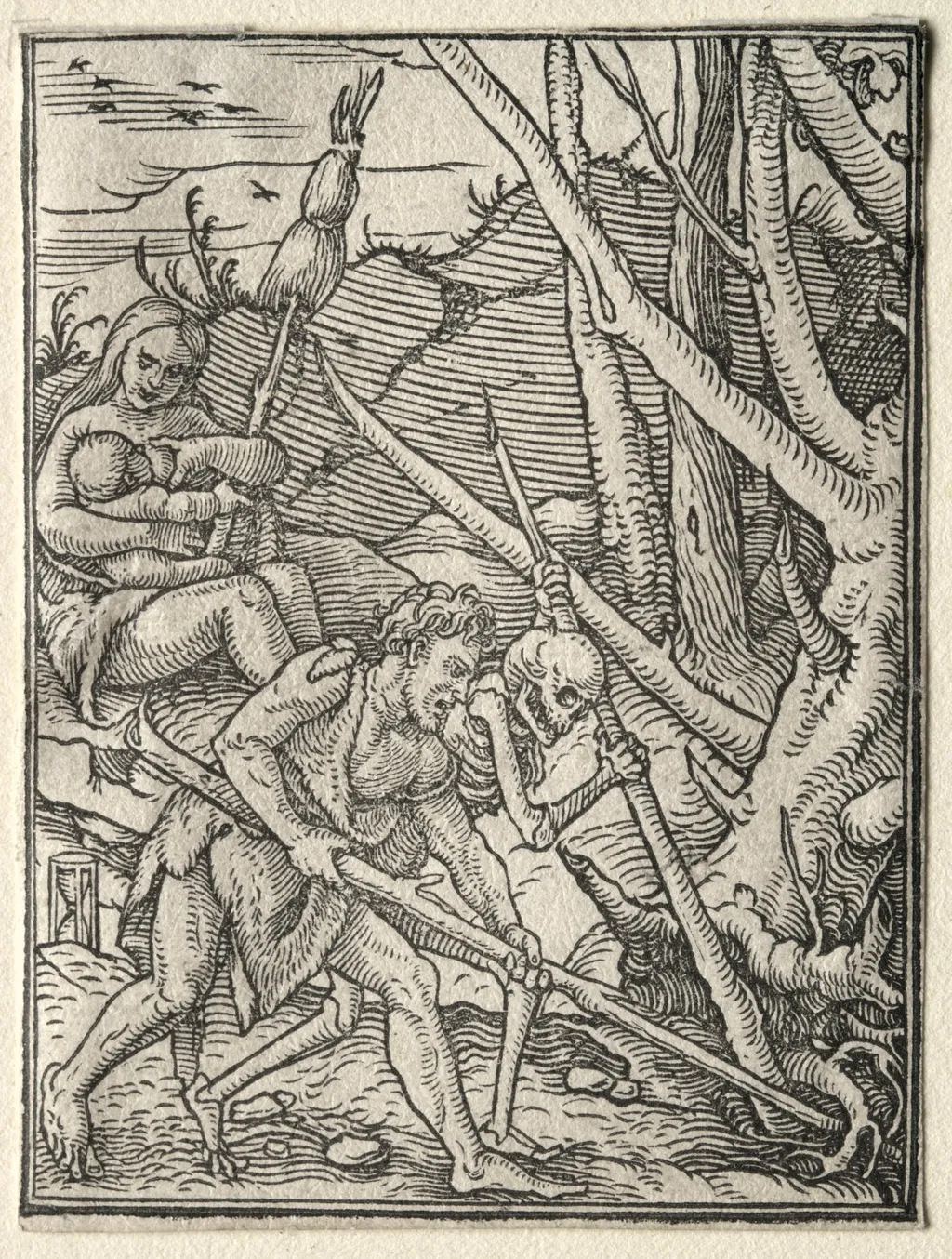
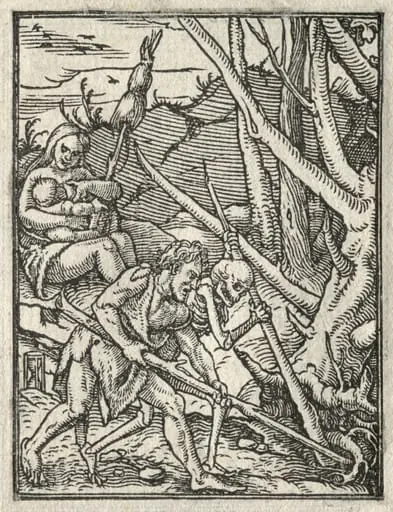
The Dance of Death: Adam Tilling the Earth is a print by the Renaissance artist Hans Holbein the Younger. It dates from 1526 and is held in the collection of the Cleveland Museum of Art.
About this work
Overview
The Dance of Death: Adam Tilling the Earth is a black-and-white print created by Hans Holbein the Younger around 1526. It is part of a series of works exploring the medieval allegory of the Dance of Death.
Subject & Meaning
The print depicts a skeleton dancing with Adam, who is laboring in the fields. The scene symbolizes the universality of death, as the skeleton leads Adam to his grave, highlighting the inevitability of mortality regardless of one's occupation or social status.
Technique & Style
Holbein's work is characterized by its stark contrast and detailed rendering, with the twisted bodies of the skeleton and Adam forming the central focus of the composition. The use of a black-and-white medium adds to the somber tone of the piece.
Context
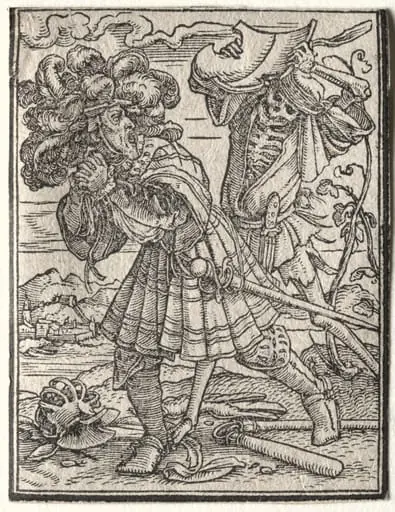
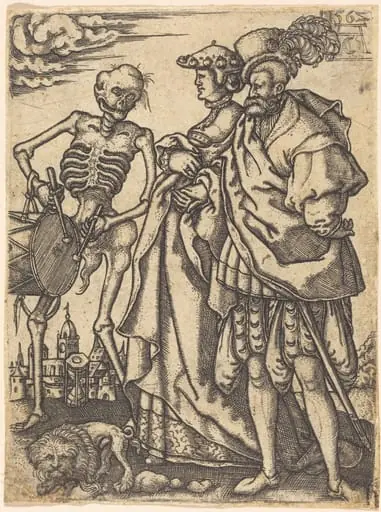
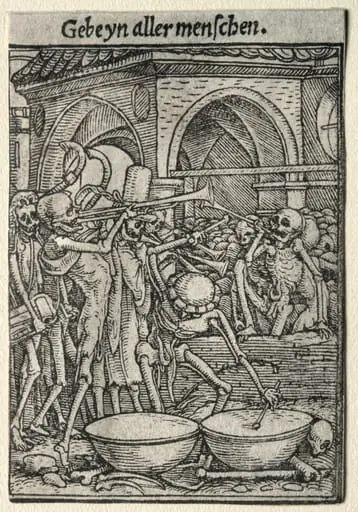
The Dance of Death series, to which this print belongs, reflects a medieval allegorical theme that was revisited during the Northern Renaissance. Holbein's adaptation of this theme into a series of prints allowed for widespread dissemination of the motif, resonating with the religious and cultural currents of his time.
Artist & collection
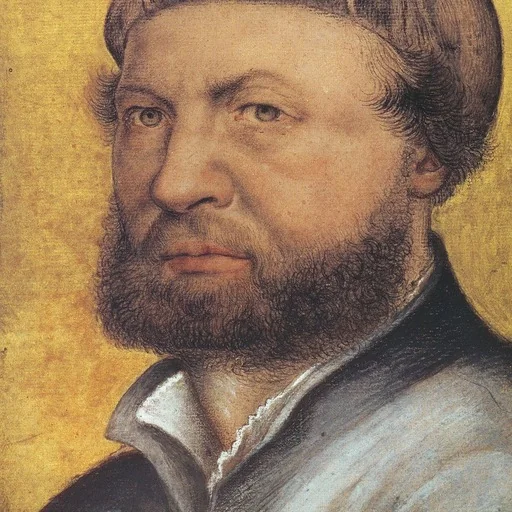
Artist
Hans Holbein the Younger (UK: HOL-byne, US: HOHL-byne, HAWL-; German: Hans Holbein der Jüngere; c.