Artwork
Dance of Death: The Merchant
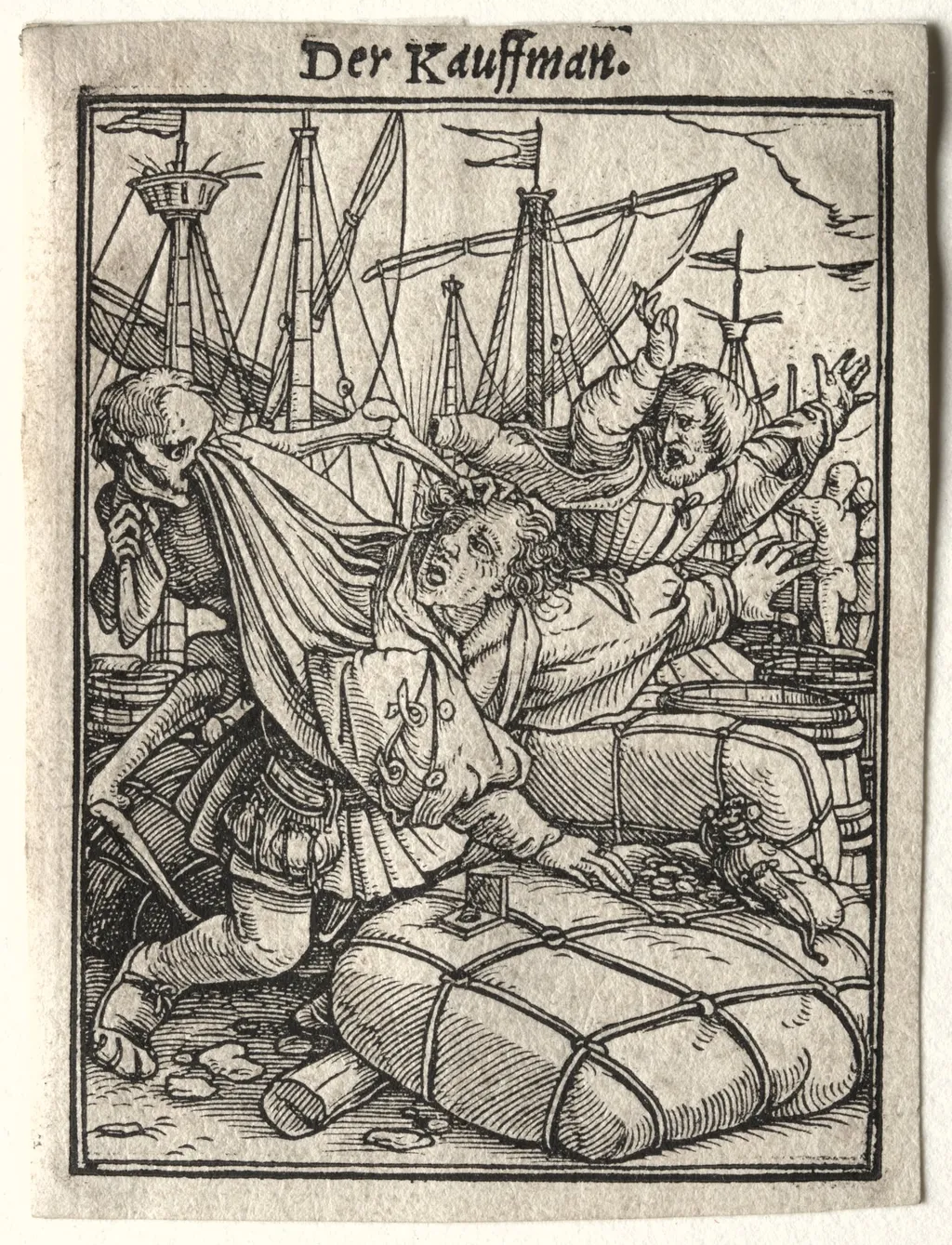
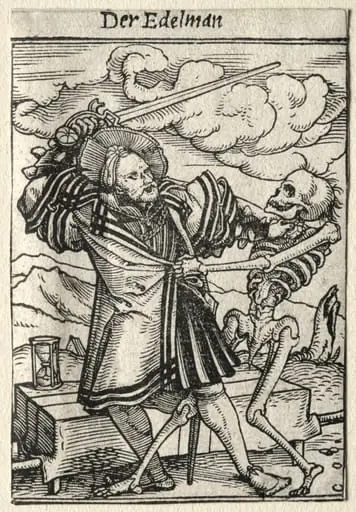
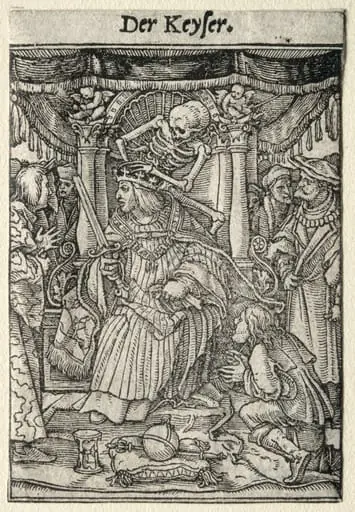
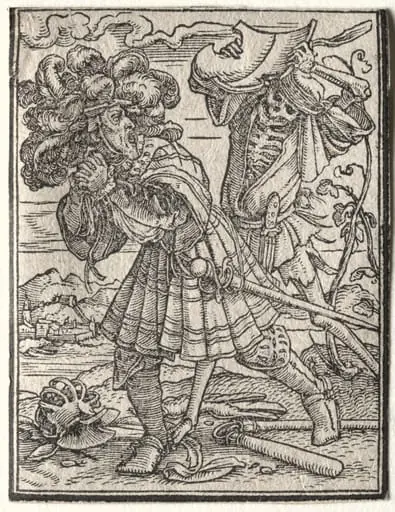
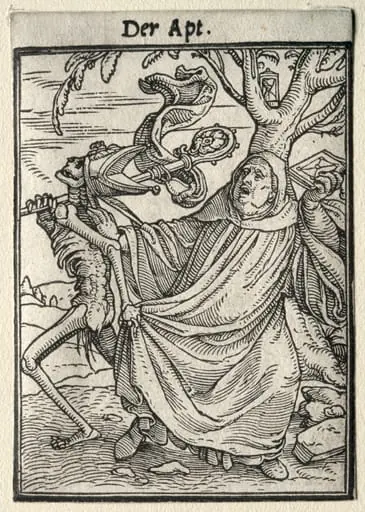
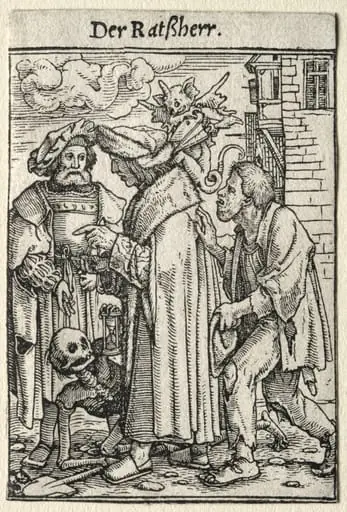
Dance of Death: The Merchant is a print by the Renaissance artist Hans Holbein the Younger. It dates from 1526 and is held in the collection of the Cleveland Museum of Art.
About this work
Overview
Holbein, active in Basel and London, employed precise linework and tonal contrast to convey the universality of mortality.
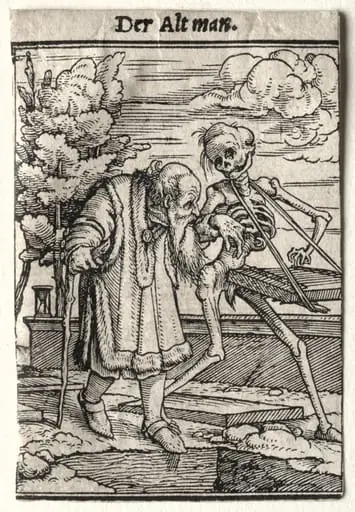
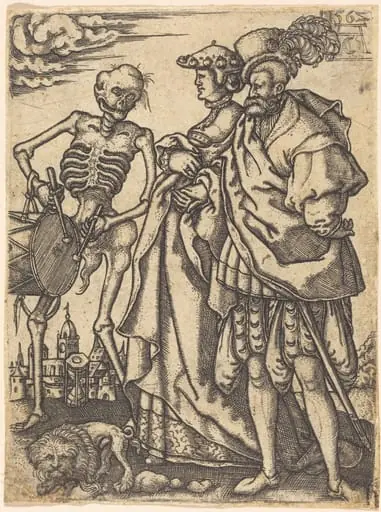
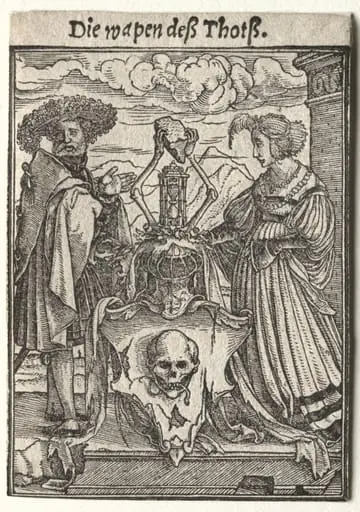
Created around 1526, *Dance of Death: The Merchant* is a woodcut by Hans Holbein the Younger, part of a larger series depicting Death claiming individuals from all walks of life. Holbein, active in Basel and London, employed precise linework and tonal contrast to convey the universality of mortality. The print belongs to a Northern Renaissance tradition that merged religious allegory with social commentary, reflecting anxieties about wealth, power, and the afterlife in early 16th-century Europe.
Subject & Meaning
The scene portrays a merchant, dressed in a rich cloak and surrounded by symbols of commerce, being led away by a skeletal figure representing Death. The merchant’s resistance underscores the human reluctance to surrender worldly possessions. The imagery reinforces the medieval *Dance of Death* theme: no rank or wealth shields one from mortality. The port and ships in the background hint at the merchant’s trade, suggesting that even the fruits of economic success are transient.
Technique & Style
Holbein rendered the scene using fine, controlled woodcut lines to achieve intricate detail and spatial depth. He employed chiaroscuro through dense hatching and contrasted light and shadow to model forms and heighten emotional tension. The merchant’s fabric, Death’s bony frame, and distant architecture are rendered with equal precision, grounding the allegory in tangible reality. The monochrome palette amplifies the somber tone, focusing attention on gesture and composition.
History & Provenance
The print was produced in Basel during Holbein’s early career, likely as part of a series published in 1538. It circulated widely through printed books, reaching audiences beyond elite circles. Original impressions are held in major European collections, including the British Museum and the Albertina. Its popularity stemmed from its moral clarity and technical excellence, making it a reference point for later satirical and religious prints.
Context
In the decades before the Reformation, images of Death confronting the living resonated amid religious upheaval and plague outbreaks. Holbein’s series responded to a cultural preoccupation with mortality, aligning with Protestant critiques of materialism. Unlike earlier medieval versions, his prints emphasized individual identity and social role, transforming a traditional motif into a sharp, human-centered commentary on the fragility of earthly status.
Legacy
Holbein’s *Dance of Death* series influenced later generations of printmakers and satirists, establishing a visual language for moral allegory in Northern Europe. Its emphasis on social hierarchy and the inevitability of death persisted in Enlightenment and Romantic art. The merchant’s confrontation with Death remains a potent symbol in discussions of wealth, impermanence, and the ethical dimensions of labor and commerce.
Artist & collection
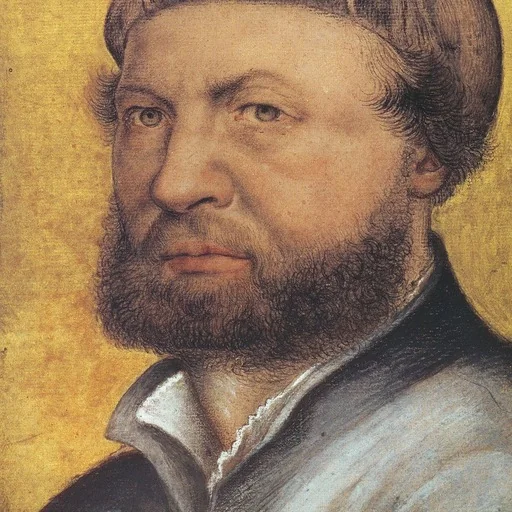
Artist
Hans Holbein the Younger (UK: HOL-byne, US: HOHL-byne, HAWL-; German: Hans Holbein der Jüngere; c.