Artwork
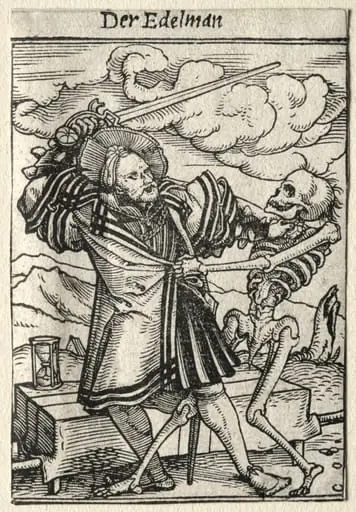
The Dance of Death: The Count
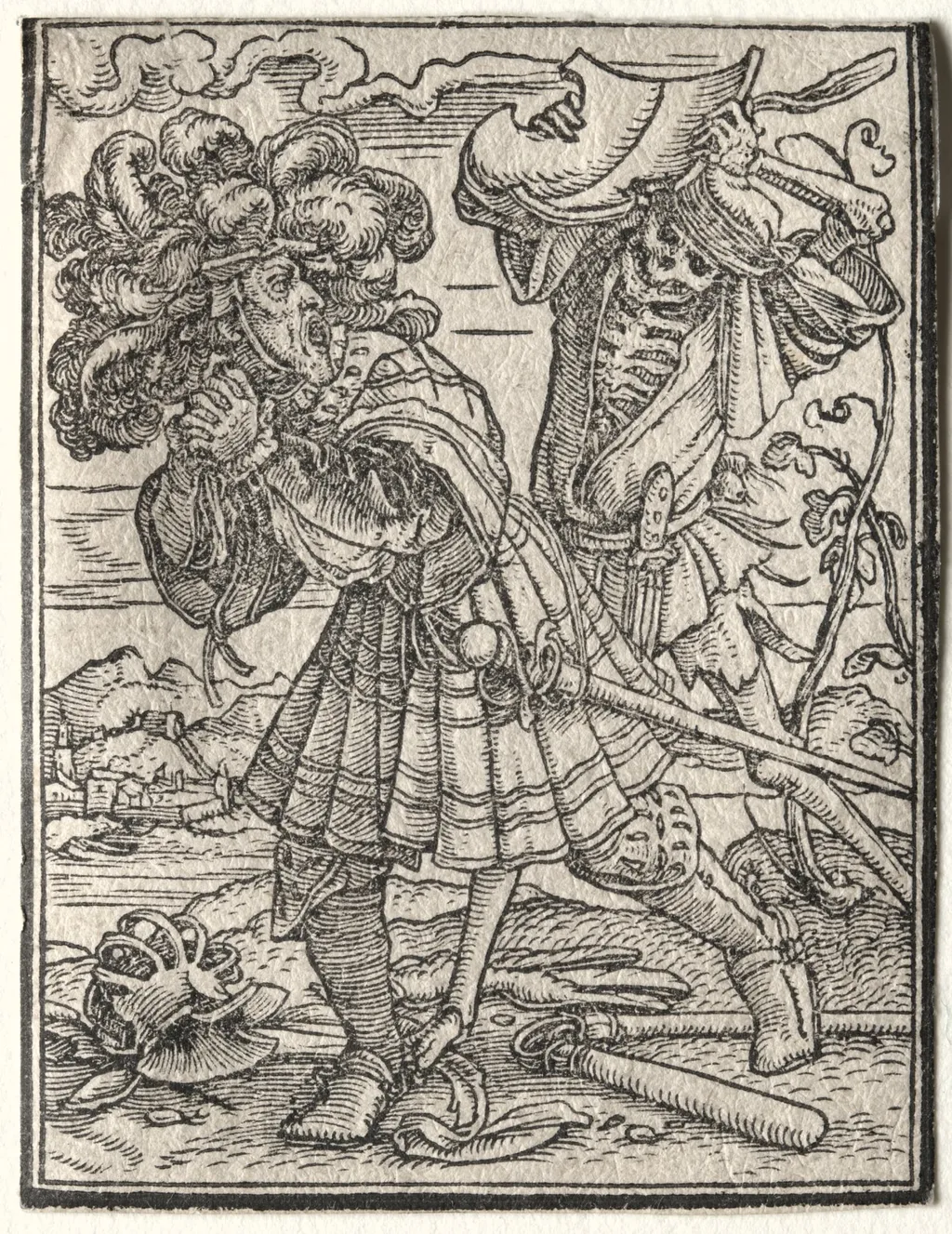
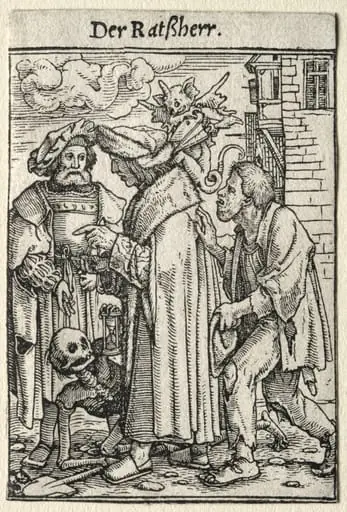
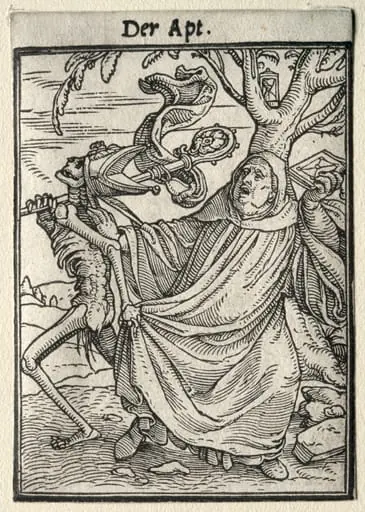
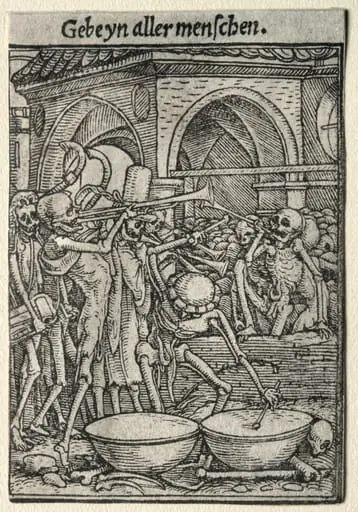
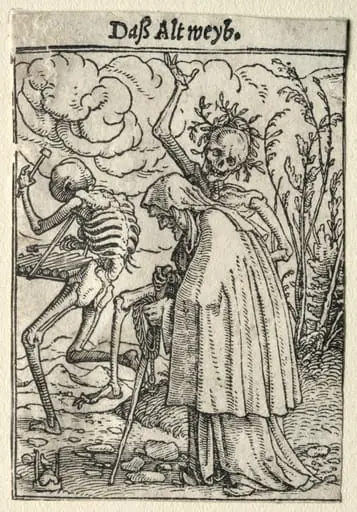
The Dance of Death: The Count is a print by the Renaissance artist Hans Holbein the Younger. It dates from 1526 and is held in the collection of the Cleveland Museum of Art.
About this work
Overview
It belongs to a tradition rooted in medieval allegory, illustrating death’s inevitability across all social classes.
Created around 1526 by Hans Holbein the Younger, this print is part of a larger series titled The Dance of Death. It belongs to a tradition rooted in medieval allegory, illustrating death’s inevitability across all social classes. Holbein, active in the Northern Renaissance, used woodcut technique to produce these images for printed books. The Cleveland Museum of Art holds one of the surviving impressions from this influential series.
Subject & Meaning
The scene shows a skeleton, dressed in ornate robes, confronting a nobleman who clutches his sword. The figure’s wide eyes and open mouth convey shock, while the skeleton’s calm posture underscores death’s impartiality. The nobleman’s status—signified by his attire and weapons—offers no protection. The image critiques earthly power, asserting that death reduces all to equal footing, regardless of rank or wealth.
Technique & Style
Holbein employed woodcut printing, carving precise lines into woodblocks to produce sharp, high-contrast images. His use of chiaroscuro enhances the dramatic tension: the skeleton emerges from deep shadow, while the nobleman’s face and garments catch the light. The composition directs focus to the confrontation, with minimal background detail—rolling hills and water—keeping attention on the central encounter.
History & Provenance
The series was originally published in Lyon around 1538, following Holbein’s designs from the early 1520s. These prints circulated widely across Europe, becoming key examples of Reformation-era visual culture. The Cleveland Museum of Art’s impression is one of many surviving copies, likely acquired through 19th-century European collections before entering its holdings in the 20th century.
Context
The Dance of Death emerged amid religious upheaval and plague outbreaks in early 16th-century Europe. As the Church’s authority waned and mortality rates rose, such imagery served as moral reminders. Holbein’s version diverged from earlier, more stylized depictions by incorporating realistic portraiture and psychological depth, reflecting Renaissance humanism’s influence on traditional themes.
Legacy
Holbein’s Dance of Death series became a benchmark for allegorical printmaking, influencing later artists and satirists. Its stark visual language and social critique resonated through centuries, appearing in political cartoons and literary works. The series remains a touchstone for studying how art conveyed existential themes during a period of profound cultural transformation.
Artist & collection
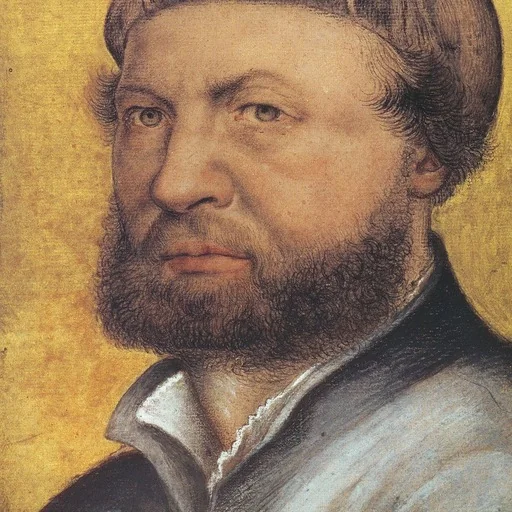
Artist
Hans Holbein the Younger (UK: HOL-byne, US: HOHL-byne, HAWL-; German: Hans Holbein der Jüngere; c.