Artwork
Dance of Death: Adam Tilling the Ground
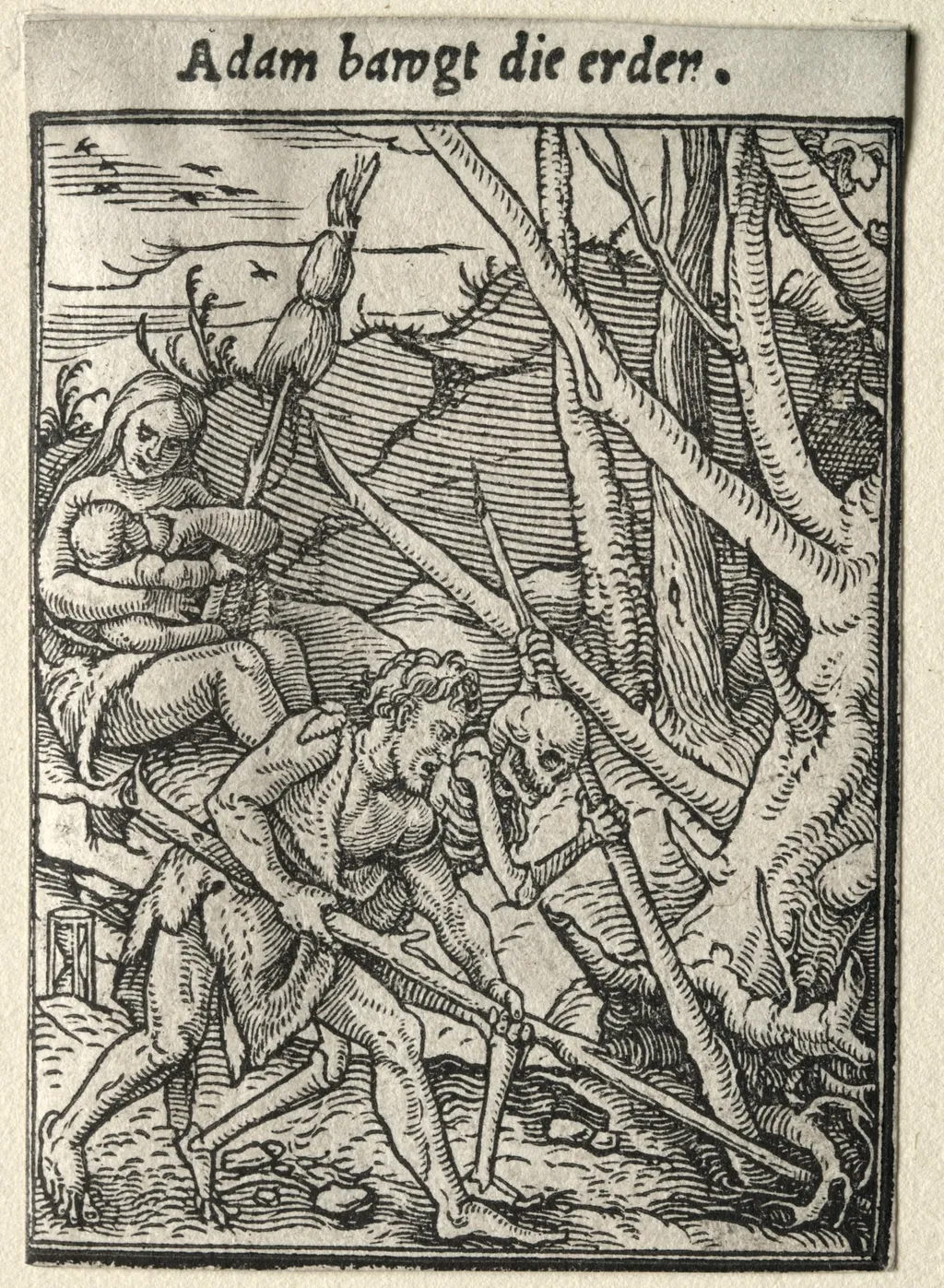
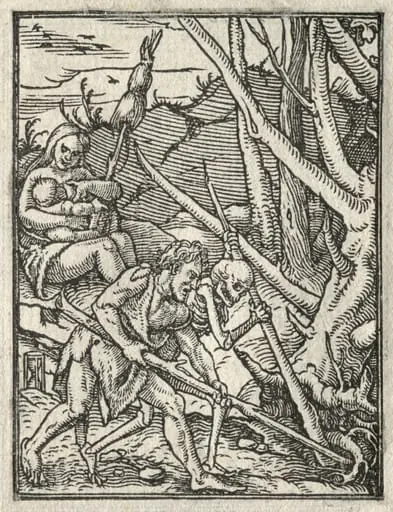
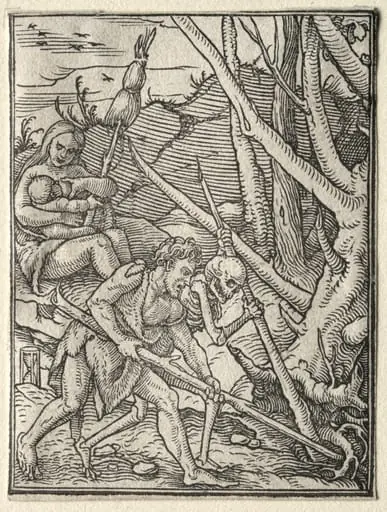
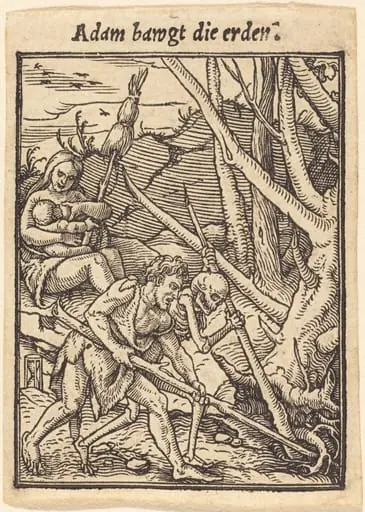
Dance of Death: Adam Tilling the Ground is a print by the Renaissance artist Hans Holbein the Younger. It dates from 1526 and is held in the collection of the Cleveland Museum of Art.
About this work
Overview
The composition illustrates the universal reach of mortality, positioning a humble agricultural figure alongside the series’ recurring skeletal presence.
Created circa 1526, this woodcut by Hans Holbein the Younger belongs to his extensive *Dance of Death* series. The image presents a bearded, shirtless laborer turning soil with a hoe, while a woman and infant appear in the background among trees. The composition illustrates the universal reach of mortality, positioning a humble agricultural figure alongside the series’ recurring skeletal presence.
Subject & Meaning
The central figure, identified as Adam, engages in the act of tilling, symbolizing human labor and the cycle of life. The juxtaposition of the working man with a distant mother and child underscores the inevitability of death across all ages and social roles, reinforcing the series’ moral lesson that no status can evade the final summons.
Technique & Style
Executed as a woodcut, the print showcases Holbein’s precise line work and careful modulation of light and shadow, giving the scene a tangible three‑dimensional quality. Fine incisions render the textures of bark, soil, and flesh, while cross‑hatching creates depth, reflecting the Northern Renaissance’s emphasis on meticulous realism combined with allegorical content.
History & Provenance
Holbein produced the *Dance of Death* series during his early career in Basel, a period marked by his engagement with Reformation ideas. The prints circulated widely in the 16th century, influencing both devotional and secular audiences. Original impressions are held in several European museum collections, documenting the work’s continued scholarly interest.
Context
The series emerged amid the religious upheavals of the early Reformation, when mortality and salvation were pressing concerns. By pairing figures from emperors to peasants with the personified Death, Holbein addressed contemporary anxieties about plague, war, and spiritual uncertainty, using visual satire to comment on the fragility of earthly status.
Artist & collection
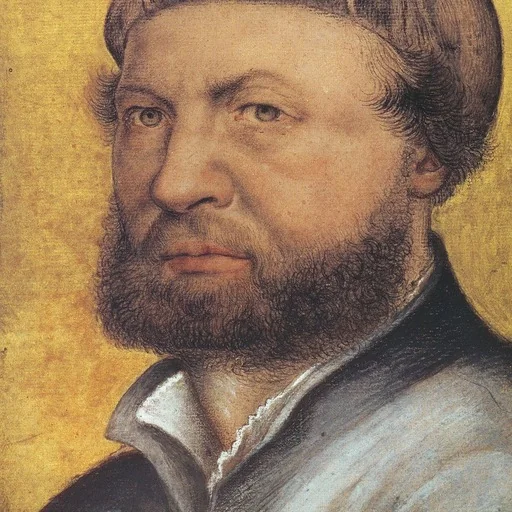
Artist
Hans Holbein the Younger (UK: HOL-byne, US: HOHL-byne, HAWL-; German: Hans Holbein der Jüngere; c.