Artwork
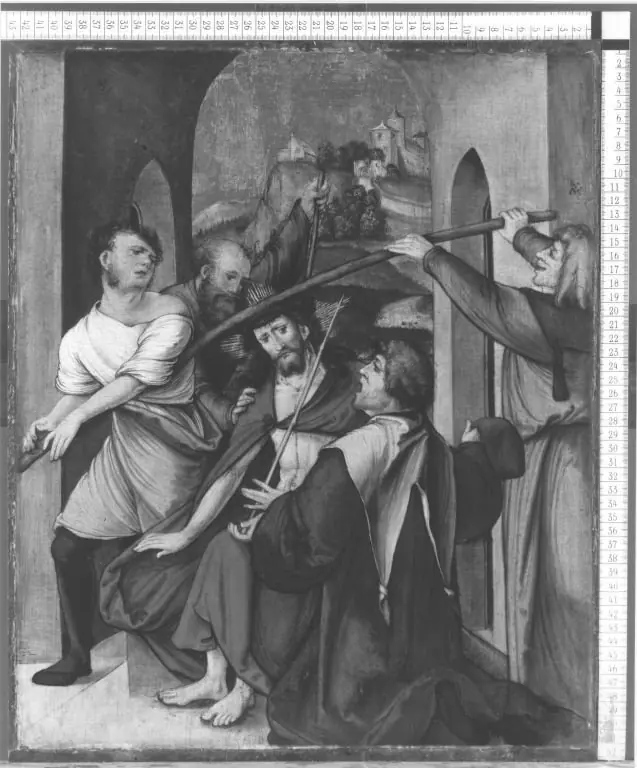
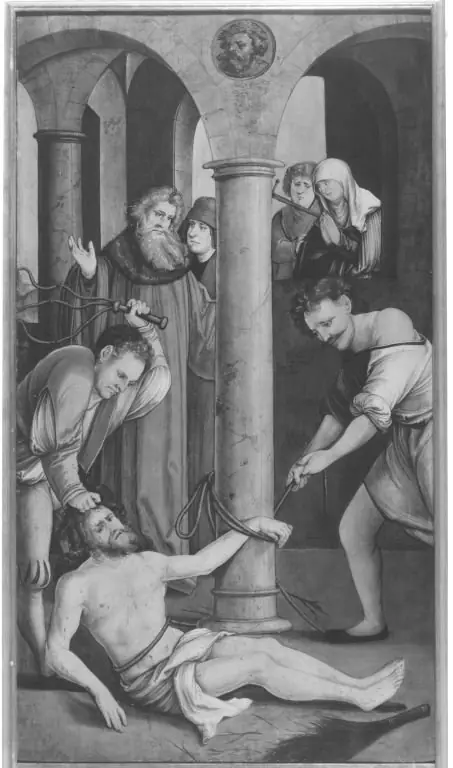
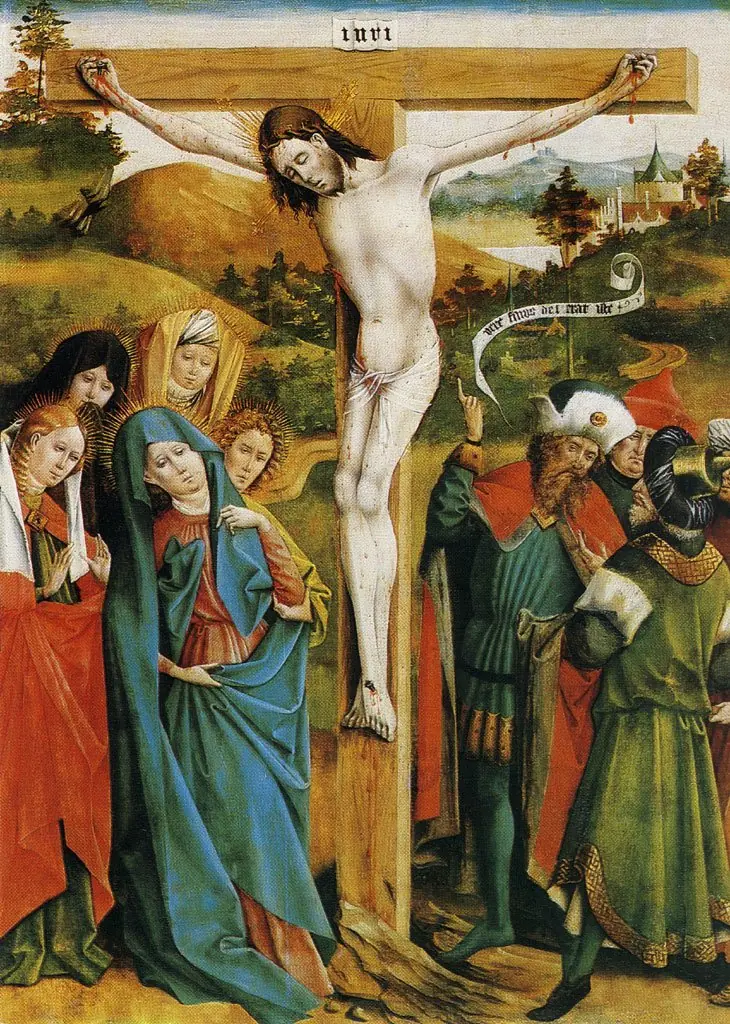
Christgartner Altar: Fall Christi bei der Kreuzaufrichtung (Abgetrennte Rückseite von WAF 920)
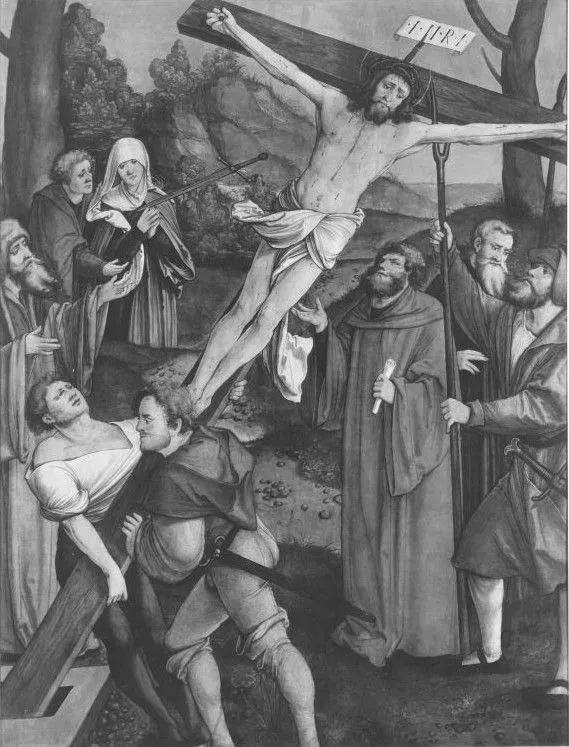
Christgartner Altar: Fall Christi bei der Kreuzaufrichtung (Abgetrennte Rückseite von WAF 920) is an unspecified painting by the Early Renaissance artist Hans Leonhard Schäufelein. It dates from 1515 and is held in the collection of the Bavarian State Painting Collections.
About this work
Overview
Created in 1515, this religious panel by Hans Leonhard Schäufelein forms part of a larger altar composition. Executed in tempera on wood, the work is presently conserved in Munich’s Alte Pinakothek, where it is displayed as a detached rear panel of the original ensemble.
Subject & Meaning
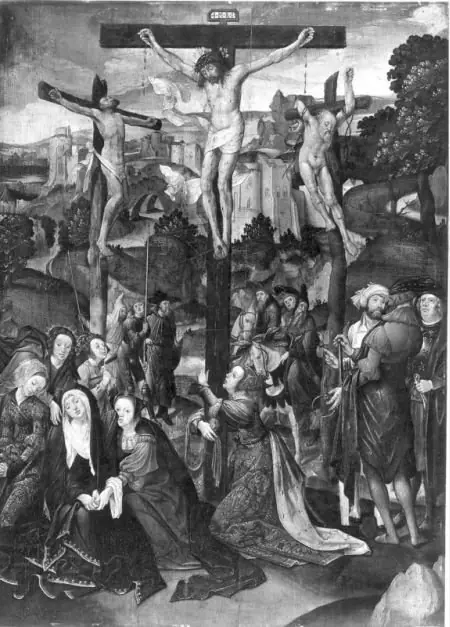
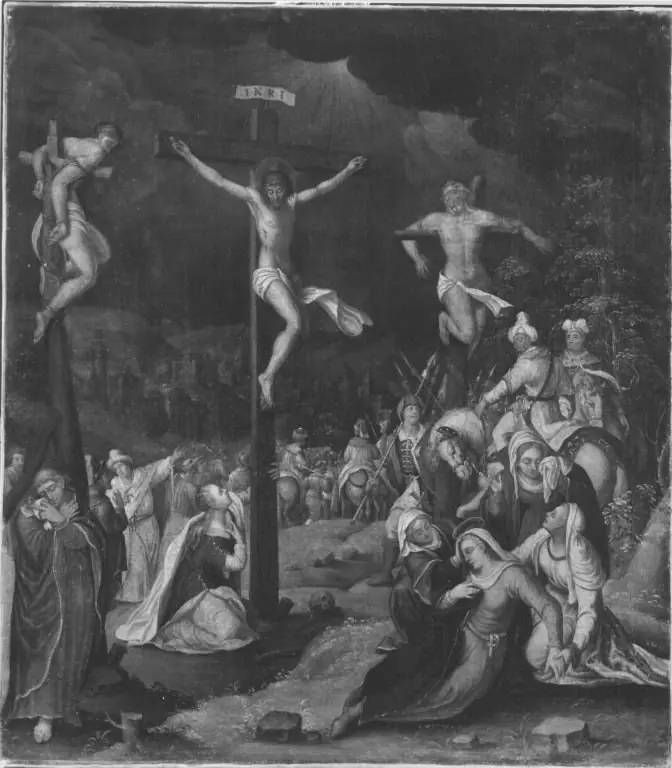
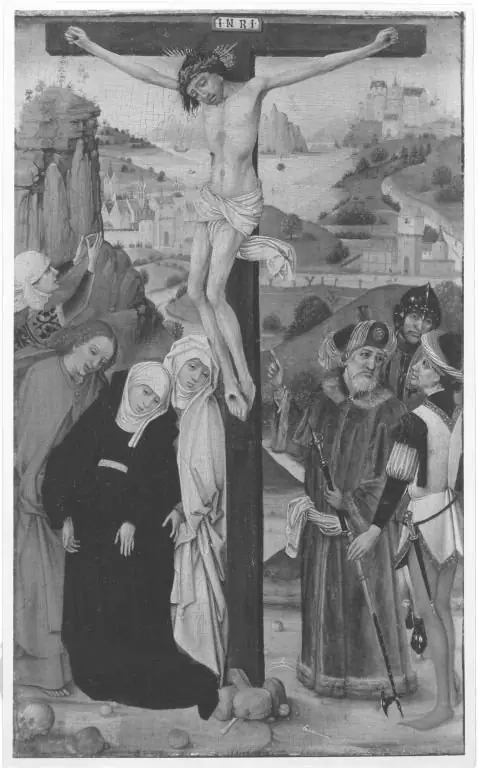
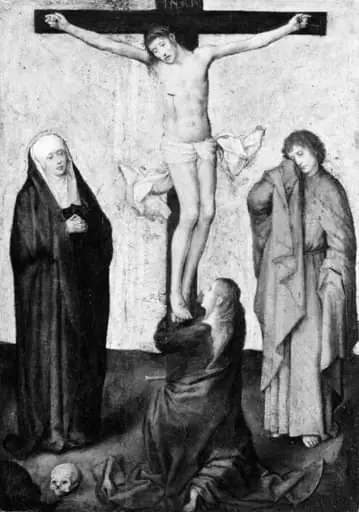
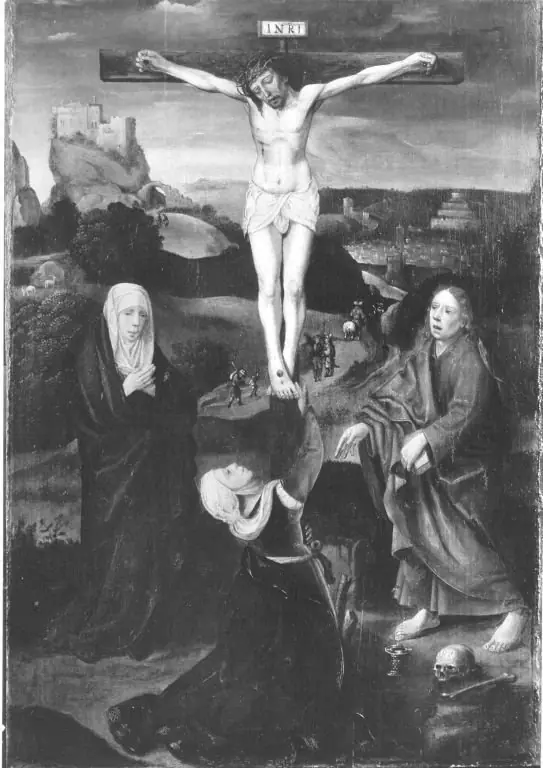
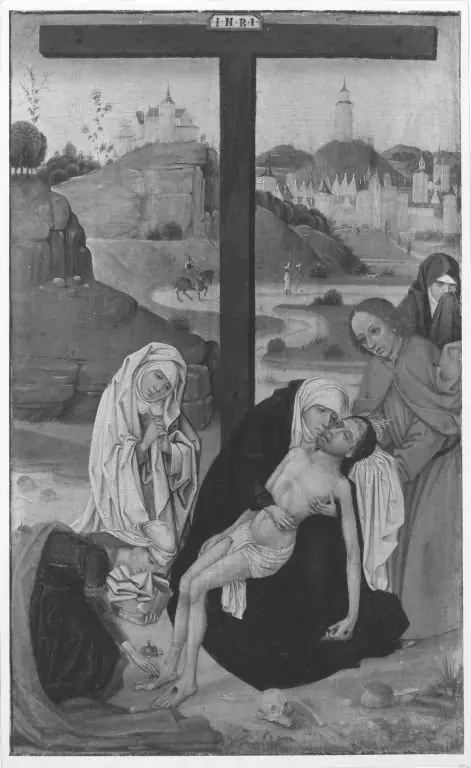
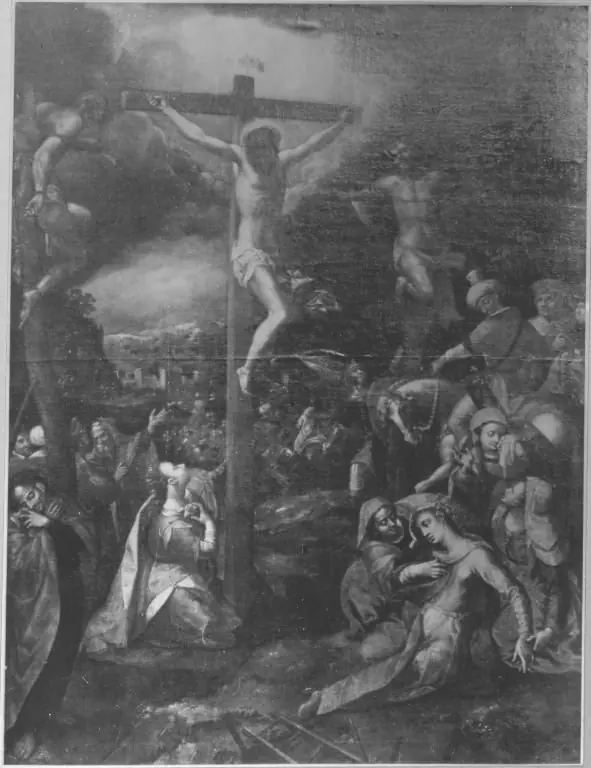
The central figure is the crucified Christ, suspended on a cross with a crown of thorns and a modest loincloth. Surrounding him are several mourners in contemporary robes, their gestures ranging from upward gazes of devotion to downcast, contemplative postures, underscoring the solemnity of the Passion narrative.
Technique & Style
Schäufelein employs a clear, linear drawing style characteristic of early German Renaissance painting. The composition is organized with a shallow receding landscape of trees and low hills, creating modest depth while the figures are rendered with delicate modeling and restrained color harmonies.
History & Provenance
Originally part of an altar dedicated to the Passion, the panel was later separated from its counterpart and entered the collection of the Alte Pinakothek in the 19th century. Its provenance traces back to a German ecclesiastical setting before becoming part of the museum’s holdings.
Context
The work reflects the devotional practices of early 16th‑century Germany, where altarpieces served both liturgical and didactic functions. Schäufelein, a pupil of Albrecht Dürer, integrates Northern attention to detail with a narrative clarity intended to engage the viewer’s piety.
Artist & collection
Artist
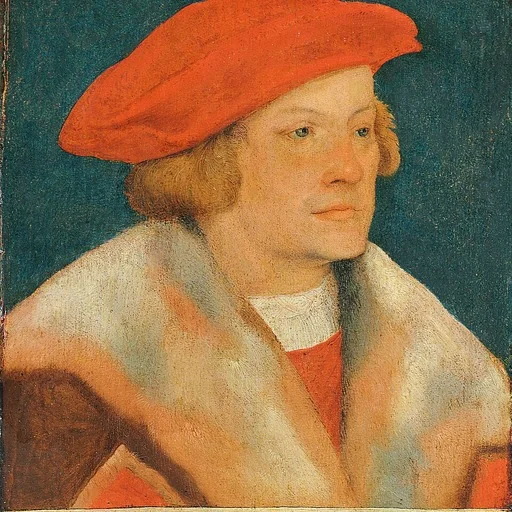
Hans Leonhard Schäufelein (1480–1540) was an artist, born in Nuremberg.