Artwork
Der hl. Ulrich vor dem Abt von St. Gallen
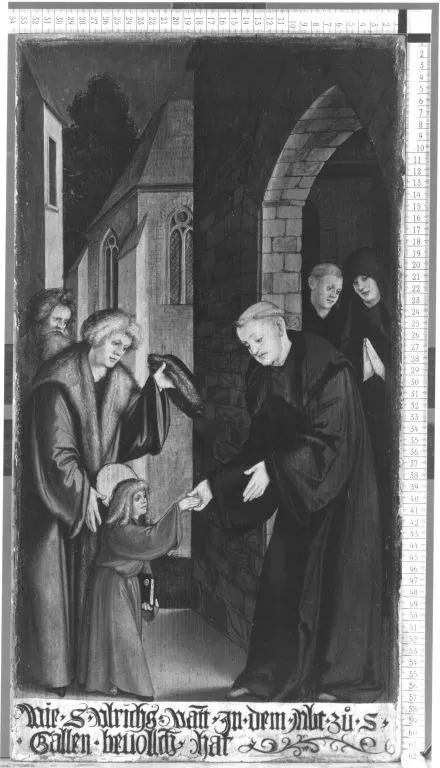
Der hl. Ulrich vor dem Abt von St. Gallen is an unspecified painting by the Northern Renaissance artist Hans Leonhard Schäufelein. It dates from 1515 and is held in the collection of the Bavarian State Painting Collections. Der hl.
About this work
Overview
Der hl. Ulrich vor dem Abt von St. Gallen is a 1515 religious painting by Hans Leonhard Schäufelein, currently housed at the Alte Pinakothek.
Subject & Meaning
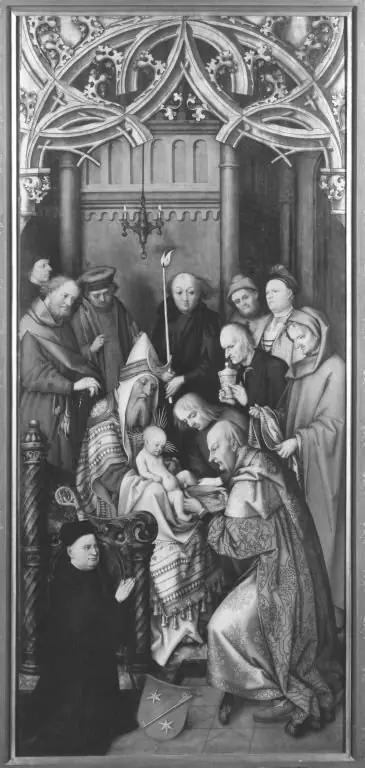
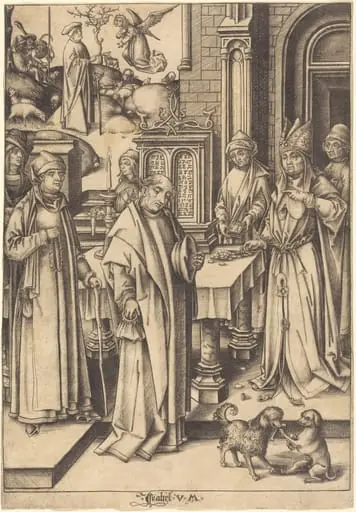
The painting depicts a solemn scene involving Saint Ulrich, the Abbot of St. Gallen, and two accompanying figures: a woman in a hooded cloak and a child reaching up towards her. A clergyman holds a document, possibly a religious text or decree, underscoring the scene's religious or transactional nature.
Technique & Style
Executed in a predominantly black-and-white palette, the work features stark, flat colors and rigid, two-dimensional figures, evoking a sense of formality. The composition's use of strong shadows and simple geometric forms anticipates elements of chiaroscuro, though without its characteristic lighting depth.
History & Provenance
Created in 1515, the painting's provenance prior to its acquisition by the Alte Pinakothek is not detailed here. An inscription at the bottom, written in German, provides contextual information, though its specifics are obscured by illegibility.
Context
Dating from the early 16th century, this work reflects the religious and artistic sensibilities of its time, blending traditional representation with emerging stylistic elements. The choice of monochrome hues may signify solemnity or austerity, common in religious art of the period.
Legacy
While not widely recognized outside specialized art historical circles, the painting offers insights into Schäufelein's oeuvre and the transitional artistic styles of the early 16th century. Its anticipation of chiaroscuro techniques links it to broader European artistic developments.
Artist & collection
Artist
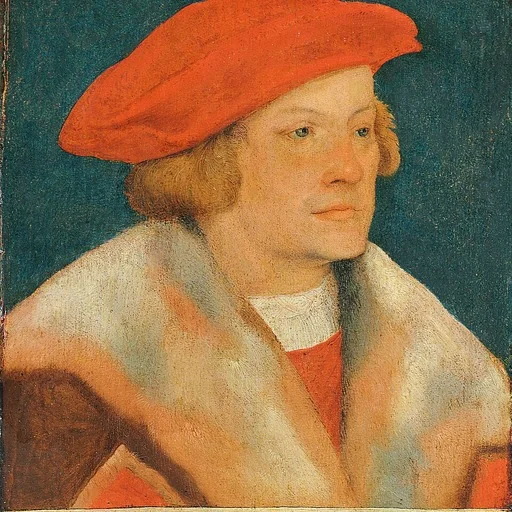
Hans Leonhard Schäufelein (1480–1540) was an artist, born in Nuremberg.

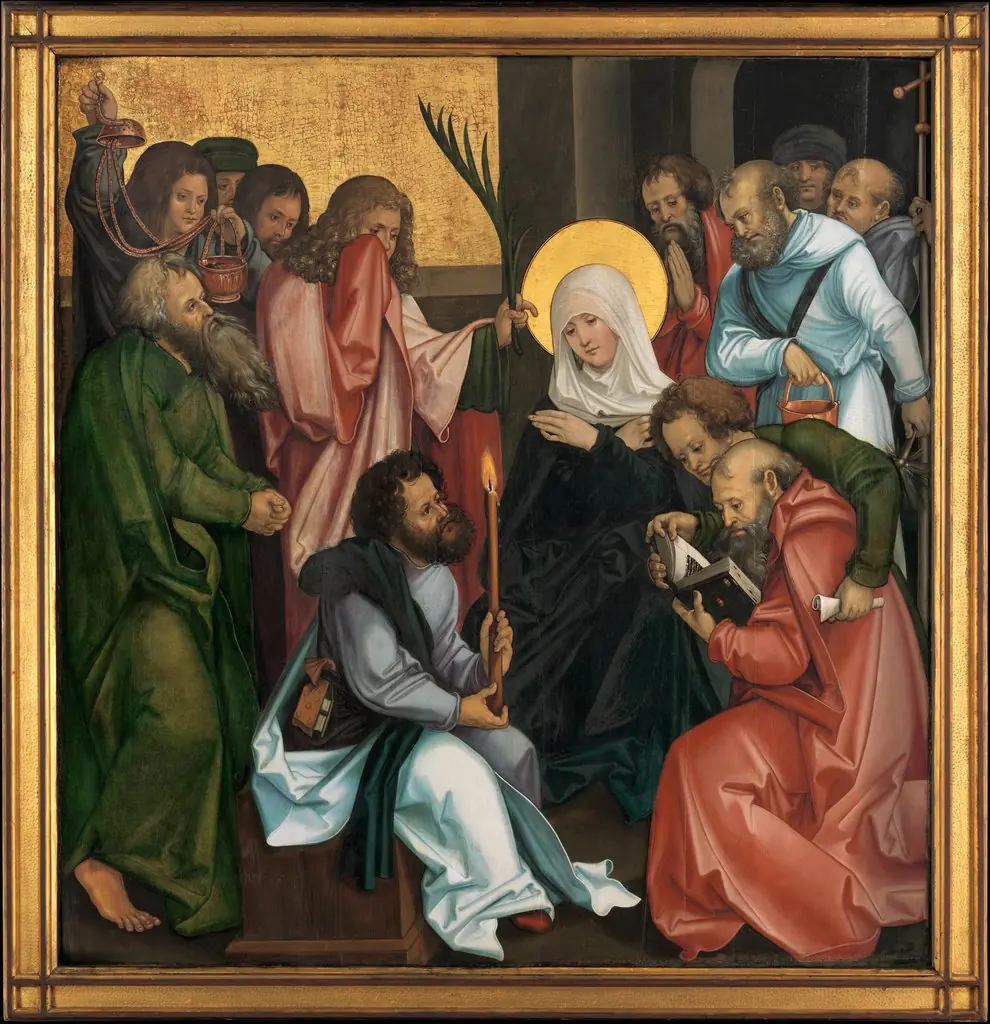 The Dormition of the Virgin; (reverse) Christ Carrying the Cross
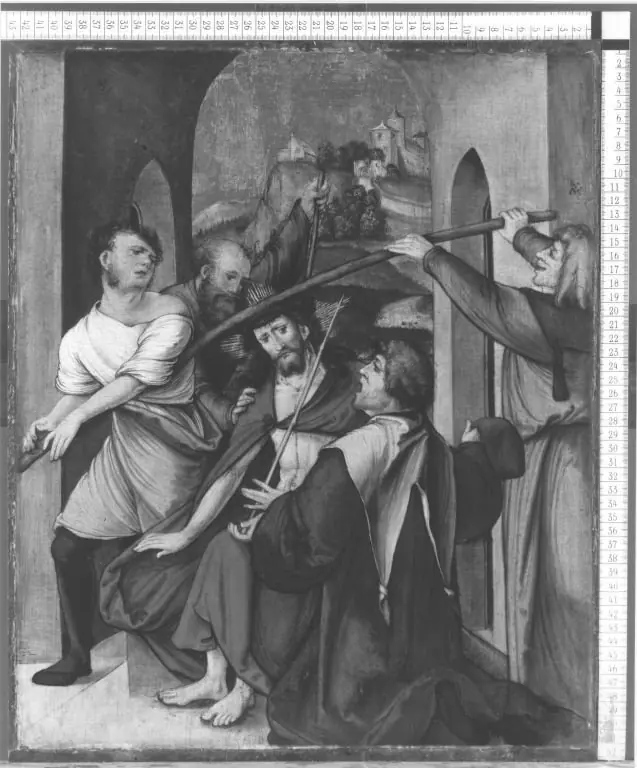 Christ crowned with thorns
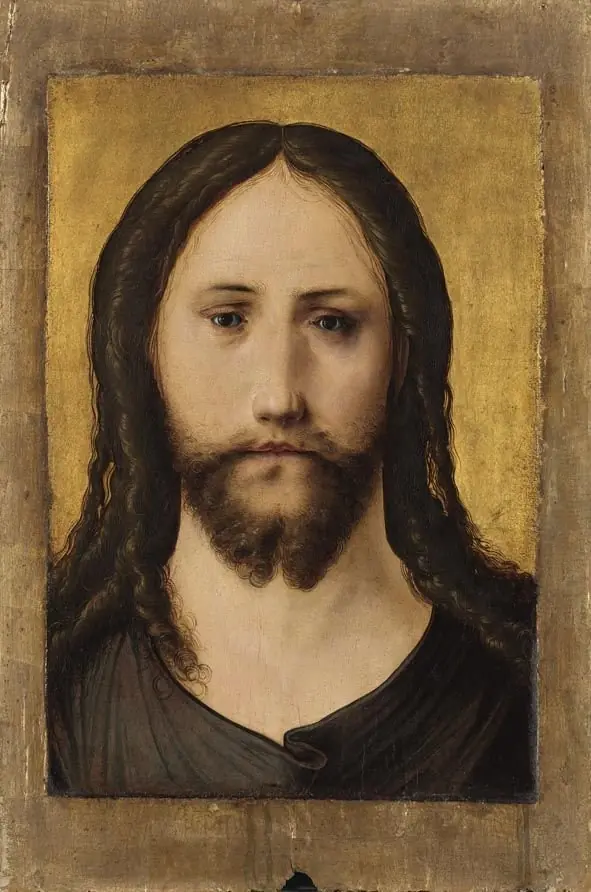 Christuskopf
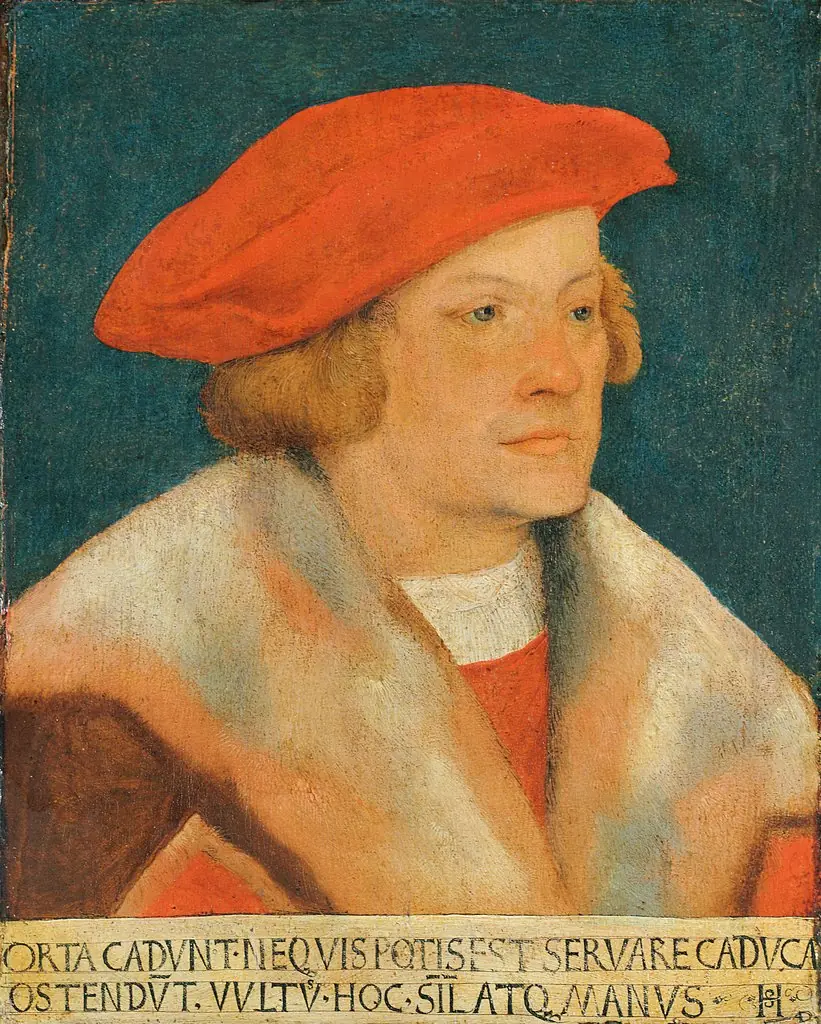 Portrait of a Man (Self-portrait?)
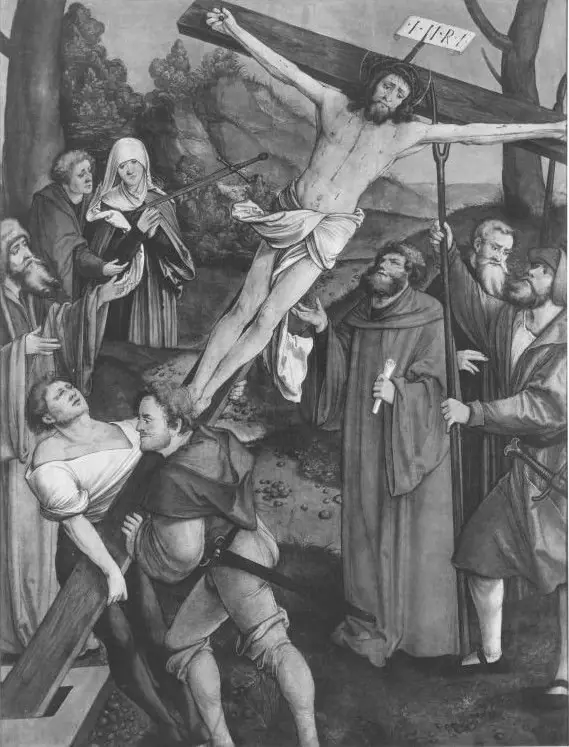 Christgartner Altar: Fall Christi bei der Kreuzaufrichtung (Abgetrennte Rückseite von WAF 920)
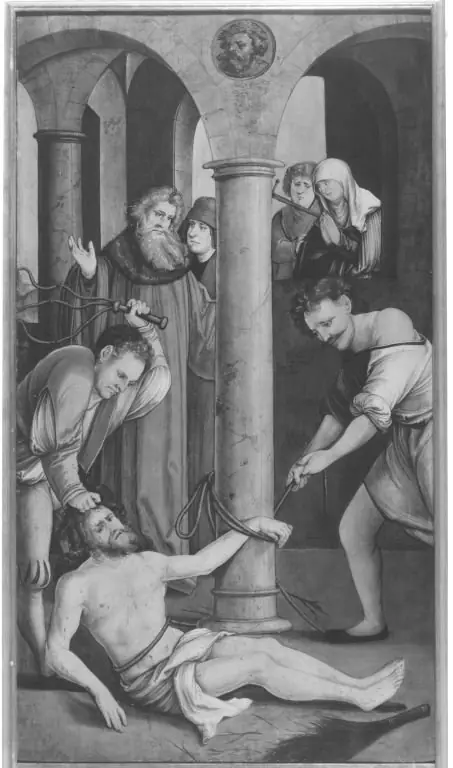 Fall of Christ during the Flagellation
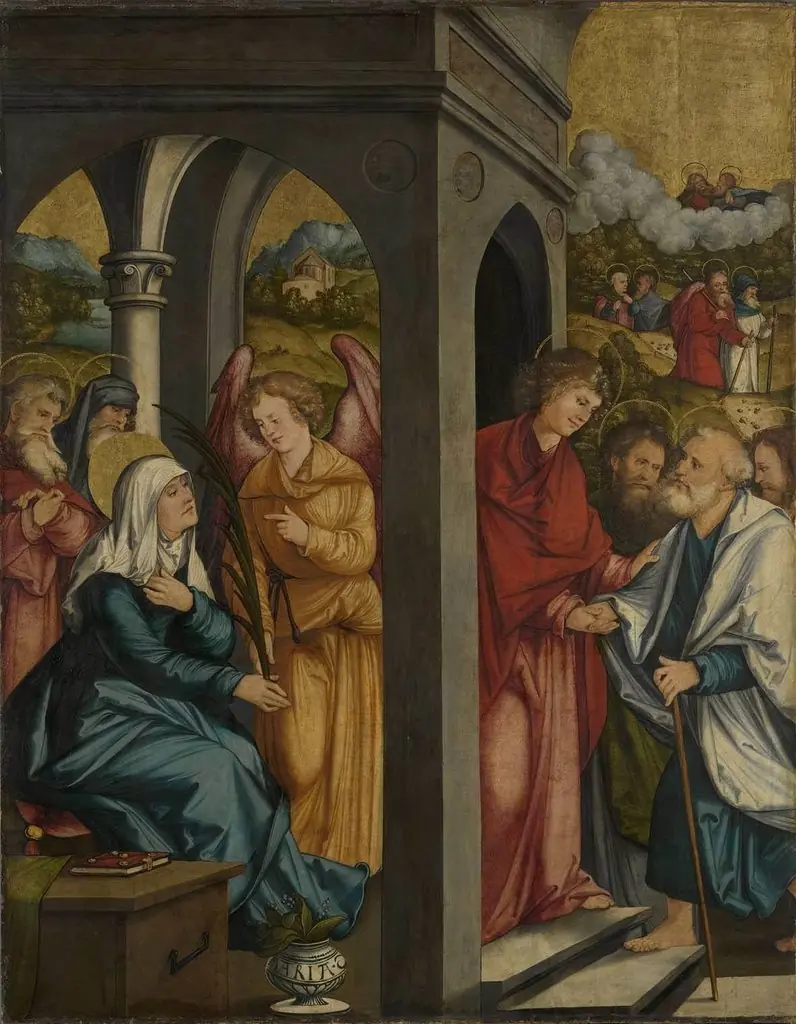 Christgartner Altar: Ein Engel reicht Maria die Palme
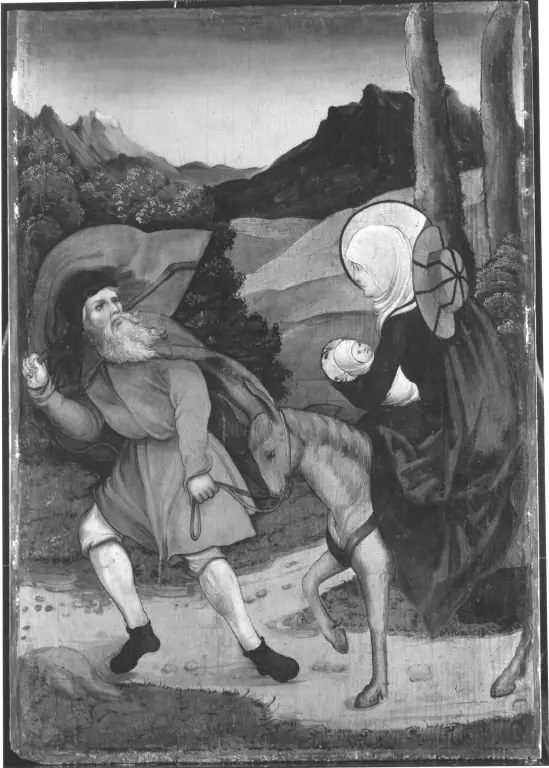 Die Flucht nach Ägypten