Artwork
Herzog Albrecht V. (1528-1579) von Bayern mit einem Löwen
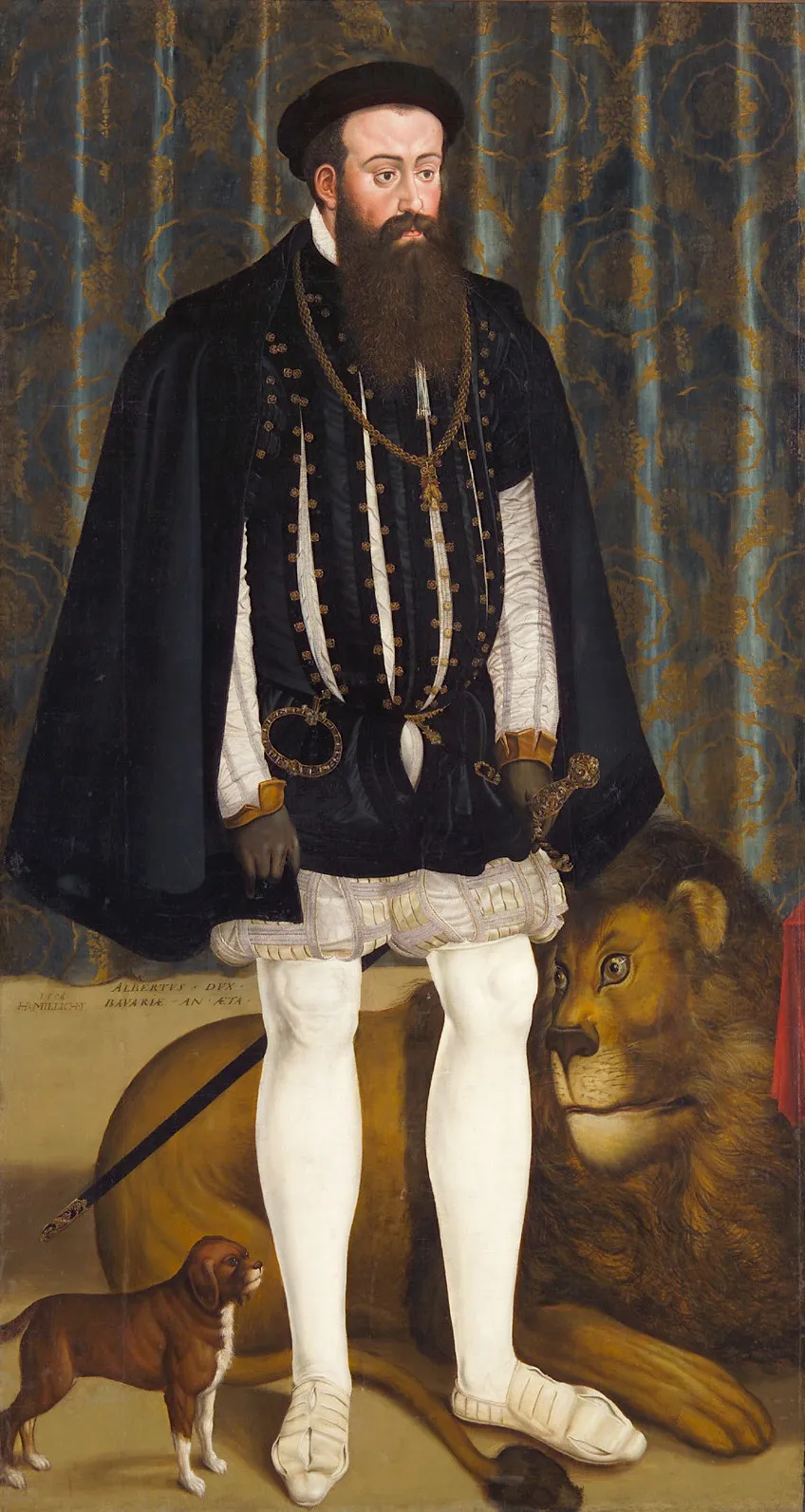
Herzog Albrecht V. (1528-1579) von Bayern mit einem Löwen is an unspecified painting by the Mannerist artist Hans Muelich. It dates from 1556 and is held in the collection of the Kunsthistorisches Museum.
About this work
Overview
The composition balances naturalism with ceremonial grandeur, typical of mid-16th-century court portraiture in the Holy Roman Empire.
Painted in 1556 by Hans Muelich, this portrait captures Albrecht V, Duke of Bavaria, in formal attire. The work is part of the Kunsthistorisches Museum’s collection in Vienna. It presents the duke in a composed, frontal pose, surrounded by symbolic animals and rich textiles that reflect his position. The composition balances naturalism with ceremonial grandeur, typical of mid-16th-century court portraiture in the Holy Roman Empire.
Subject & Meaning
Albrecht V is depicted as a ruler of authority and refinement. The lion at his side signifies strength and sovereignty, while the small dog at his left may represent loyalty or domesticated nobility. Together, these animals reinforce his dual role as both a warrior and a cultured patron. His attire, though restrained in color, is rendered with meticulous detail to emphasize his rank and access to luxury materials.
Technique & Style
Muelich employs fine brushwork to render textures: the sheen of gold embroidery, the softness of fur, and the crisp folds of fabric. The background’s drapery creates depth without distraction, focusing attention on the figure. The palette is muted yet refined, dominated by black, white, and gold, with subtle modeling of light to define form. The animals are rendered with anatomical precision, suggesting close observation or direct study.
History & Provenance
Commissioned during Albrecht V’s reign, the painting likely served to affirm his status within the Habsburg sphere. It remained in Bavarian collections before entering the Kunsthistorisches Museum’s holdings, possibly through imperial acquisitions or inheritance. Its preservation reflects its continued value as a document of dynastic identity, though little is documented about its early exhibition history.
Context
In the mid-1500s, German dukes cultivated images of restrained power, contrasting with the flamboyance of Italian courts. Albrecht V, a patron of the arts and sciences, aligned himself with humanist ideals. Portraits like this one balanced personal dignity with political symbolism, using animals and textiles to communicate legitimacy without overt militarism, reflecting the era’s evolving courtly aesthetics.
Legacy
The portrait endures as a representative example of Bavarian court portraiture in the Renaissance. It illustrates how rulers used visual language to convey authority through subtlety rather than spectacle. While not widely reproduced, it remains a key reference for understanding the material culture and symbolic codes of German nobility in the 16th century.
Artist & collection

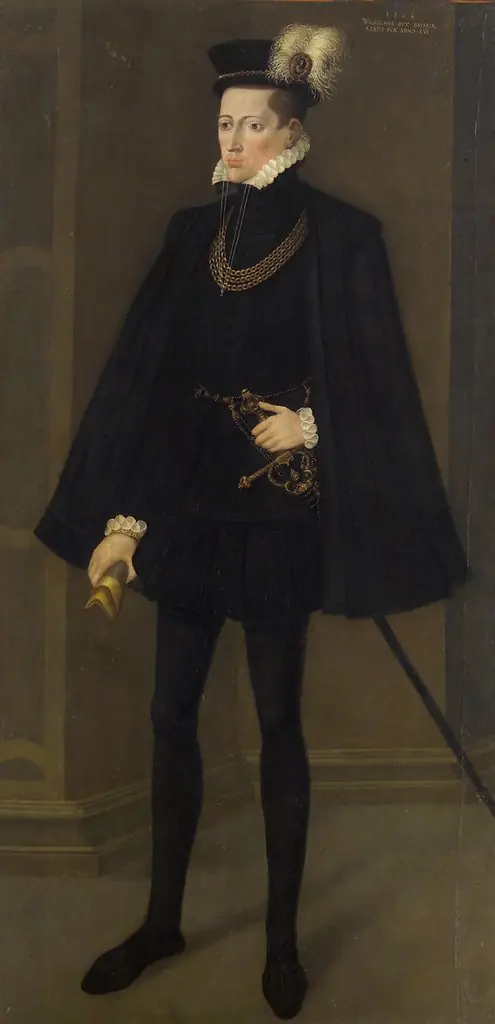 Herzog Wilhelm V. (1548-1626) von Bayern im Alter von 16 Jahren
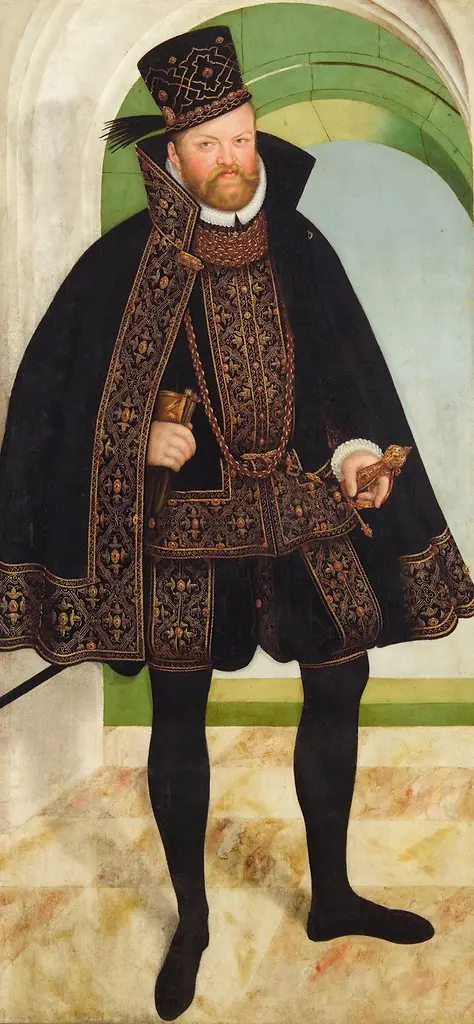 Augustus, Elector of Saxony (1526-1586)
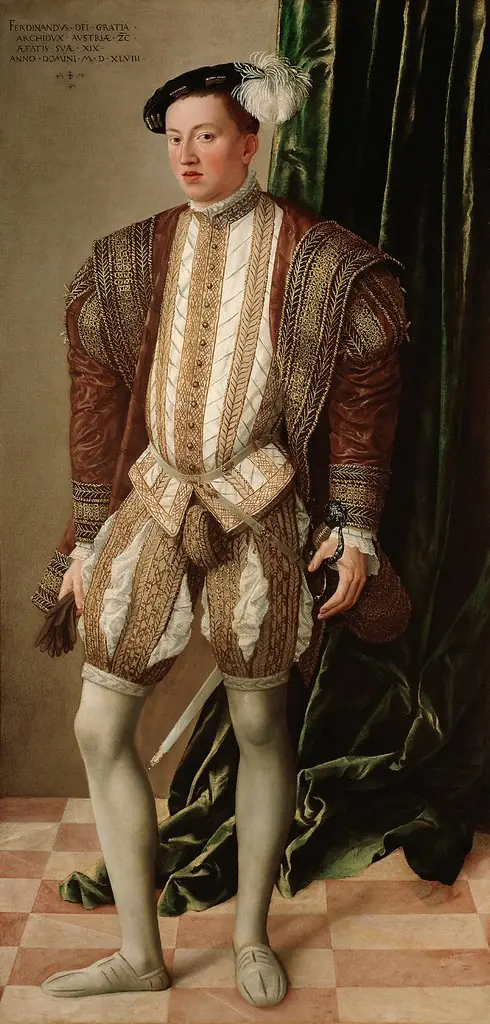 Erzherzog Ferdinand von Tirol (1529-1595)
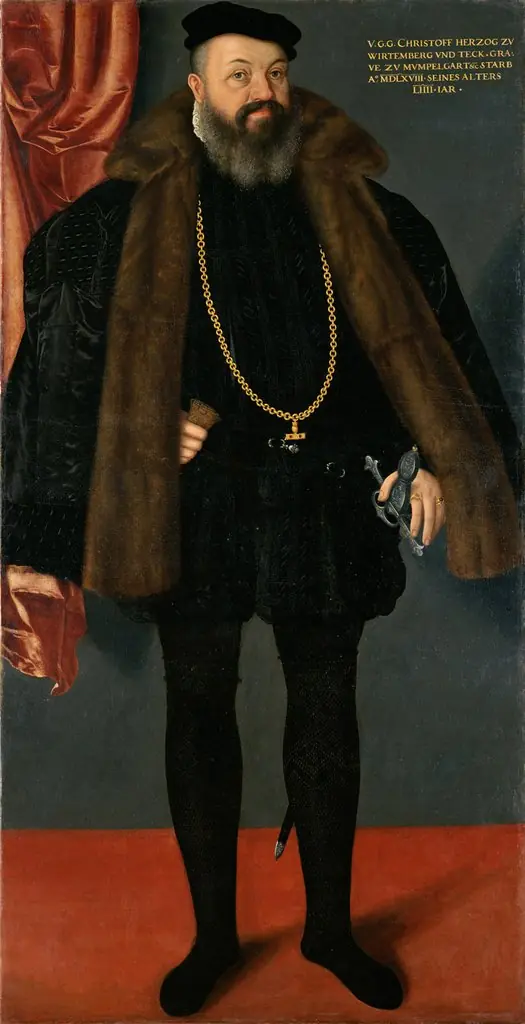 Portrait of Duke Christoph von Württemberg (1515-1568) in Spanish costume
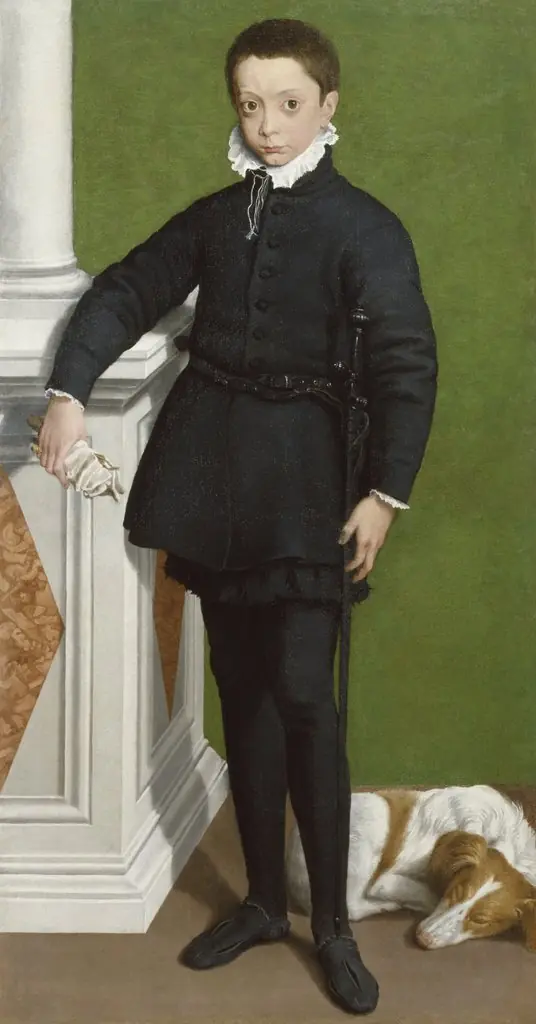 Portrait of Marquess Massimiliano Stampa
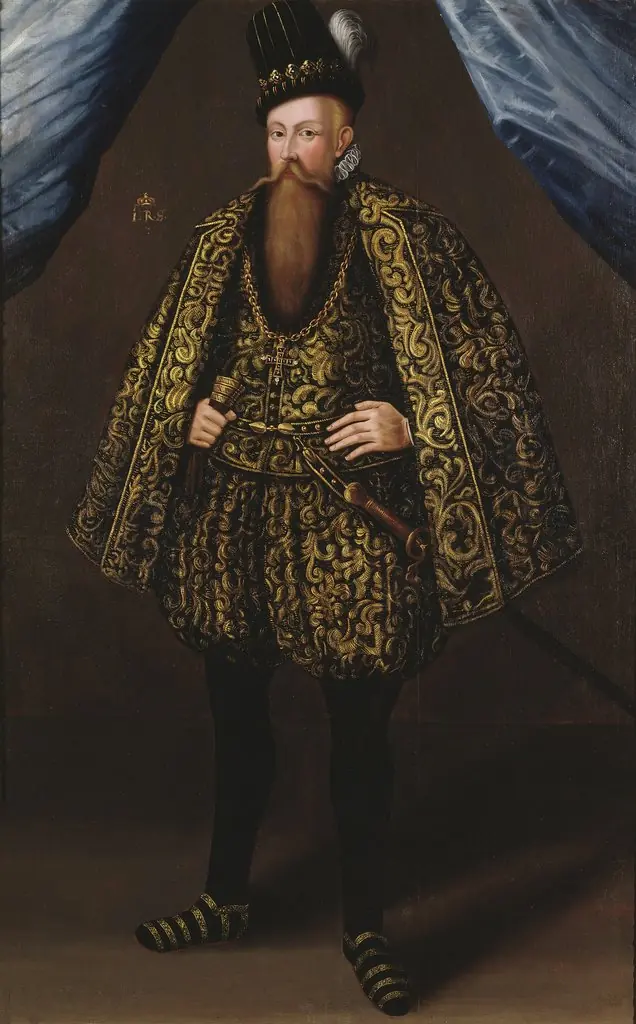 Johan III, 1537-92, konung av Sverige
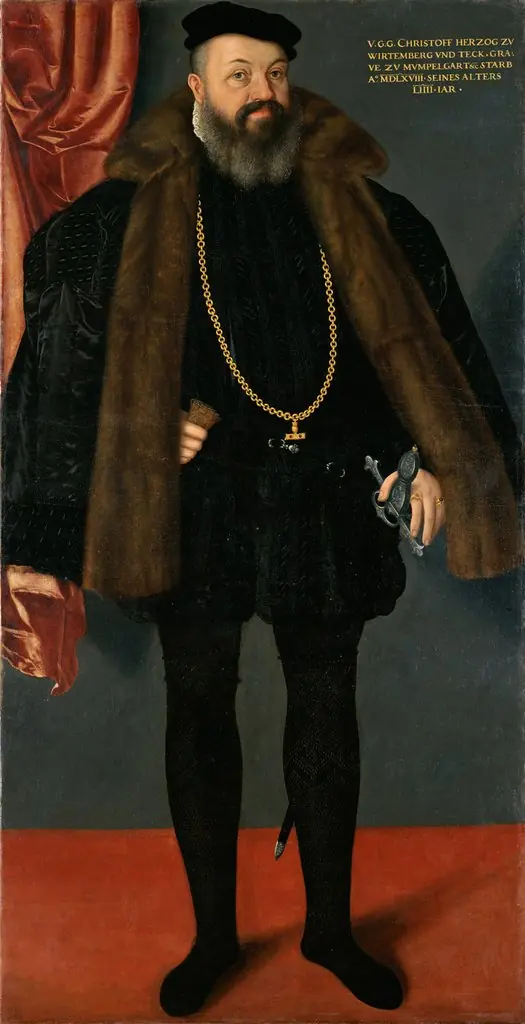 Herzog Christoph von Württemberg (1515-1568) in spanischer Tracht
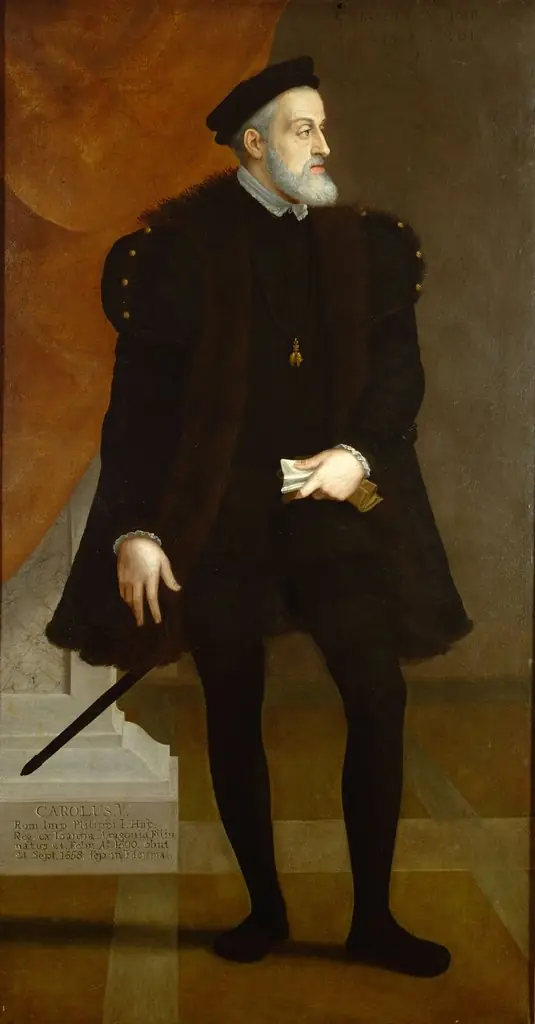 Kaiser Karl V. (1500-1558) als Fünfzigjähriger in ganzer Figur
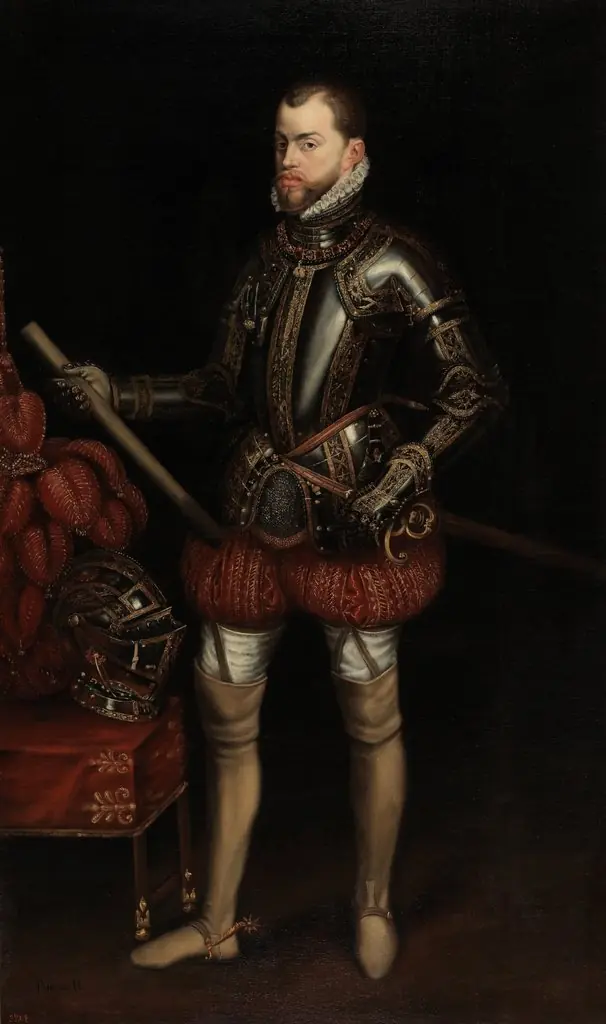 Philip II in St. Quentin's Armour
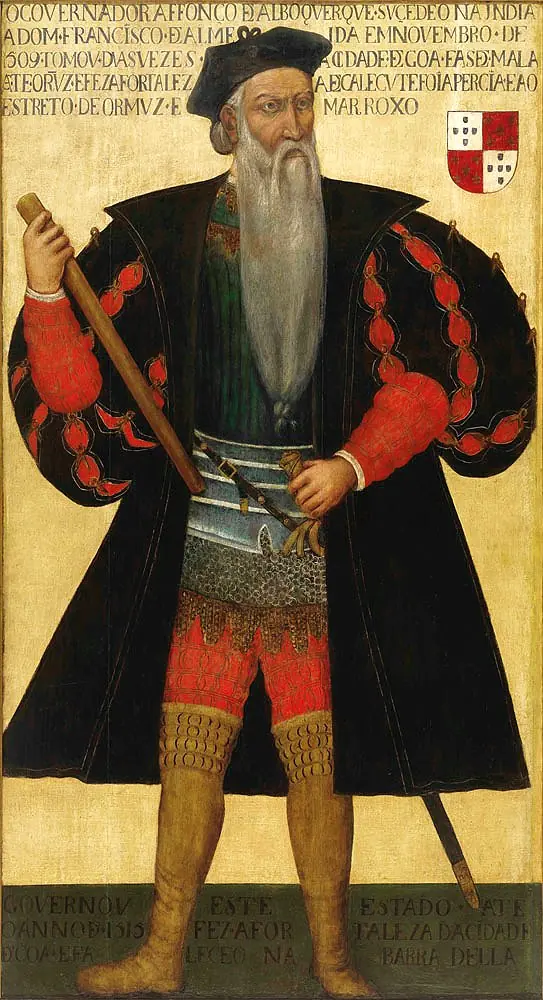 Portrait of Afonso de Albuquerque
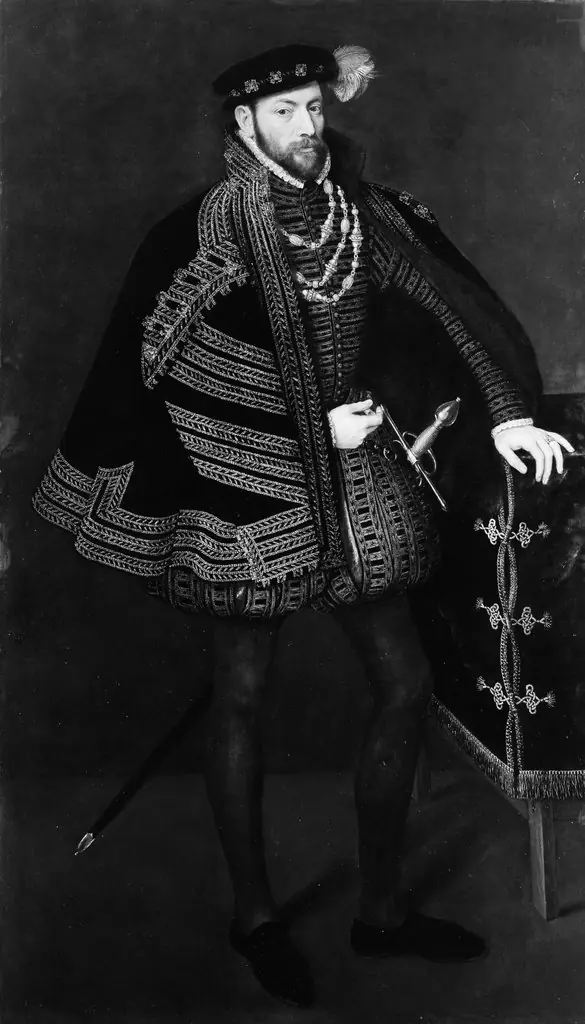 Portrait of a Man, Possibly Ottavio Farnese (1524–1586), Duke of Parma and Piacenza
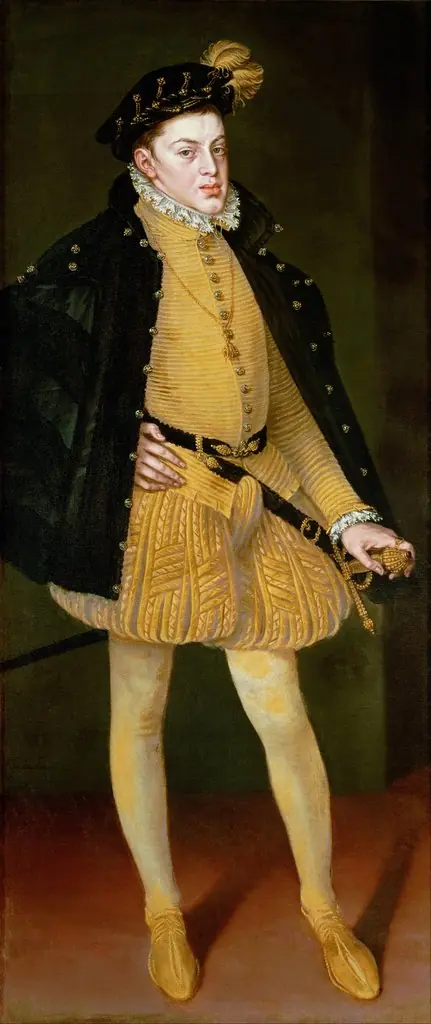 Infante Don Carlos (1545-1568)