Artwork
St. Andrew
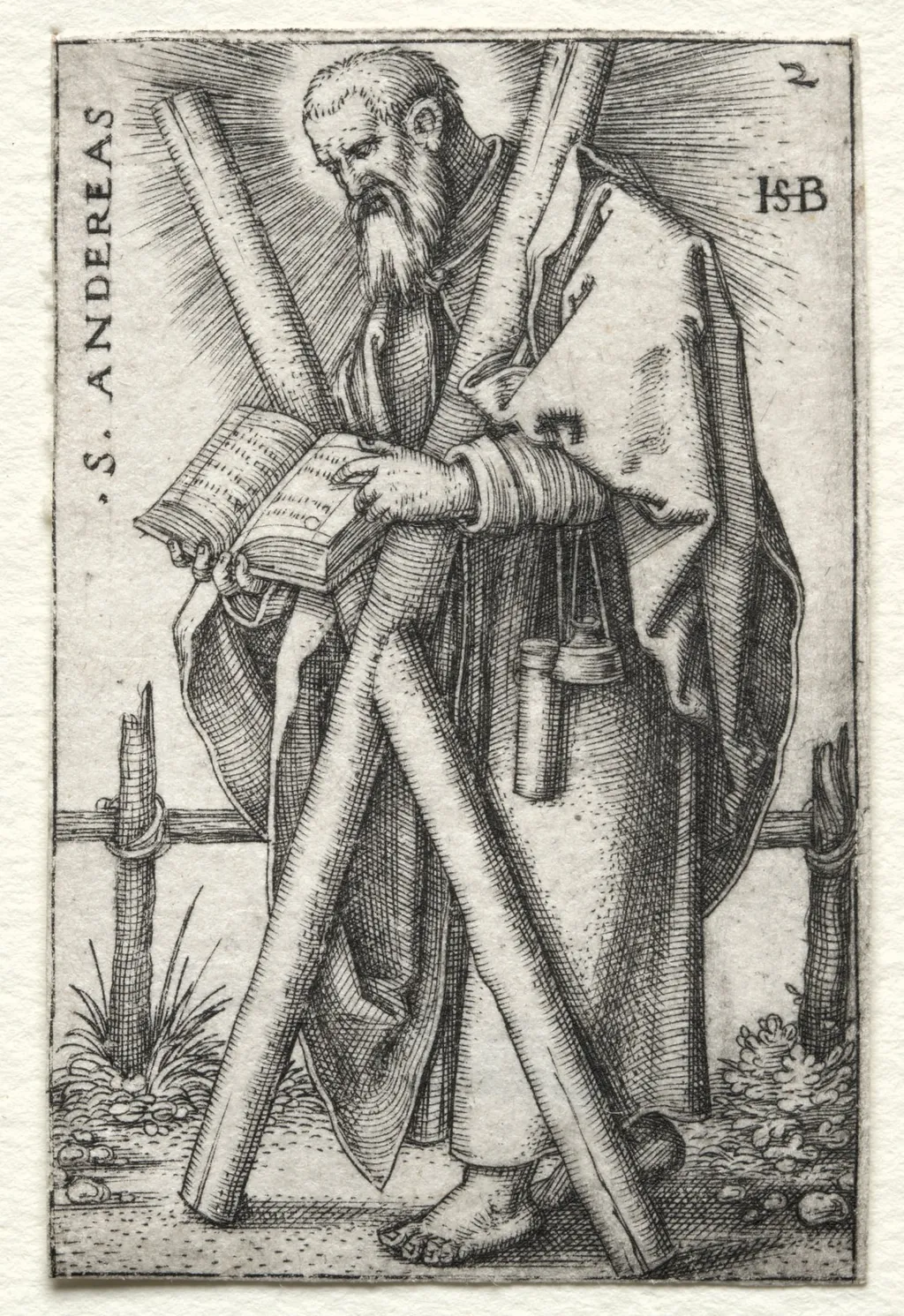
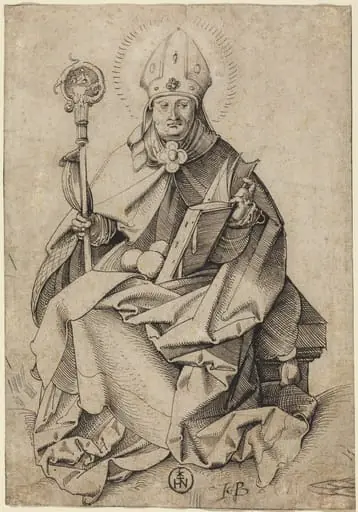
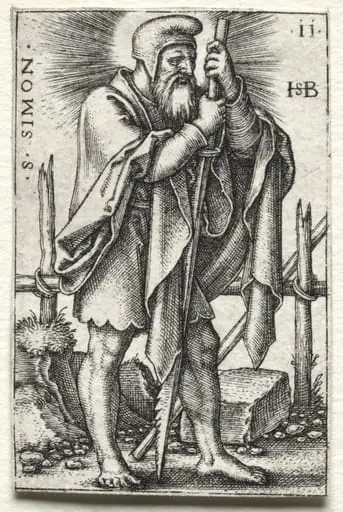
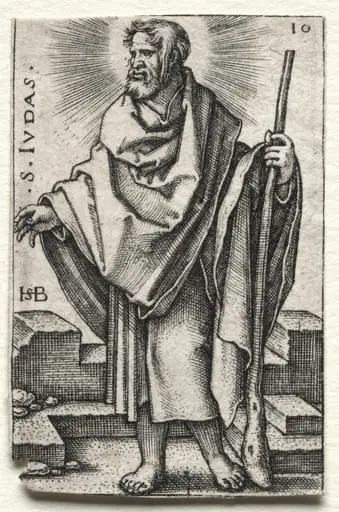
St. Andrew is a print by the Renaissance artist Sebald Beham. It dates from 1546 and is held in the collection of the Cleveland Museum of Art.
About this work
Overview
This work belongs to a vast body of over 250 engravings and thousands of woodcuts, all characterized by meticulous craftsmanship and intimate scale.
Created in 1546 by Hans Sebald Beham, *St. Andrew* is a small-scale engraving produced during the height of the German Little Masters movement. Beham, a Nuremberg-born artist active in Frankfurt, specialized in finely detailed prints that echoed the precision of Albrecht Dürer’s legacy. This work belongs to a vast body of over 250 engravings and thousands of woodcuts, all characterized by meticulous craftsmanship and intimate scale. The Cleveland Museum of Art currently holds this print.
Subject & Meaning
The print depicts Saint Andrew, one of Christ’s apostles, traditionally associated with the X-shaped cross on which he was martyred. Here, he is rendered in quiet contemplation, his posture and gaze suggesting introspection rather than dramatic martyrdom. The absence of overt violence or celestial intervention reflects a shift toward personal devotion in Protestant-influenced regions, where religious imagery favored humility over spectacle.
Technique & Style
Beham employed fine-line engraving to achieve subtle tonal gradations and delicate textures, particularly in the folds of Andrew’s robes and the rendering of his beard. The composition is tightly framed, emphasizing the figure’s stillness. Unlike the atmospheric blending of sfumato, Beham’s approach relies on controlled linear precision, a hallmark of the Little Masters’ aesthetic, which prioritized clarity and detail over painterly effects.
History & Provenance
The engraving was produced during a period of intense religious upheaval in the Holy Roman Empire, as Reformation ideals reshaped artistic patronage. Beham’s output, though prolific, was often circulated among educated urban elites rather than ecclesiastical institutions. The print entered the Cleveland Museum of Art’s collection through documented acquisitions in the 20th century, preserving its place in the canon of Northern Renaissance printmaking.
Context
In mid-16th century Germany, the decline of large-scale religious commissions led artists like Beham to focus on portable, collectible prints. These works catered to private devotion and scholarly interest, replacing altarpieces with intimate scenes. The quiet dignity of St. Andrew aligns with Protestant values that emphasized individual faith and moral reflection over ceremonial grandeur.
Legacy
Beham’s *St. Andrew* exemplifies the enduring influence of the Little Masters in sustaining printmaking as a respected art form after Dürer. His technical discipline and thematic restraint helped define a generation of Northern European engravers. Though less celebrated than his predecessors, his work remains a vital record of how religious imagery adapted to changing spiritual and cultural landscapes in early modern Europe.
Artist & collection
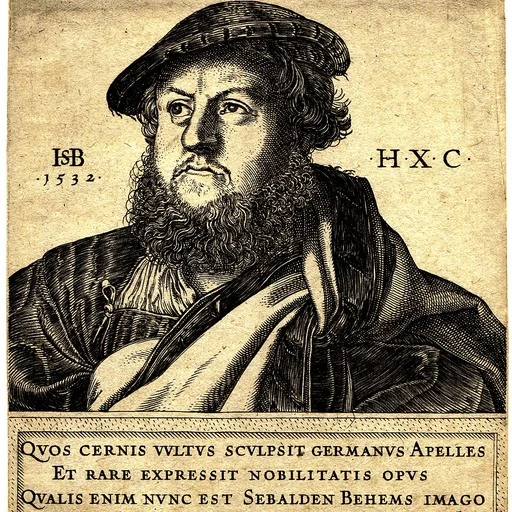
Artist
Sebald Beham (1500–1550) was a German painter and printmaker, mainly known for his very small engravings.