Artwork
The Village Wedding: Jacob Hewmon
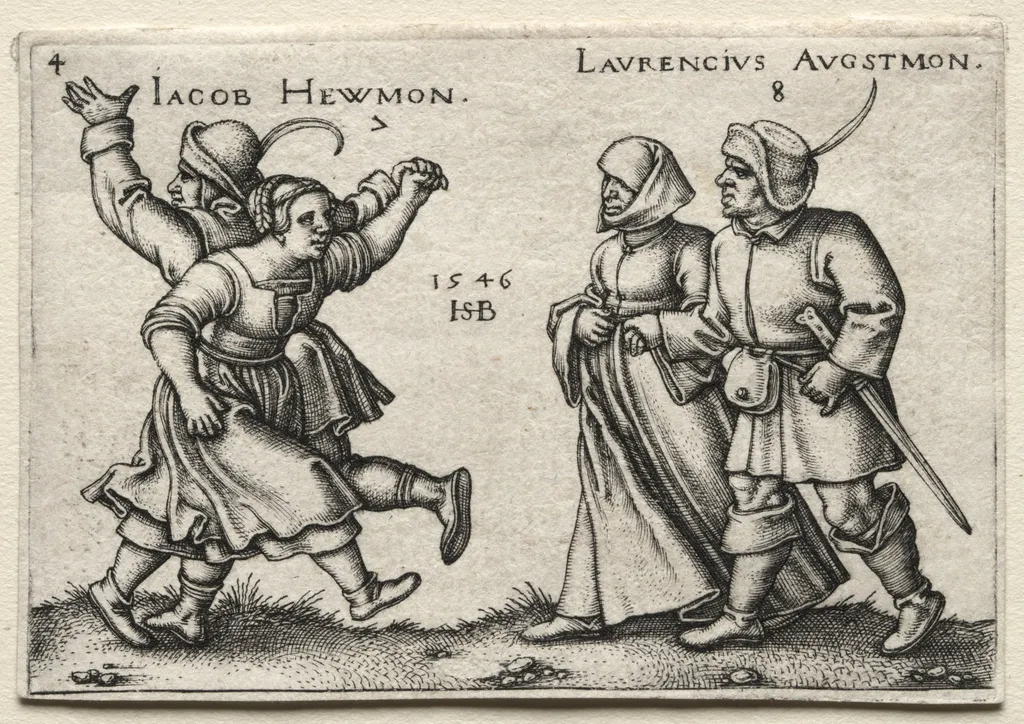
The Village Wedding: Jacob Hewmon is a print by the Renaissance artist Sebald Beham. It dates from 1546 and is held in the collection of the Cleveland Museum of Art.
About this work
The date 1546 is written in the corner, and the names *Jacob Hewmon* and *Lawrencius Augstmon* are mentioned—likely the people shown.
This engraving shows four people in an outdoor scene. Two men on the right wear long robes and point at something. One has a sword at his side. On the left, a man and woman are mid-motion, like they’re dancing or fighting. The woman’s hair is loose, and the man’s hat has a feather.
The woman’s raised arm and the men’s serious faces suggest trouble or drama. The date 1546 is written in the corner, and the names *Jacob Hewmon* and *Lawrencius Augstmon* are mentioned—likely the people shown.
Look up Hans Sebald Beham, the artist who made this.
Overview
Created in 1546 by Hans Sebald Beham, this small engraving captures a rural wedding scene marked by tension rather than festivity. Beham, a Nuremberg-born artist associated with the Little Masters, specialized in intricate prints that blended everyday life with subtle narrative complexity. The work bears the names Jacob Hewmon and Lawrencius Augstmon, suggesting it may depict specific individuals, possibly patrons or local figures, within a moment of social friction.
Subject & Meaning
The scene portrays a wedding gathering that has turned volatile. A man and woman on the left appear locked in motion—perhaps dancing, perhaps clashing—while two men on the right observe with stern expressions, one gesturing sharply. The woman’s loose hair and raised arm, contrasted with the men’s formal attire and swords, imply a rupture in social decorum. The inclusion of names hints at a real event, transforming the image from generic genre scene to a documented moment of communal discord.
Technique & Style
Beham employed fine, precise lines typical of the Little Masters’ engraving tradition, inheriting Dürer’s attention to detail. The composition is tightly framed, with figures arranged to guide the viewer’s eye across the unfolding drama. Delicate hatching defines fabric, hair, and terrain, while the absence of landscape depth focuses attention on interpersonal dynamics. The date and names are inscribed with care, reinforcing the work’s documentary intent amid its artistic refinement.
History & Provenance
The engraving was produced during Beham’s active years in Nuremberg and Frankfurt, a period when printmaking flourished as a medium for both artistic expression and social commentary. Though specific early ownership records are scarce, the inclusion of personal names suggests it may have been commissioned or circulated among local elites. Its survival reflects the broader 16th-century demand for small-format prints that captured contemporary life with narrative nuance.
Context
In mid-16th-century Germany, rural weddings were key social events governed by strict customs. Beham’s depiction diverges from idealized celebrations, instead highlighting potential conflict—perhaps over dowry, lineage, or honor. The presence of armed men and uncontrolled movement signals underlying tensions in peasant society, a theme echoed in other Northern Renaissance prints that viewed rural life with neither romanticism nor outright satire, but with quiet observation.
Legacy
Beham’s engraving stands as an early example of genre printmaking that prioritizes psychological realism over spectacle. While not widely reproduced in later centuries, it contributed to a tradition of observing ordinary life with unflinching detail. Its focus on individual identity within a communal setting influenced later Northern European artists who sought to portray social nuance through intimate, small-scale works.
Artist & collection
Artist
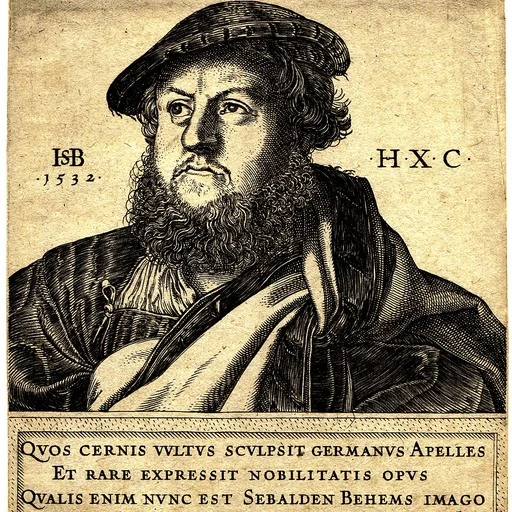
Sebald Beham (1500–1550) was a German painter and printmaker, mainly known for his very small engravings.

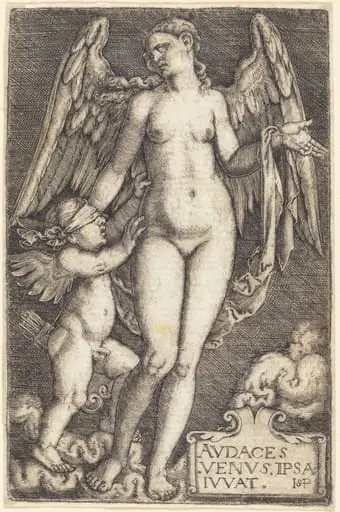
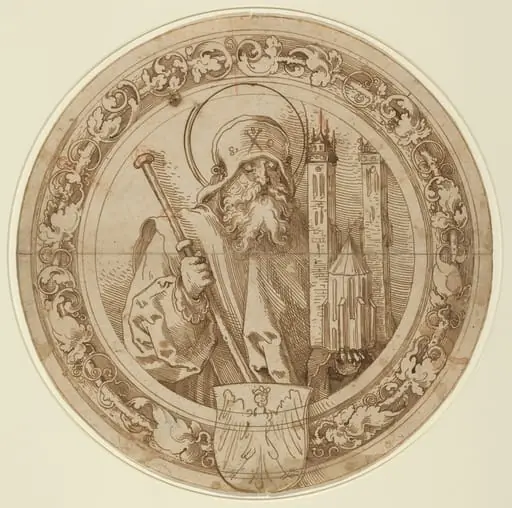

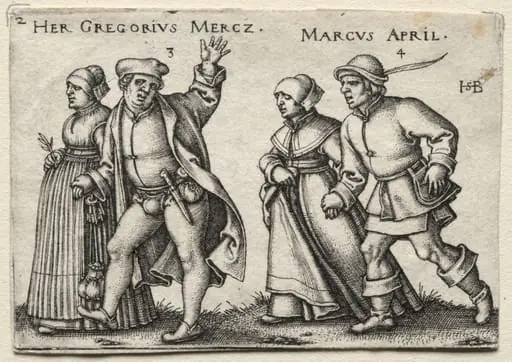 The Village Wedding: Her Gregorius Mercz
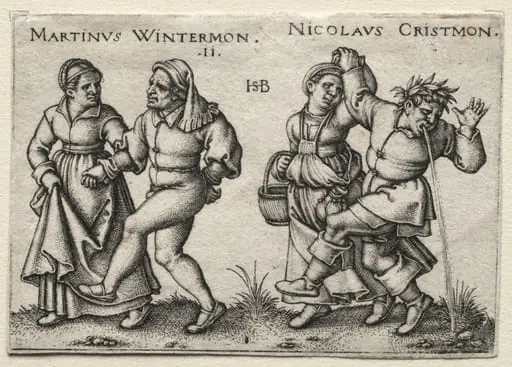 The Village Wedding: Martinus Wintermon
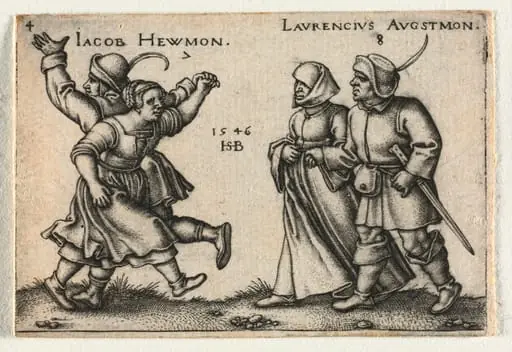 The Peasant Wedding or the Twelve Months: 7 Jacob Hewmon 8-Laurencius Augstmon
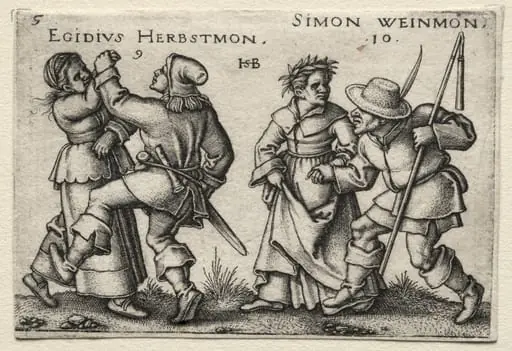 The Village Wedding: Egidius Herbstmon
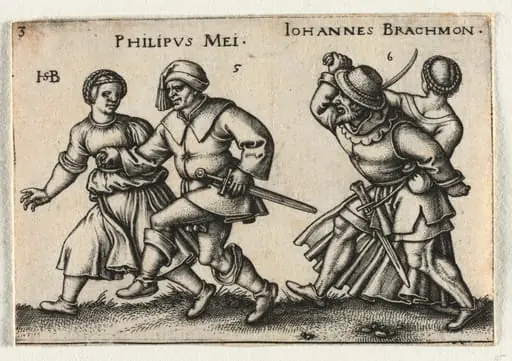 The Peasant Wedding or the Twelve Months: 5-Philipus Mei 6-Johannes Brachmon
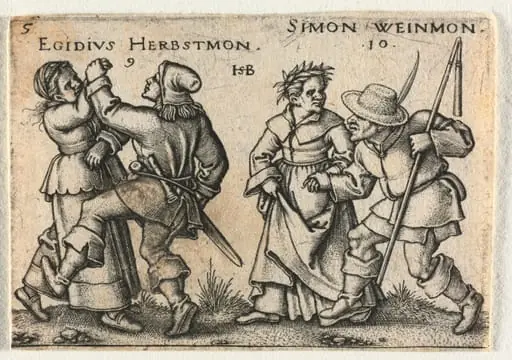 The Peasant Wedding or the Twelve Months: 9-Egidius Herbstmon 10-Simon Weinmon
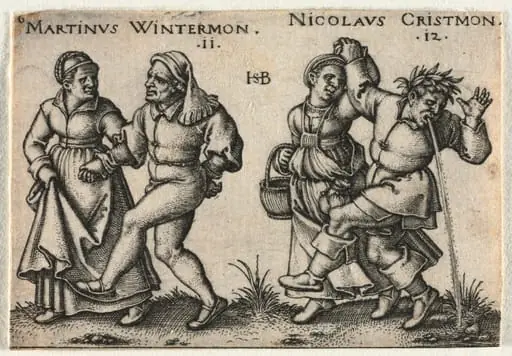 The Peasant Wedding or the Twelve Months: 11-Martinus Wintermon 12-Nicolaus Cristmon