Artwork
The Peasant Wedding or the Twelve Months: 7 Jacob Hewmon 8-Laurencius Augstmon
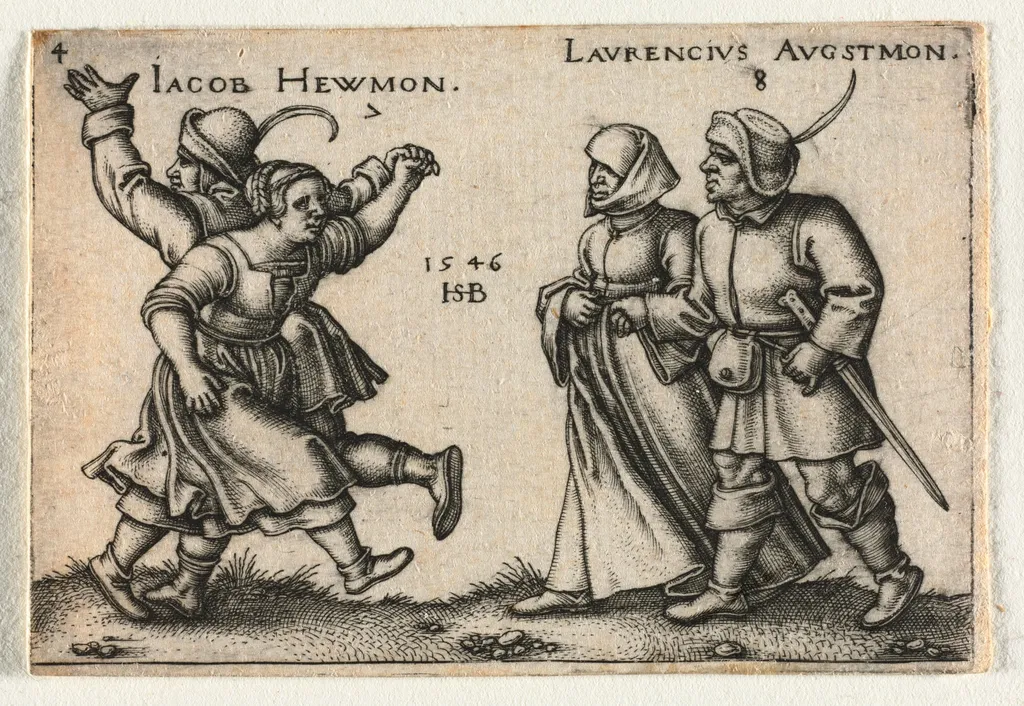
The Peasant Wedding or the Twelve Months: 7 Jacob Hewmon 8-Laurencius Augstmon is a print by the Renaissance artist Sebald Beham. It dates from 1546 and is held in the collection of the Cleveland Museum of Art.
About this work
The names *Jacob Hewmon* and *Laurencius Augstmon* are written above them, likely referencing a story or calendar series.
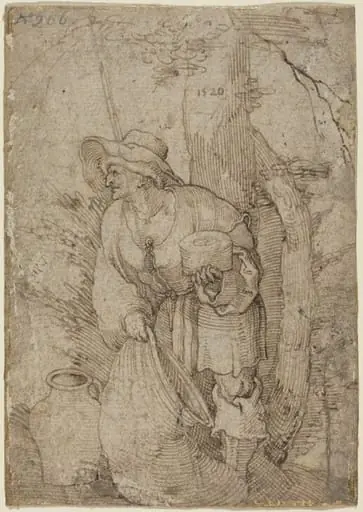
This etching shows three people in a rough, outdoor scene. One man is mid-stride, kicking up dirt, while another leans on a stick. The woman next to him holds a small bag. Their clothes look worn, and the ground is patchy with grass and rocks.
The names *Jacob Hewmon* and *Laurencius Augstmon* are written above them, likely referencing a story or calendar series. The year *1546* is stamped in the corner, showing this was made over 500 years ago.
Next, check out Hans Sebald Beham, the artist who made this sharp, detailed print.
Overview
Created in 1546 by Hans Sebald Beham, this etching is one of twelve prints illustrating the months of the year, each tied to seasonal rural activities. Part of a broader series, it captures a moment from a peasant wedding in a sparse, open landscape. Beham, a Nuremberg-based artist known for small, finely detailed engravings, produced this work with precision typical of the Little Masters. The print is now held in the Cleveland Museum of Art’s collection.
Subject & Meaning
The scene portrays three figures at a rural wedding: a man mid-step, another leaning on a staff, and a woman carrying a small bag. Their attire and posture suggest modest means, emphasizing the everyday nature of the event. The names Jacob Hewmon and Laurencius Augstmon inscribed above them likely reference figures from a folk calendar or local tradition, anchoring the image in a specific cultural narrative rather than a generic depiction.
Technique & Style
Beham employed fine-line etching to render texture and movement with remarkable clarity. The ground is suggested through sparse, uneven strokes, while clothing and gestures are defined with economical yet expressive lines. The composition avoids ornamentation, focusing on bodily posture and environmental detail. This restrained approach reflects the Little Masters’ preference for intimate scale and meticulous craftsmanship over grandeur.
History & Provenance
The print was made in 1546 during a period when Beham was prolific in producing small-format prints for a growing market of collectors. Though originally part of a thematic series on the months, individual plates were often circulated separately. The Cleveland Museum of Art acquired the work as part of its broader collection of Northern Renaissance prints, preserving its historical and artistic context.
Context
In mid-16th century Germany, depictions of peasant life gained traction among urban audiences fascinated by rural customs. Beham’s series aligned with a trend of calendar imagery that linked seasonal labor to moral or folkloric themes. Unlike religious or mythological subjects, these prints offered a secular, observational lens on common life, reflecting both curiosity and social hierarchy of the time.
Legacy
Beham’s *The Peasant Wedding* exemplifies the Little Masters’ contribution to print culture, demonstrating how small-scale works could convey narrative depth and social observation. While not widely known today, such prints influenced later genre scenes in Northern European art. Their survival in museum collections underscores their role as documents of everyday life in early modern Europe.
Artist & collection
Artist
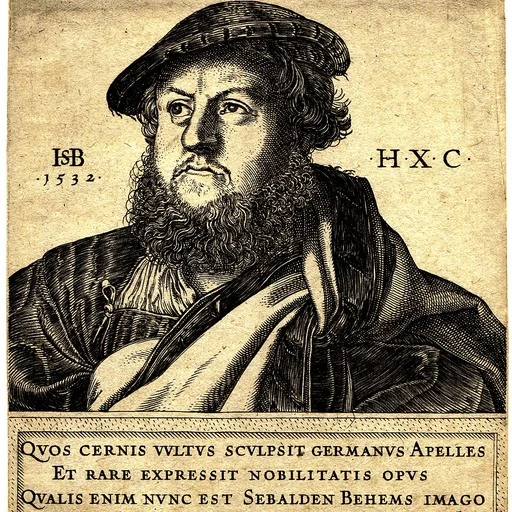
Sebald Beham (1500–1550) was a German painter and printmaker, mainly known for his very small engravings.


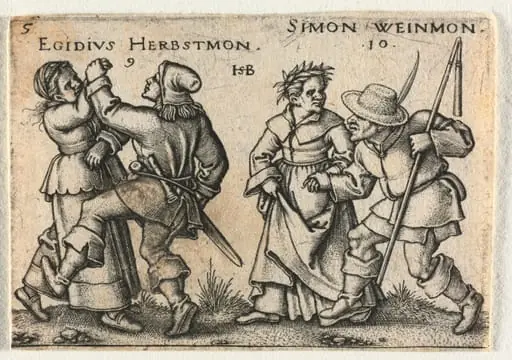 The Peasant Wedding or the Twelve Months: 9-Egidius Herbstmon 10-Simon Weinmon
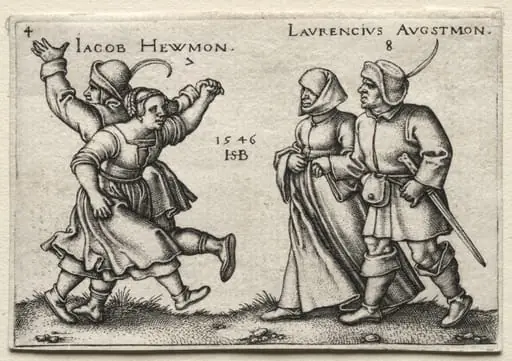 The Village Wedding: Jacob Hewmon
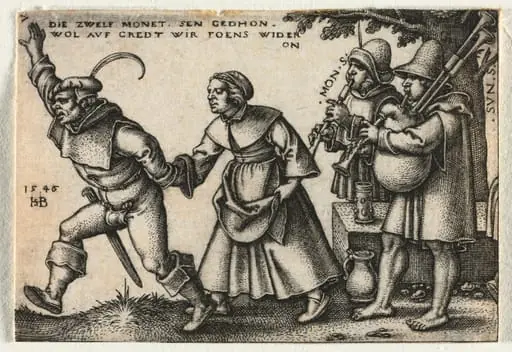 The Peasant Wedding or the Twelve Months: No. 7
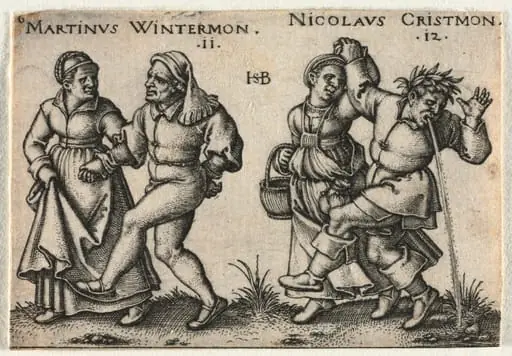 The Peasant Wedding or the Twelve Months: 11-Martinus Wintermon 12-Nicolaus Cristmon
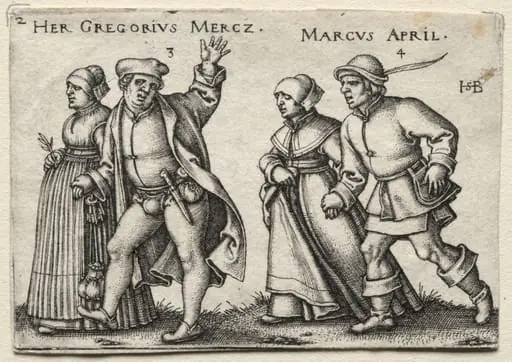 The Village Wedding: Her Gregorius Mercz
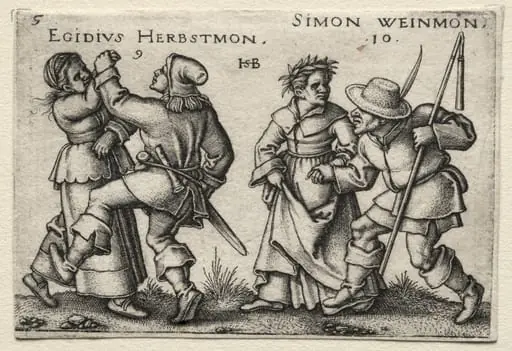 The Village Wedding: Egidius Herbstmon
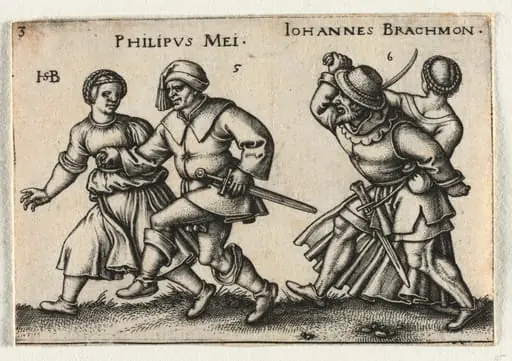 The Peasant Wedding or the Twelve Months: 5-Philipus Mei 6-Johannes Brachmon
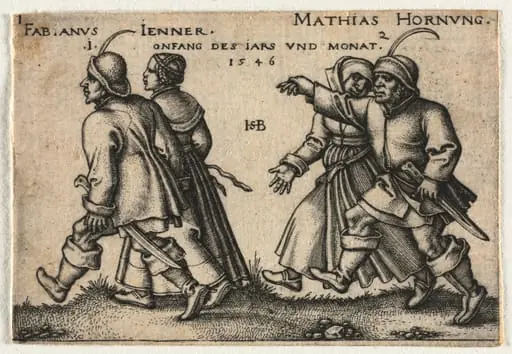 The Peasant Wedding or the Twelve Months
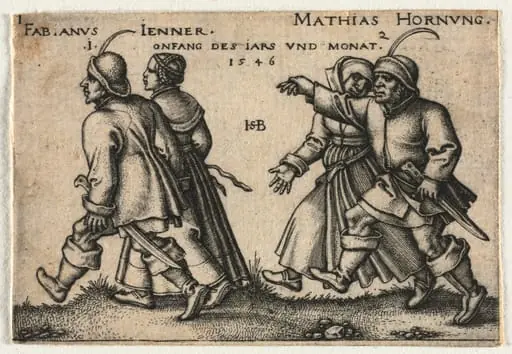 The Peasant Wedding or the Twelve Months: 1-Fabianus Jenner 2-Mathias Hornung
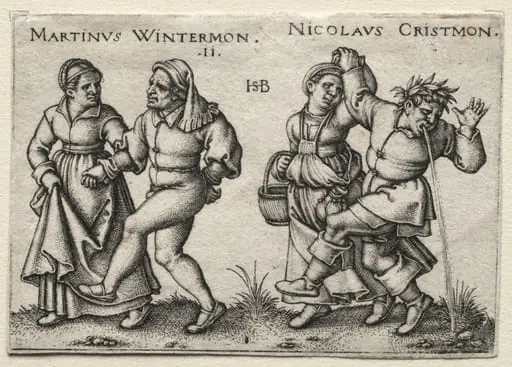 The Village Wedding: Martinus Wintermon
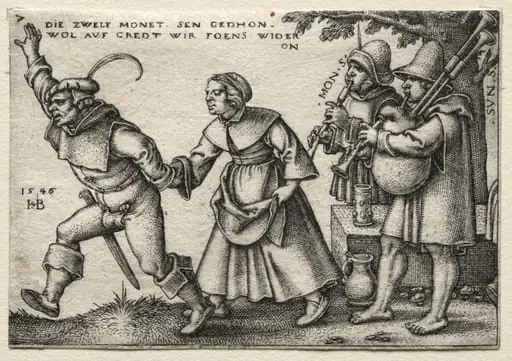 The Twelve Months: The Year's End