Artwork
The Village Wedding: Martinus Wintermon
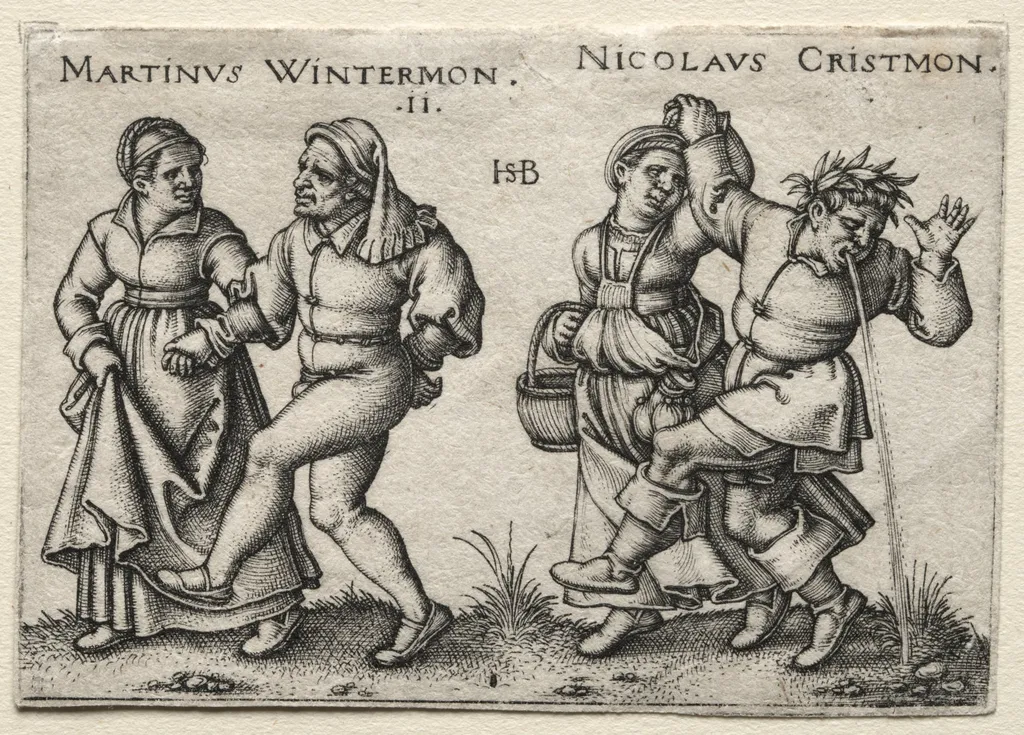
The Village Wedding: Martinus Wintermon is a print by the Renaissance artist Sebald Beham. It dates from 1546 and is held in the collection of the Cleveland Museum of Art.
About this work
Overview
The Village Wedding: Martinus Wintermon / Nicolaus Cristmon is a 1546 print by Hans Sebald Beham, a German artist known for intricate, small-scale engravings and woodcuts. This work exemplifies his detailed narrative style.
Subject & Meaning
The print portrays a rustic wedding scene with four figures engaged in lively interaction, identified by the names Martinus Wintermon and Nicolaus Cristmon at the top, likely representing the bridegroom and another key figure. The everyday, rural setting and simple attire of the characters reflect Beham's attention to common life.
Technique & Style
Executed in black and white, the print features sharp lines and strong contrasts, characteristic of Beham's graphic work. The composition captures dynamic movement and expressive gestures, highlighting his ability to convey narrative depth in a small format.
History & Provenance
Created in 1546, the print is part of the Cleveland Museum of Art's collection. As one of the 'Little Masters,' Beham's prolific output included book illustrations, with this piece showcasing his skill in engraving.
Context
This work fits within the broader context of Renaissance art, where detailed, narrative prints were popular. Beham's style, while rooted in the German Renaissance, contributed to the era's visual storytelling traditions.
Legacy
As a representative of Beham's oeuvre, The Village Wedding contributes to the historical understanding of 16th-century German graphic arts and the 'Little Masters' movement, influencing subsequent generations of printmakers with its narrative complexity and technical precision.
Artist & collection
Artist
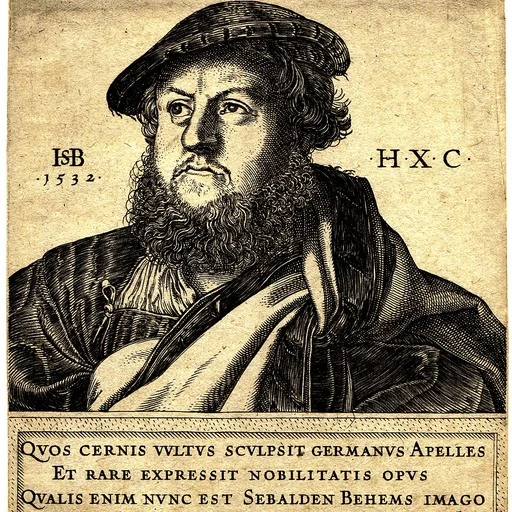
Sebald Beham (1500–1550) was a German painter and printmaker, mainly known for his very small engravings.


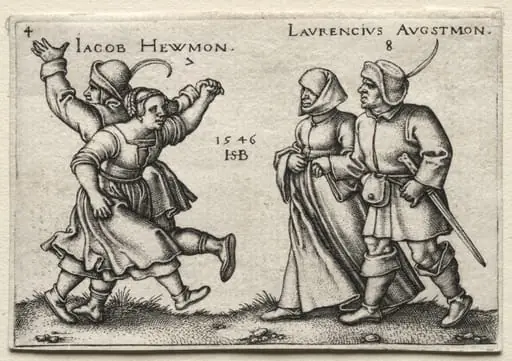 The Village Wedding: Jacob Hewmon
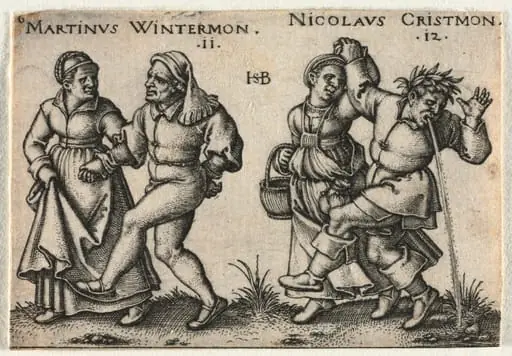 The Peasant Wedding or the Twelve Months: 11-Martinus Wintermon 12-Nicolaus Cristmon
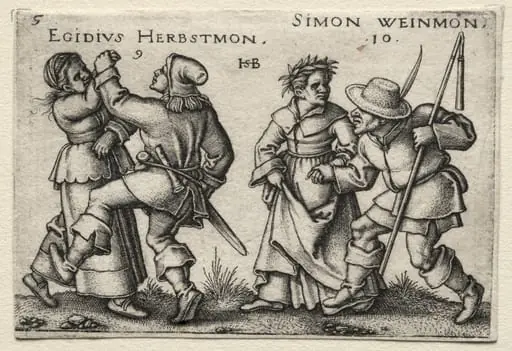 The Village Wedding: Egidius Herbstmon
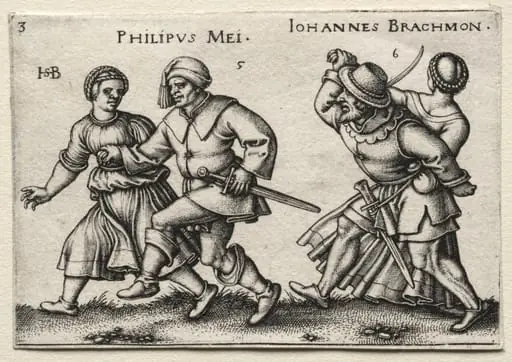 The Village Wedding: Philipus Mei
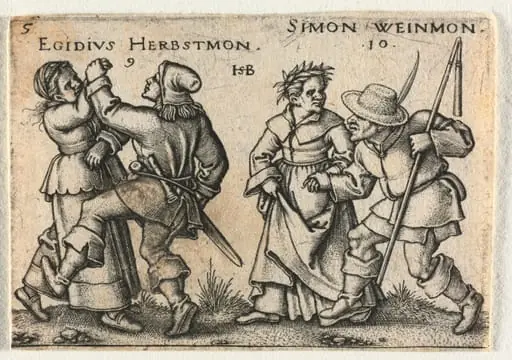 The Peasant Wedding or the Twelve Months: 9-Egidius Herbstmon 10-Simon Weinmon
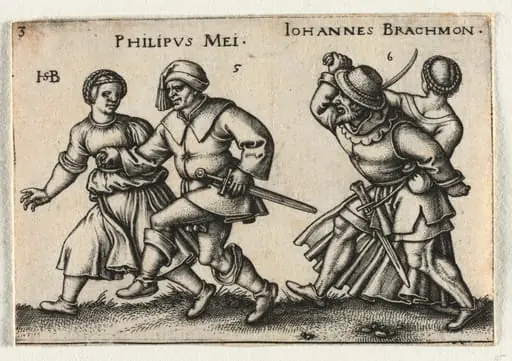 The Peasant Wedding or the Twelve Months: 5-Philipus Mei 6-Johannes Brachmon
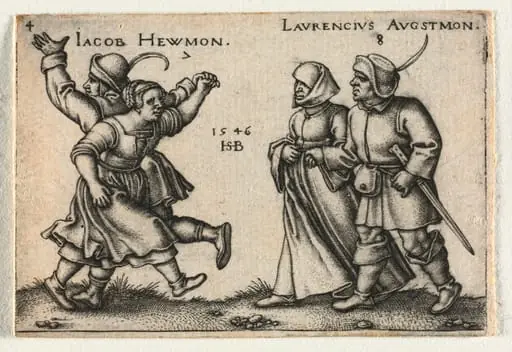 The Peasant Wedding or the Twelve Months: 7 Jacob Hewmon 8-Laurencius Augstmon
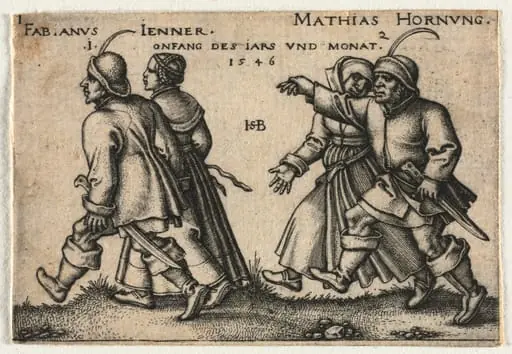 The Peasant Wedding or the Twelve Months: 1-Fabianus Jenner 2-Mathias Hornung