Artwork
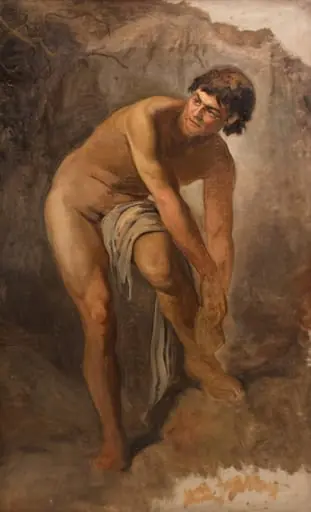
Ung italiensk mandsfigur i klippelandskab
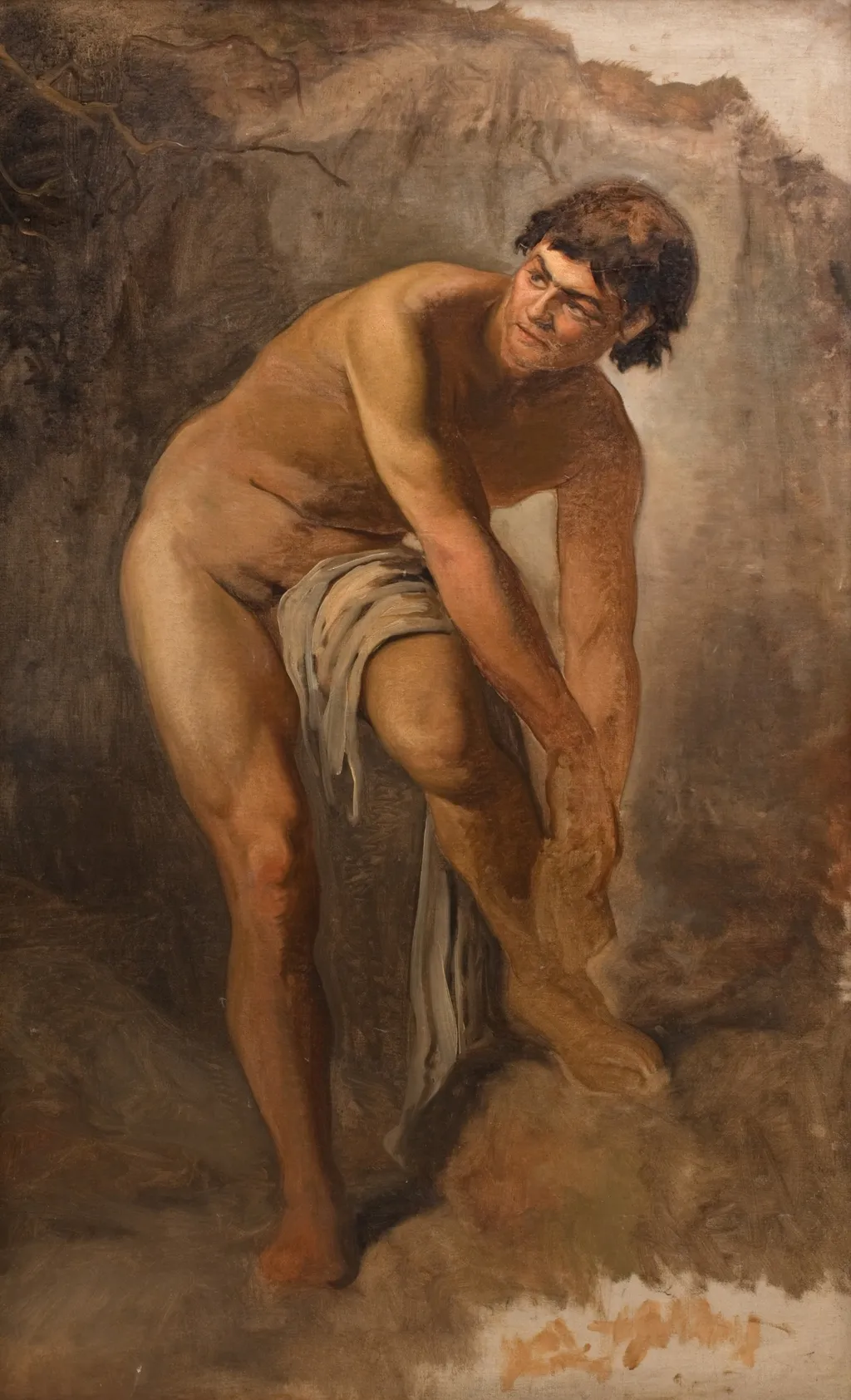
Ung italiensk mandsfigur i klippelandskab is an oil painting by the Realist artist Ludvig Abelin Schou. It dates from 1866 and is held in the collection of the Statens Museum for Kunst.
About this work
Overview
Though trained in Denmark, Schou’s exposure to Mediterranean landscapes and figures shaped this piece, completed shortly before his death in Florence.
Ludvig Abelin Schou’s 1866 oil painting portrays a solitary young Italian man in a rugged natural setting. Executed during his time in Italy, the work reflects Schou’s engagement with classical themes and observed reality. Though trained in Denmark, Schou’s exposure to Mediterranean landscapes and figures shaped this piece, completed shortly before his death in Florence. The painting remains part of the Statens Museum for Kunst’s permanent collection.
Subject & Meaning
The figure is a nude male, draped only in a cloth around his waist, standing in a contemplative pose with one leg bent and his gaze lowered toward his foot. His posture suggests introspection rather than action, evoking a quiet moment of stillness. The absence of narrative context invites interpretation as a meditation on solitude, the human form in nature, or the artist’s own sense of displacement while abroad.
Technique & Style
Schou employs a restrained Realist approach, using warm, earthy tones to model the figure with subtle chiaroscuro that enhances three-dimensionality. The background is rendered with looser, more expressive brushwork, suggesting rock formations and sparse vegetation without detailed precision. The contrast between the carefully modeled figure and the atmospheric landscape underscores a tension between human presence and the enduring natural world.
History & Provenance
Created in 1866 during Schou’s extended stay in Italy, the painting was made in the final year of his life. He died in Florence the following year, leaving behind a body of work shaped by his travels. The painting entered the collection of Statens Museum for Kunst in Denmark, where it has remained since, representing Schou’s contribution to Danish art beyond its national borders.
Context
Schou worked amid a broader European trend of artists traveling to Italy to study classical antiquity and natural light. While often associated with Romanticism, this painting leans toward Realism, reflecting a shift in 19th-century Danish art toward direct observation. His focus on an ordinary, unidealized male figure aligns with contemporary interest in the human form outside mythological or historical frameworks.
Legacy
Though not widely exhibited outside Denmark, the painting stands as a quiet example of Nordic artists engaging with Mediterranean subjects during the 1860s. It captures Schou’s personal artistic evolution and the cross-cultural dialogue between Northern European training and Southern European environments. Its preservation in a national collection ensures its role as a document of artistic exchange in the late 19th century.
Own this work as a print
Artist & collection
Artist
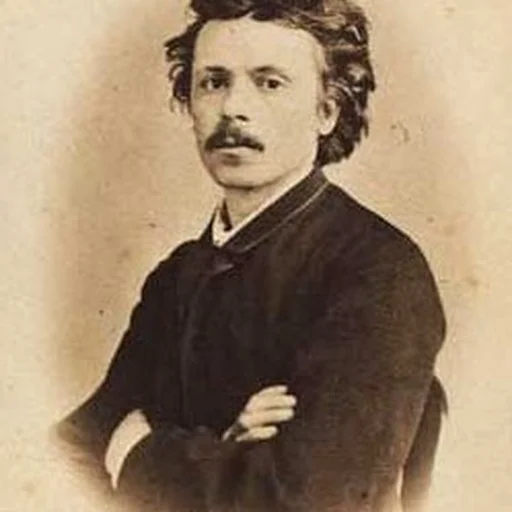
Ludvig Abelin Schou, known as L.A. Schou (11 January 1838, in Slagelse – 30 September 1867, in Florence), was a Danish Romantic painter, the older brother of Peter Alfred Schou.

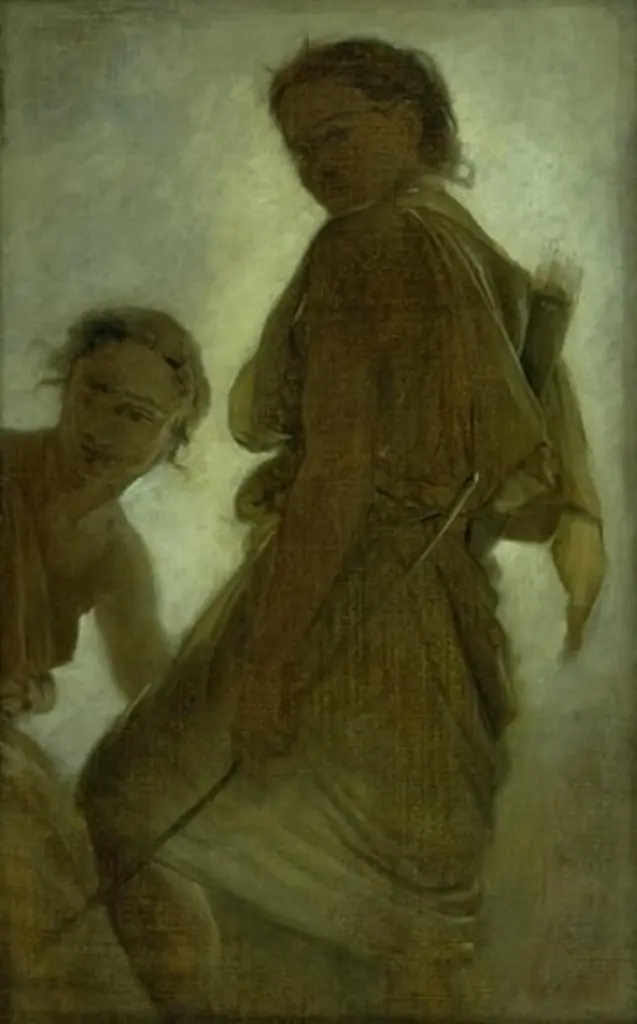 Diana with one of her Nymphs
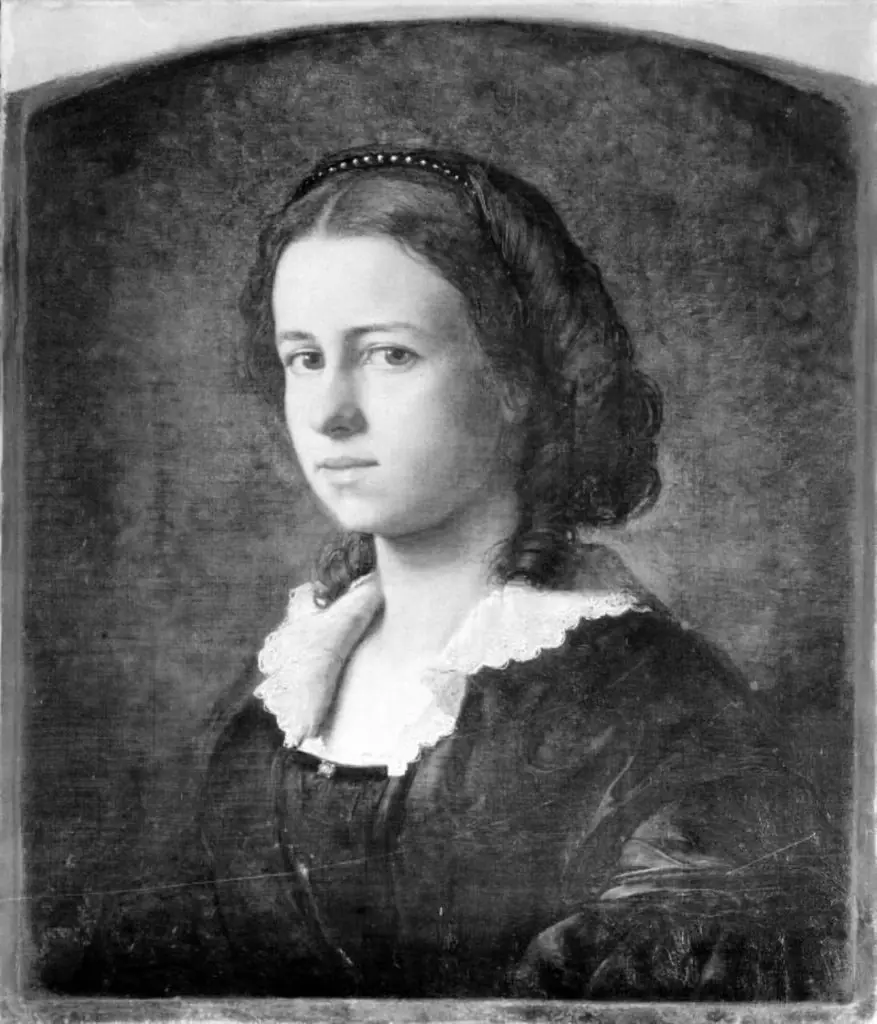 Melanie Becker, f. Wolff
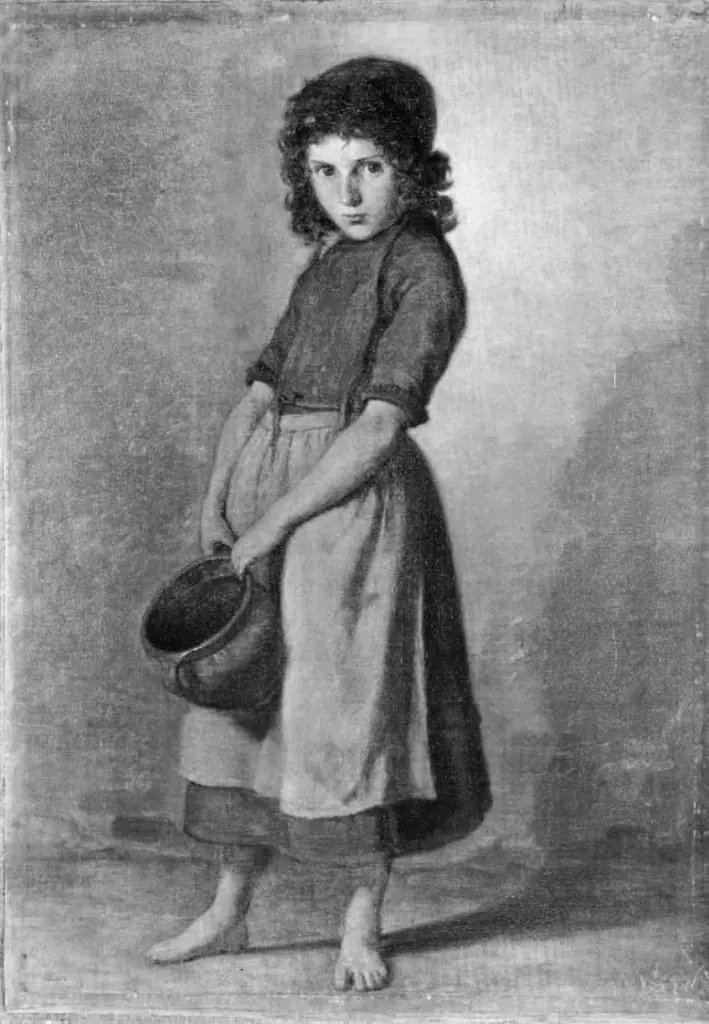 En lille pige med en krukke
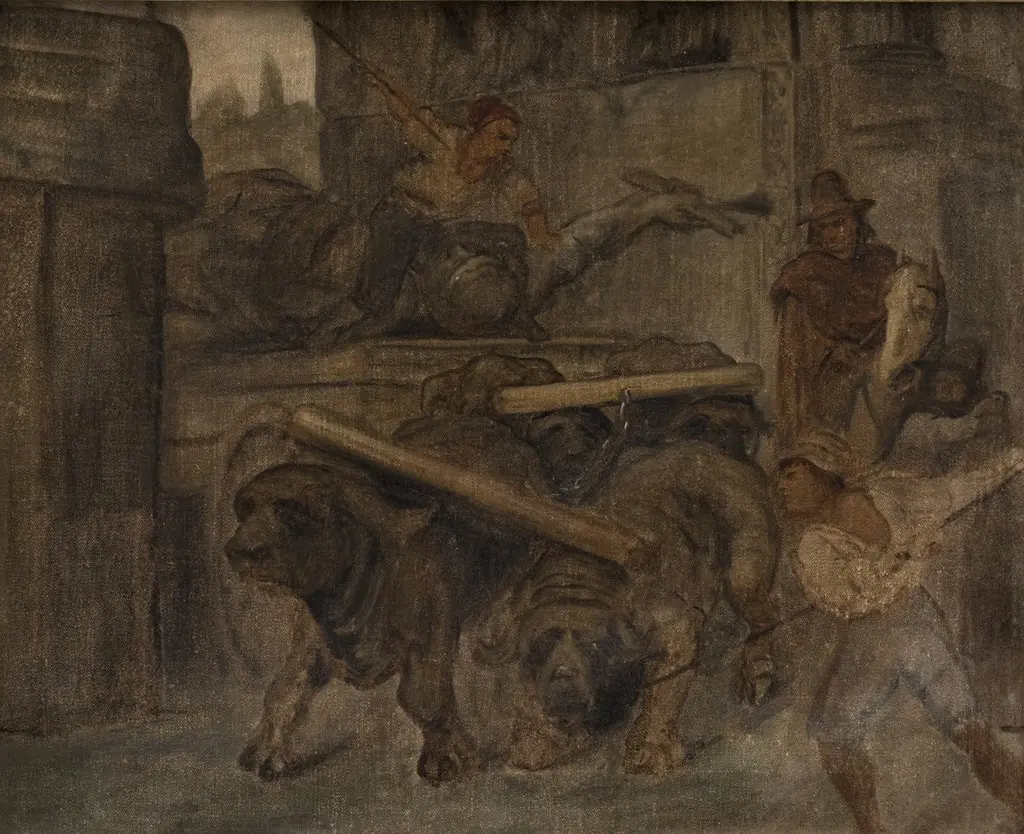 Roman Workmen Transporting an Antique Imperial Statue from the Colosseum through the Arch of Titus to the Capitoline Museums. Study
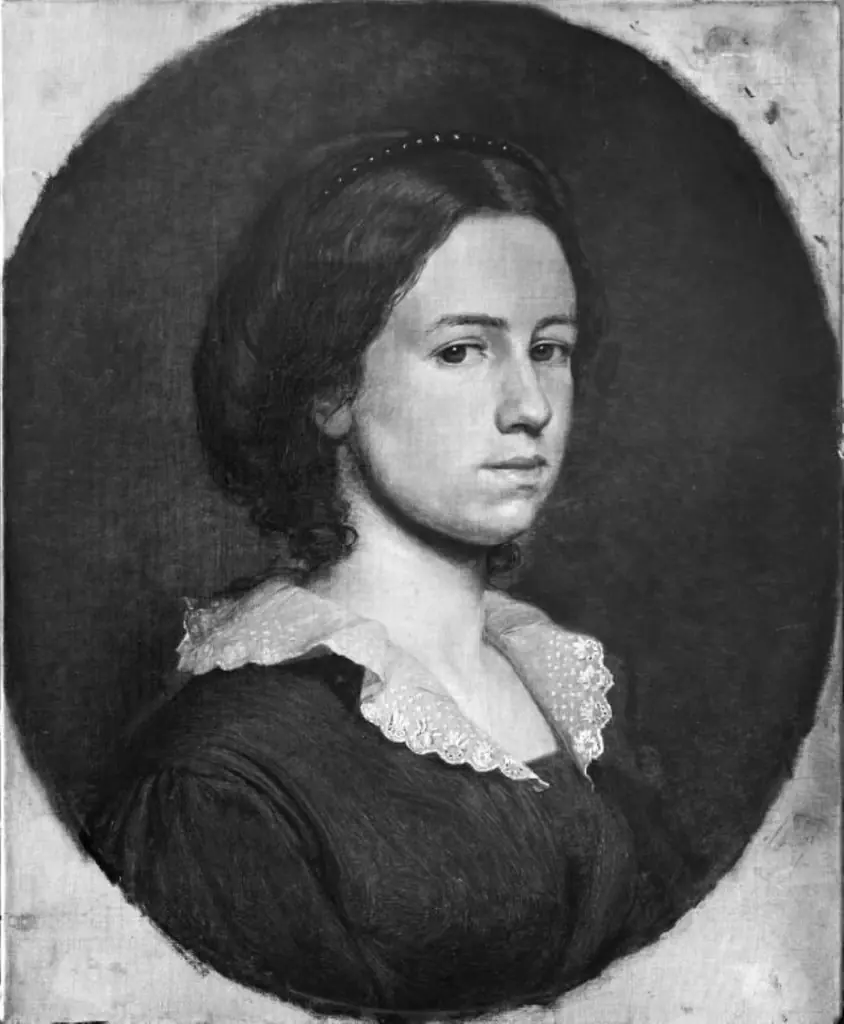 Melanie Becker, f. Wolff
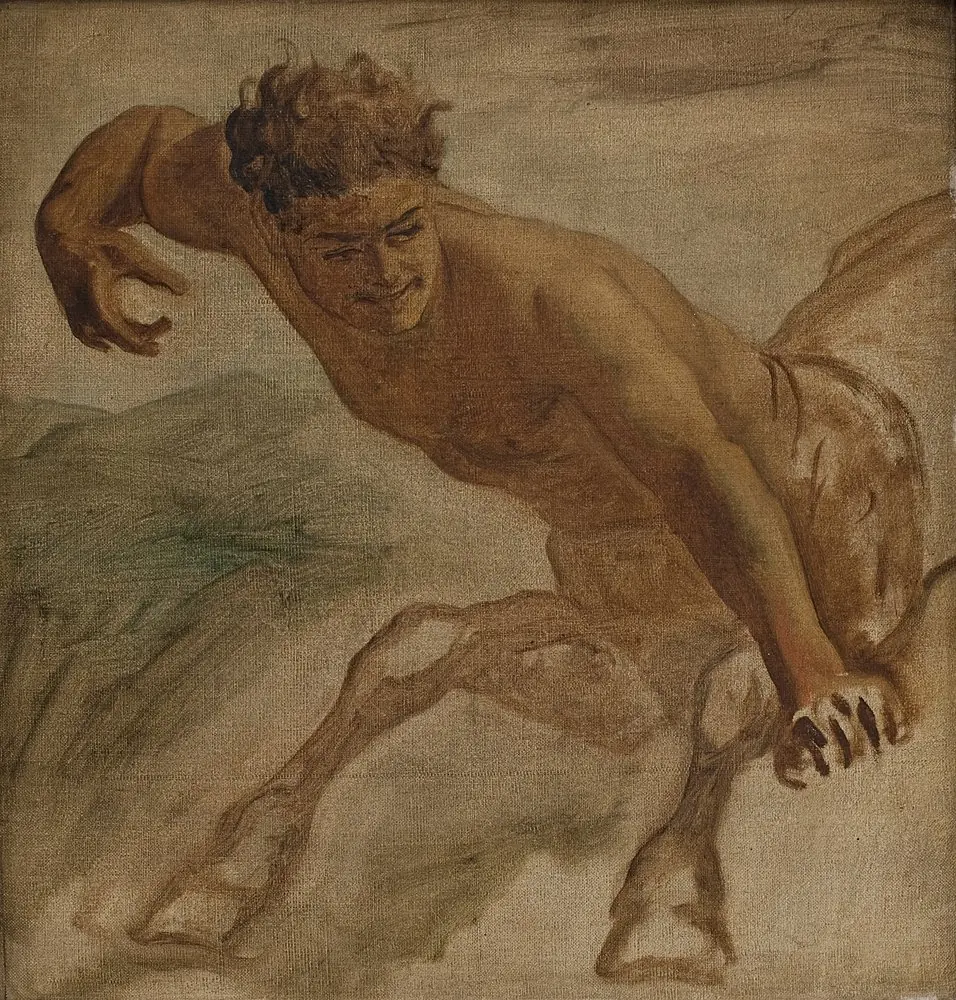 Centaur
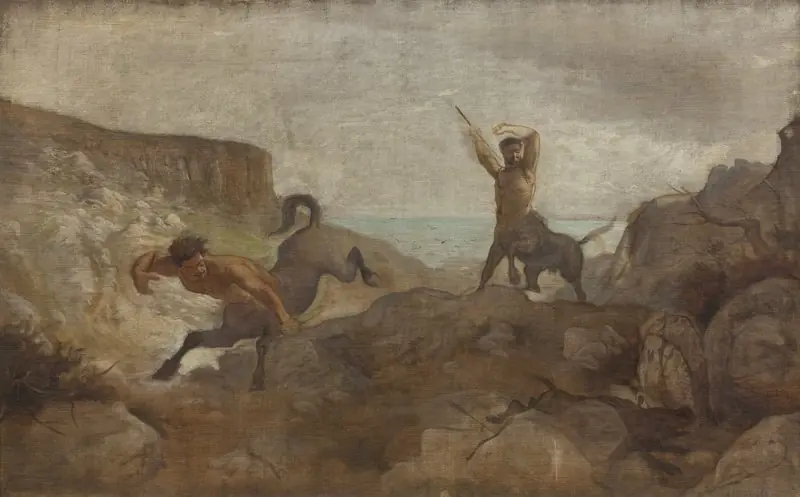 Centaurs Hunting Boars
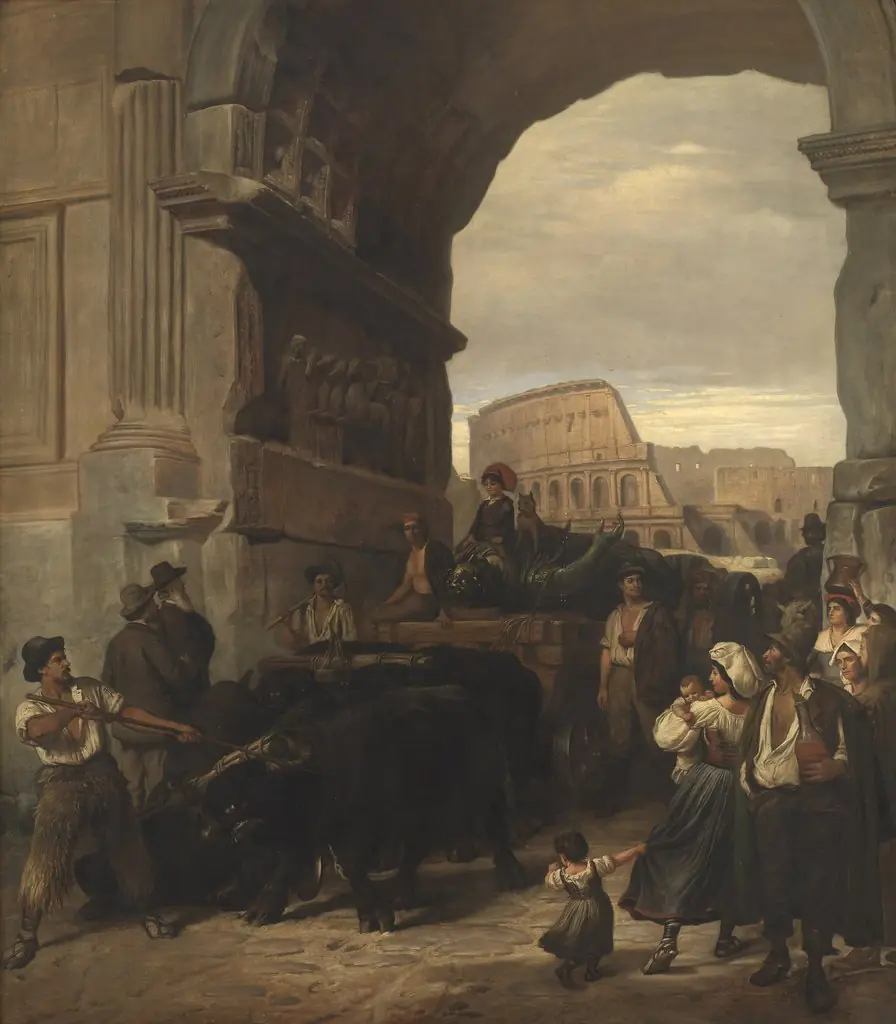 Roman Workmen Transporting an Antique Imperial Statue from the Colosseum through the Arch of Titus to the Capitoline Museums
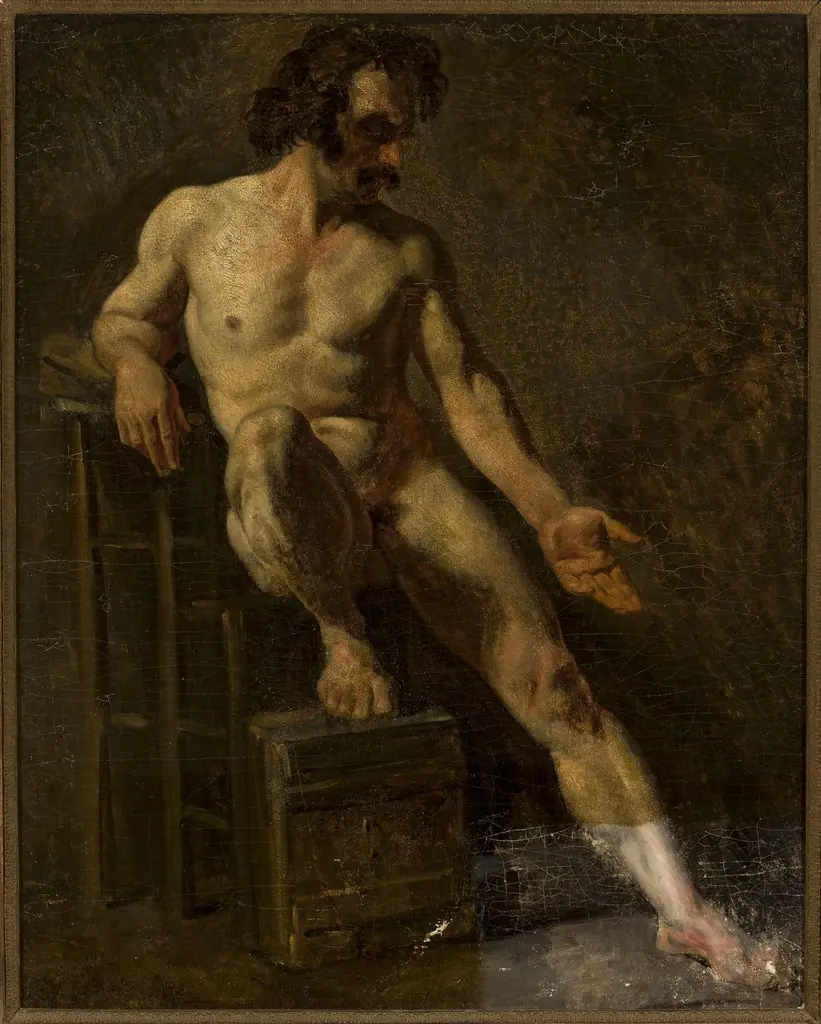 Study of a nude man
 Male Nude on Steps
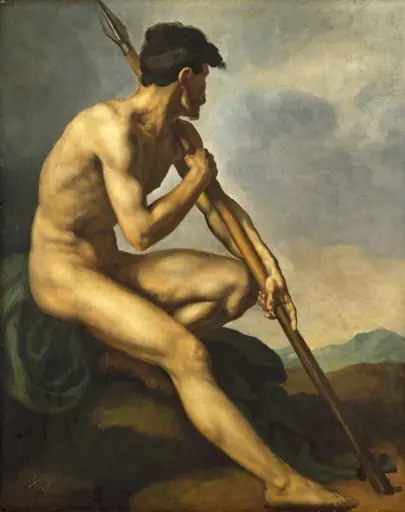 Nude Warrior with a Spear
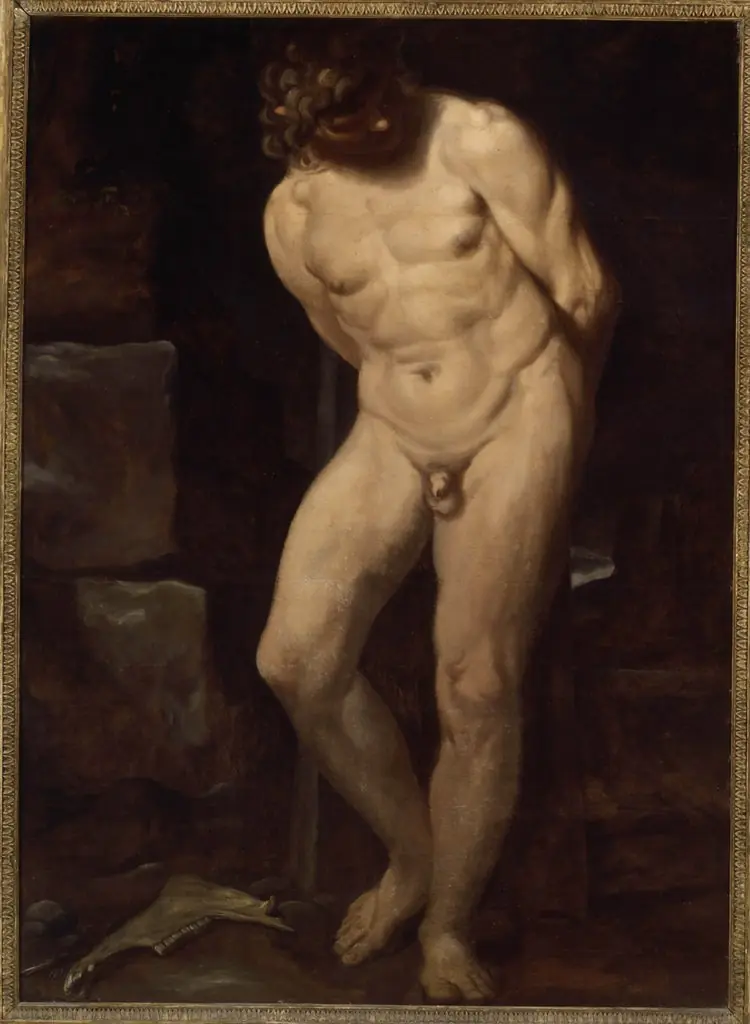 Samson in Chains
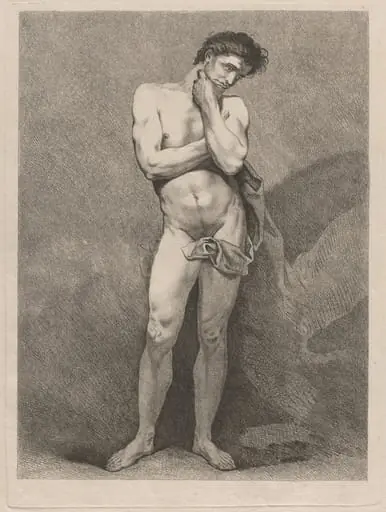 Standing Man in Pensive Pose
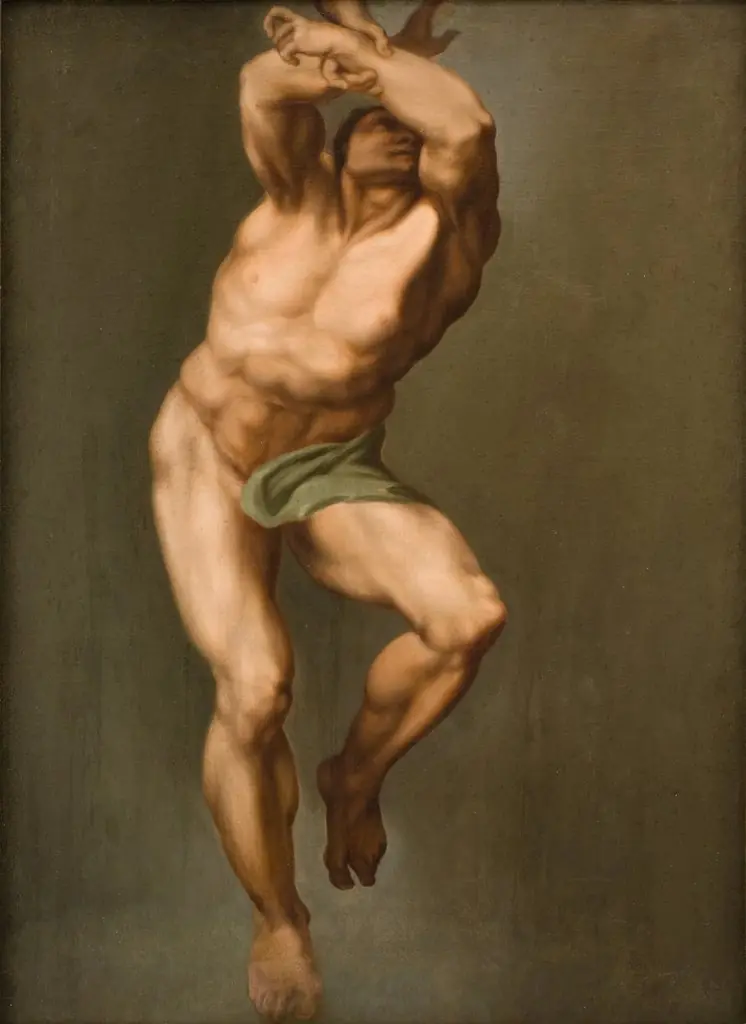 Male Figure. After Michelangelo's "Last Judgement" in the Sistine Chapel
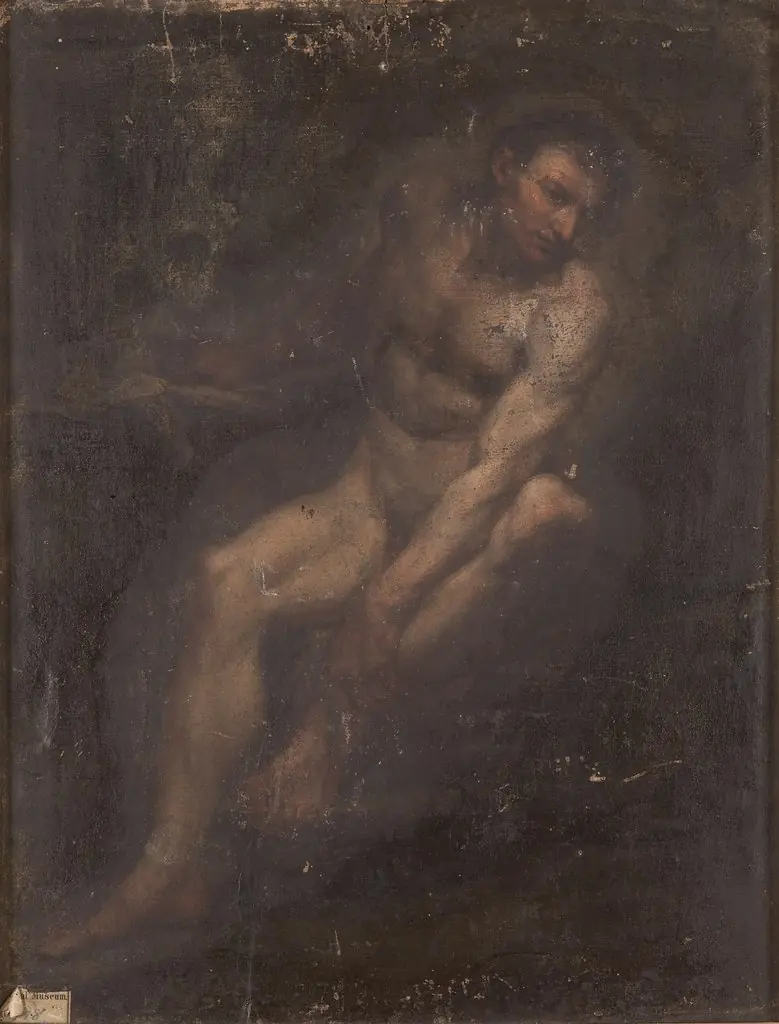 Figurstudie av sittande man
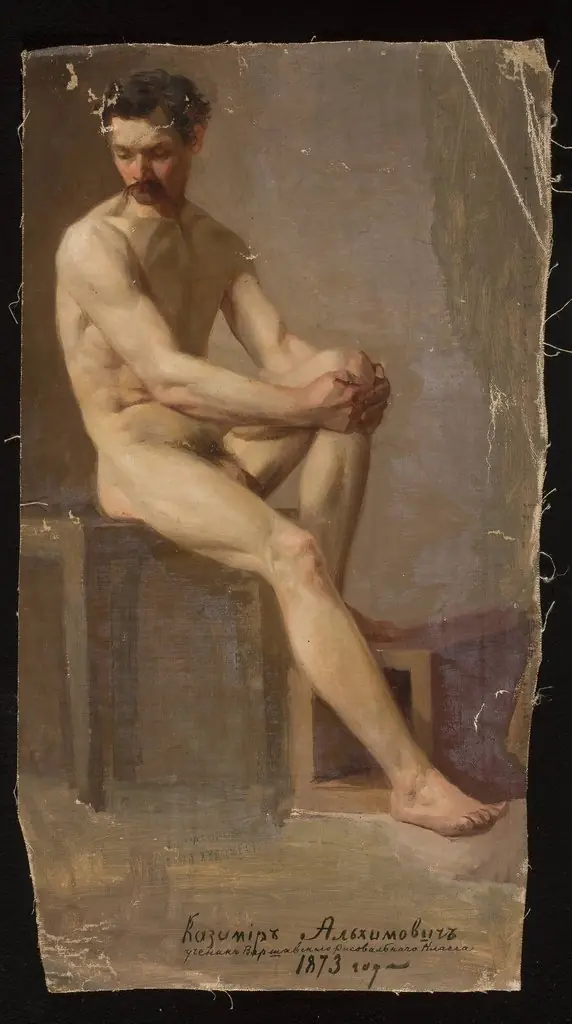 Nude of a seated man
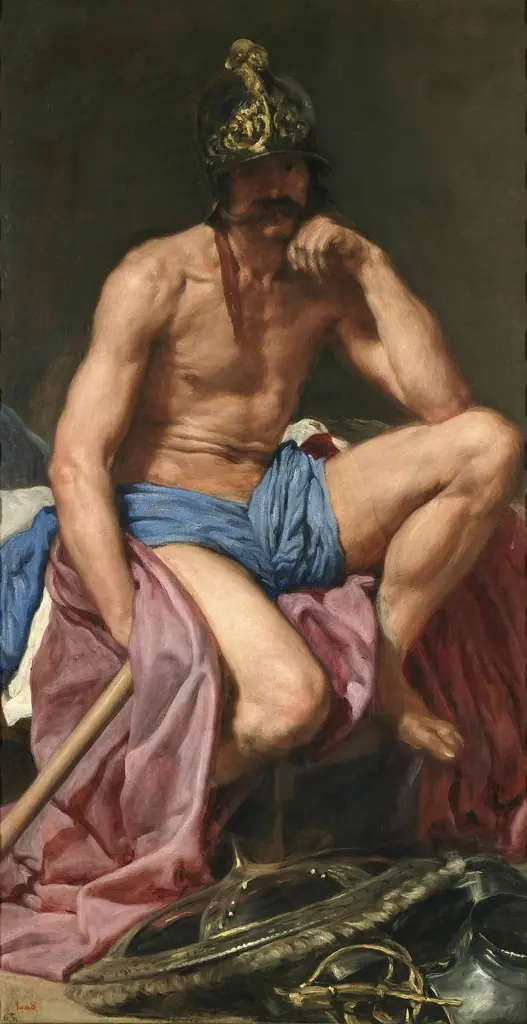 Mars Resting
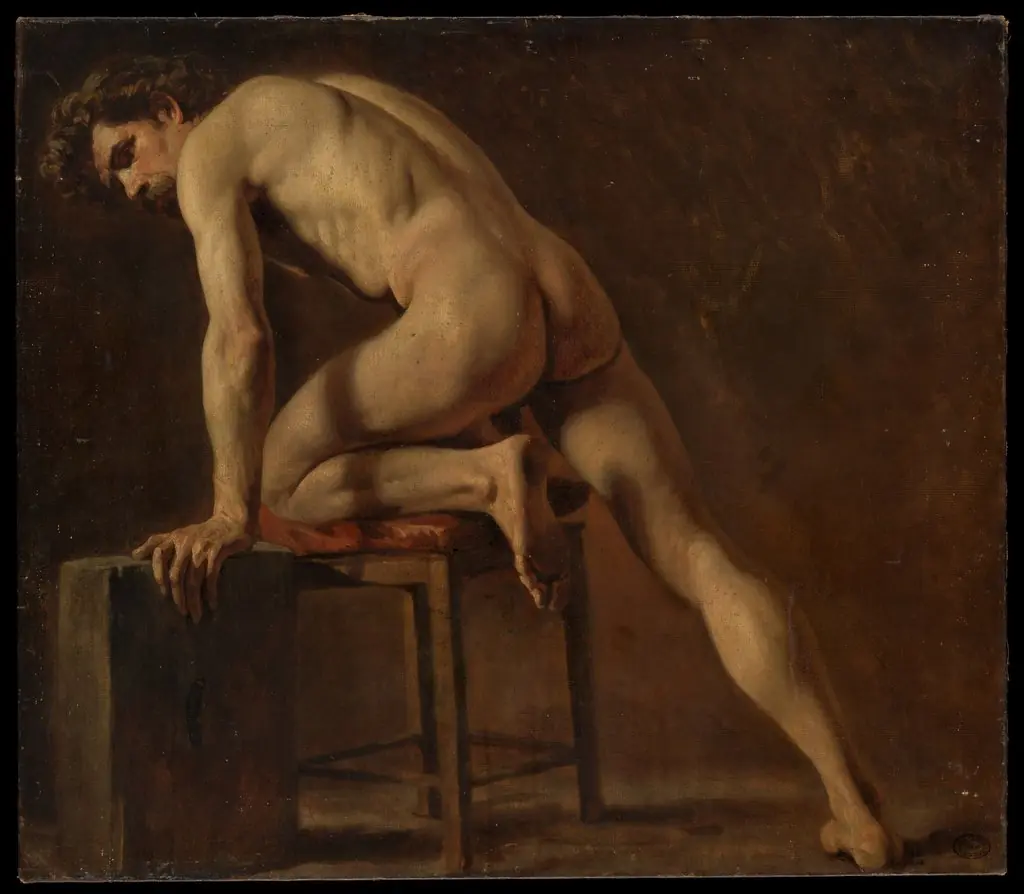 Study of a Nude Man
 Male Nude with Staff
 Ung italiensk mandsfigur i klippelandskab