Artwork
St. John on the Island of Patmos
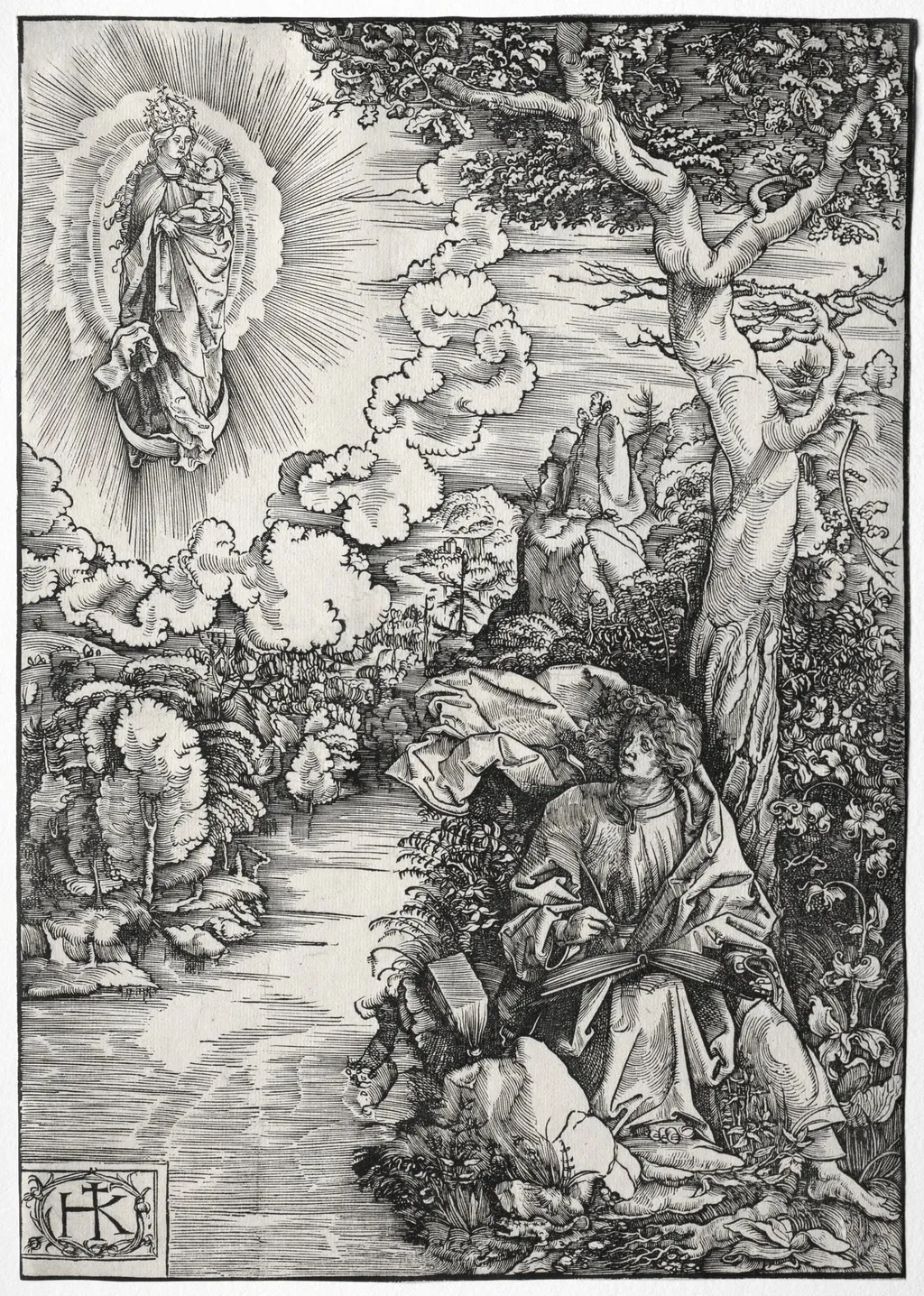
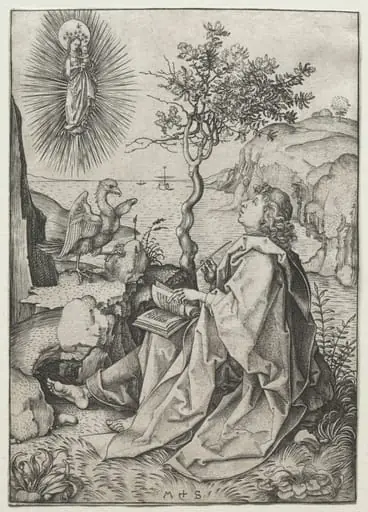
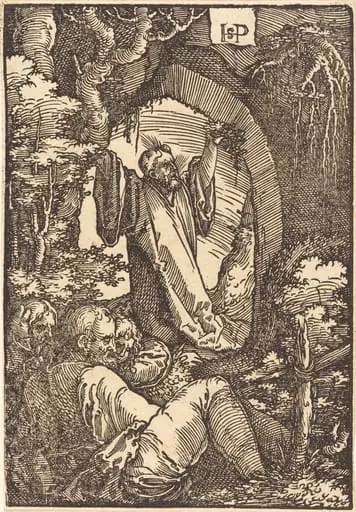
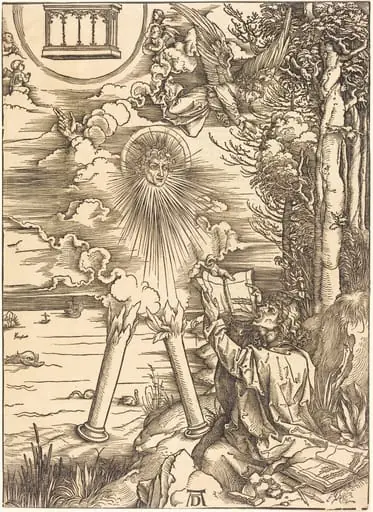
St. John on the Island of Patmos is a print by Hans Wechtlin. It dates from 1513 and is held in the collection of the Cleveland Museum of Art. St.
About this work
Overview
St. John on the Island of Patmos is a chiaroscuro woodcut created by German Renaissance artist Hans Wechtlin around 1513. It is one of his rare surviving woodcuts, alongside his more prolific output of book illustrations.
Subject & Meaning
The print depicts St. John in contemplation on Patmos, kneeling with a book in a rocky landscape. A ghostly figure hovers to his left, adding a mystical ambiance, suggesting the saint is receiving or recording a divine vision.
Technique & Style
The work utilizes chiaroscuro, a technique employing multiple colors to emphasize contrasts of light and dark, enhancing the dramatic and dreamlike quality of the scene.
History & Provenance
Active between 1502 and 1526, Wechtlin produced this piece during the peak popularity of chiaroscuro woodcuts. The exact provenance of *St. John on the Island of Patmos* is not detailed in available information.
Context
Created in the early 16th century, this print reflects the Renaissance interest in biblical themes and the experimental use of chiaroscuro in Northern European art.
Legacy
While *St. John on the Island of Patmos* showcases Wechtlin's skill in a then-popular technique, his overall legacy is more notably marked by his contributions to book illustration during the German Renaissance.
Artist & collection
Artist
Johann, Johannes or Hans Wechtlin was a German Renaissance artist, active between at least 1502 and 1526, whose woodcuts are his only certainly surviving work.