Artwork
The Knight and Lansquenet
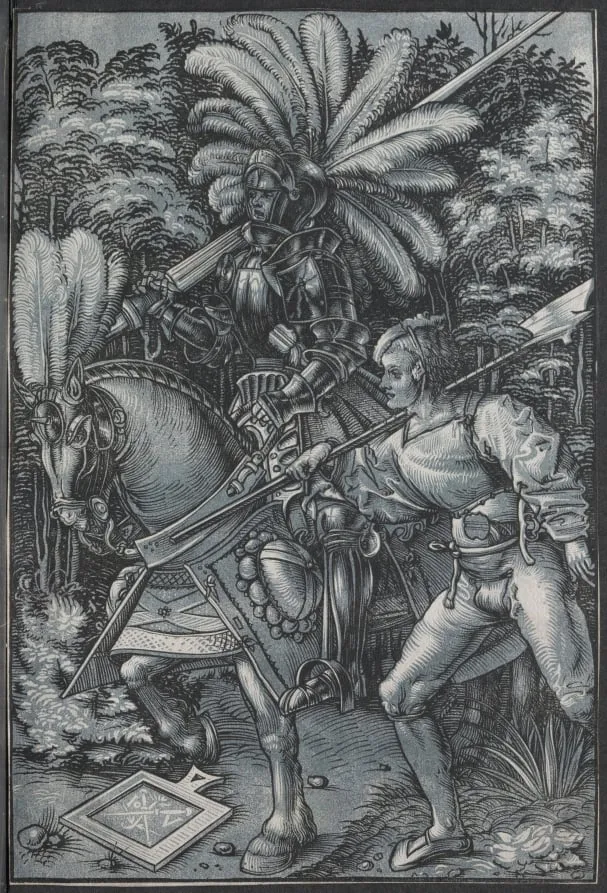
The Knight and Lansquenet is a print by the Renaissance artist Hans Wechtlin. It dates from 1512 and is held in the collection of the Cleveland Museum of Art.
About this work
Overview
Created around 1509, The Knight and Lansquenet is an early example of a two-block woodcut technique that combined black line work with a single flat color.
Created around 1509, The Knight and Lansquenet is an early example of a two-block woodcut technique that combined black line work with a single flat color. The print uses unprinted paper areas to suggest highlights, eliminating the need for hand-coloring. This method allowed artists to achieve tonal variation without relying on multiple color blocks or paint, marking a significant step in printmaking innovation during the early 16th century.
Subject & Meaning
The print depicts a fully armored knight standing beside a soldier dressed in voluminous, puffed sleeves—likely a landsknecht, a type of mercenary common in Renaissance armies. The figures are presented without narrative context, emphasizing their visual contrast: disciplined armor versus flamboyant civilian dress. The composition invites comparison between military order and the chaotic energy of mercenary life, though no explicit moral or political message is conveyed.
Technique & Style
Two separate woodblocks were used: one for the fine black outlines defining form, and another for the uniform red-brown background. The brightest areas—such as the knight’s helmet and breastplate—were left as the untouched white of the paper, creating natural highlights. This selective use of negative space mimics the effects of chiaroscuro, suggesting volume and light direction without gradients or shading, a hallmark of early color printmaking.
History & Provenance
The print is attributed to Hans Wechtlin, a German artist active in the early 1500s known for experimenting with color woodcuts. Few examples of his work survive, and this piece is among the earliest known to use the two-block method successfully. It was likely produced in southern Germany, where such techniques were being refined, and may have been intended for private collectors rather than mass distribution.
Context
In the early 16th century, printmakers sought ways to make woodcuts more visually compelling without the cost of hand-coloring. The Knight and Lansquenet reflects a broader trend toward tonal experimentation, influenced by contemporary painting techniques. While Italian artists were developing chiaroscuro in oil, German printmakers adapted similar light-shape principles using the limitations of woodcut, bridging painting and print traditions.
Legacy
This print helped establish the viability of color woodcuts as a serious artistic medium. Its use of unprinted paper for highlights became a foundational strategy in later German and Dutch prints. Though eventually superseded by multi-block methods, its minimalist approach to tone and form influenced generations of printmakers who valued clarity and structural economy over decorative complexity.
Artist & collection
Artist
Johann, Johannes or Hans Wechtlin was a German Renaissance artist, active between at least 1502 and 1526, whose woodcuts are his only certainly surviving work.

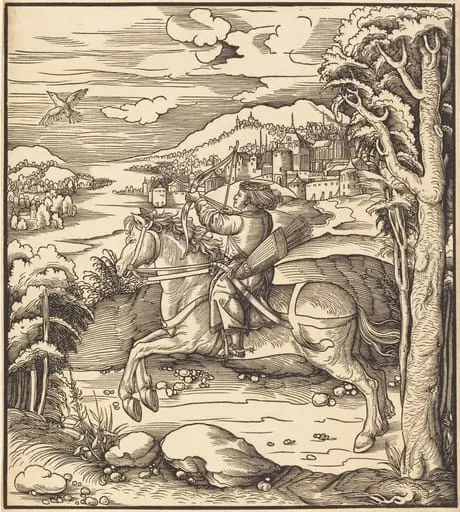 The Prince at the Bird-Catching
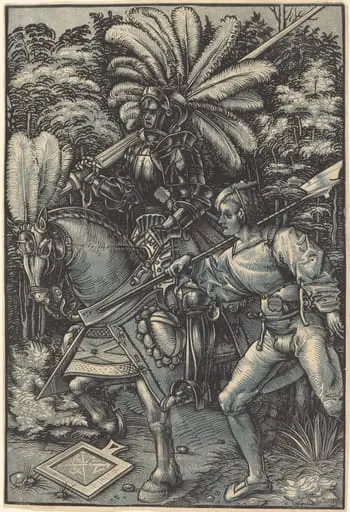 Knight and the Servant
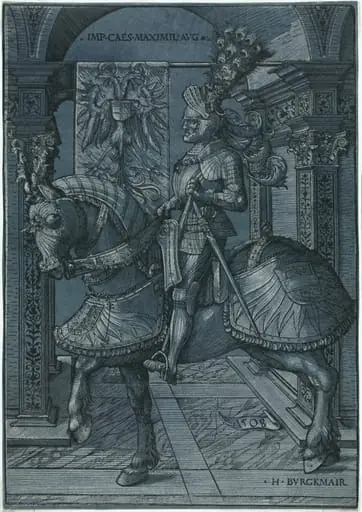 Equestrian Portrait of the Emperor Maximilian
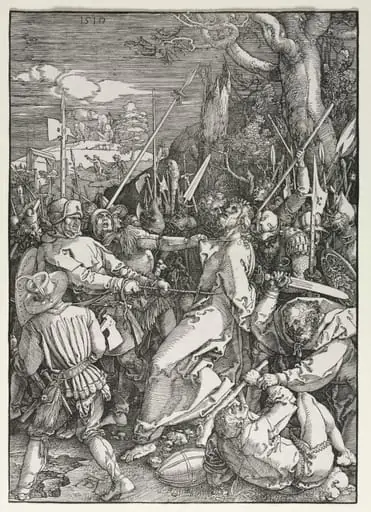 The Large Passion: The Betrayal of Christ
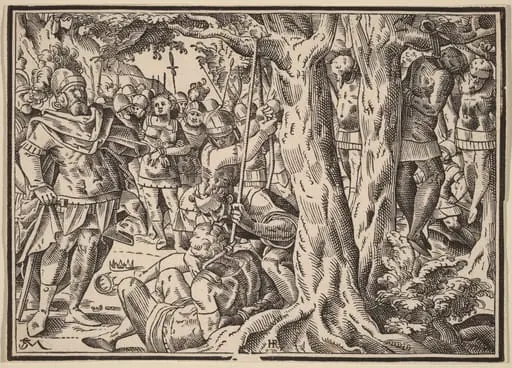 Christ Tells His Disciples of the Last Judgment
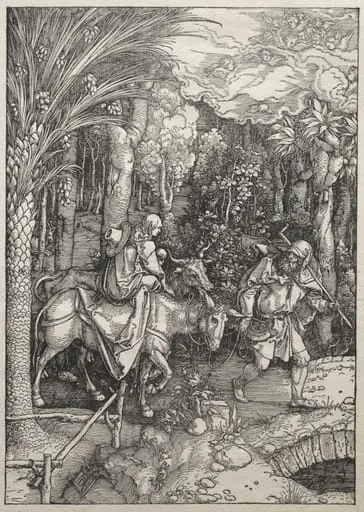 Life of the Virgin: Flight into Egypt
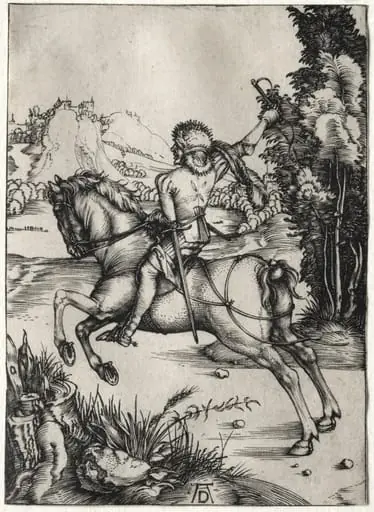 The Little Courier
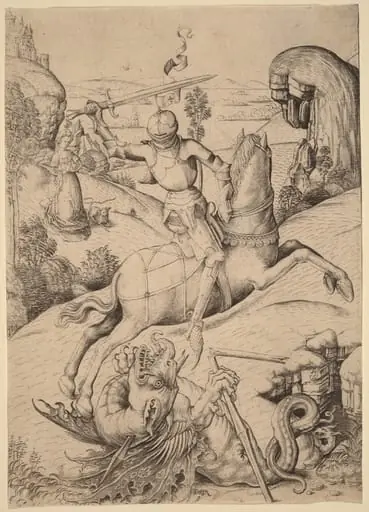 Saint George and the Dragon
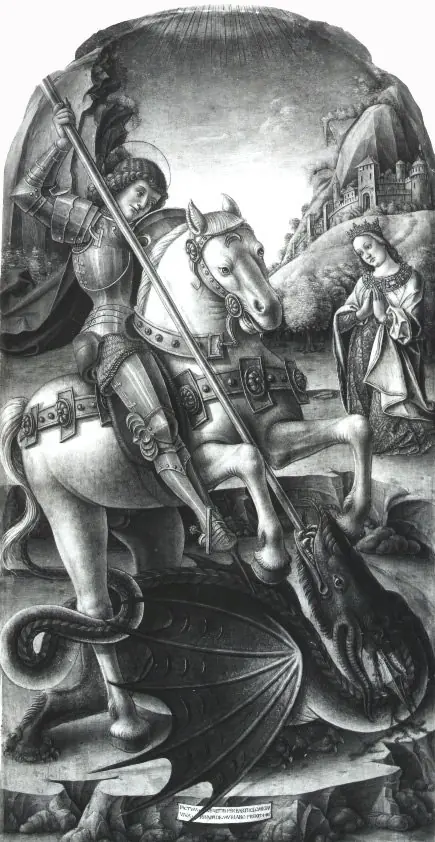 Saint George kills the dragon
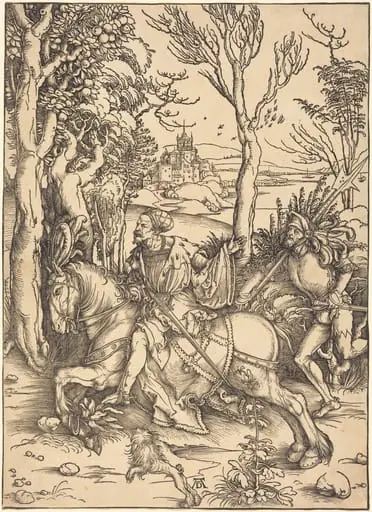 The Knight on Horseback and the Lansquenet
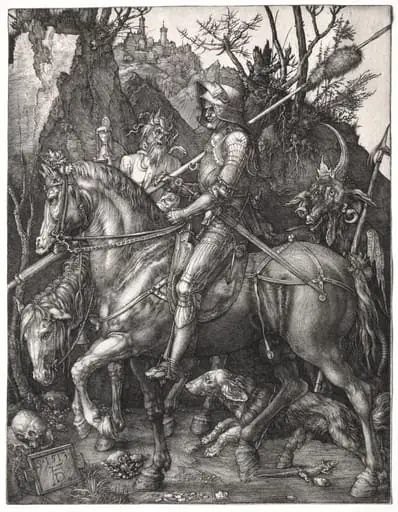 Knight, Death, and the Devil
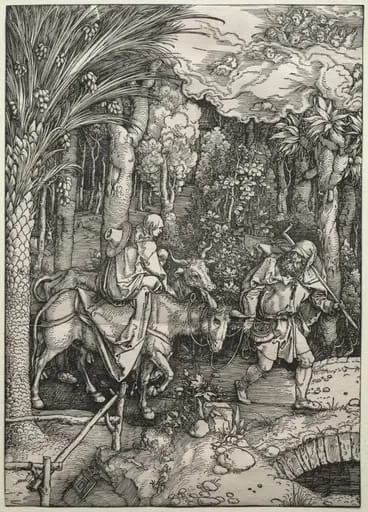 The Flight into Egypt