Artwork
St. Anne, the Virgin and Christ Child
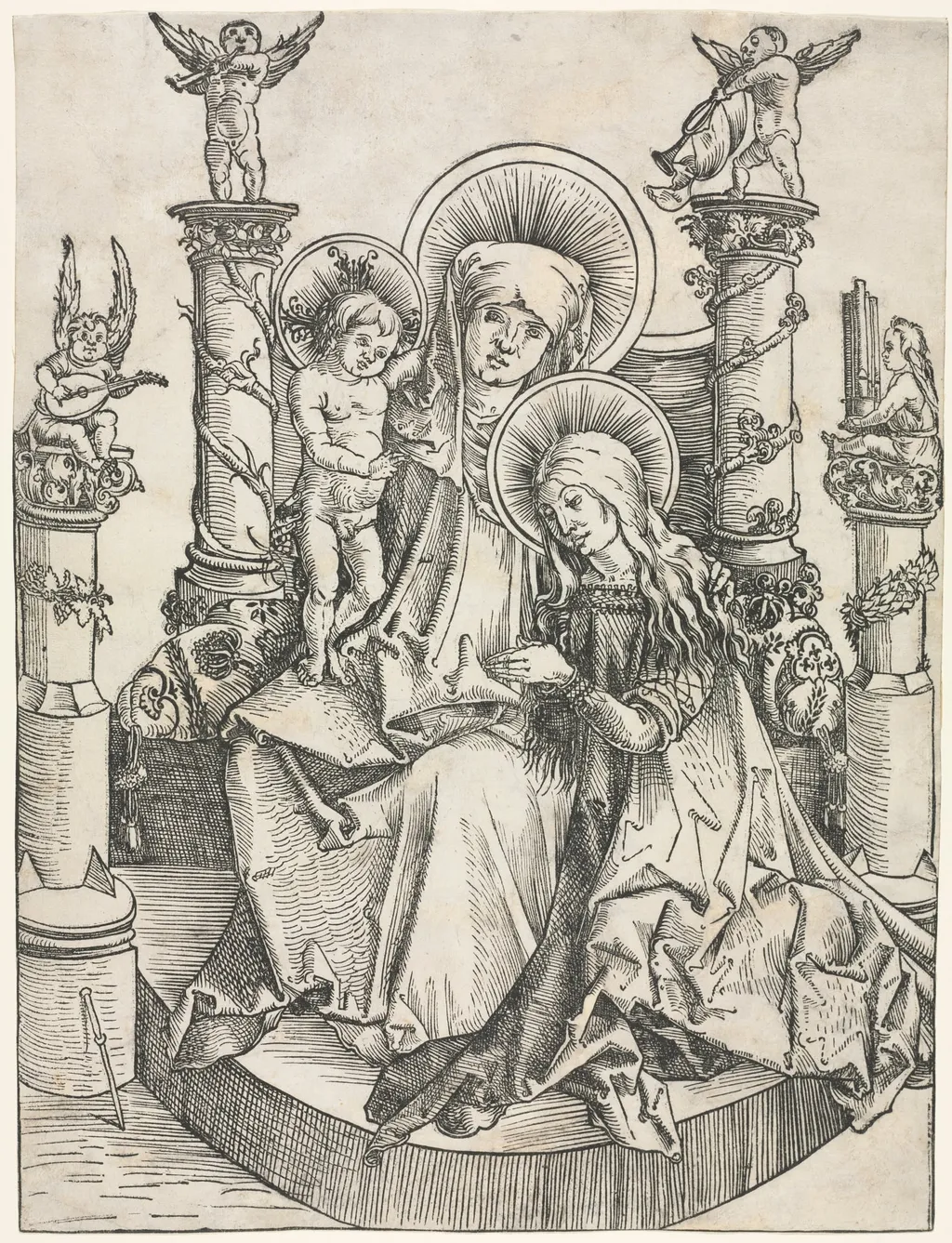
St. Anne, the Virgin and Christ Child is a print by the Renaissance artist Hans Wechtlin. It dates from 1505 and is held in the collection of the Cleveland Museum of Art.
About this work
Overview
Anne, the Virgin Mary, and the Christ Child—within a richly detailed architectural setting.
Hans Wechtlin, a German printmaker active between 1502 and 1526, produced a small but influential body of woodcuts, with this print among his earliest known works. Created around 1505, it depicts a sacred trio—St. Anne, the Virgin Mary, and the Christ Child—within a richly detailed architectural setting. The work is notable for its use of chiaroscuro, a technique that employs tonal contrast to model form, making it one of the more advanced German prints of its time.
Subject & Meaning
The composition centers on the familial bond between St. Anne, her daughter Mary, and the infant Jesus, reflecting late medieval devotional themes of maternal lineage and divine ancestry. Angels flank the scene on ornate columns, their presence underscoring the sacred nature of the moment. The figures are arranged in a quiet, intimate grouping, emphasizing contemplation over drama, aligning with private prayer practices of the period.
Technique & Style
Wechtlin employed chiaroscuro woodcutting, using multiple blocks to layer tones of gray and black, creating a sense of volume and spatial depth. The figures emerge from a background of intricate, swirling patterns and miniature figures, suggesting a celestial realm. Fine linework defines drapery and architecture, while subtle gradations of shadow give the forms a sculptural weight uncommon in earlier German prints.
History & Provenance
The print entered the collection of The Cleveland Museum of Art as part of a broader acquisition of early German prints. Its survival in good condition is rare, given the fragility of woodcuts and the passage of time. While its early ownership is undocumented, its technical sophistication suggests it was made for a discerning, likely ecclesiastical or noble, patron.
Context
Produced during the early years of the German Renaissance, this print reflects the influence of Netherlandish detail and Italian modeling techniques, filtered through local devotional traditions. Chiaroscuro woodcuts were a brief but significant innovation in Northern Europe, bridging the gap between hand-drawn illumination and mass-produced imagery. Wechtlin’s work stands as a rare example of this technique’s full potential in Germany.
Legacy
Wechtlin’s print contributed to the development of tonal woodcut in Germany, influencing later artists who sought to elevate printmaking beyond line-based illustration. Though his output was limited, this work remains a key reference for understanding how German printmakers adapted Renaissance ideas of form and light. It stands as a quiet but pivotal moment in the evolution of Northern print culture.
Artist & collection
Artist
Johann, Johannes or Hans Wechtlin was a German Renaissance artist, active between at least 1502 and 1526, whose woodcuts are his only certainly surviving work.

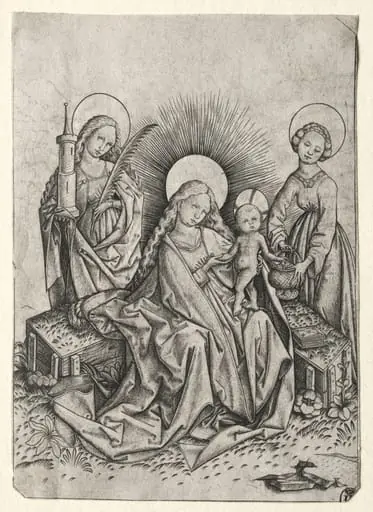 Madonna and Child in a Garden between St. Barbara and st. Dorothy
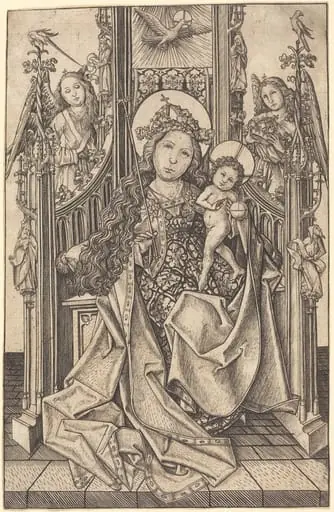 Madonna and Child Enthroned
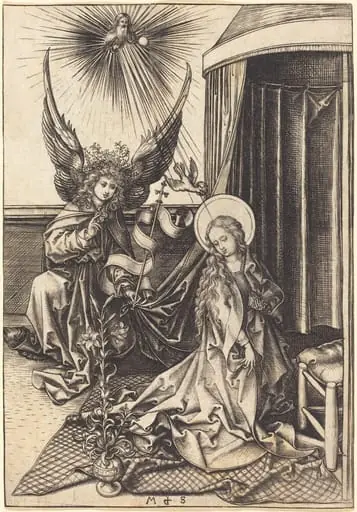 The Annunciation
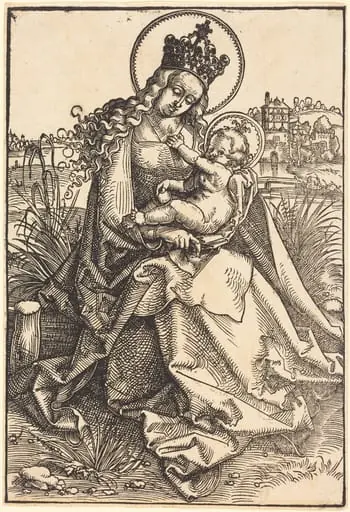 Madonna and Child on the Grassy Bank
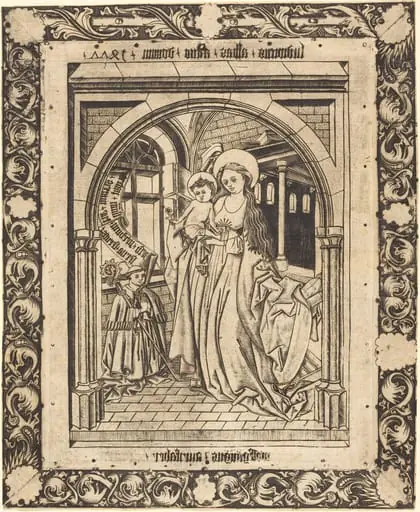 The Madonna and Child with the Abbot Ludwig von Churchwalden
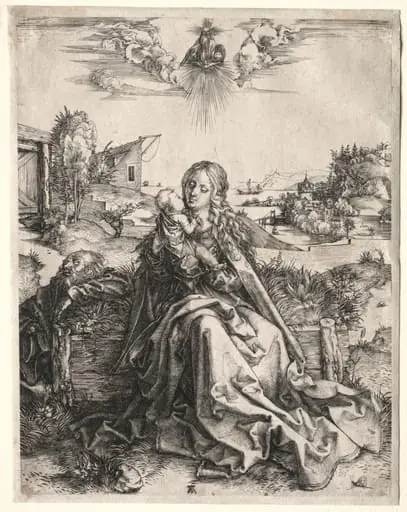 Holy Family with the Butterfly
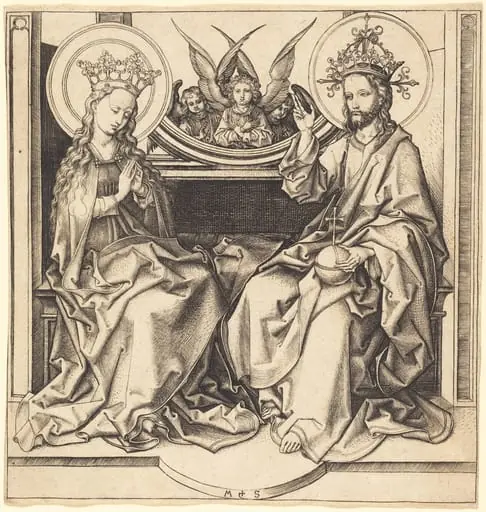 Christ Blessing the Virgin
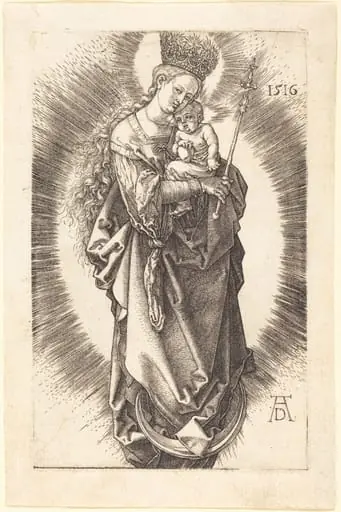 The Virgin and Child on a Crescent with a Sceptre and a Starry Crown
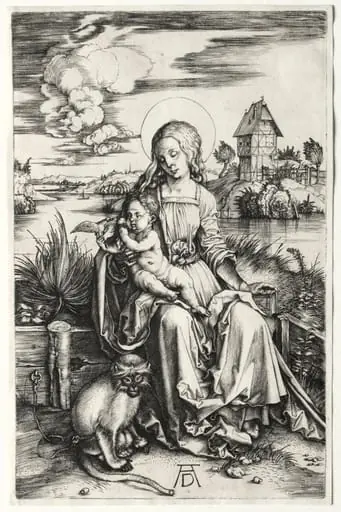 The Virgin and Child with a Monkey
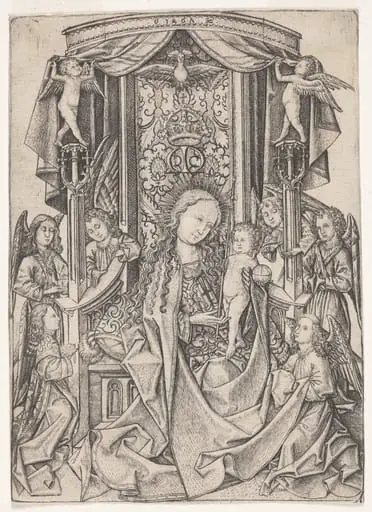 Madonna Enthroned with Eight Angels
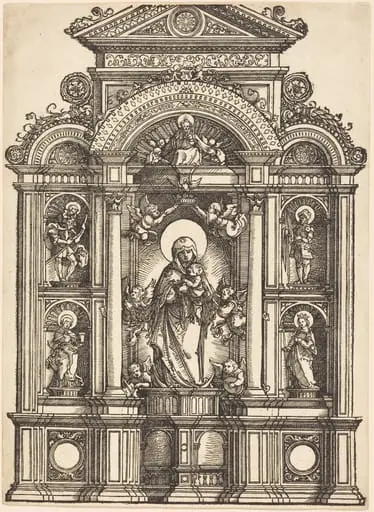 Altarpiece with the Beautiful Virgin of Regensburg and Saints Christopher, Mary Magdalene, Florian, and Catherine Standing in Niches, with God the Father Above
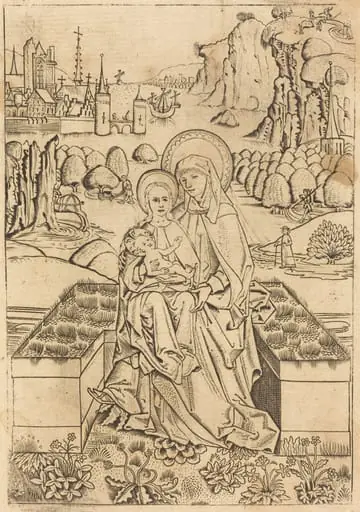 The Madonna and Child with Saint Anne