Artwork
Briare
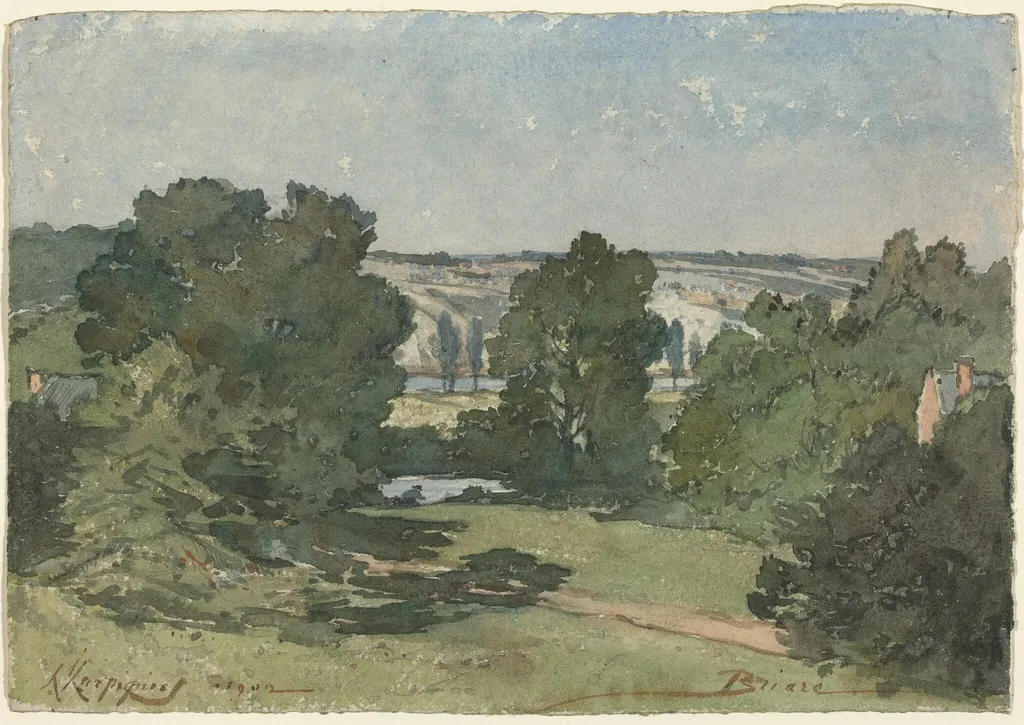
Briare is a graphite drawing by Henri-Joseph Harpignies. It dates from 1902 and is held in the collection of the National Gallery of Art.
About this work
Overview
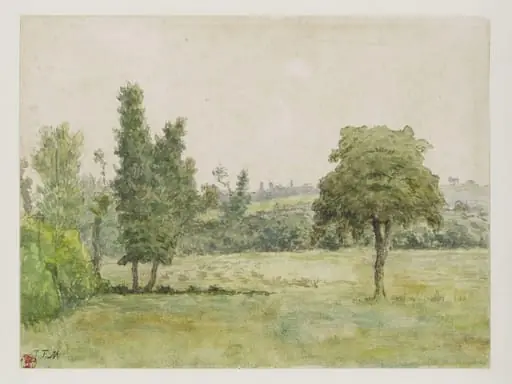
Henri-Joseph Harpignies produced the watercolor drawing Briare in 1902. Executed on wove paper with a graphite underdrawing, the work bears the artist’s signature in the lower corner and carries the place name Briare as its title.
Subject & Meaning
The composition depicts a verdant landscape where a meandering path threads through grass and trees toward a distant water surface that mirrors the sky. Sparse structures emerge from the foliage, suggesting a rural setting that balances natural and built elements.
Technique & Style
Harpignies employed a loose, rapid brushstroke that lends the scene a sketch‑like softness. Transparent washes of green and blue are built up in thin layers, allowing the underlying graphite to guide the forms while the glazing creates luminous atmospheric effects.
History & Provenance
Created at the turn of the twentieth century, Briare reflects Harpignies’ mature period of landscape work. The piece remains documented as a signed original, though specific ownership history beyond its creation has not been recorded in the available sources.
Own this work as a print
Artist & collection


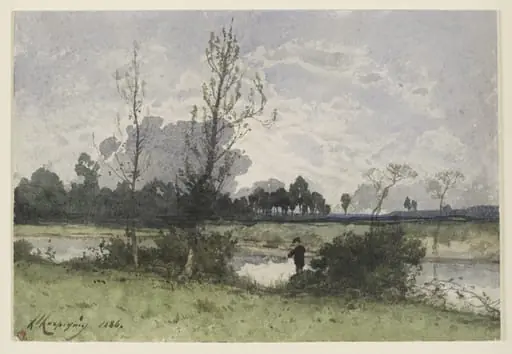 The fisherman
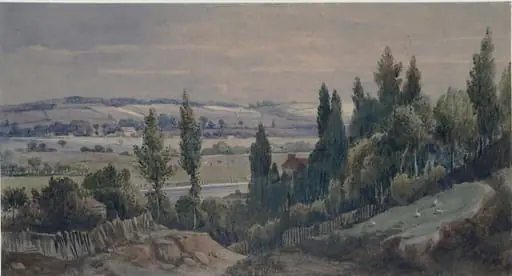 Hampstead Heath
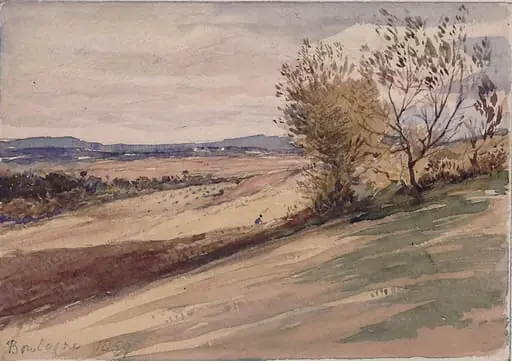 Landscape near Boulogne
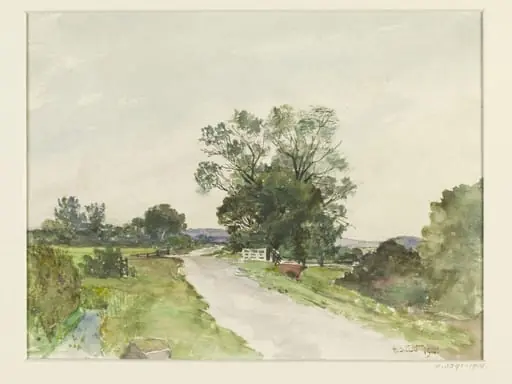 Landscape with road in flat country
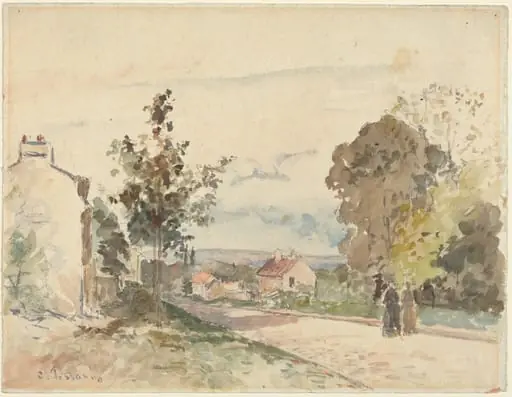 The Road from Versailles to Louveciennes
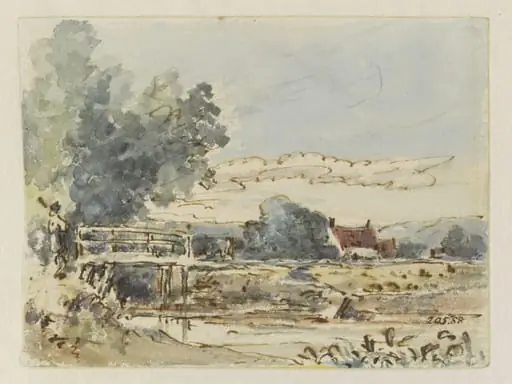 A bridge over a stream, with a cottage behind
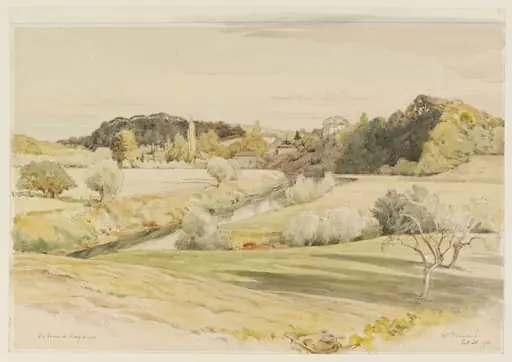 The Teme at Knightwick
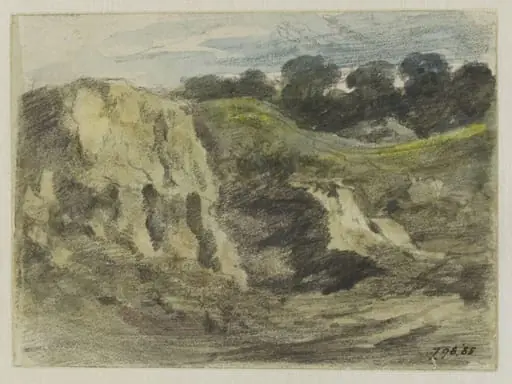 A sandbank with trees beyond
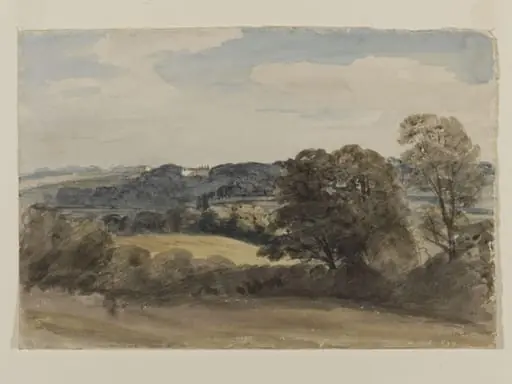 Landscape with buildings in the distance
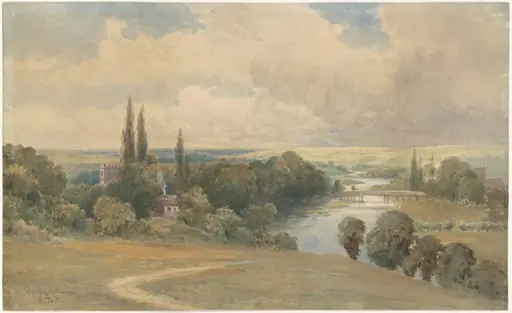 View of Streatley-on-Thames
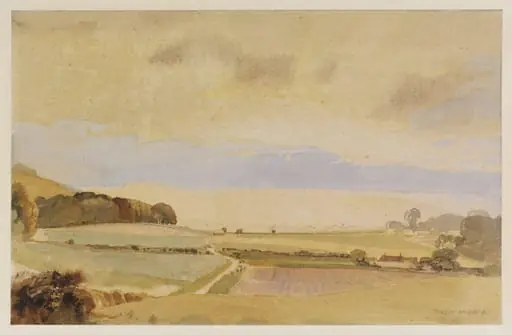 The Southdown, Underhill Road; Wolstonbury, showing Danny Farm
 Meadow with trees