Artwork
The Teme at Knightwick
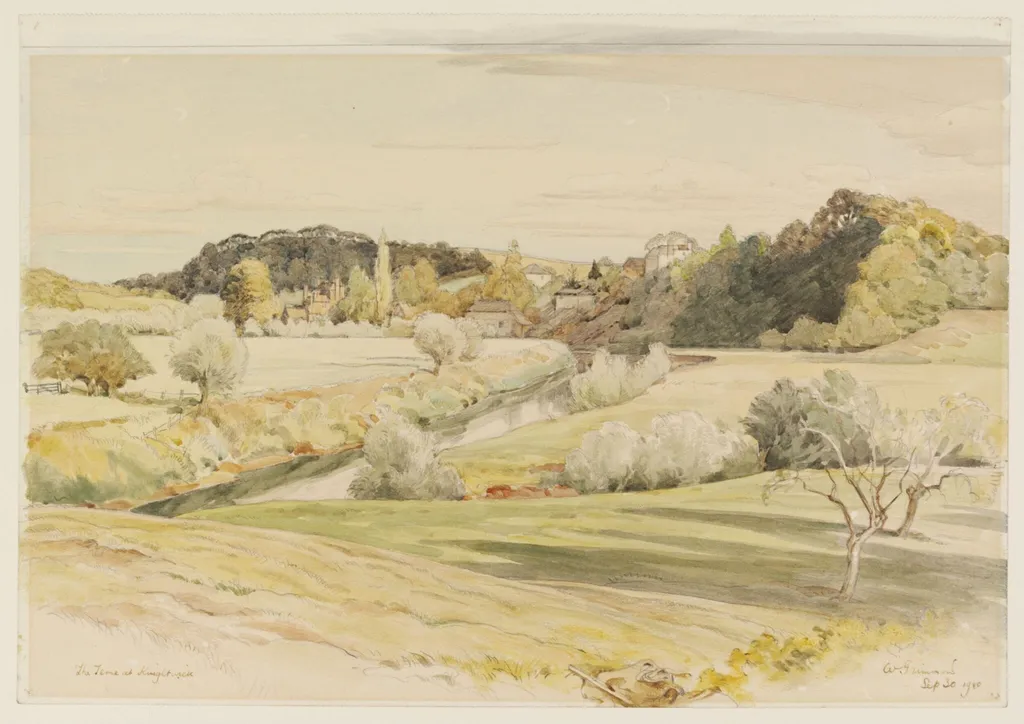
The Teme at Knightwick is a watercolor work on paper by William Grimmond. It dates from 30 and is held in the collection of the Victoria and Albert Museum.
About this work
The date in the corner tells us this was painted in 1940, likely during a time when artists focused on simple, peaceful landscapes.
This watercolor shows a quiet countryside scene with rolling hills and a winding river. Sheep graze in the foreground, while a few trees and small buildings dot the background. The colors are soft—mostly pale greens, yellows, and browns—with a light, sketchy style.
The date in the corner tells us this was painted in 1940, likely during a time when artists focused on simple, peaceful landscapes. The loose brushwork gives it a quick, almost sketchy feel.
Check out the Victoria and Albert Museum to see more works like this.
Overview
The Teme at Knightwick is a watercolour painting by William Grimmond, created in 1940 as part of the Recording Britain project.
Subject & Meaning
The painting depicts a serene riverside scene in Worcestershire, with grazing sheep, trees, and small buildings set against rolling hills. The tranquil atmosphere reflects the project's aim to capture rural English landscapes.
Technique & Style
Grimmond's work is characterized by soft colours, including pale greens, yellows, and browns, and a loose, sketchy style achieved through quick brushwork.
History & Provenance
The painting was produced during the Recording Britain project, a wartime initiative funded by the Pilgrim Trust and directed by Sir Kenneth Clark, which employed artists to document the British landscape between 1940 and 1943.
Context
The work reflects the project's dual goals: preserving scenes vulnerable to wartime damage and sustaining artistic practice during a period of social change.
Own this work as a print
Artist & collection
Artist
English watercolourist who painted Worcestershire landscapes in 1940. His brush captured riverside scenes like The Teme at Knightwick and Knightwick Mill, along with half-timbered houses such as Elmley Castle and local…

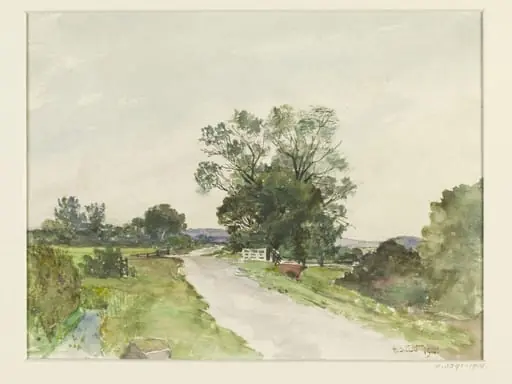 Landscape with road in flat country
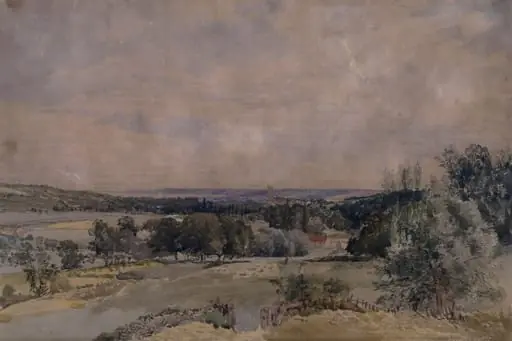 Vale of Dedham
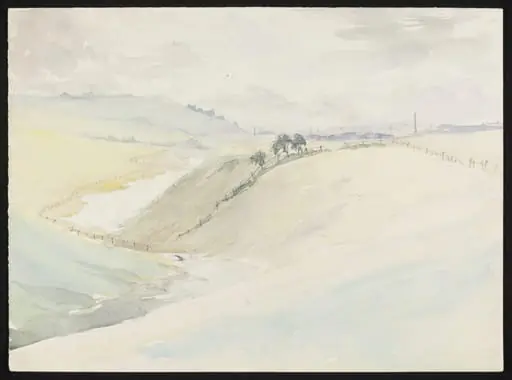 Looking towards Bury from the North of the city
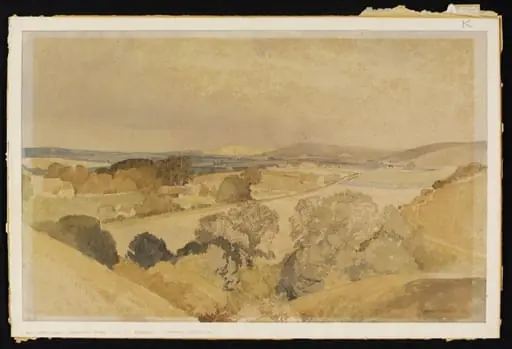 The Southdown, Underhill Road; Edburton, and the Road Eastwards
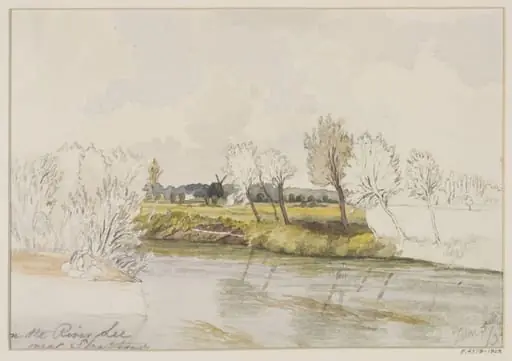 On the River Lee, near Stratford
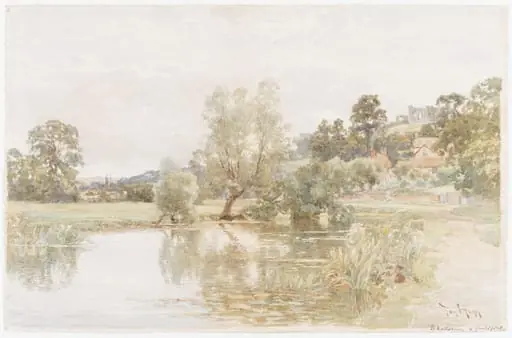 St. Catherine's Chapel, above Artington and the River Wey
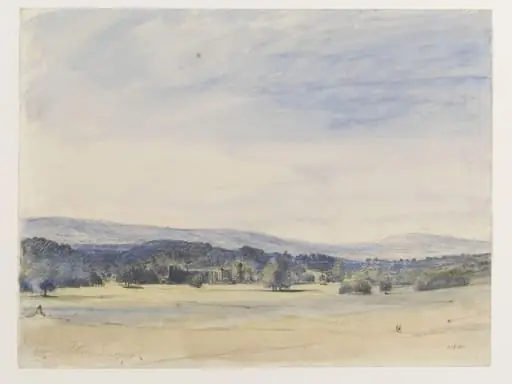 The ruins of a Cowdray House
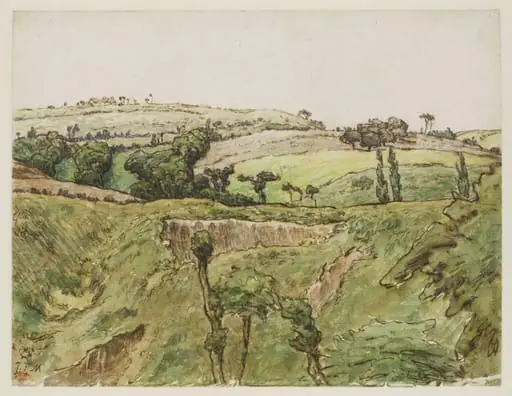 A hilly landscape with trees
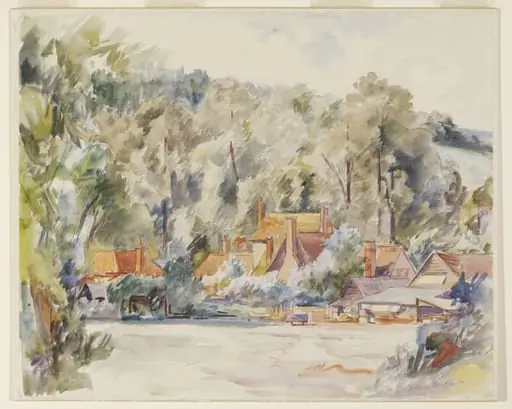 The Chequers Inn, Fingest
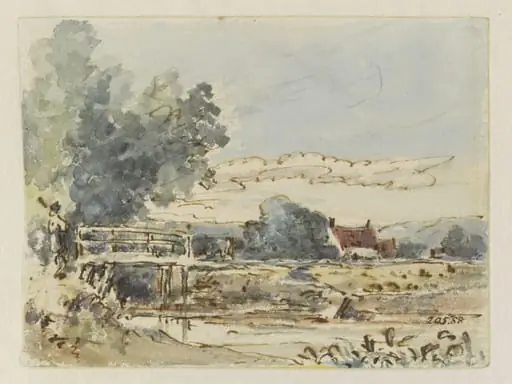 A bridge over a stream, with a cottage behind
 The Downs from Friston
 View of Streatley-on-Thames