Artwork
Chicken Vendor, Trinidad
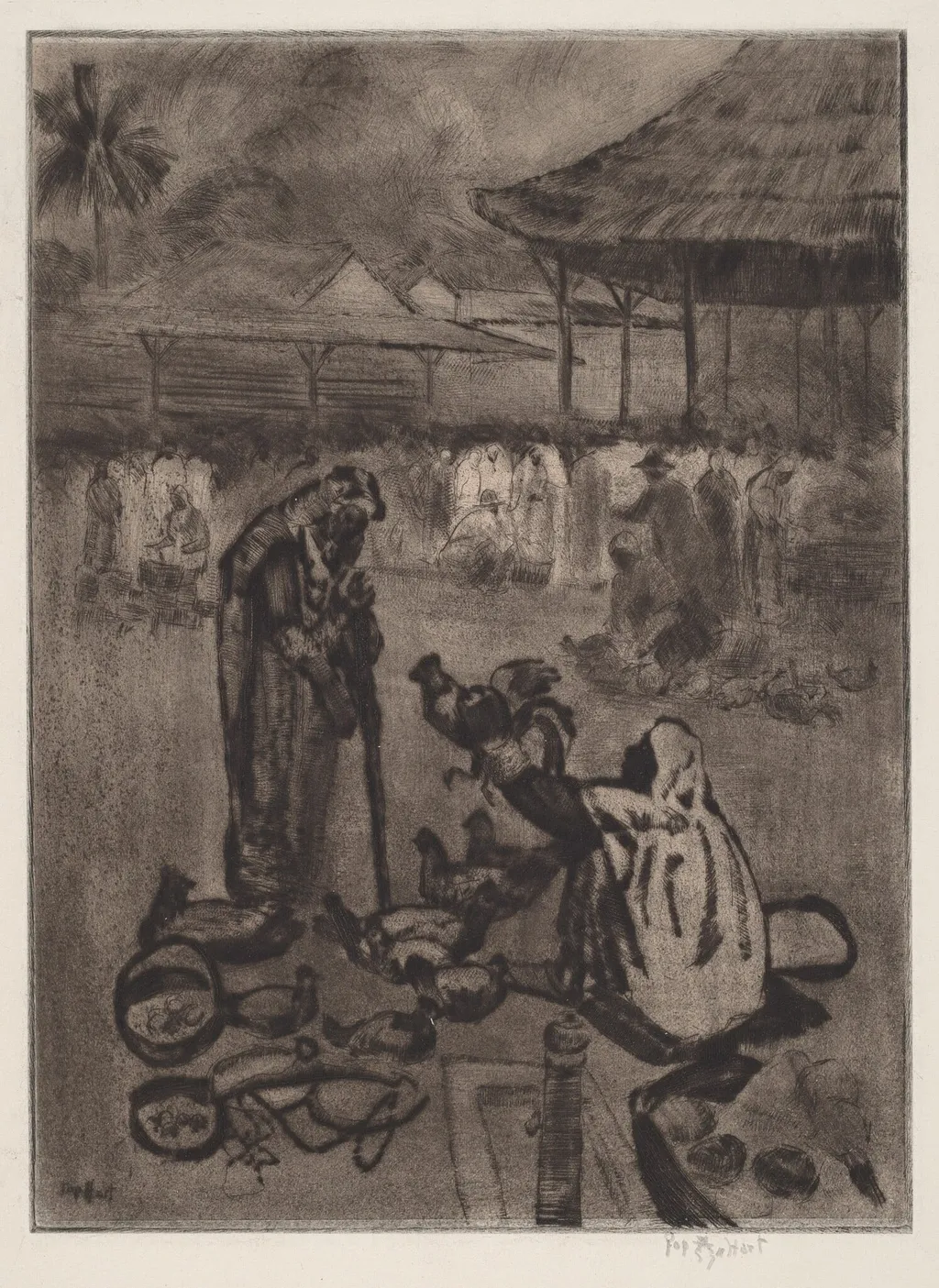
Chicken Vendor, Trinidad is an ink print by George Overbury Hart. It dates from 1923 and is held in the collection of the National Gallery of Art.
About this work
Overview
The composition centers on a vendor amid scattered poultry, rendered with urgent, unrefined lines that suggest immediacy rather than polish.
Created in 1923 by George Overbury Hart, this drypoint print captures a moment of daily commerce in Trinidad. The work is rendered in black ink on paper, with the artist employing sandpaper to texture the metal plate, producing a coarse, tactile surface that enhances the rawness of the scene. The composition centers on a vendor amid scattered poultry, rendered with urgent, unrefined lines that suggest immediacy rather than polish.
Subject & Meaning
The scene depicts a woman selling chickens in a modest courtyard, surrounded by birds pecking at the ground. Her face is indistinct, and her clothing is suggested with swift, sketch-like strokes, emphasizing action over identity. The focus lies in the rhythm of labor and the informal setting, conveying the quiet persistence of street trade without romanticizing it. The absence of facial detail universalizes the figure as a symbol of everyday resilience.
Technique & Style
Hart used drypoint, scratching directly into a metal plate with a pointed tool, and supplemented the process with sandpaper to create a granular, uneven surface. This method produced rich, velvety blacks and a tactile grain that mimics the roughness of the environment. Lines are irregular and urgent, shadows are stark, and forms are simplified—qualities that align the work with expressive sketching rather than formal portraiture.
History & Provenance
The print was made during Hart’s time in Trinidad, where he traveled to document local life. It was not widely exhibited at the time and remained largely within private collections until later scholarly interest in early 20th-century Caribbean printmaking brought it to light. Its survival reflects its status as a personal, observational study rather than a commissioned work.
Context
Hart created this work amid broader early 20th-century interest in ethnographic observation through printmaking. While European artists often idealized colonial subjects, Hart’s approach was more grounded, focusing on unposed moments of labor. The work aligns with contemporaneous efforts to record vernacular life, though it avoids overt political or exoticizing narratives.
Legacy
Chicken Vendor, Trinidad stands as a quiet example of how printmaking could serve as a tool for direct, unembellished observation. Though not widely known during Hart’s lifetime, the work has gained recognition for its honest rendering of Caribbean daily life and its technical experimentation with texture. It remains a reference point in studies of regional printmaking outside mainstream Western traditions.
Own this work as a print
Artist & collection


![Men Drinking at a Table [verso], by George Overbury Hart](https://artifactworldgallery.com/img/george-overbury-hart--men-drinking-at-a-table-verso--7e9475e5b5079377-w320.webp)
![Chicken Vendors [recto], by George Overbury Hart](https://artifactworldgallery.com/img/george-overbury-hart--chicken-vendors-recto--d97b582e13465974-w320.webp)
 Rag Pickers, Quartier Mouffetard, Paris
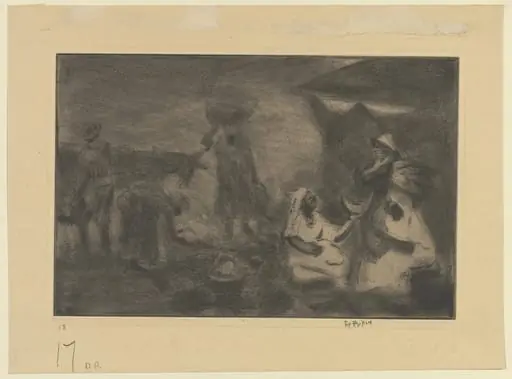 Untitled
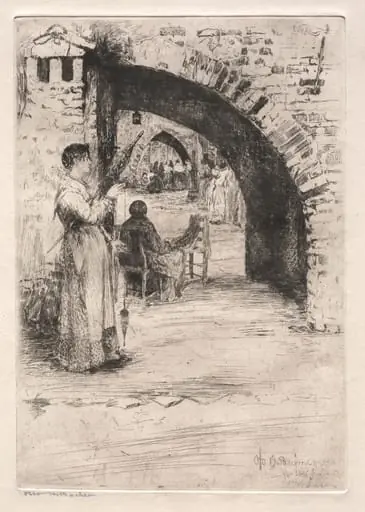 Etchings of Venice: Net Makers
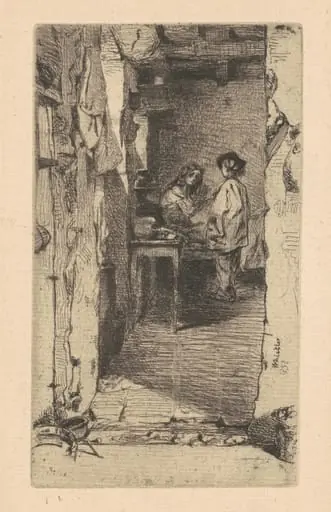 Rag Pickers, Quartier Mouffetard, Paris
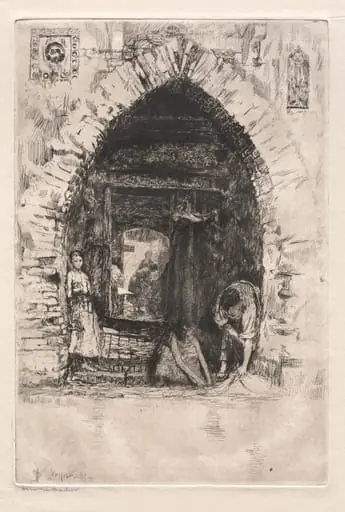 Etchings of Venice: Laundry
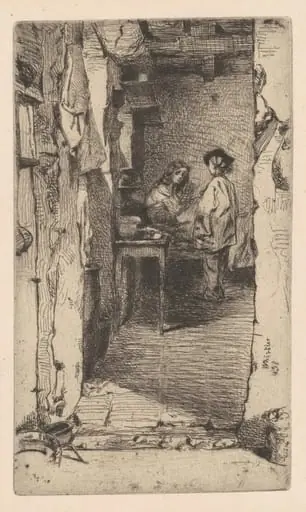 Rag Pickers, Quartier Mouffetard, Paris
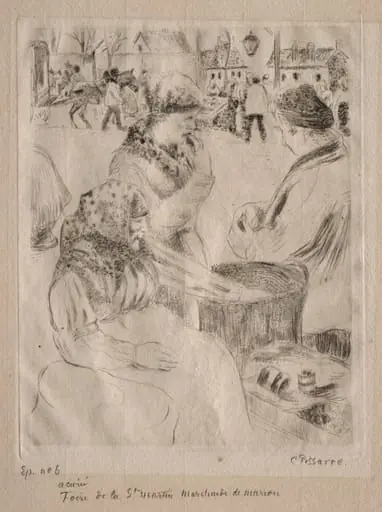 Chestnut Vendor, St. Martin's Day Fair (Pontoise)
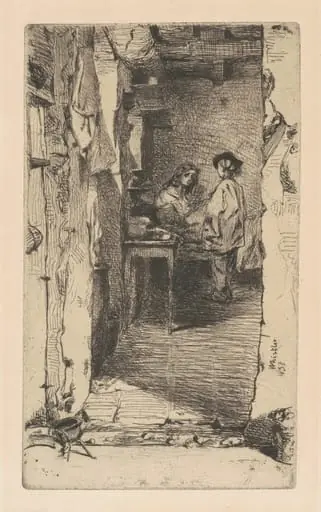 Rag Pickers, Quartier Mouffetard, Paris
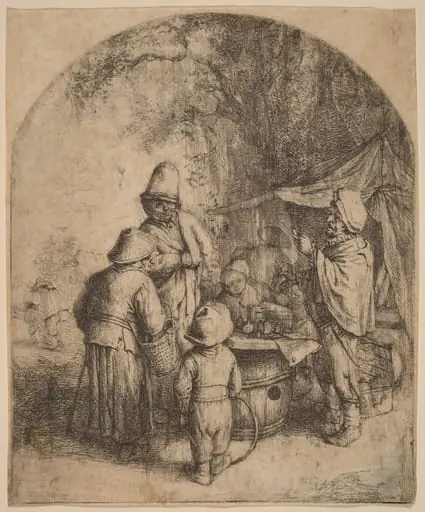 Quack Doctor Presenting his Potions to a Group of Bystanders
 Moldavian Interior