Artwork
The Commuter
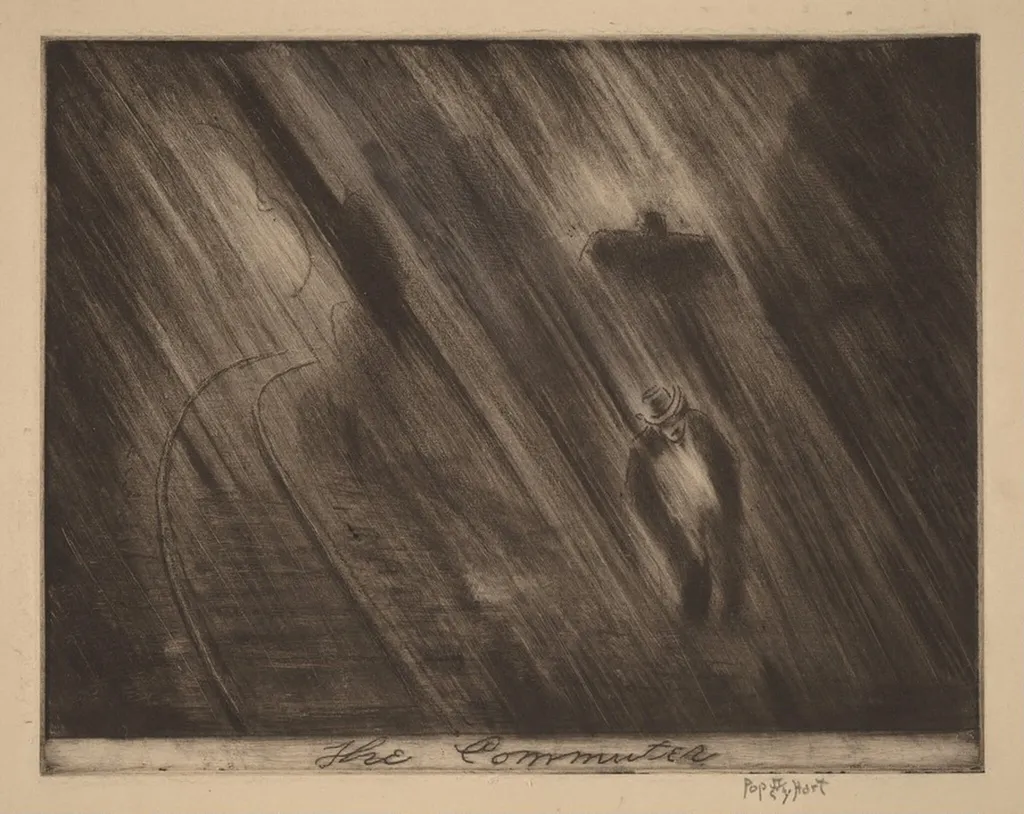
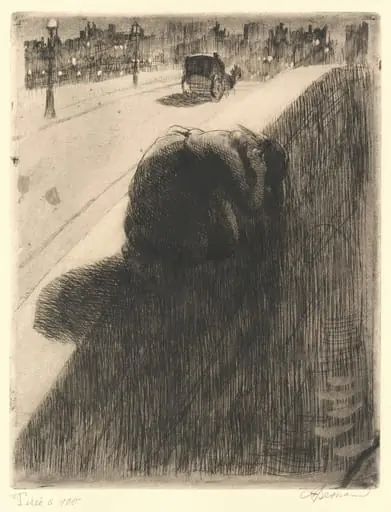
The Commuter is an ink print by George Overbury Hart. It dates from 1926 and is held in the collection of the National Gallery of Art.
About this work
Overview
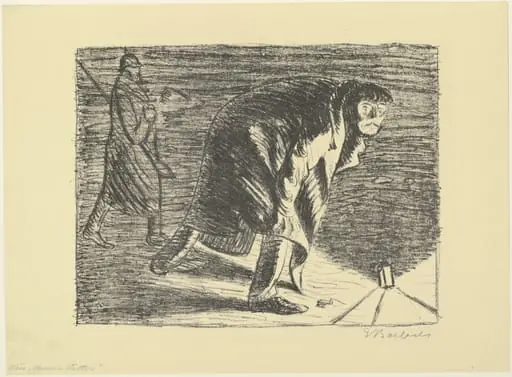
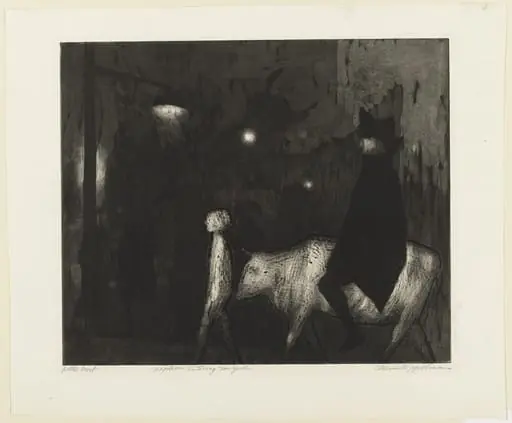
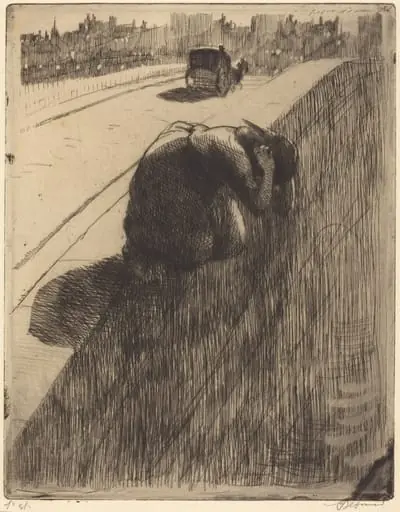
The Commuter, produced in 1926, is a black-and-white print created by George Overbury Hart using etching combined with aquatint on wove paper. The work captures a solitary traveler moving along a steep, nocturnal street, framed by looming, darkened buildings that recede into near‑blackness toward the top of the composition.
Subject & Meaning
At the center of the image a lone figure, hat tipped low and bent over a heavy suitcase, navigates the incline. The obscured facial features and the cramped posture convey a sense of isolation and urgency, suggesting the anonymity and fatigue often associated with urban commuting.
Technique & Style
Hart employed a mixture of sharp, incised lines and soft, tonal washes achieved through aquatint to render depth and atmosphere. The contrast between the crisp outlines of the architecture and the smooth shading of the sky intensifies the tension of the scene, while the emphasis on the suitcase’s weight underscores the physical burden of travel.
History & Provenance
The print was executed in the interwar period, a time when rapid urban expansion heightened the daily experience of public transportation. It entered the artist’s catalogue of prints shortly after its creation and has since been held in several public and private collections focused on early 20th‑century British printmaking.
Context
Hart’s work reflects broader artistic interests in modern city life during the 1920s, aligning with contemporaneous explorations of anonymity, movement, and the psychological impact of urban environments. The use of etching and aquatint situates the piece within a tradition of British printmakers who sought to combine precise line work with atmospheric tonal effects.
Artist & collection


![Men Drinking at a Table [verso], by George Overbury Hart](https://artifactworldgallery.com/img/george-overbury-hart--men-drinking-at-a-table-verso--7e9475e5b5079377-w320.webp)
![Chicken Vendors [recto], by George Overbury Hart](https://artifactworldgallery.com/img/george-overbury-hart--chicken-vendors-recto--d97b582e13465974-w320.webp)