Artwork
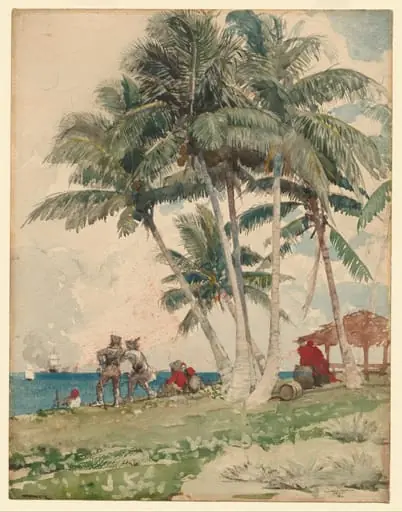
Hut in Trinidad
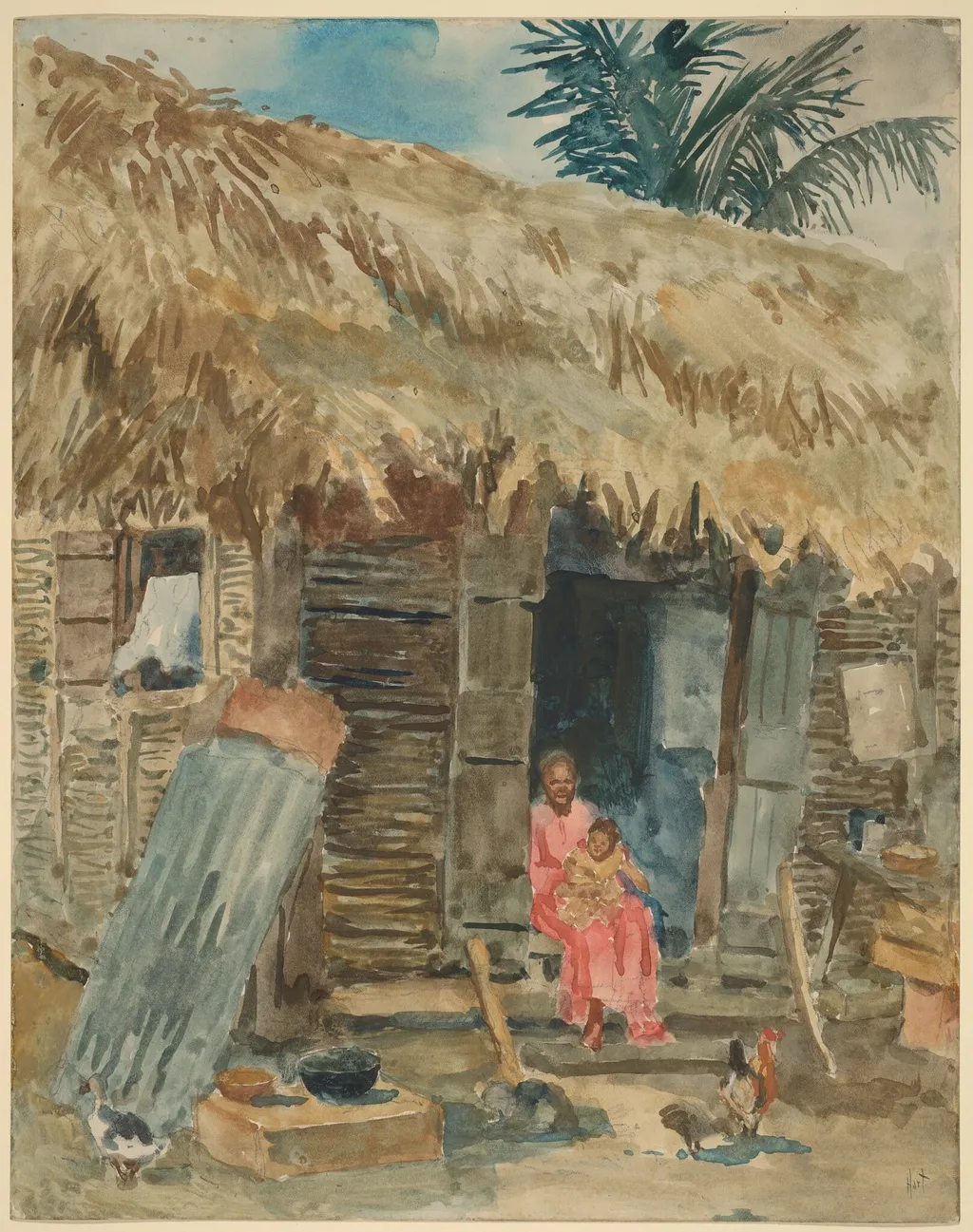
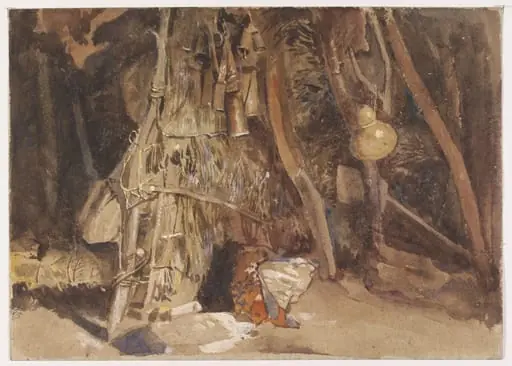
Hut in Trinidad is a graphite drawing by George Overbury Hart. It dates from 1917 and is held in the collection of the National Gallery of Art.
About this work
Overview
The work belongs to a series of sketches Hart made during his time in Trinidad, reflecting his interest in everyday life and local architecture.
Hut in Trinidad is a watercolor and graphite drawing by George Overbury Hart, dated around 1917. It captures a quiet domestic scene in the Caribbean, rendered with delicate washes and subtle layering. The work belongs to a series of sketches Hart made during his time in Trinidad, reflecting his interest in everyday life and local architecture. Its modest scale and intimate subject distinguish it from grander colonial narratives of the period.
Subject & Meaning
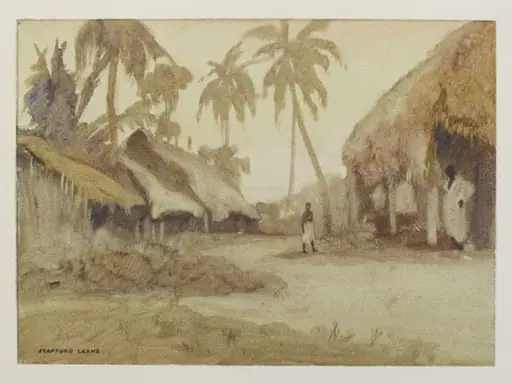
The scene centers on a modest hut built from local materials, with a thatched roof and timber walls. A woman sits on the steps, cradling a child, while chickens roam freely in the yard. The composition avoids drama, instead emphasizing stillness and routine. The figures are not idealized; their presence suggests a quiet dignity in daily labor and domestic life, offering a grounded view of Caribbean rural existence.
Technique & Style
Hart employed watercolor over a light graphite underdrawing to build soft, translucent layers. He used glazing to subtly modulate tones in the roof, walls, and foliage, creating depth without harsh lines. The palette is restrained—earthy browns, muted greens, and pale ochres—enhancing the calm atmosphere. The brushwork is loose yet deliberate, allowing the paper’s texture to contribute to the sense of natural weathering and light.
History & Provenance
Hart created this work during a stay in Trinidad in the mid-1910s, likely as part of a broader observational project. It remained in private hands for much of the 20th century before entering a public collection. Its survival as a small, unassuming work reflects its status as a personal study rather than a commissioned piece, offering insight into Hart’s artistic practice beyond formal exhibitions.
Context
Painted during British colonial rule, the work quietly diverges from the exoticizing tendencies common in colonial art. Hart’s focus on ordinary life—without spectacle or sentimentality—aligns with emerging early 20th-century interests in ethnographic realism. The scene reflects Trinidad’s Afro-Caribbean and Creole communities, though without explicit commentary, leaving interpretation open to the viewer’s awareness of the era’s social dynamics.
Legacy
Though not widely exhibited, Hut in Trinidad contributes to a lesser-known body of work by Hart that documents Caribbean life with restraint and attention to detail. It stands as an example of how Western artists engaged with colonial settings without overt romanticism. The drawing is now valued for its quiet authenticity, offering a counterpoint to more stylized or propagandistic depictions of the region from the same period.
Own this work as a print
Artist & collection


![Men Drinking at a Table [verso], by George Overbury Hart](https://artifactworldgallery.com/img/george-overbury-hart--men-drinking-at-a-table-verso--7e9475e5b5079377-w320.webp)
![Chicken Vendors [recto], by George Overbury Hart](https://artifactworldgallery.com/img/george-overbury-hart--chicken-vendors-recto--d97b582e13465974-w320.webp)