Artwork
Bathing Beach
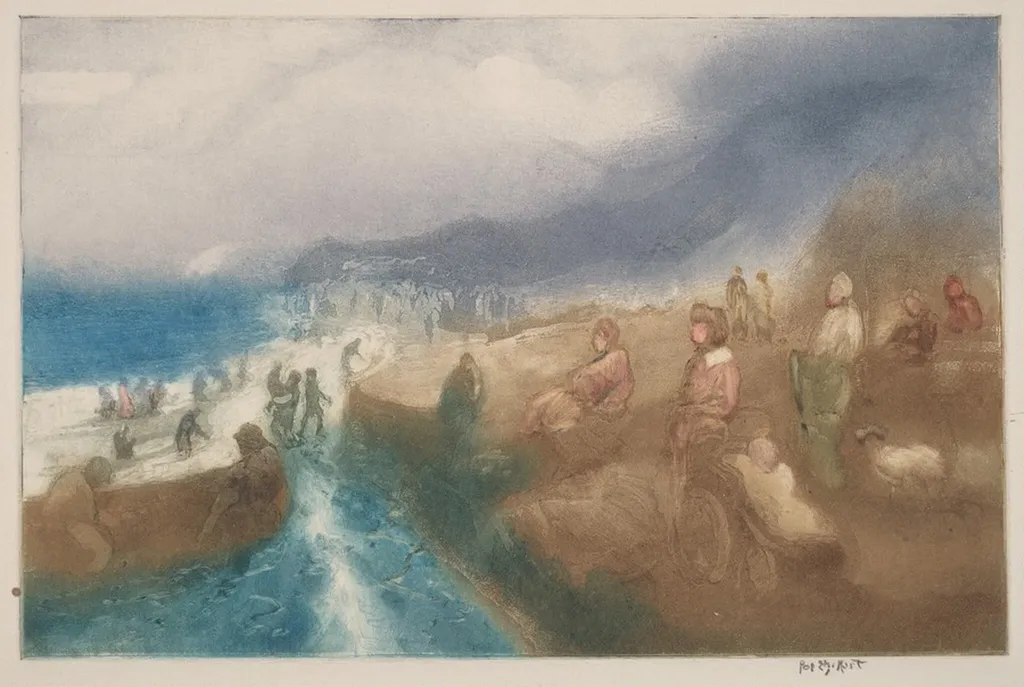
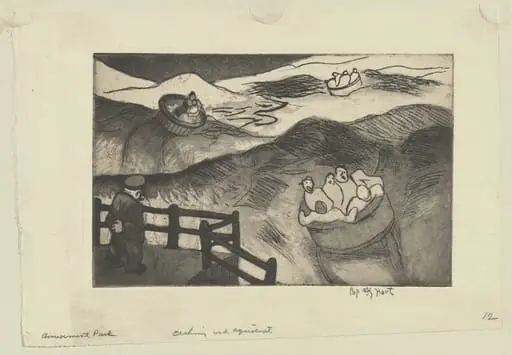
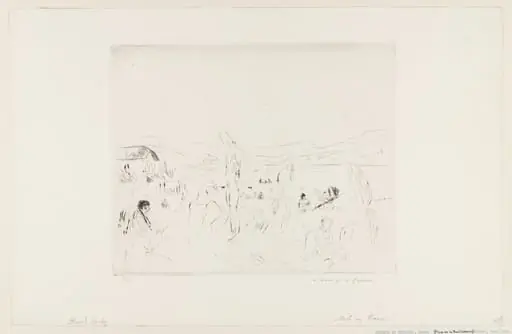
Bathing Beach is an ink print by George Overbury Hart. It dates from 1925 and is held in the collection of the National Gallery of Art.
About this work
Overview
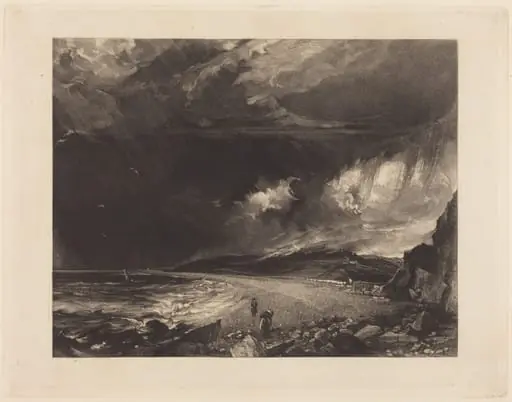
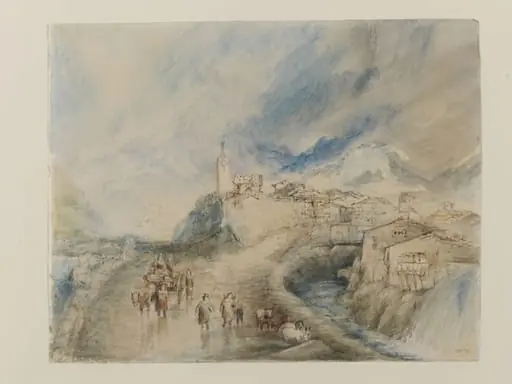
Bathing Beach is a 1925 color aquatint by George Overbury Hart, depicting a quiet coastal scene populated by loosely rendered figures. Unlike traditional prints with sharp lines, this work uses soft, layered tones to suggest atmosphere and movement. The technique allows subtle transitions between hues, enhancing the sense of a calm, overcast day by the sea.
Subject & Meaning
The scene portrays ordinary beachgoers in quiet repose—some seated on the shore, others wading in shallow surf. No dramatic action occurs; instead, the focus lies in stillness and solitude. The presence of hats and coats suggests a cool, unseasonable day, reinforcing a mood of contemplative leisure rather than recreation.
Technique & Style
Hart employed color aquatint to build tonal depth through controlled acid etching and multiple ink layers. The surface appears sketchlike, with fluid, uneven lines and soft edges that mimic rapid drawing. Muted blues and grays dominate, avoiding vivid contrast, which contributes to the print’s subdued, atmospheric quality and sense of immediacy.
History & Provenance
Created in 1925, Bathing Beach emerged during Hart’s active period in American printmaking, when artists were exploring modernist approaches to traditional media. The work was likely produced in a small edition, typical of fine art prints of the era. Its early 20th-century origins align with a broader interest in everyday scenes rendered with emotional restraint.
Context
In the 1920s, American artists increasingly turned to intimate, non-narrative subjects as a reaction against academic grandeur. Hart’s beach scene reflects this shift, echoing the quiet realism of contemporaries like Mary Cassatt and the tonal experiments of printmakers influenced by Japanese woodcuts and Impressionist light studies.
Legacy
Bathing Beach remains a representative example of early 20th-century American printmaking that prioritized mood over spectacle. While not widely exhibited today, it contributes to the understanding of how aquatint was adapted for expressive, atmospheric ends—bridging traditional technique with modern sensibilities in American art.
Artist & collection


![Men Drinking at a Table [verso], by George Overbury Hart](https://artifactworldgallery.com/img/george-overbury-hart--men-drinking-at-a-table-verso--7e9475e5b5079377-w320.webp)
![Chicken Vendors [recto], by George Overbury Hart](https://artifactworldgallery.com/img/george-overbury-hart--chicken-vendors-recto--d97b582e13465974-w320.webp)