Artwork
Drepanornis albertisi (Black-billed Sicklebill Bird of Paradise)
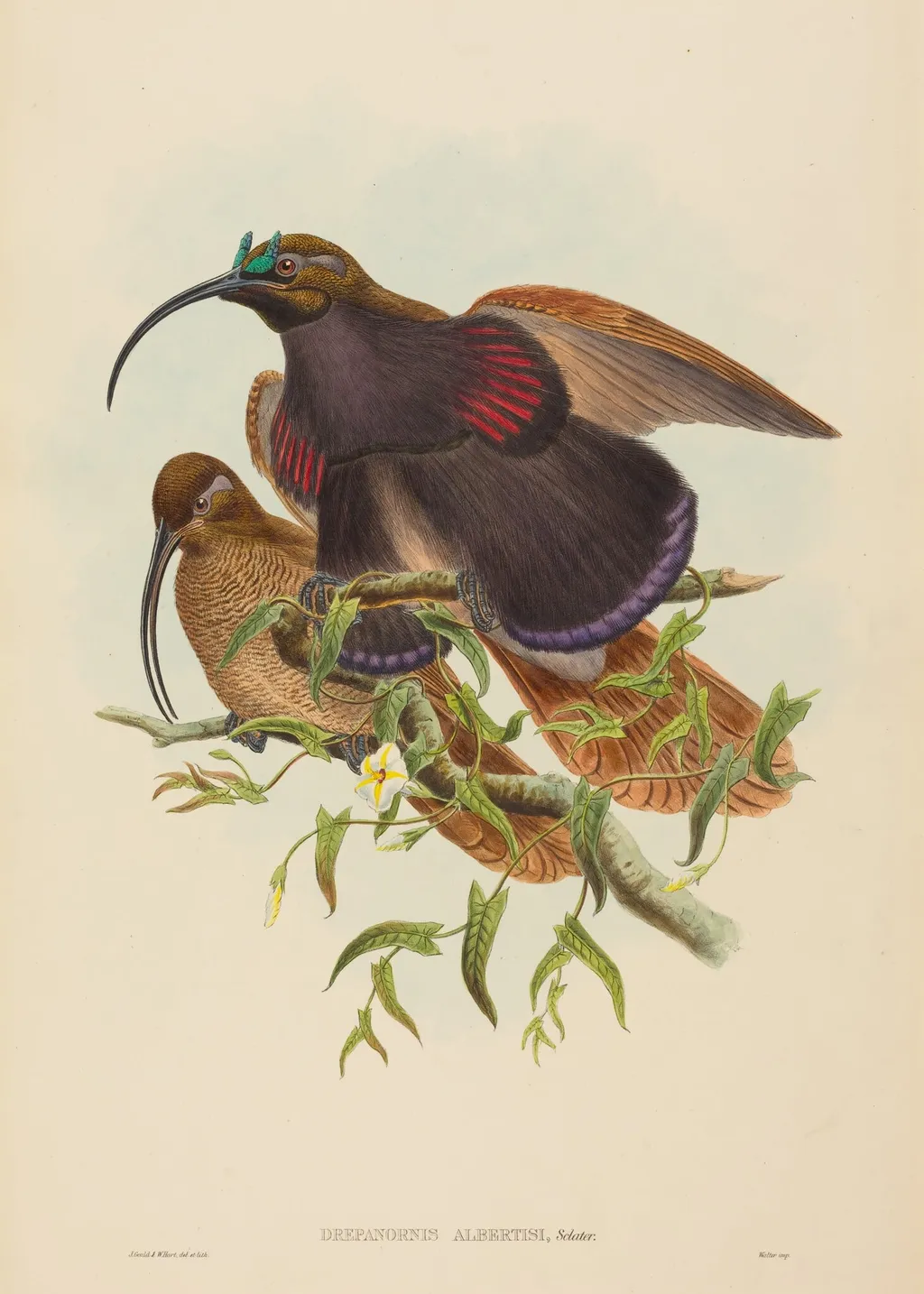
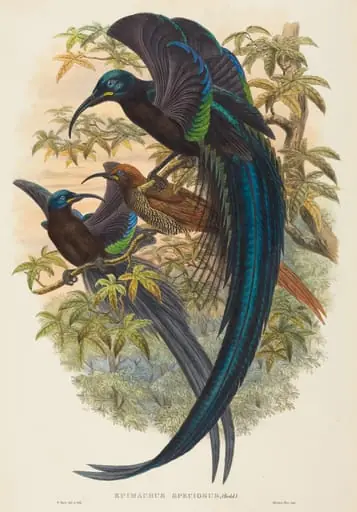
Drepanornis albertisi (Black-billed Sicklebill Bird of Paradise) is an ink print by the Romanticist artist W. Hart. It dates from 1842 and is held in the collection of the National Gallery of Art. This 1842 hand-colored lithograph by W.
About this work
Overview
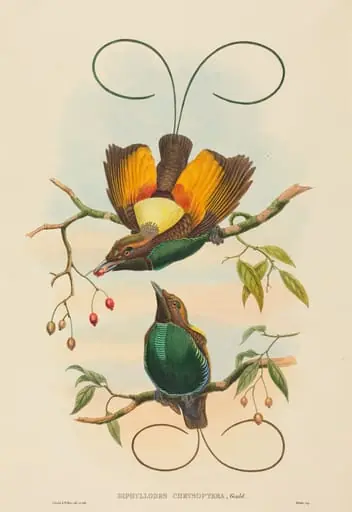
This 1842 hand-colored lithograph by W. Hart illustrates the Black-billed Sicklebill Bird of Paradise (Drepanornis albertisi), featuring two birds amidst foliage.
Subject & Meaning
The print depicts two birds of the same species in contrasting poses: a larger, dark bird with vibrant red wing feathers and a green beak, and a smaller, brownish bird with a distinctive long, curved beak, highlighting the species' characteristics.
Technique & Style
The artist employed lithography, a printmaking technique involving drawing on limestone plates, combined with meticulous hand-coloring to capture the intricate details and colors of the birds' plumage and their natural surroundings.
History & Provenance
Created in 1842 by W. Hart, specific provenance details are not provided, though the scientific naming suggests alignment with contemporary taxonomic practices.
Context
The work reflects 19th-century interests in ornithology and the illustration of newly classified species, often driven by colonial-era discoveries and the development of systematic biology.
Legacy
While specific legacy details of this piece are not highlighted, it contributes to the broader heritage of 19th-century natural history art, aiding in the popularization and scientific documentation of bird species.
Artist & collection