Artwork
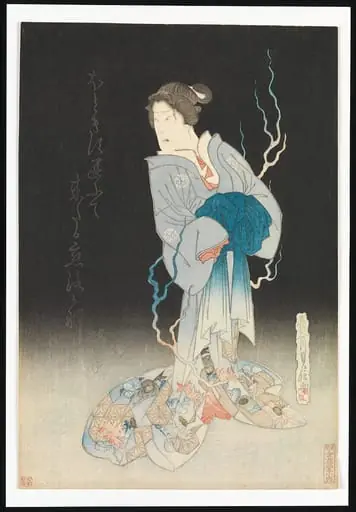
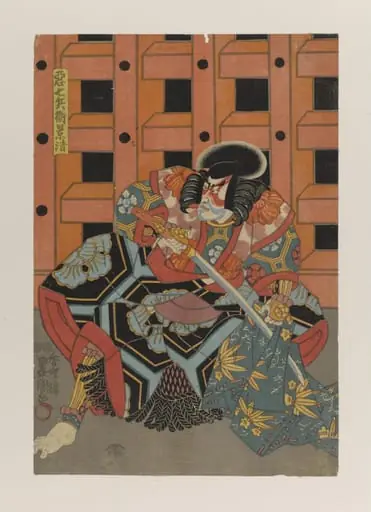
「忠孝復讐傳 磯貝藤助」二代目嵐璃珏|The Actor Arashi Rikaku II as Isogai Tōsuke, from the series Lives of Men who Carried Out Revenge for Loyalty or Filial Piety
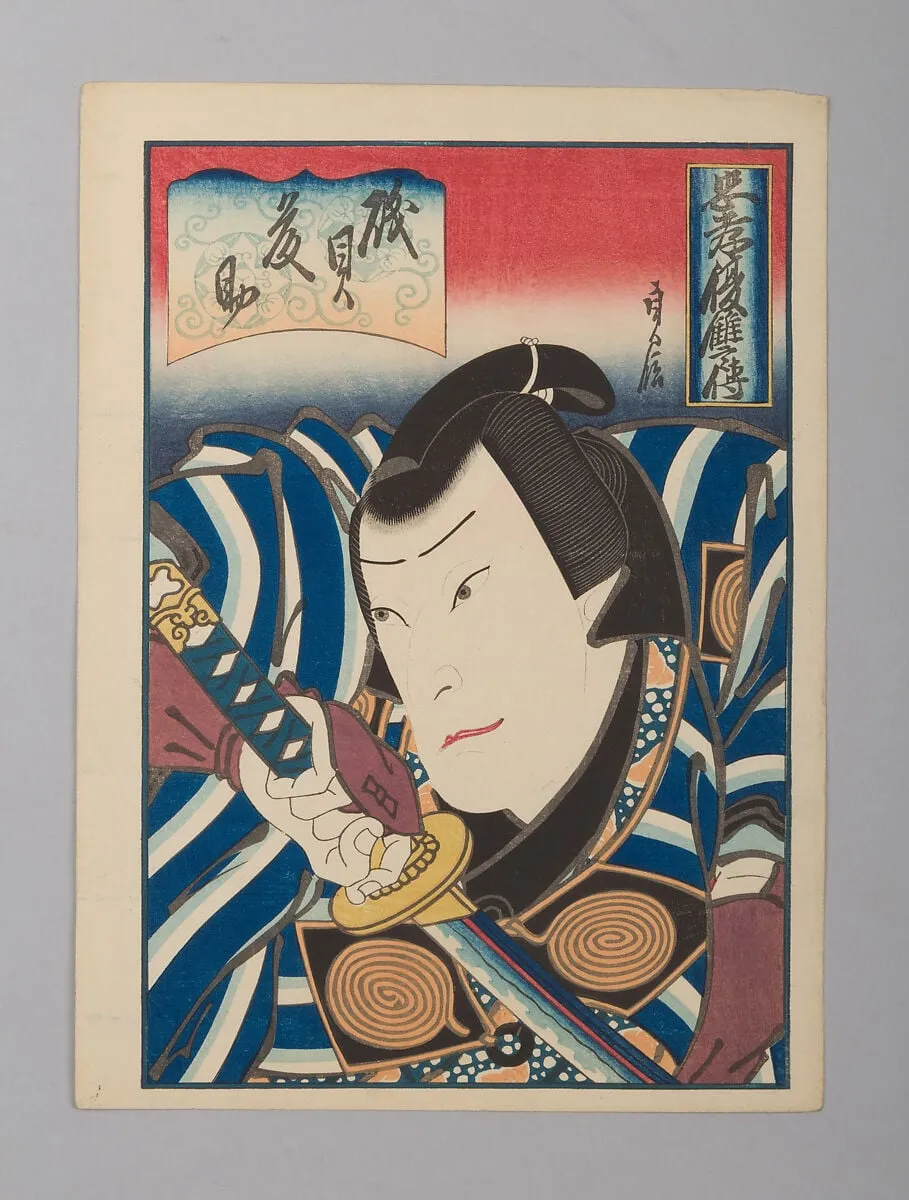
「忠孝復讐傳 磯貝藤助」二代目嵐璃珏|The Actor Arashi Rikaku II as Isogai Tōsuke, from the series Lives of Men who Carried Out Revenge for Loyalty or Filial Piety is an ink print by the Romanticist artist Hasegawa Sadanobu. It dates from 1848 and is held in the collection of the Metropolitan Museum of Art.
About this work
Overview
Created in 1848 by the ukiyo‑e designer Hasegawa Sadanobu, this vertical chūban woodblock print depicts the actor Arashi Rikaku II in the role of Isogai Tōsuke, a figure from the popular series “Lives of Men who Carried Out Revenge for Loyalty or Filial Piety.” The work is part of the Metropolitan Museum of Art’s collection of Japanese prints.
Subject & Meaning
The image presents a theatrical performer wearing a vivid red wig and stark white face makeup outlined in black, holding a small fan‑like object. The costume—a dark robe with swirling sleeve patterns—identifies the character Isogai Tōsuke, a loyal figure celebrated for avenging a familial grievance, a theme that resonated with Edo‑period audiences.
Technique & Style
Executed as a nishiki‑e multicolour woodblock, the print employs flat, saturated pigments and crisp line work typical of late‑mid‑19th‑century ukiyo‑e. The composition is framed by a blue‑and‑white striped curtain and a red banner bearing Japanese script, creating a graphic contrast that emphasizes the actor’s dramatic pose and facial expression.
History & Provenance
The print was produced during the height of the kabuki actor portrait market, when popular performers were frequently commemorated in series. It entered the Metropolitan Museum of Art’s collection through a 20th‑century acquisition of Japanese prints, where it remains catalogued as an example of Sadanobu’s work and of the period’s theatrical iconography.
Artist & collection


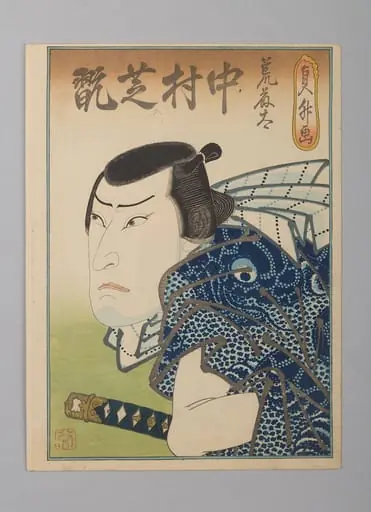 「荒藤太 中村芝翫」(四代)|Nakamura Shikan IV as the Fishmonger Aratota
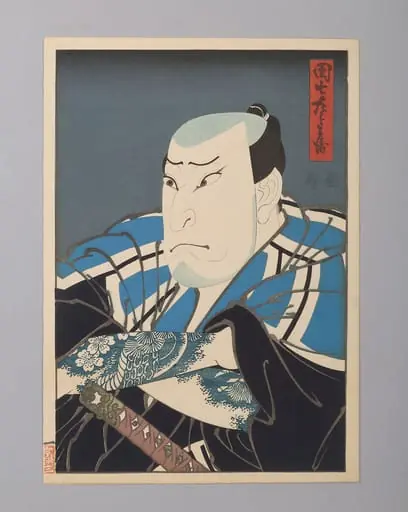 「団七九郎兵衛」|Nakamura Utaemon IV as Danshichi Kurobei
 H Beard Print Collection
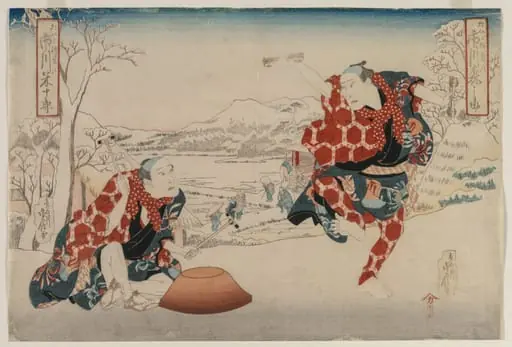
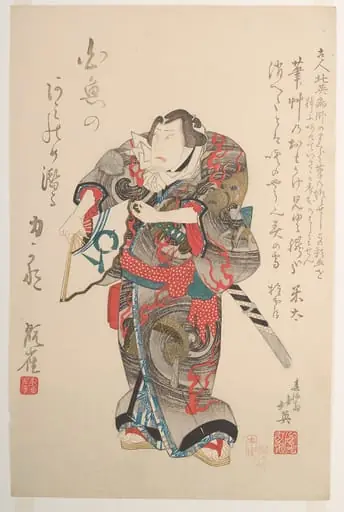 四代目中村歌右衛門 「関取千両幟」|The Actor Nakamura Utaemon IV as the Wrestler Iwakawa Jirokichi
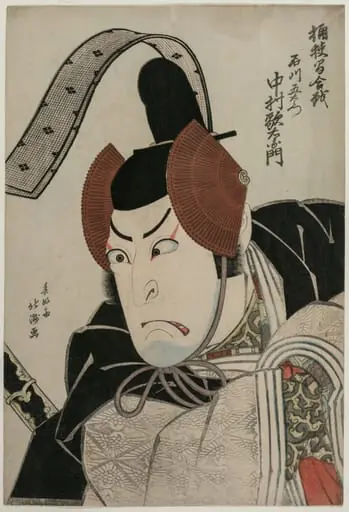 Actor Nakamura Utaemon III (Shikan) as Ishikawa Goemon at the Battle of Okehazama (Okehazama Gassen)
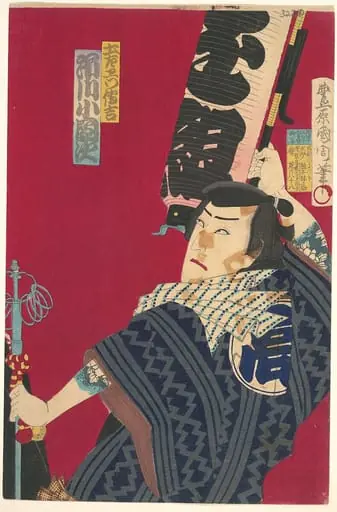 市川左小治 土左衛門伝吉|Ichikawa Sadanji as Dozaemon Denkichi in a Kabuki Play
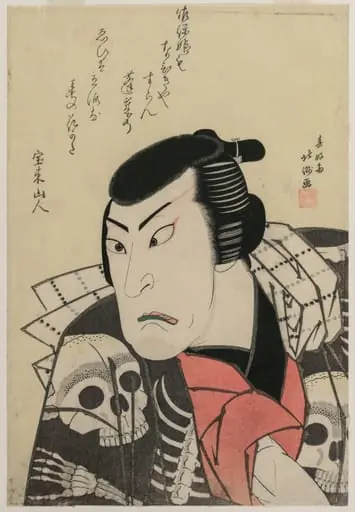 Actor Ichikawa Ebijūrō I as Tōken (China Dog) Jūbei, in the play Red and Purple, Rich Dyes of Osaka (Benimurasaki ai de someage)
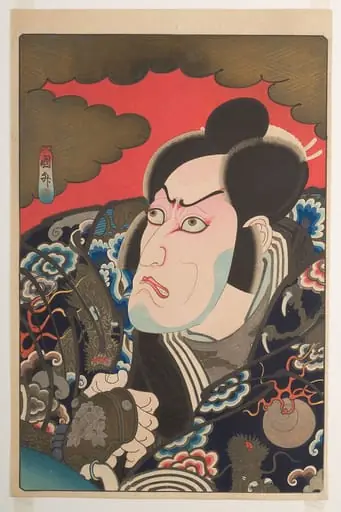 歌川国升画 五代目市川海老蔵 「熊谷次郎直実」|Kabuki Actor Ichikawa Ebizō V as Kumagai Jirō Naozane