Artwork
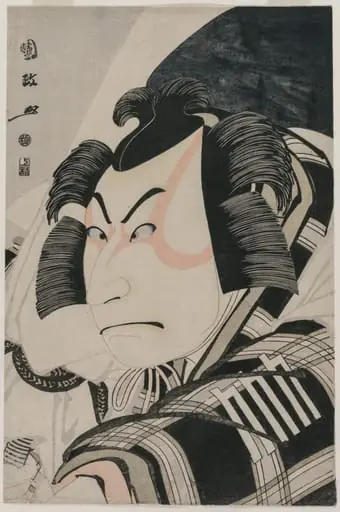
歌川国升画 五代目市川海老蔵 「熊谷次郎直実」|Kabuki Actor Ichikawa Ebizō V as Kumagai Jirō Naozane
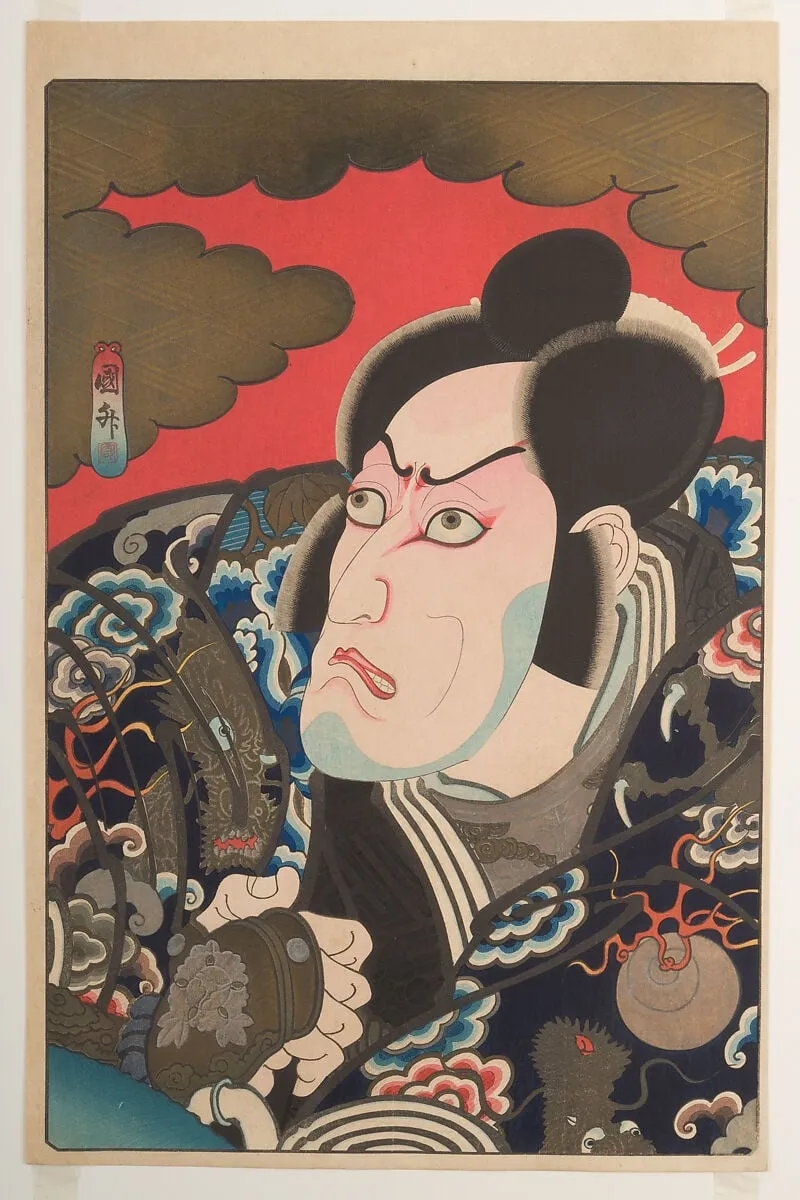
歌川国升画 五代目市川海老蔵 「熊谷次郎直実」|Kabuki Actor Ichikawa Ebizō V as Kumagai Jirō Naozane is an ink print by the Romanticist artist Utagawa Kunimasu. It dates from 1849 and is held in the collection of the Metropolitan Museum of Art.
About this work
Overview
Utagawa Kunimasu’s woodblock print, dated around 1849, portrays the celebrated Kabuki performer Ichikawa Ebizō V in the role of Kumagai Jirō Naozane. Executed in ink and color on paper, the image is part of the Metropolitan Museum of Art’s collection and exemplifies the vibrant portraiture typical of mid‑nineteenth‑century Japanese prints.
Subject & Meaning
The portrait captures the actor in a dramatic pose, his face rendered with stark white skin, dark hair, and a vivid red mouth. He dons a tall, dark wig accented by a white stripe, suggesting the heroic samurai character of Kumagai Jirō, a figure associated with loyalty and martial valor in Japanese folklore.
Technique & Style
Kunimasu employed the ukiyo‑e woodblock method, layering pigments to achieve bold contrasts: a pale complexion against a deep‑blue backdrop patterned with gold clouds. The artist’s signature appears as a small red seal in the upper left, a common practice that both authenticates the work and adds a decorative element.
History & Provenance
Created circa 1849, the print entered the Metropolitan Museum of Art’s holdings through acquisition in the early twentieth century, reflecting the museum’s long‑standing interest in Japanese print culture. Its survival in good condition allows contemporary viewers to study the visual conventions of Kabuki portraiture during the late Edo period.
Context
During the late Edo era, Kabuki actors were frequent subjects of ukiyo‑e prints, which served both as promotional material and as collectibles for fans. This image situates Ichikawa Ebizō V within that commercial and artistic network, illustrating how theatrical fame was disseminated through popular visual media.
Artist & collection


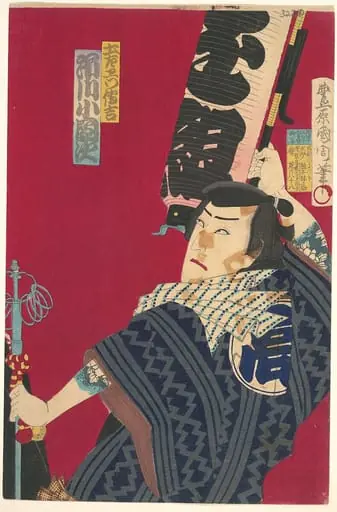 市川左小治 土左衛門伝吉|Ichikawa Sadanji as Dozaemon Denkichi in a Kabuki Play
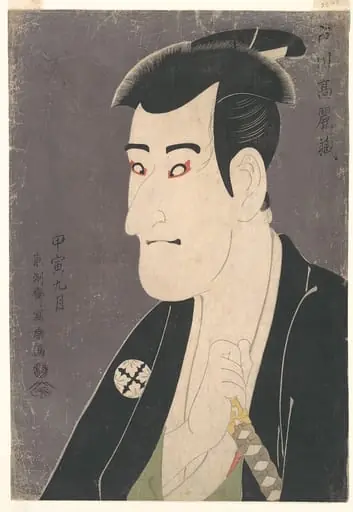 三代目市川高麗蔵の志賀大七|Kabuki Actor Ichikawa Komazō III as Shiga Daishichi in the Play A Medley of Tales of Revenge (Katakiuchi noriaibanashi)
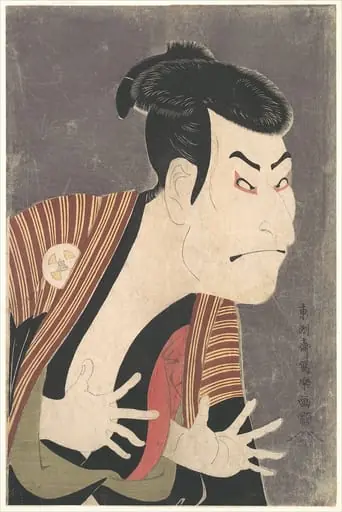 東洲斎写楽画 三代目大谷鬼次の奴江戸兵衛|Kabuki Actor Ōtani Oniji III as Yakko Edobei
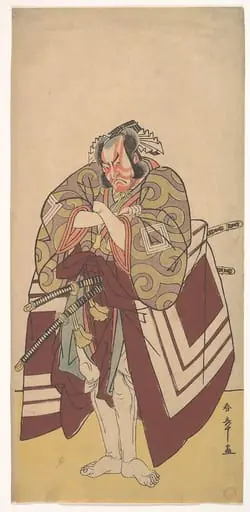 五代目市川団十郎|Kabuki Actor Ichikawa Danjūrō V in a Shibaraku (Stop Right There!) Role
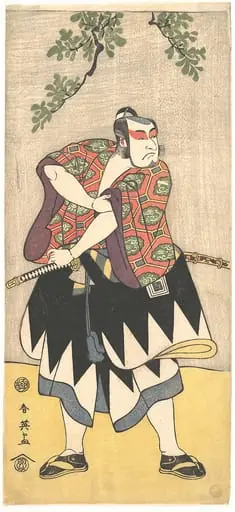 勝川春英画 二代目市川門之助|Kabuki Actor Ichikawa Monnosuke II
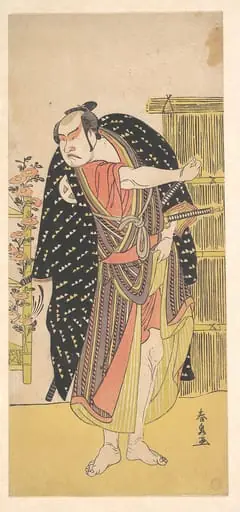 勝川春泉画 三代目大谷廣次|Kabuki Actor Ōtani Hiroji III
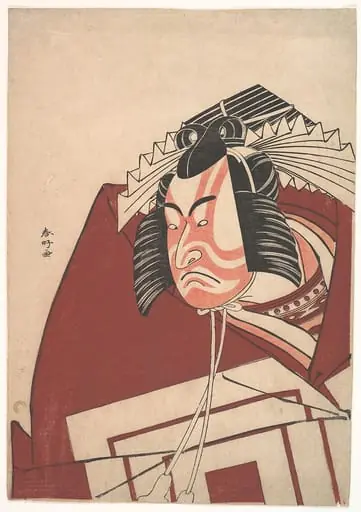 勝川春好画 二代目市川門之助|Ichikawa Monnosuke II in a Shibaraku Performance
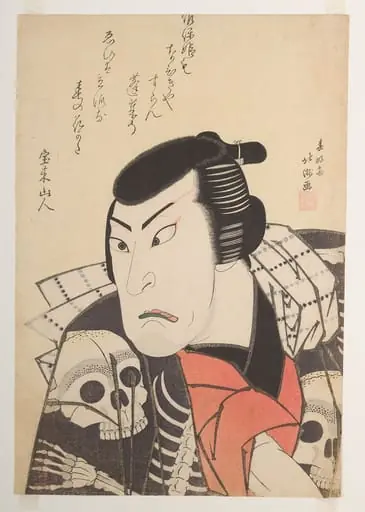 春好斎北洲画 初代市川鰕十郎 「紅紫大坂潤」|Kabuki Actor Ichikawa Ebijūrō I as Tōken (China Dog) Jūbei, in the play Benimurasaki ai de someage (Red and Purple, Rich Dyes of Osaka)
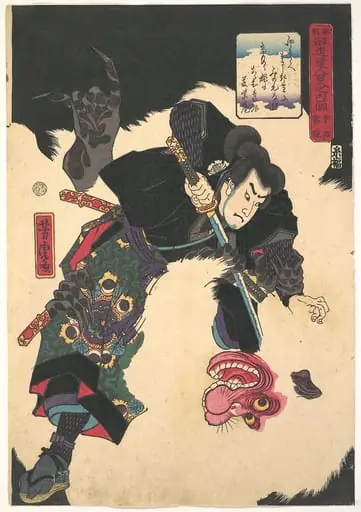 Untitled
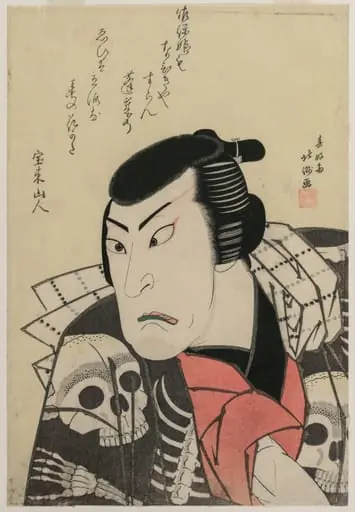 Actor Ichikawa Ebijūrō I as Tōken (China Dog) Jūbei, in the play Red and Purple, Rich Dyes of Osaka (Benimurasaki ai de someage)
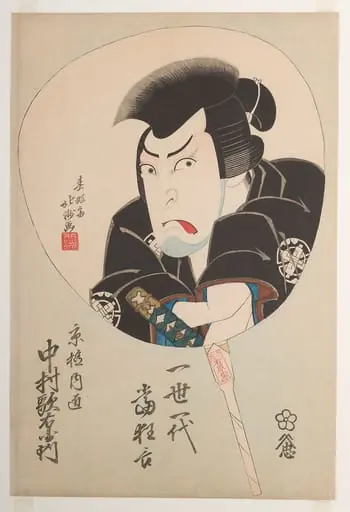 春好斎北洲画 三代目中村歌右衛門 『一世一代当狂言』|Kabuki Actor Nakamura Utaemon III as the Sword Master Kyōgoku Takumi, from the series Issei ichidai atari Kyōgen (Hits of a Lifetime of Kyōgen)
 Nakamura Nakazo II as Matsuomaru in the Carriage-Stopping Scene