Artwork
Rama Chandra
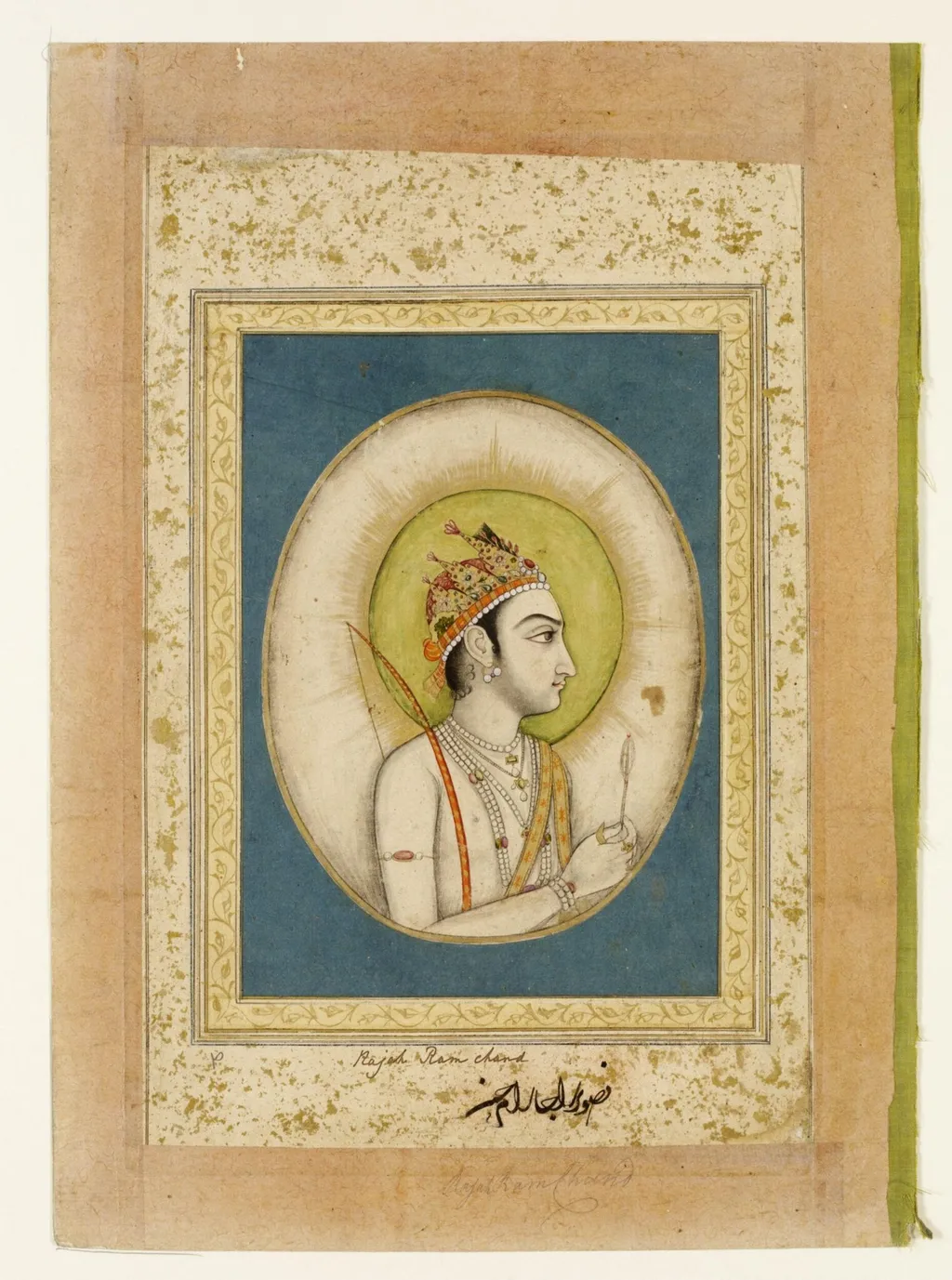
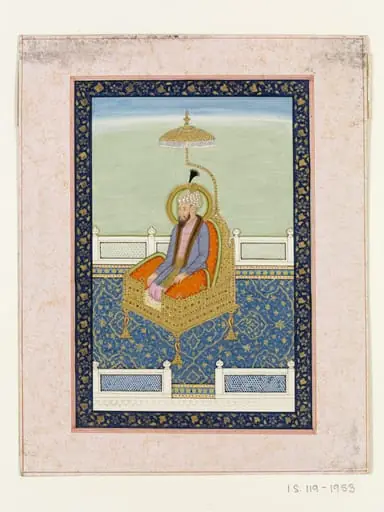
Rama Chandra is a paint painting by Unknown. It dates from 1750 and is held in the collection of the Victoria and Albert Museum.
About this work
Overview
Rendered in profile facing right, the figure is framed within a white oval set against a blue square field, bordered by a golden vine motif on a yellow ground.
This opaque watercolor and gold painting on paper, dated circa 1750, depicts Rama Chandra, the legendary king of Ayodhya and seventh incarnation of Vishnu. Rendered in profile facing right, the figure is framed within a white oval set against a blue square field, bordered by a golden vine motif on a yellow ground. The work is inscribed with his name and entered the Victoria and Albert Museum’s collection in 1922 after acquisition from London dealer Arthur Churchill.
Subject & Meaning
Rama Chandra is portrayed as a divine sovereign, his clean-shaven face and regal adornments signaling both royal authority and spiritual purity. The arrow raised in his right hand and the bow slung over his shoulder reference his role as a warrior-king from the Ramayana, embodying dharma and righteous power. His still, serious gaze reinforces his role as an ideal ruler, calm yet prepared for action.
Technique & Style
The composition employs opaque watercolor with extensive gold leaf detailing to highlight jewelry, headdress, and the ornamental border. The figure is rendered with fine brushwork, emphasizing texture in fabric and metalwork. The blue background and yellow ground create a flat, symbolic space, typical of Pahari court painting, where spatial depth is secondary to symbolic presence and ornamental richness.
History & Provenance
The painting was acquired by the Victoria and Albert Museum in 1922 from Arthur Churchill, a London dealer specializing in South Asian art. The inscription 'Rajah Ram Chand' confirms the subject’s identity and suggests the work originated in a North Indian royal atelier, likely from the Pahari region. Its survival and documented provenance reflect early 20th-century interest in Indian miniature traditions among Western collectors.
Context
Created during the height of Pahari painting, this work aligns with devotional portraiture common in Himalayan hill states, where rulers were often depicted as divine avatars to legitimize their rule. The use of gold, rich pigments, and stylized framing reflects courtly aesthetics tied to Vaishnavite devotion. Similar images were used in ritual contexts or as objects of contemplation within royal collections.
Legacy
As part of the V&A’s South Asian collection, this painting contributes to the scholarly understanding of 18th-century Indian miniature traditions. Its preservation allows ongoing study of iconographic conventions, material practices, and the transmission of religious narratives through visual form. It remains a quiet but significant example of how kingship and divinity were visually fused in pre-colonial India.
Artist & collection

 Domestic Scene
 Giacomo and Cardinal Marco, investing Andrea, Abbot of San Zeno, with his Benefice
 The Nymph of Fontainebleau
 Portrait of a Woman
 Madonna and Child with Saints in the Enclosed Garden
 Venus and Minerva
 Family Group of Four on Sofa
 Wall painting from Room H of the Villa of P. Fannius Synistor at Boscoreale
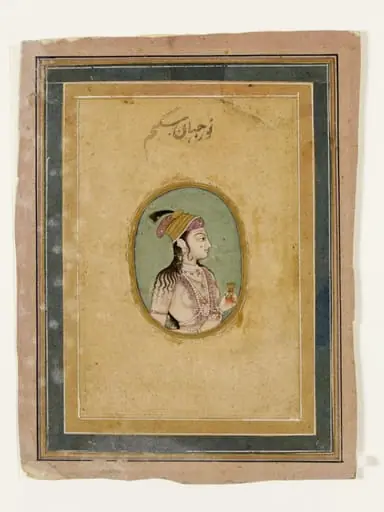 Nur Jahan
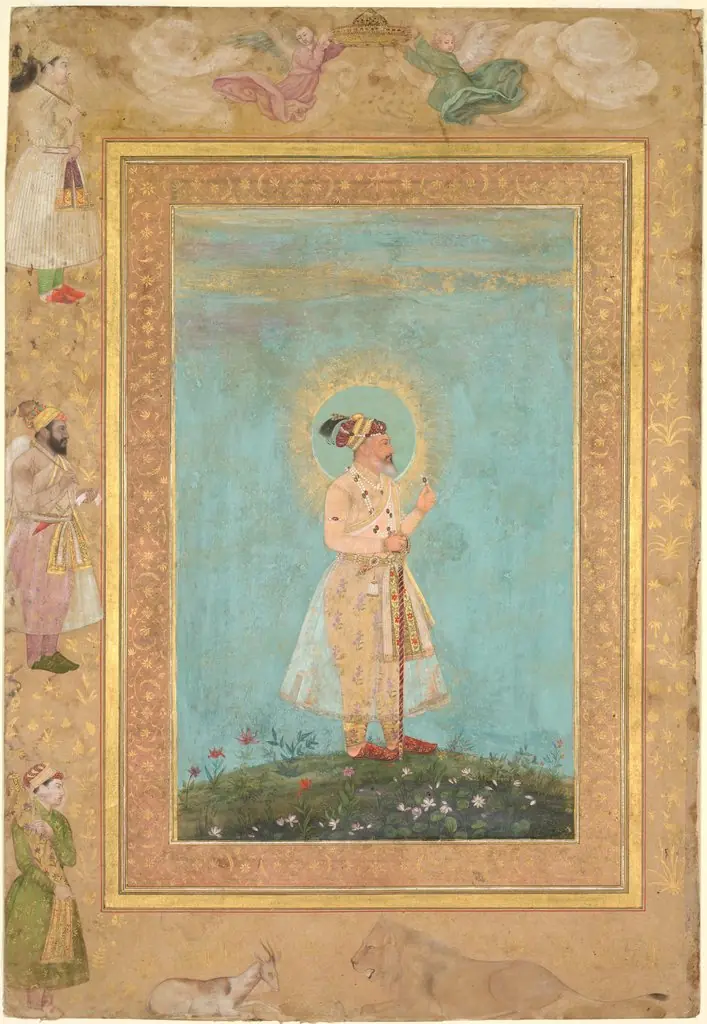 Shah Jahan holding a spinel and a long Deccan sword, from the Late Shah Jahan Album
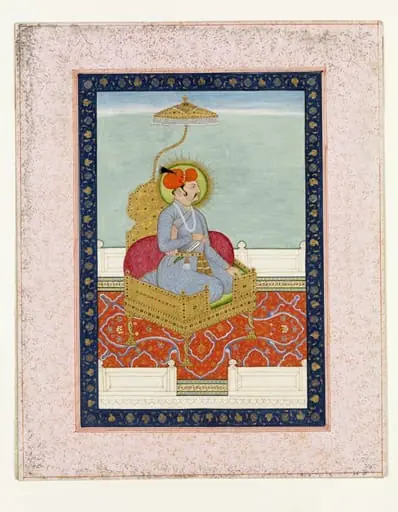 Jahangir
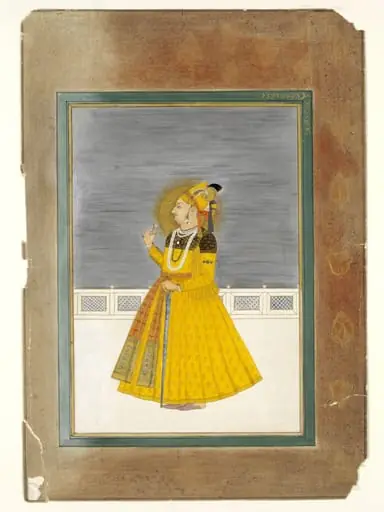 Ajit Singh
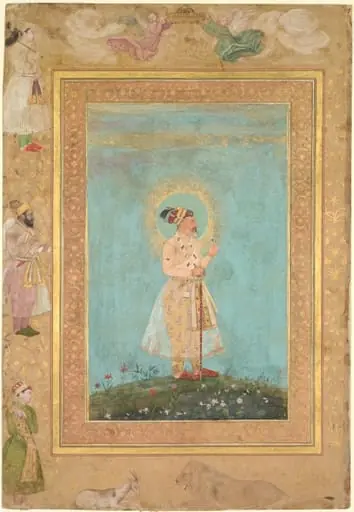 Shah Jahan holding a spinel and a long Deccan sword, from the Late Shah Jahan Album
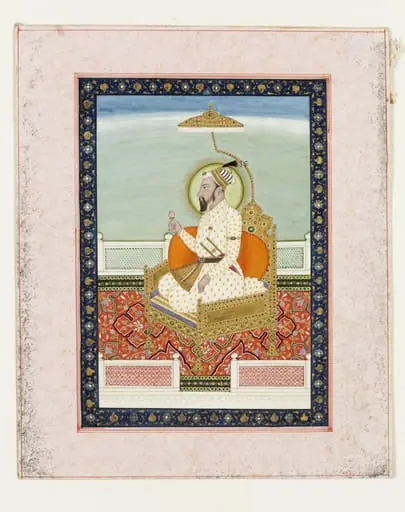 Rafi-U'ddarjat
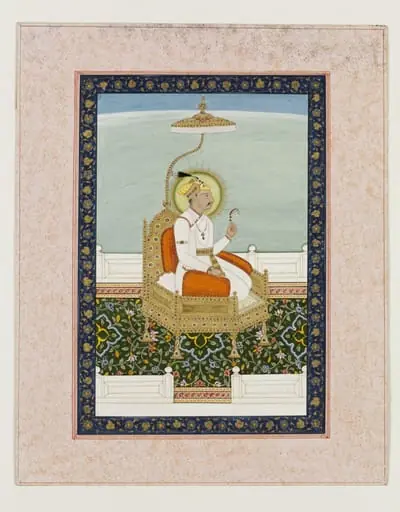 Emperor Ahmad Shah
 Nau Nihal Singh
 Rafi-U'ddaula
 Emperor Jahangir
 Shah Jahan
 Sultan Muhammad Mirza of Samarkand