Artwork
Portrait of Prince Sur Singh Rathor of Bikaner (1594–1631)
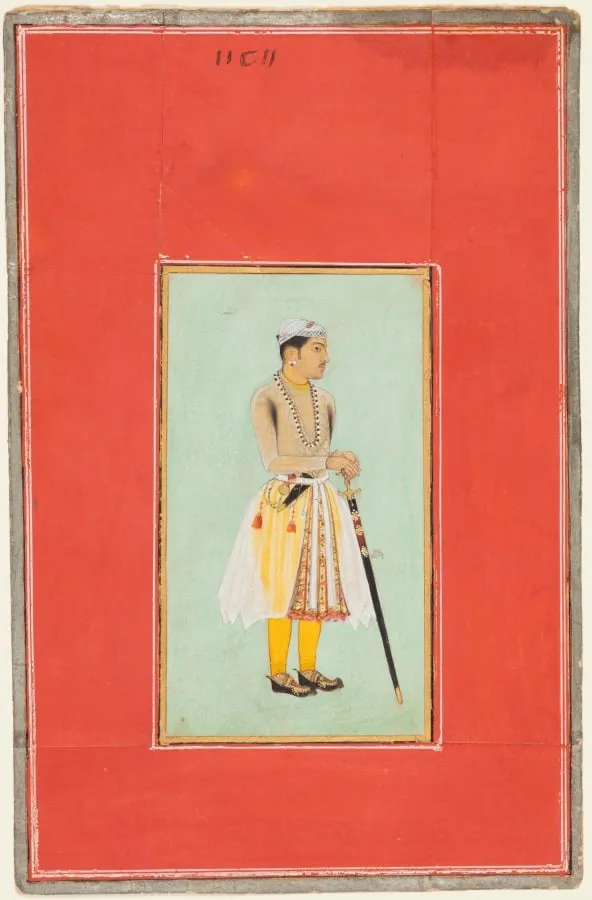
Portrait of Prince Sur Singh Rathor of Bikaner (1594–1631) is an unspecified painting by the Baroque artist Unknown. It dates from 1612 and is held in the collection of the Cleveland Museum of Art. This portrait depicts Prince Sur Singh Rathor of Bikaner, created between 1611 and 1613.
About this work
The prince’s calm face and the flat background feel Rajput, while the careful folds in his clothes look Mughal.
A young prince stands in a pale blue space, wearing a loose white tunic and bright yellow pants. A dagger sits in his sash, and he grips a long sword in its black case. Tiny red marks on his forehead and ear show he worshipped Vishnu.
The painting was made in 1611–13, right when Mughal and Rajput styles began to mix. The prince’s calm face and the flat background feel Rajput, while the careful folds in his clothes look Mughal.
To see more of this blend, look up rajput kingdom of bikaner.
Overview
This portrait depicts Prince Sur Singh Rathor of Bikaner, created between 1611 and 1613. He is shown standing alone against a pale blue background, dressed in a flowing white tunic and vivid yellow trousers. His posture is composed, his gaze direct, and his attire reflects both regional Rajput traditions and emerging Mughal influences. The painting captures a moment of quiet authority, blending stylistic elements from two distinct courtly traditions.
Subject & Meaning
Prince Sur Singh is portrayed as a warrior and devotee. The dagger at his waist and the sword in its black sheath signify his martial role, while the red tilakas on his forehead, neck, and ear mark his devotion to Vishnu, a deity revered by many Rajput rulers. These symbols together convey his dual identity: a protector of his realm and a faithful adherent of Vaishnavism, reinforcing his legitimacy and spiritual authority.
Technique & Style
The painting merges Rajput and Mughal techniques. The flat, unmodulated blue background and serene facial expression are characteristic of Rajput portraiture, emphasizing spiritual presence over naturalism. In contrast, the delicate rendering of fabric folds, especially in the translucent jama, reflects Mughal attention to texture and volume. This synthesis reveals a transitional moment in court painting, where stylistic boundaries were becoming porous.
History & Provenance
Commissioned during Sur Singh’s reign as ruler of Bikaner, the portrait was likely produced in the royal atelier between 1611 and 1613. Bikaner, though politically independent, maintained close ties with the Mughal court, facilitating artistic exchange. The work remained within the royal family’s collection for generations before entering a public collection, preserving its connection to Bikaner’s dynastic memory.
Context
In early 17th-century Rajasthan, Rajput courts were increasingly influenced by Mughal aesthetics without abandoning their own visual language. Bikaner, strategically positioned between Delhi and the desert, became a hub for this hybrid style. Artists there adapted Mughal precision in drapery and detail while retaining Rajput emphasis on symbolic clarity and devotional tone, reflecting broader political and cultural negotiations of the era.
Legacy
This portrait stands as an early example of the stylistic fusion that would define Rajput painting in the 17th century. It illustrates how local rulers selectively adopted Mughal techniques to enhance their own imagery without surrendering cultural identity. The work continues to inform scholarship on cross-regional artistic dialogue, offering insight into how visual culture supported political and religious authority in early modern India.
Artist & collection

 Domestic Scene
 Giacomo and Cardinal Marco, investing Andrea, Abbot of San Zeno, with his Benefice
 The Nymph of Fontainebleau
 Portrait of a Woman
 Madonna and Child with Saints in the Enclosed Garden
 Venus and Minerva
 Family Group of Four on Sofa
 Wall painting from Room H of the Villa of P. Fannius Synistor at Boscoreale
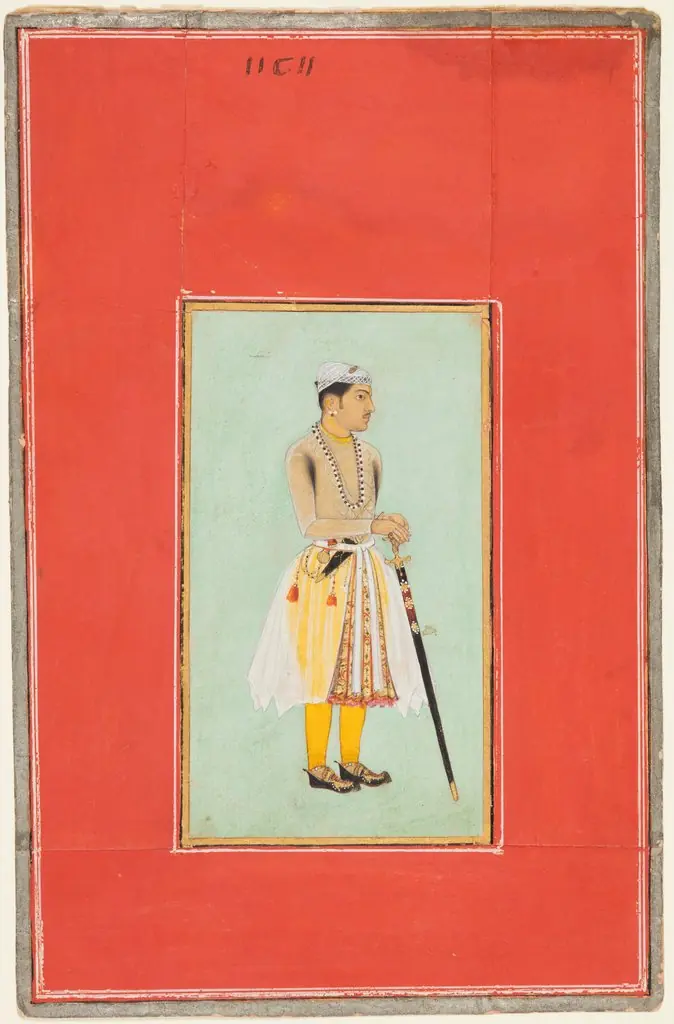 Portrait of Prince Sur Singh Rathor of Bikaner (1594–1631)
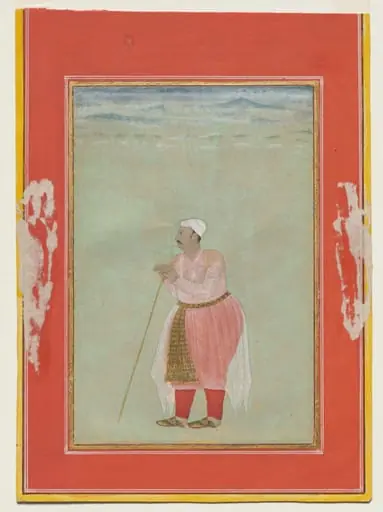 Portrait of Maharaja Rai Singh of Bikaner (reigned 1574–1612)
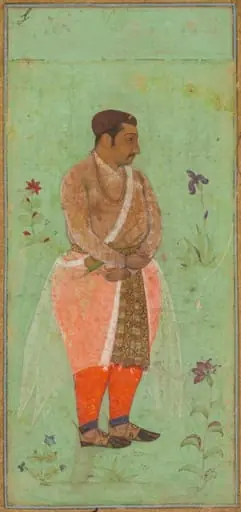 Portrait of Suraj Singh Rathor, Raja of Marwar and Maternal Uncle of Shah Jahan: A Page from the Prince Khurram Album
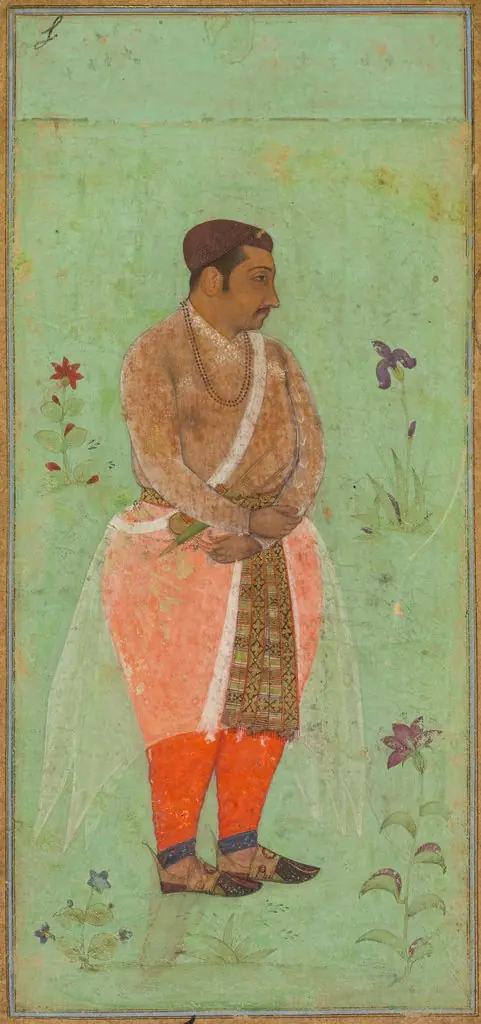 Portrait of Suraj Singh Rathor, Raja of Marwar and Maternal Uncle of Shah Jahan: A Page from the Prince Khurram Album
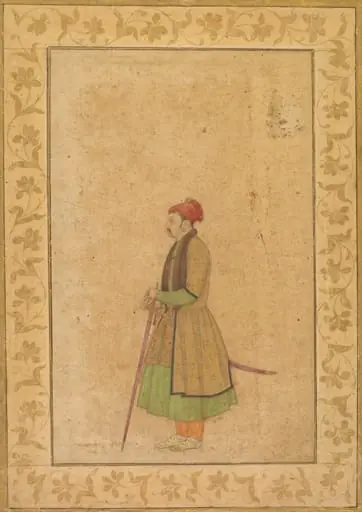 Portrait of Raja Ram Singh of Amber (r. 1667-1688) with a Deccan Sword (recto)
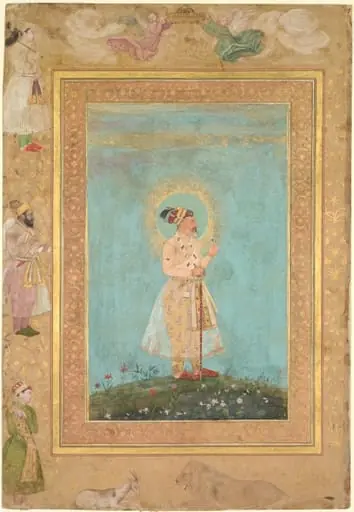 Shah Jahan holding a spinel and a long Deccan sword, from the Late Shah Jahan Album