Artwork
Shah Jahan
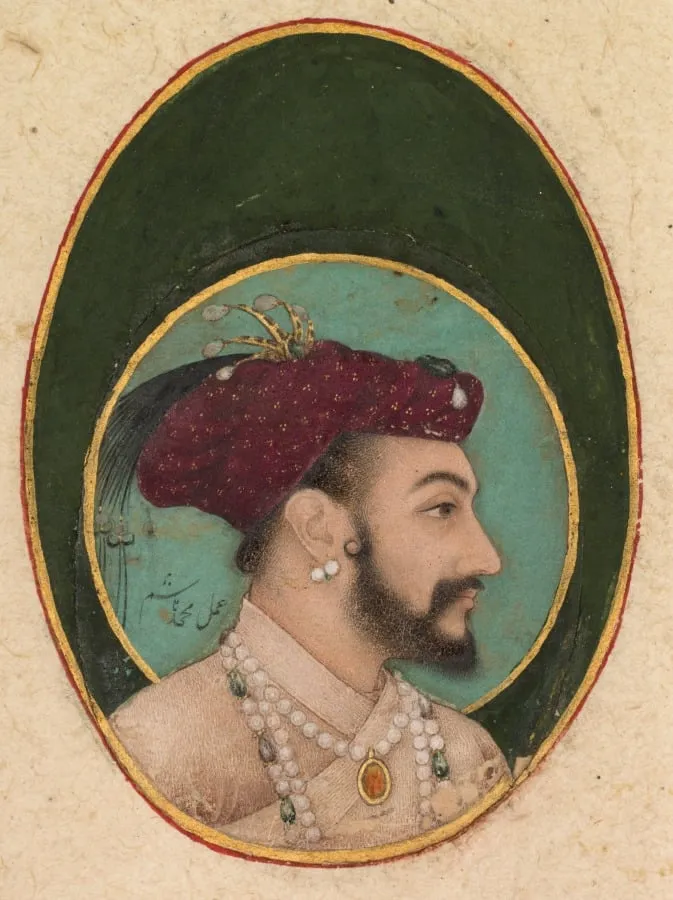
Shah Jahan is an unspecified painting by the Baroque artist Hashim. It dates from 1630 and is held in the collection of the Cleveland Museum of Art.
About this work
To see more royal faces from this time, look up subject: india, mughal period (1526-1756).
You see a man in a white robe and turban, his dark beard framing a calm face. Tiny gold details glint on his clothes and the green background.
This small portrait was made to mark Shah Jahan’s rise to emperor. The artist signed his name behind the ruler’s neck—a quiet nod to his own skill. The full beard was a new look, showing the emperor’s shift toward tradition.
To see more royal faces from this time, look up subject: india, mughal period (1526-1756).
Overview
The portrait presents Shah Jahan shortly after his accession in 1628, depicting the new emperor in a white robe and turban against a muted green backdrop. A neatly trimmed beard frames his composed expression, while subtle gold accents catch the light on his garments. The composition is modest in size, intended as a formal acknowledgment of his recent elevation to the Mughal throne.
Subject & Meaning
The inclusion of a full beard marks a deliberate departure from the more relaxed appearance of his predecessors, signalling Shah Jahan’s turn toward stricter religious observance. The serene demeanor and restrained attire convey both the authority of the imperial office and the personal piety the ruler wished to project during the early phase of his reign.
Technique & Style
Executed in fine brushwork, the painting balances delicate coloration with precise detailing. The white fabric is rendered with soft tonal variations, while the gold embellishments are applied in minute strokes that create a subtle sparkle. A green ground provides a calm contrast, and the artist’s hand is evident in the careful rendering of facial features and the texture of the turban.
History & Provenance
Created soon after Shah Jahan succeeded his father Jahangir, the work served as an official visual record of the new sovereign. The painter’s signature, discreetly placed behind the emperor’s neck, identifies the artist without detracting from the subject. The portrait has remained within collections documenting Mughal portraiture, offering insight into early‑17th‑century courtly representation.
Artist & collection

 Portrait Jewel of Emperor Jahangir
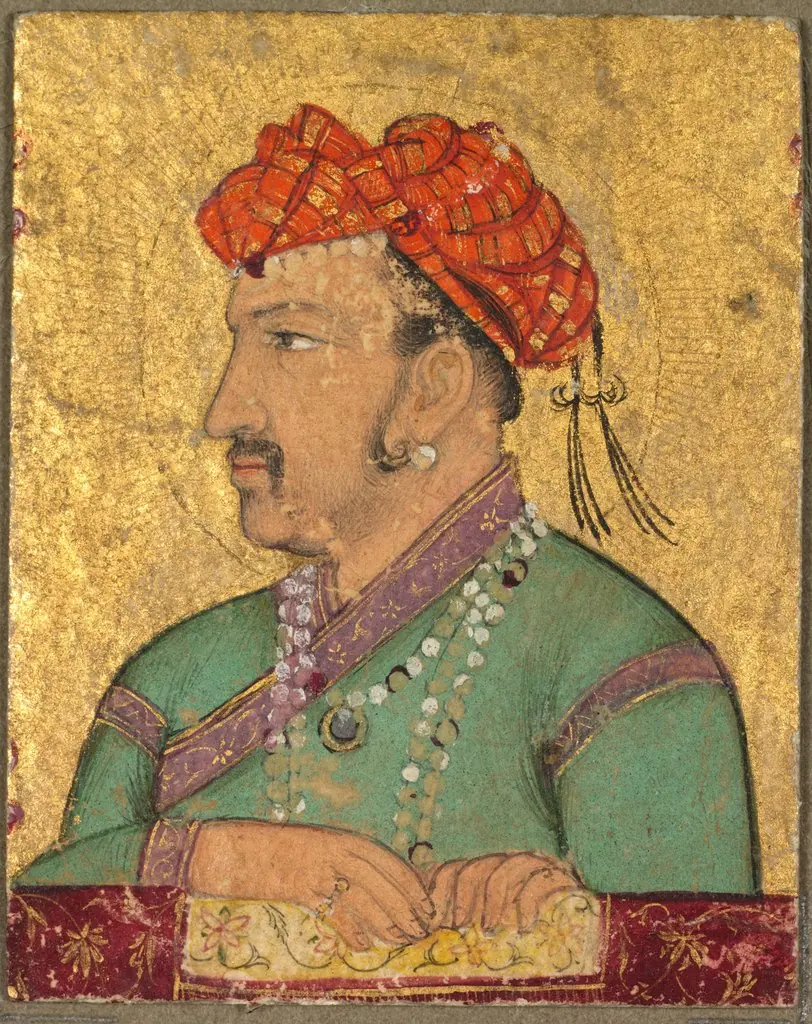 Portrait Jewel of Emperor Jahangir
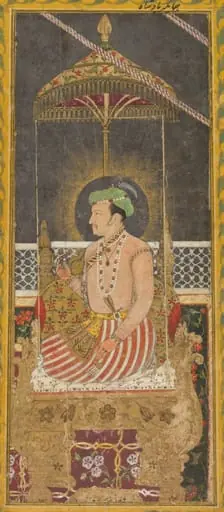 Posthumous portrait of Emperor Jahangir under a canopy (recto)
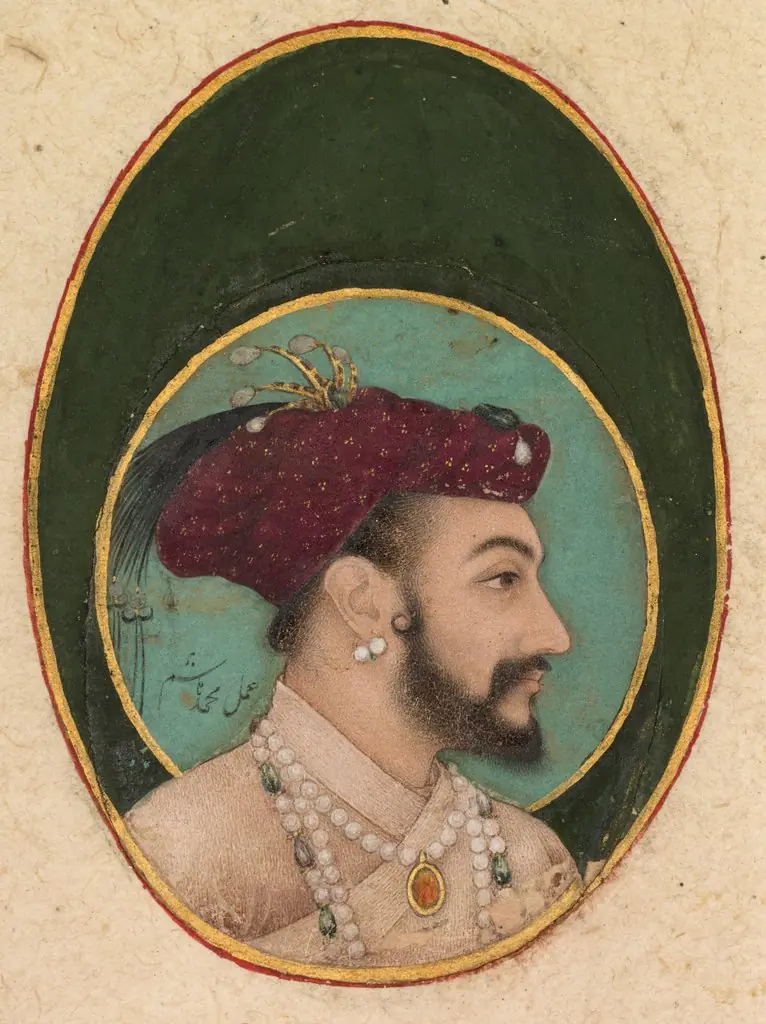 Shah Jahan
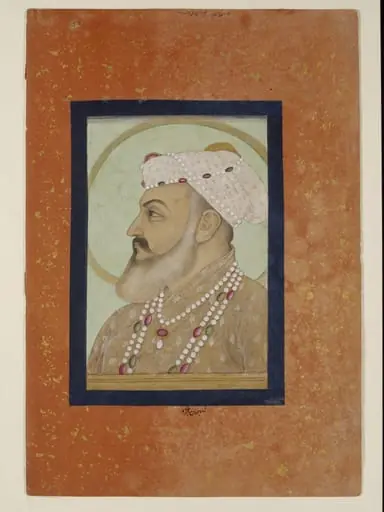 Shah Jahan
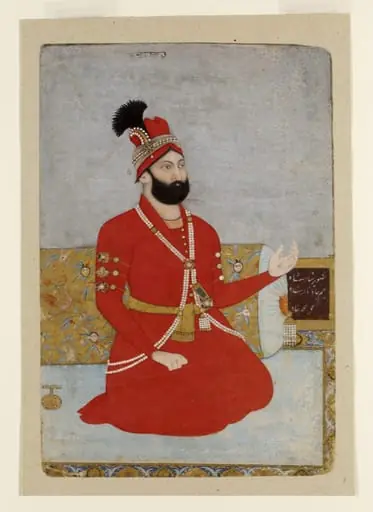 Nadir Shah
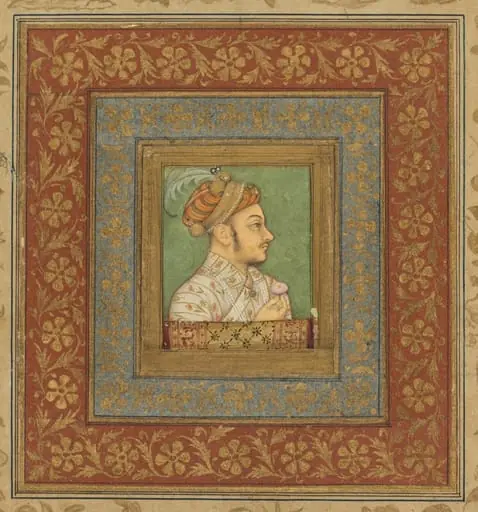 Portrait of Murad Bakhsh (1624–61)
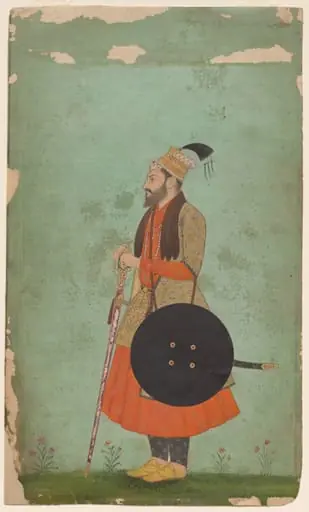 Portrait of Prince Murad Baksh (1624–1661)
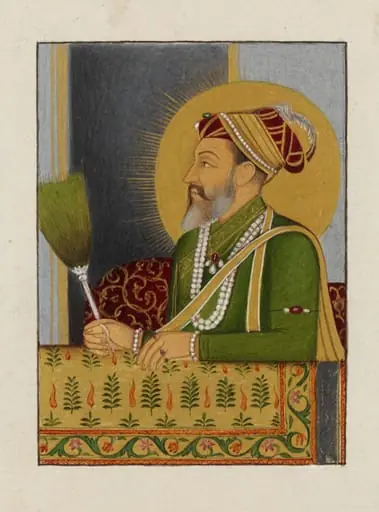 Emperor Shah Jahan
 Jaswant Singh of Jodhpur (reigned 1635–1678)
 Portrait of Emperor Jahangir