Artwork
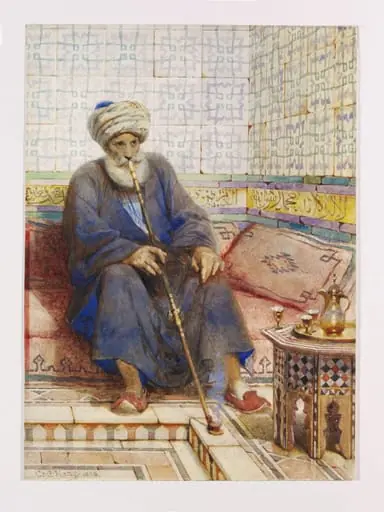
Man in Arab Costume, Seated and Smoking
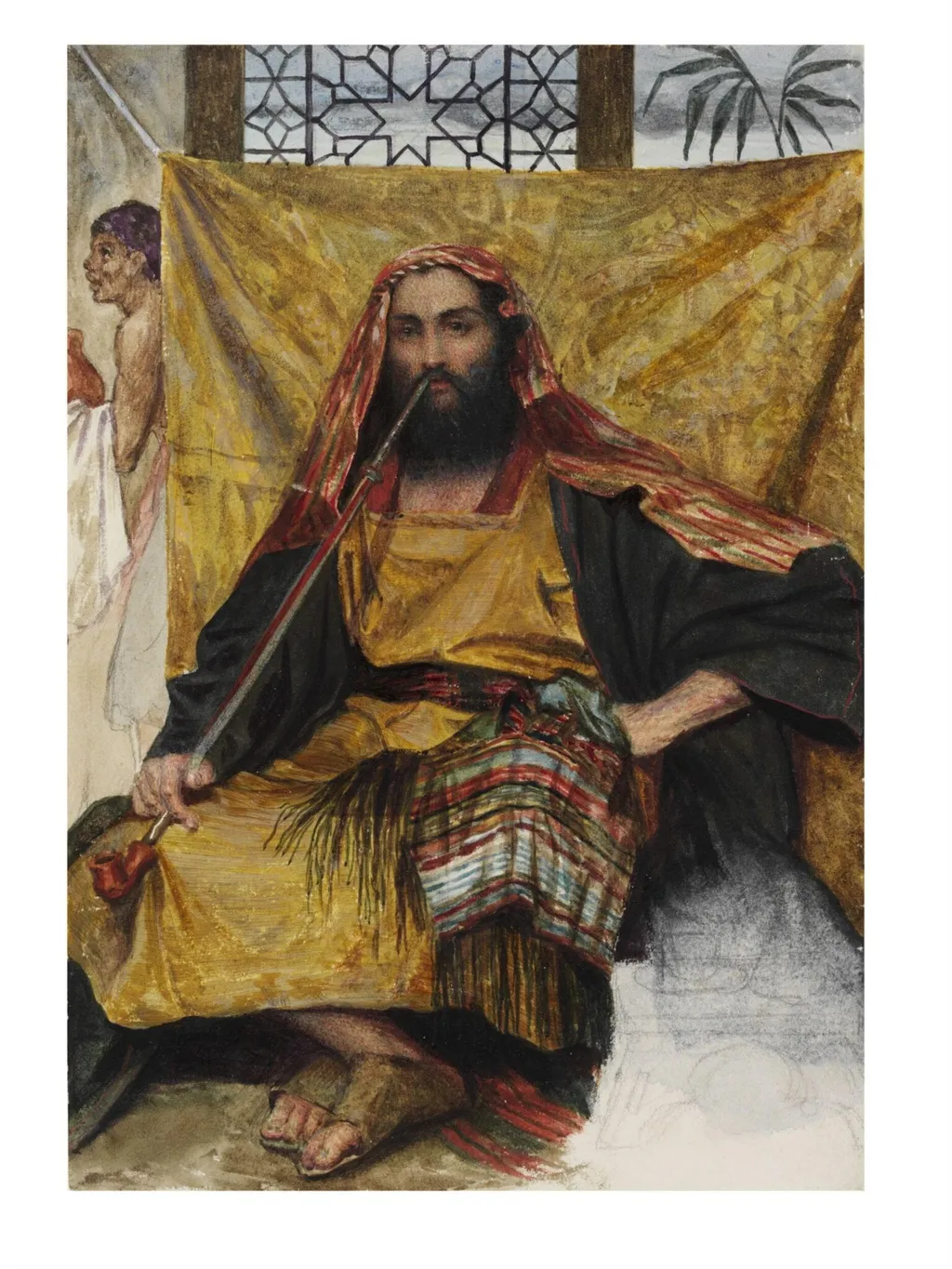
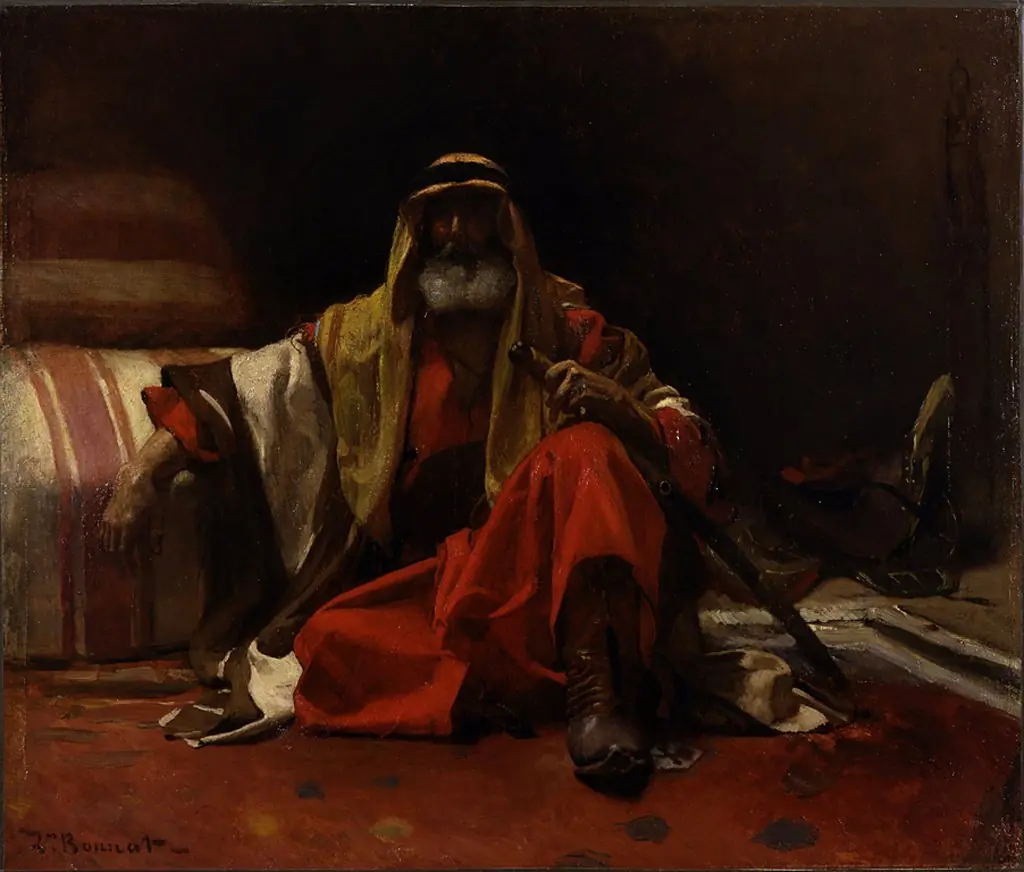
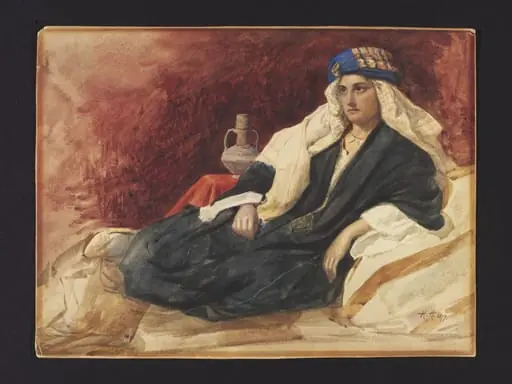
Man in Arab Costume, Seated and Smoking is a watercolor work on paper by the Impressionist artist Alfred Hassam. It dates from 1864 and is held in the collection of the Victoria and Albert Museum. This watercolour, created in the 1860s, depicts a man in traditional Arab attire seated and smoking a long-stemmed pipe.
About this work
Overview
This watercolour, created in the 1860s, depicts a man in traditional Arab attire seated and smoking a long-stemmed pipe.
This watercolour, created in the 1860s, depicts a man in traditional Arab attire seated and smoking a long-stemmed pipe. It reflects a broader 19th-century European fascination with North African and Middle Eastern domestic life, a subject rendered frequently in portable watercolour by travellers and artists who encountered these cultures firsthand. The medium allowed for quick, spontaneous recording of scenes previously known only through secondhand accounts.
Subject & Meaning
The figure embodies a common trope in Orientalist imagery: the contemplative male smoker, often encountered in coffee houses or private courtyards. Smoking, particularly through ornate hookahs or cherry-wood pipes, was a social ritual tied to hospitality in Ottoman and Egyptian societies. The painting captures not just a person, but a cultural practice that European observers noted for its contrast with their own simpler smoking customs.
Technique & Style
Executed in watercolour, the work employs loose, fluid brushwork typical of on-site sketching. The artist likely worked rapidly to capture light, texture, and posture before the moment passed. Details such as the folds of fabric and the curve of the pipe are suggested rather than meticulously rendered, reflecting an emphasis on immediacy over finish — a quality shared with emerging Impressionist practices of the same era.
History & Provenance
The artist, Alfred William Hassam (1842–1869), was a London-born painter and stained glass designer associated with the South Kensington art schools and the firm Heaton, Butler and Bayne. He received recognition for his stained glass work exhibited at the South Kensington Museum in 1865. Though little is known of his watercolours, this piece aligns with his documented activity in the mid-1860s, likely produced during a period of artistic exploration before his early death.
Context
The 1860s saw a surge in European travel to the Ottoman Empire and North Africa, aided by improved transport and colonial expansion. Artists and illustrators brought back visual records of daily life, often selecting scenes that emphasized cultural difference. These images catered to a home audience hungry for exoticism, shaping perceptions of the East through selective, sometimes romanticized, depictions of leisure and ritual.
Legacy
Hassam’s watercolour contributes to a body of work that documented cross-cultural encounters during a time of expanding imperial and artistic exchange. Though his career was brief, his surviving pieces, including this one, offer insight into how British artists engaged with non-European subjects. The image remains a quiet example of how personal observation intersected with broader 19th-century visual trends in Orientalist art.
Artist & collection
Artist
Childe Hassam carried a sketchbook like a second diary, doodling wherever he paused—street corners, park benches, even crowded ferries.