Artwork
Young Person in Arab dress
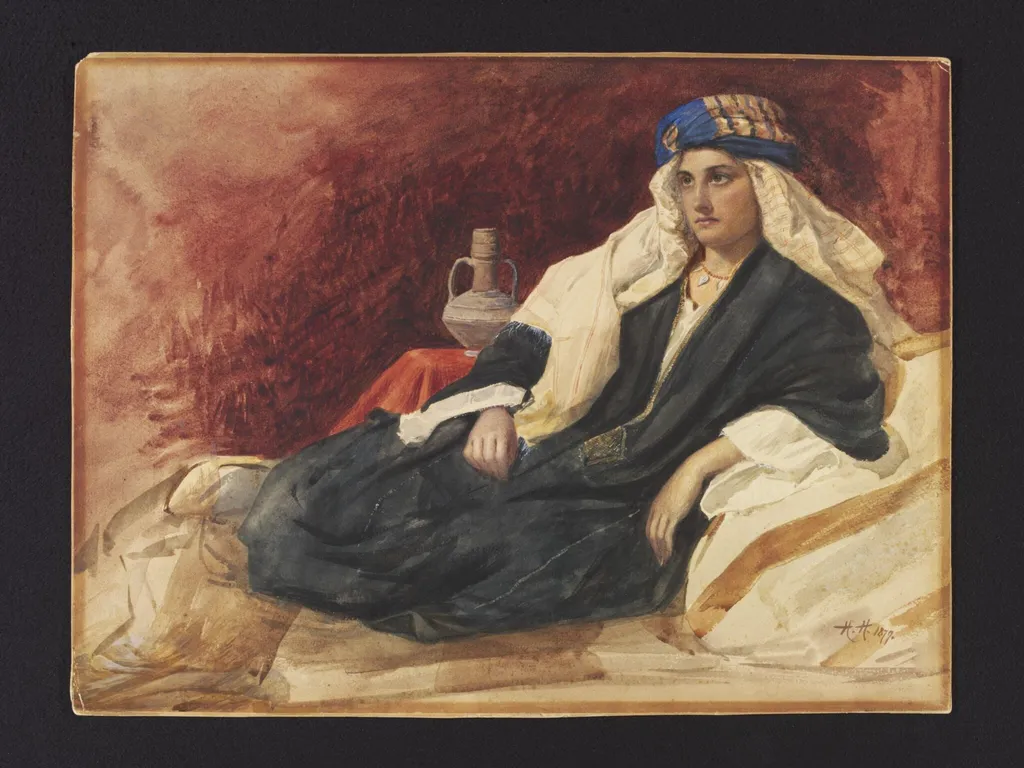
Young Person in Arab dress is a watercolor work on paper by the Impressionist artist Herbert Herkomer. It dates from 1879 and is held in the collection of the Victoria and Albert Museum. Painted in 1879 by Sir Hubert Herkomer, this watercolor portrays a young individual in Arab-inspired attire.
About this work
Overview
Despite the detailed depiction of clothing and setting, there is no evidence Herkomer ever visited the Near East.
Painted in 1879 by Sir Hubert Herkomer, this watercolor portrays a young individual in Arab-inspired attire. Despite the detailed depiction of clothing and setting, there is no evidence Herkomer ever visited the Near East. The work is executed in delicate watercolor washes, emphasizing texture and tone over precise line, reflecting the artist’s interest in atmospheric realism rather than ethnographic accuracy.
Subject & Meaning
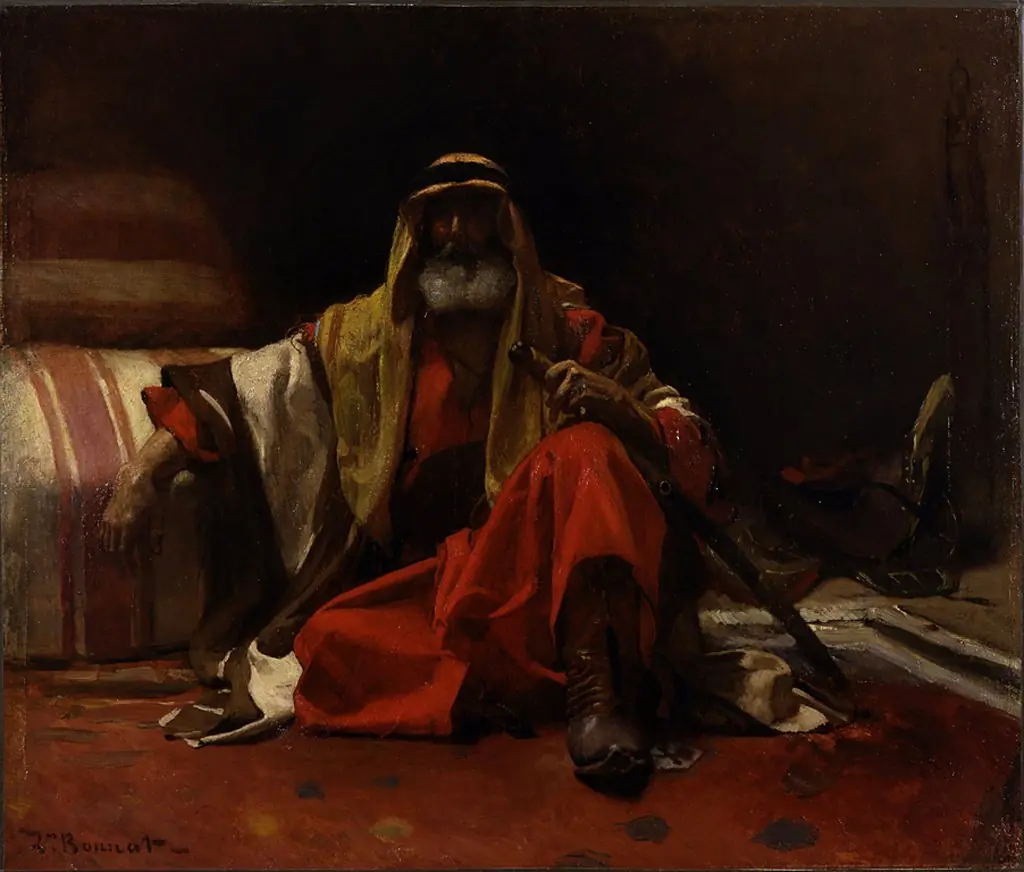
The figure, dressed in a black robe with white trim, a blue headscarf, and a white veil, reclines calmly on a couch, gazing directly at the viewer. The posture and gaze suggest introspection rather than performance. The presence of a clay jug on a nearby table hints at domestic quietude. The subject’s identity remains unknown, and the attire appears stylized, possibly drawn from secondhand sources rather than firsthand observation.
Technique & Style
Herkomer employed translucent watercolor layers to build subtle gradations of color and light. The warm, earthy background enhances the richness of the garments, while soft shadows define form without harsh contours. Details like the weave of fabric and the glaze on the jug are rendered with precision, yet the overall effect remains intimate and subdued, prioritizing mood over narrative.
History & Provenance
The painting was acquired in May 1971 by art dealer Jeremy Maas for £45, as documented by Rodney Searight. Prior ownership is unrecorded. Its journey from Herkomer’s studio to mid-20th-century private collections remains unclear, though its modest purchase price suggests it was not widely recognized as significant at the time of acquisition.
Context
In late 19th-century Britain, Orientalist imagery was common in art, often based on imagination or published illustrations rather than travel. Herkomer, known for portraiture and social realism, likely drew from photographic sources or theatrical costumes. This work aligns with a broader trend of European artists engaging with exoticized themes without direct experience of the cultures depicted.
Legacy
The painting remains a quiet example of Victorian-era Orientalism, notable for its restraint and sensitivity compared to more theatrical contemporaries. It offers insight into how artists interpreted foreign cultures through available references, revealing more about the observer’s imagination than the subject’s reality. Its preservation allows continued study of aesthetic choices in cross-cultural representation.
Artist & collection
Artist
Herkomer painted detailed scenes in watercolour, often dressing sitters in elaborate costumes.

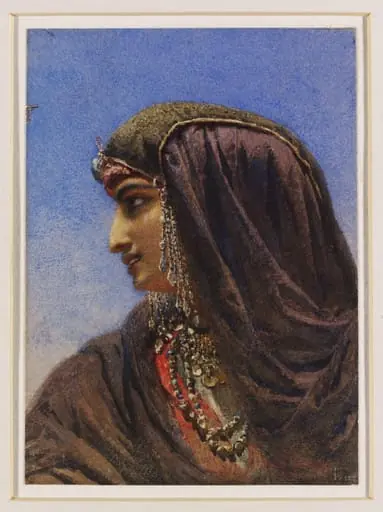 Head of an Egyptian Girl, probably a Bedouin
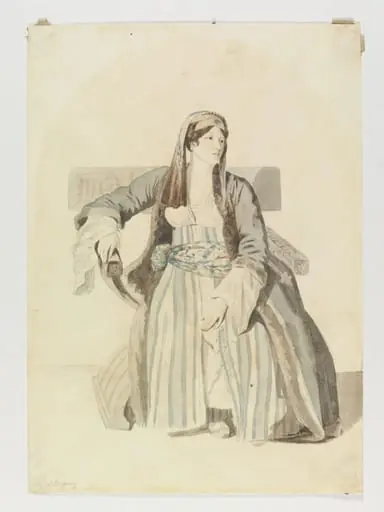 Une Demoiselle Grecque de Livadie
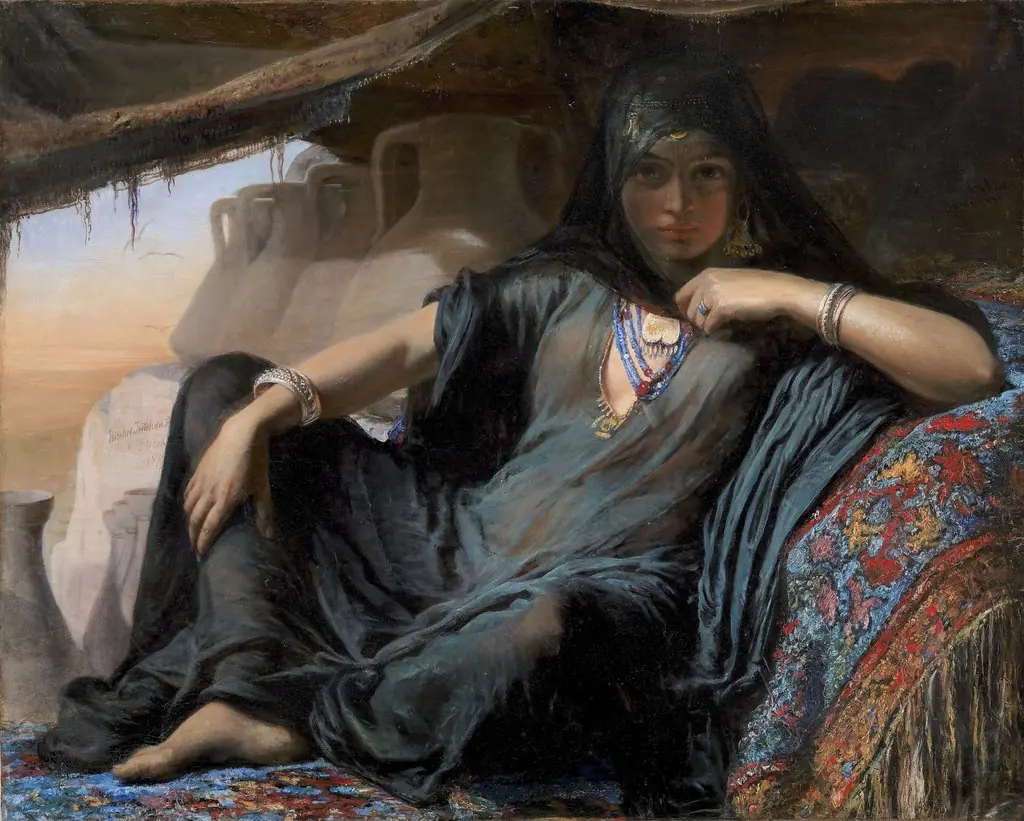 An Egyptian Pot Seller at Gizeh
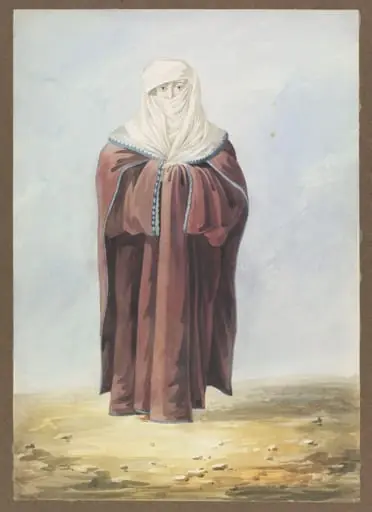 A Turkish lady in Walking Dress
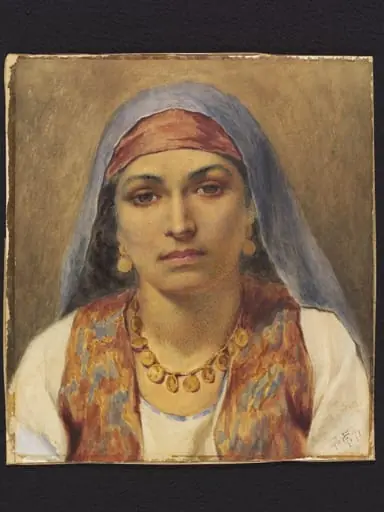 Head of an Egyptian Girl
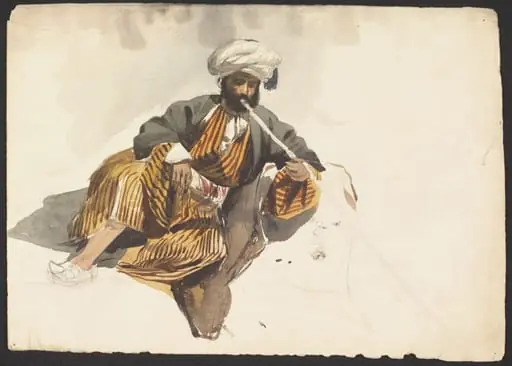 Figure of a Man in Arab dress, reclining, smoking a chibouk
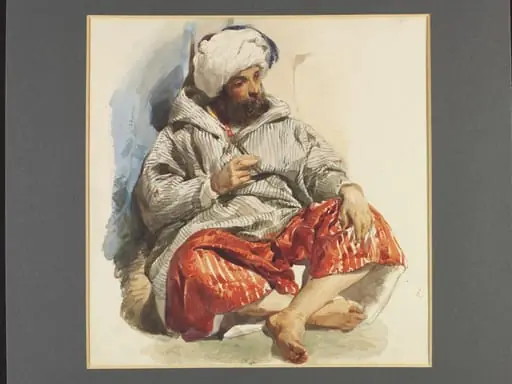 A European in Oriental dress, seated cross legged
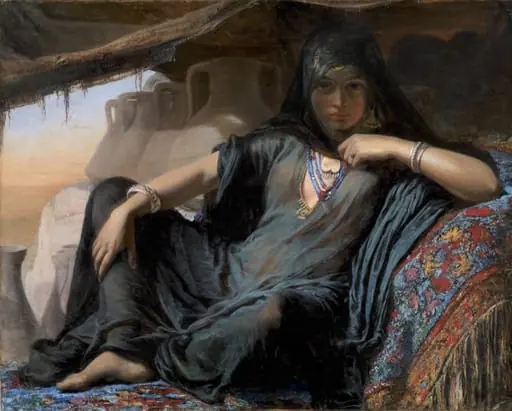 An Egyptian Pot Seller at Gizeh
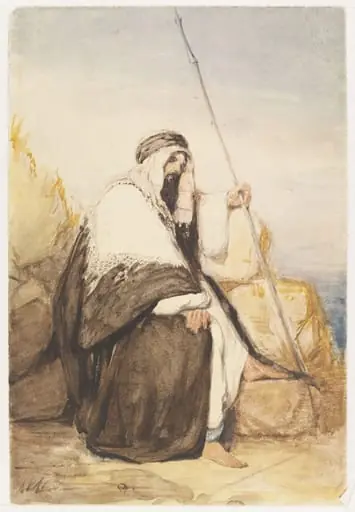 Figure of a Man in Arab dress, seated, holding a spear
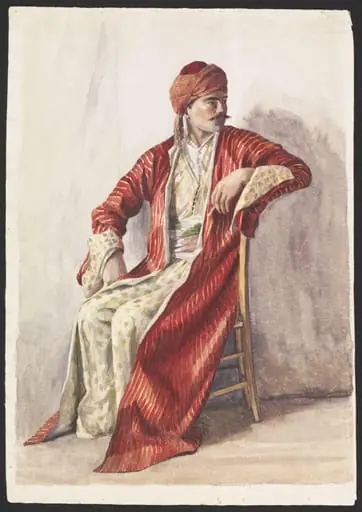 Portrait, full-length, facing right, of a Man in Arab dress, possibly smoking a cheroot
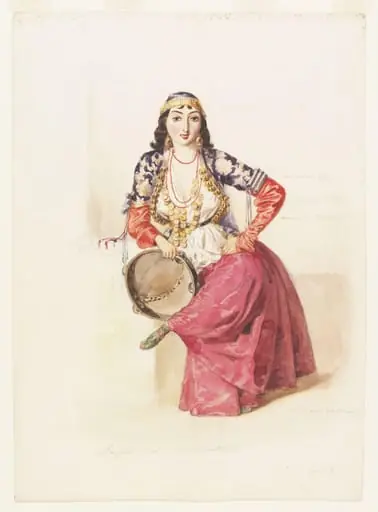 Bayadère de Chemakha
 An Arab Sheik