Artwork
Mountainous Landscape, with Figures
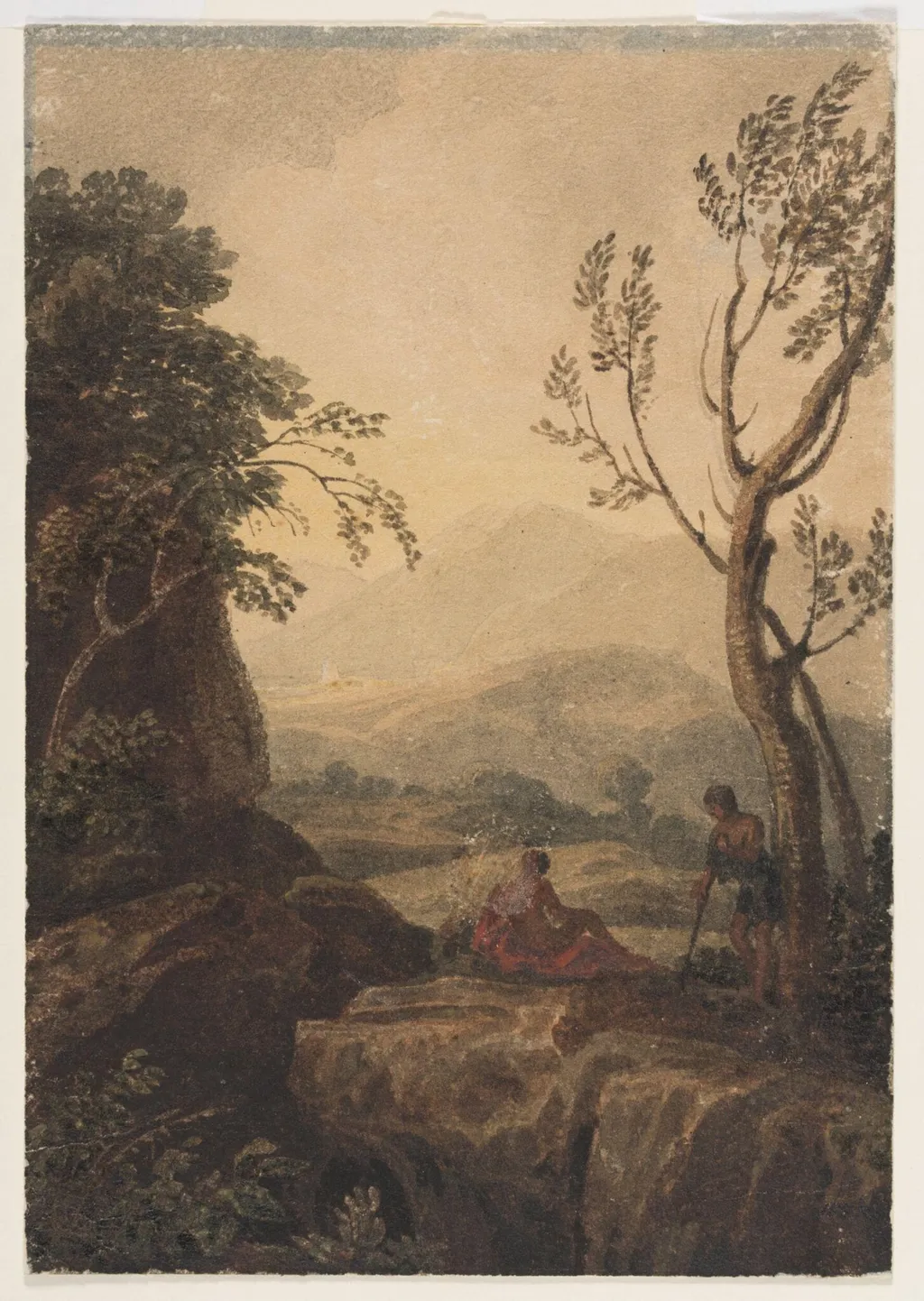
Mountainous Landscape, with Figures is a watercolor work on paper by the Romanticist artist William Havell. It dates from 1800 and is held in the collection of the Victoria and Albert Museum.
About this work
Overview
The composition emphasizes quietude, with two figures integrated into the natural setting rather than dominating it.
William Havell’s watercolour depicts a tranquil mountainous terrain with minimal human presence. The composition emphasizes quietude, with two figures integrated into the natural setting rather than dominating it. Soft washes of pigment create a muted, atmospheric effect, reinforcing the sense of stillness and distance. The work exemplifies early 19th-century British landscape watercolour, valuing subtlety over dramatic contrast.
Subject & Meaning
Two figures—a seated woman in red and a standing companion—are placed modestly within a vast, undulating landscape. Their small scale and simple attire suggest humility before nature, not narrative importance. The seated figure’s downward gaze invites contemplation, aligning the viewer with a meditative response to the scenery. The scene evokes harmony between human presence and the enduring natural world, without overt symbolism.
Technique & Style
Havell employed transparent watercolour washes to achieve a luminous, hazy effect. Colours blend gently across the paper, avoiding sharp edges and creating a sense of atmospheric depth. The delicate handling of foliage and distant hills reflects a preference for tonal gradation over detail. This technique, common among British watercolourists of the period, prioritizes mood and light over precise representation.
History & Provenance
Created in the early 1800s, the work aligns with Havell’s travels and studies in the British countryside and Wales. It was likely produced for private collectors interested in picturesque landscapes. The piece entered the Victoria and Albert Museum’s collection through established channels of 19th-century art acquisition, reflecting institutional interest in watercolour as a serious medium.
Context
Havell worked during a period when watercolour was gaining recognition as a legitimate artistic medium, distinct from preparatory sketches. His landscapes responded to contemporary tastes for the picturesque and the sublime, influenced by Romantic ideals. Unlike grand oil paintings, his works offered intimate, contemplative views of nature, suited to domestic display and personal reflection.
Legacy
Havell’s watercolours contributed to the development of British landscape watercolour as a refined genre. His emphasis on atmospheric tone and restrained composition influenced later artists who valued emotional resonance over spectacle. Though not widely known today, his works remain important examples of how quiet observation shaped 19th-century British art.
Artist & collection


 Mountain Landscape with Two Men Resting
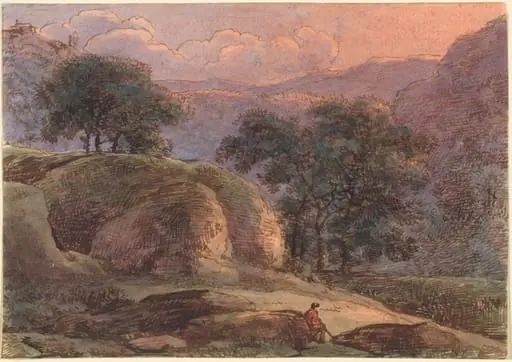 Traveler in a Mountainous Landscape at Sunset
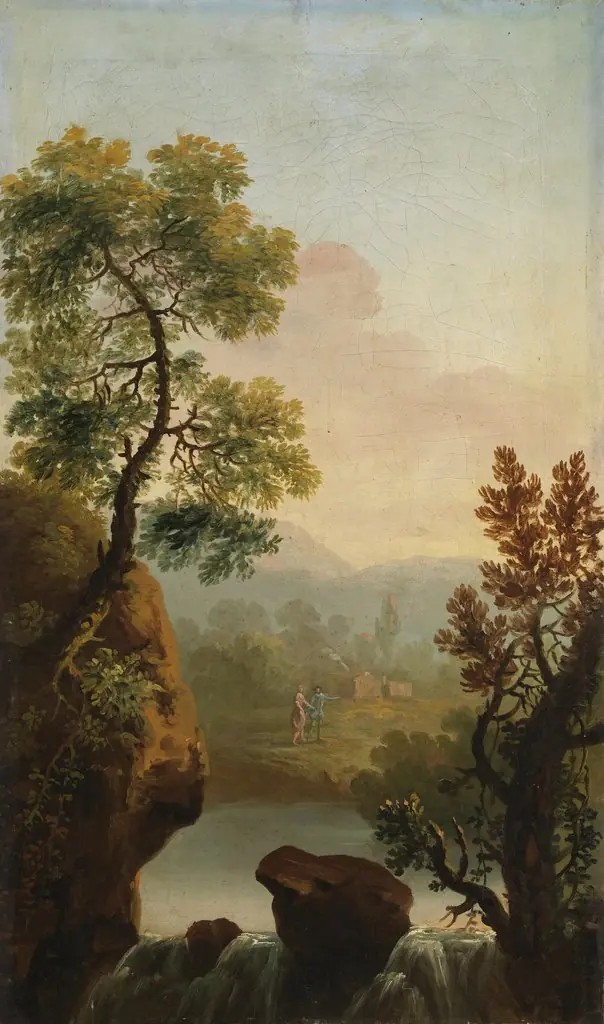 Landscape with Figures in the Background
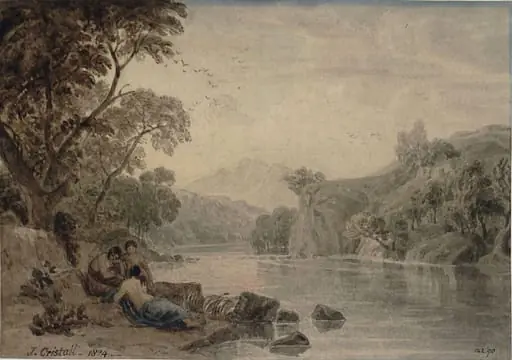 Borrowdale, Cumberland : Skiddaw in the distance
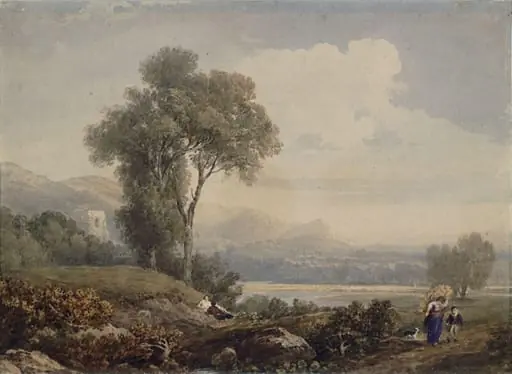 Landscape
 The Woman on the Hinny
 The Woman on the Hinny
 Arcadisch landschap met linksvoor kinderen met een vogel en een hond
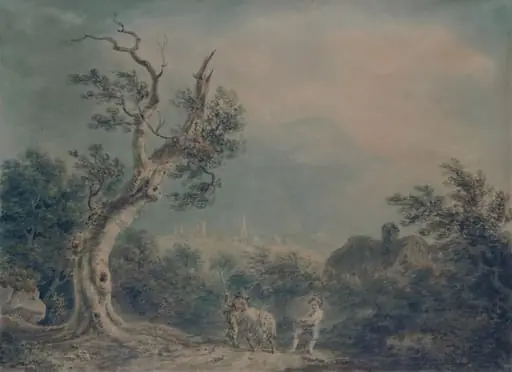 A Mountainous Country
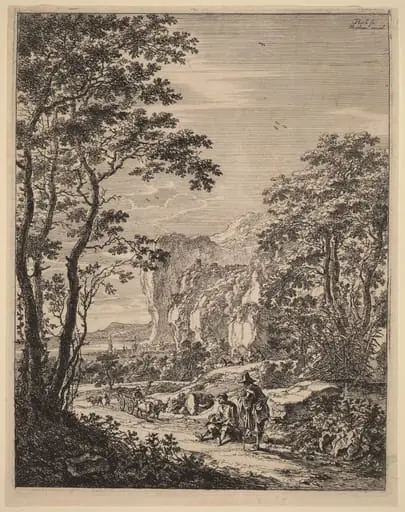 The Ox-Cart: View between Ancona and Sinigaglia
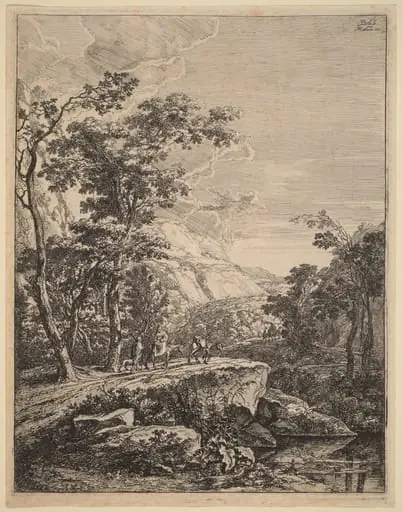 The Woman on the Hinny
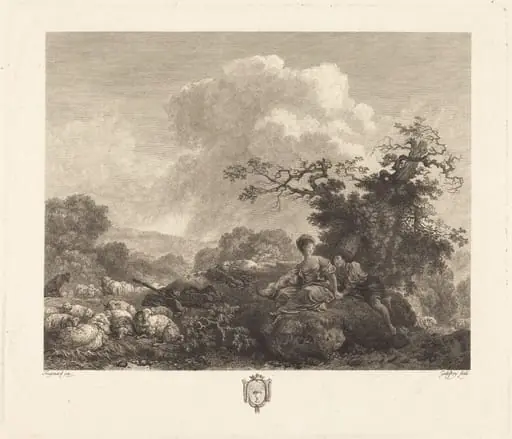 Annette a l'age de vingt ans (Annette at the Age of Twenty Years)