Artwork
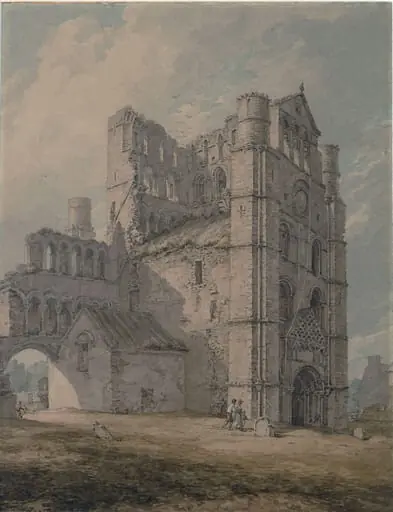
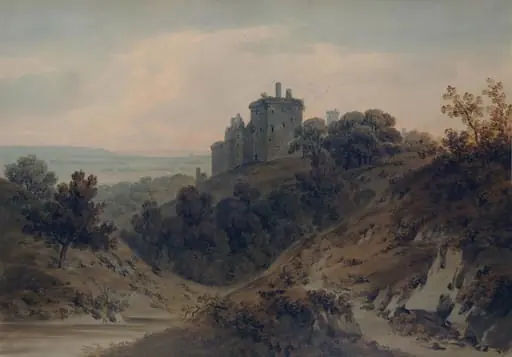
Caister Castle, Norfolk
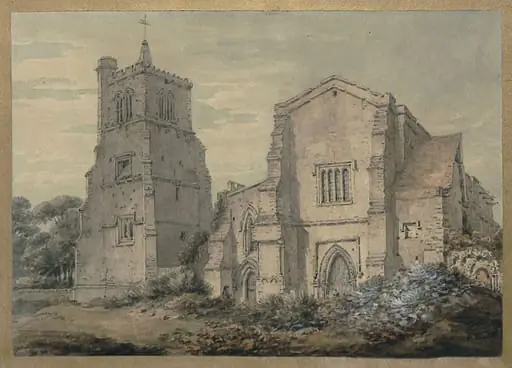
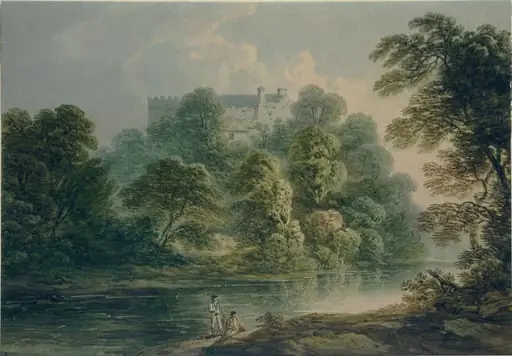
Caister Castle, Norfolk is a watercolor work on paper by the British Romanticist artist Thomas Hearne. It dates from 1806 and is held in the collection of the Victoria and Albert Museum.
About this work
Hearne painted Caister Castle, Norfolk around 1806. It’s a watercolour from the Romantic era. Hearne was a draughtsman who started in 1771.
He stopped showing work for 13 years until 1806. That year he exhibited this piece right after a big watercolour show started. Maybe he wanted better light for his art.
Look up the Victoria and Albert Museum next.
Overview
His re-emergence coincided with the inaugural show of the Society of Painters in Water-Colours, suggesting a shift in institutional support for the medium.
Thomas Hearne, who began as a professional draughtsman in 1771, produced Caister Castle, Norfolk around 1806 as a watercolour. This work marked his return to public exhibition after a thirteen-year hiatus, during which he withdrew from the Royal Academy due to dissatisfaction with how watercolours were displayed. His re-emergence coincided with the inaugural show of the Society of Painters in Water-Colours, suggesting a shift in institutional support for the medium.
Subject & Meaning
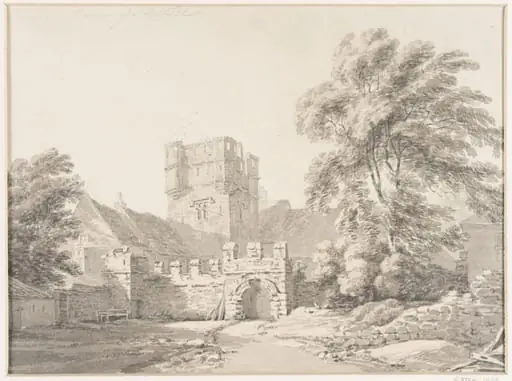
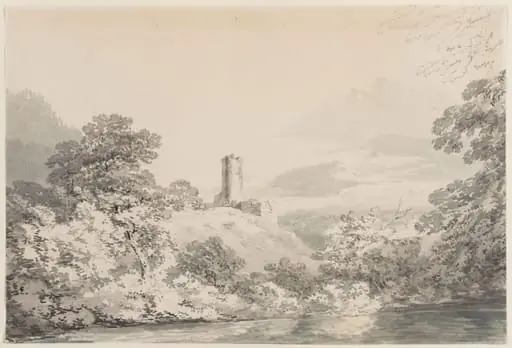
Caister Castle depicts a ruined medieval fortification in Norfolk, rendered with quiet precision. The structure, partially overgrown and weathered, conveys a sense of time’s passage without overt sentimentality. Hearne’s focus on such a site reflects a broader interest in England’s architectural past, not as romantic ruin, but as a quiet witness to history—emphasizing endurance over decay.
Technique & Style
Hearne employed watercolour with restrained tonal gradations and careful linear detail, avoiding dramatic contrasts. His approach prioritized clarity and atmospheric nuance over expressive brushwork. The composition balances architectural structure with subtle natural elements, revealing his background in topographical drawing. The medium’s transparency allows underlying pencil lines to guide the eye, reinforcing precision over flourish.
History & Provenance
The painting was exhibited in 1806 at the Society of Painters in Water-Colours, an institution founded the prior year to elevate watercolour as a serious art form. Hearne’s participation signaled a strategic alignment with this new platform, which offered better lighting and more respectful presentation than the Royal Academy. The work later entered the collection of the Victoria and Albert Museum, where it remains part of a significant archive of British watercolours.
Context
In the early 19th century, watercolour was gaining recognition beyond mere sketching or illustration. Hearne’s return to exhibition coincided with a growing community of artists advocating for the medium’s legitimacy. His choice to depict a modest, regional ruin rather than a grand landscape reflects a quieter, more documentary impulse within Romanticism—one attentive to local heritage and material decay.
Legacy
Caister Castle stands as a quiet testament to Hearne’s commitment to watercolour as a disciplined art. His re-engagement with public exhibition helped legitimize the medium’s place in institutional collections. Though not widely known today, his work contributed to the foundation of British watercolour traditions, influencing later artists who valued precision, restraint, and historical observation.
Own this work as a print
Artist & collection
Artist
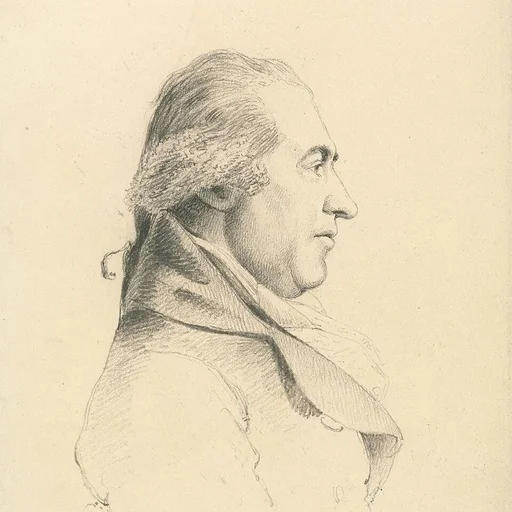
Thomas Hearne (22 September 1744 – 13 April 1817) was an English landscape painter, engraver and illustrator.