Artwork
The Court House and Guard House in the town of St. John's in the Island of Antigua
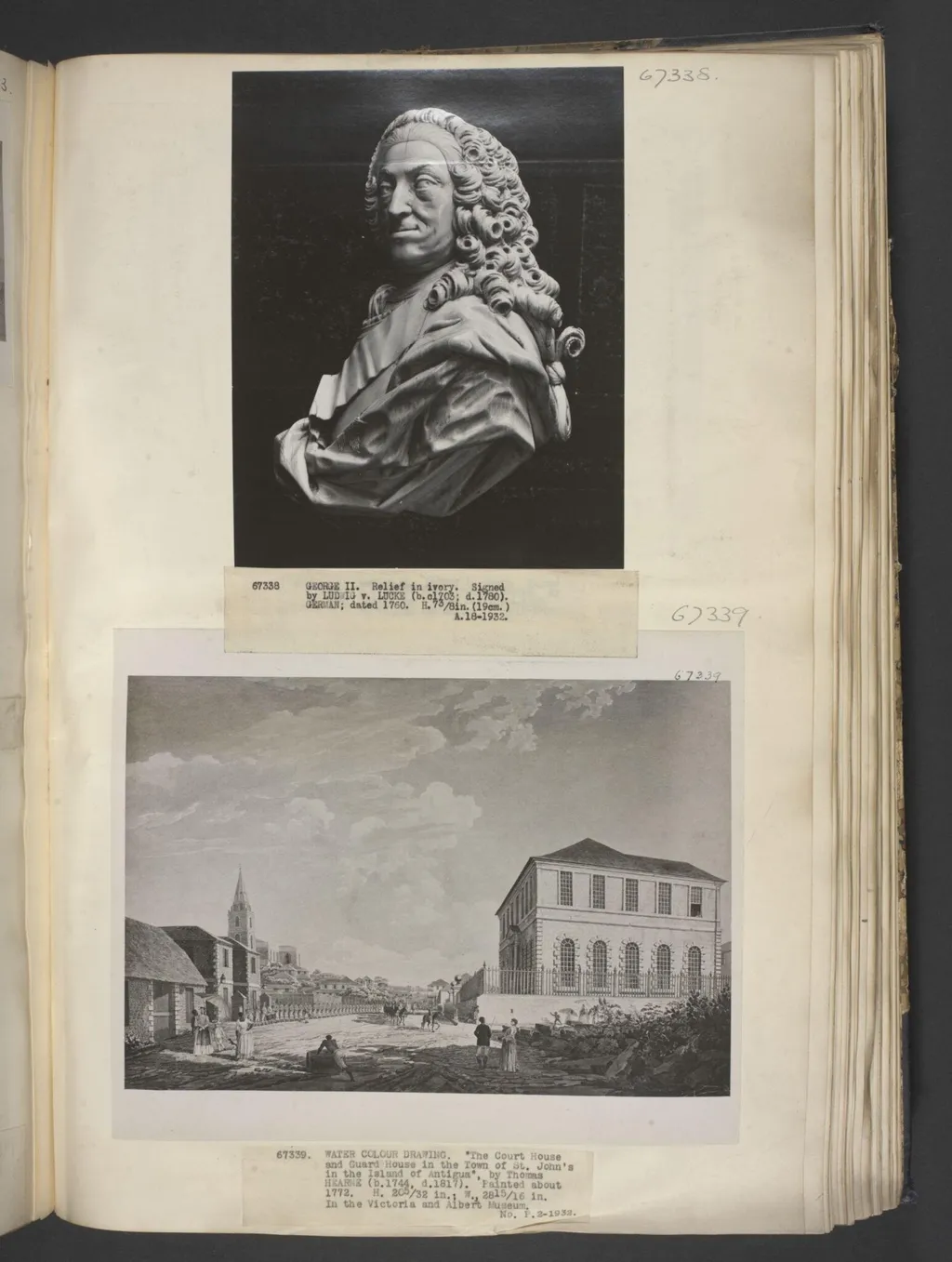
The Court House and Guard House in the town of St. John's in the Island of Antigua is a watercolor work on paper by the Rococo painting artist Thomas Hearne. It dates from 1771 and is held in the collection of the Victoria and Albert Museum.
About this work
Overview
Thomas Hearne created this watercolour in 1771, depicting two civic structures in St. John’s, Antigua: the Court House and the Guard House. Rendered in delicate washes, the scene captures a quiet colonial settlement along a broad river. The composition balances architectural form with natural elements, emphasizing stillness and order in a British Caribbean outpost.
Subject & Meaning
The painting centers on the Court House, a substantial white building with arched windows, flanked by a smaller Guard House and a distant church steeple. These structures symbolize colonial authority and civic function. The presence of pedestrians and modest wooden dwellings nearby suggests daily life unfolding under imperial administration, without overt drama or conflict.
Technique & Style
Hearne employed transparent watercolour washes to suggest atmospheric light and soft shadows. The sky is rendered with loose, fluid strokes, evoking drifting clouds without detailed definition. Architectural forms are outlined with precision but softened by gentle tonal transitions, creating a serene, almost documentary tone that prioritizes observation over embellishment.
History & Provenance
Painted during Hearne’s time in the Caribbean as part of a British surveying expedition, the work reflects his role as a topographical artist. It was likely produced for official or private patrons interested in colonial infrastructure. The piece entered the Victoria and Albert Museum’s collection, where it remains part of a broader archive of 18th-century British colonial records in watercolour.
Context
In 1771, Antigua was a key sugar colony under British rule, with St. John’s serving as its administrative hub. The Court House and Guard House were essential to maintaining legal and military control. Hearne’s depiction, devoid of enslaved laborers or overt signs of exploitation, presents a sanitized view of colonial life, typical of official visual records of the period.
Legacy
Hearne’s watercolours of Antigua contribute to a visual archive of British colonial architecture in the West Indies. Though not widely exhibited, they remain valuable for their precise documentation of early urban layouts and building types. Their quiet realism offers insight into how colonial power was visually represented — calmly, systematically, and without overt commentary.
Artist & collection
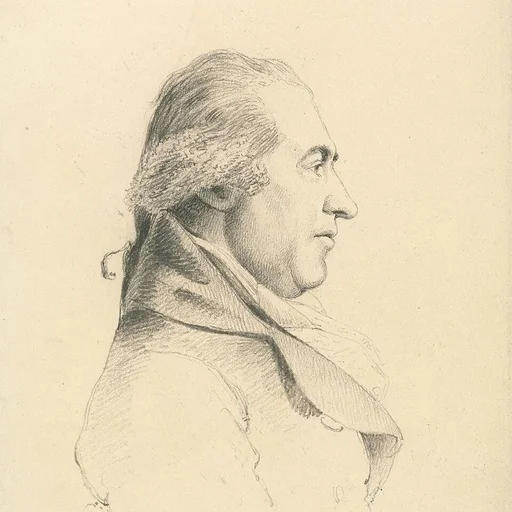
Artist
Thomas Hearne (22 September 1744 – 13 April 1817) was an English landscape painter, engraver and illustrator.