Artwork
Venus and Cupid with a Honeycomb
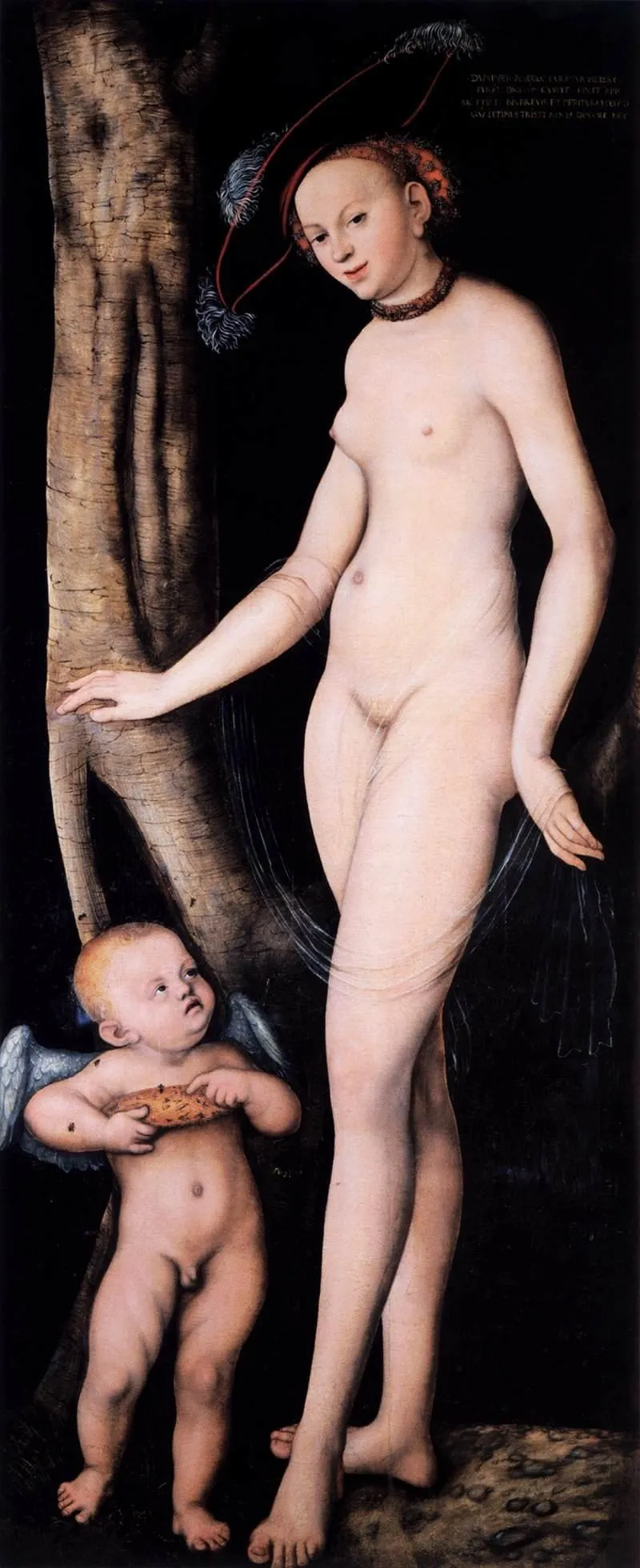
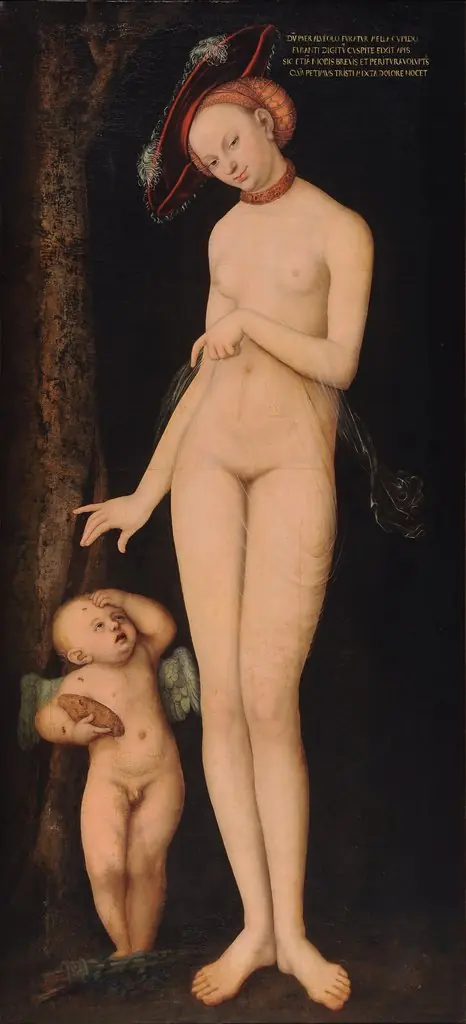
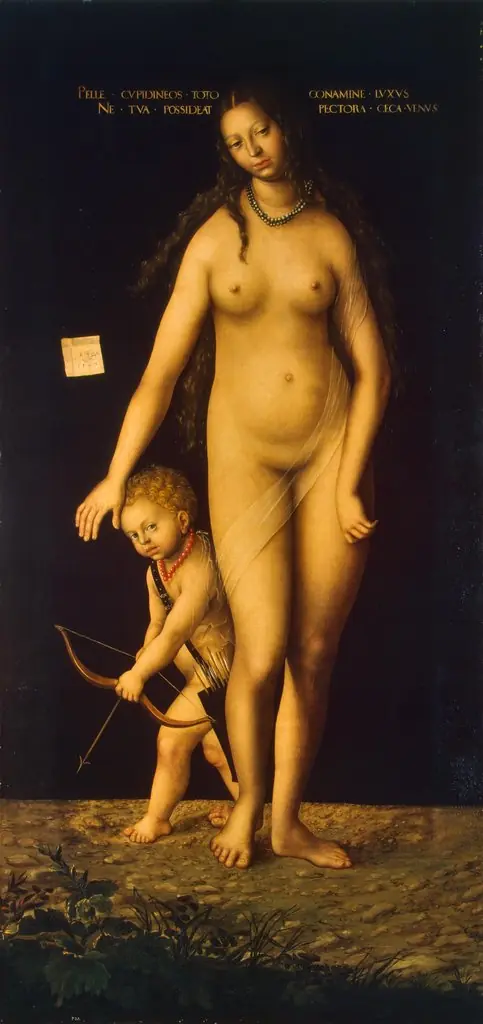
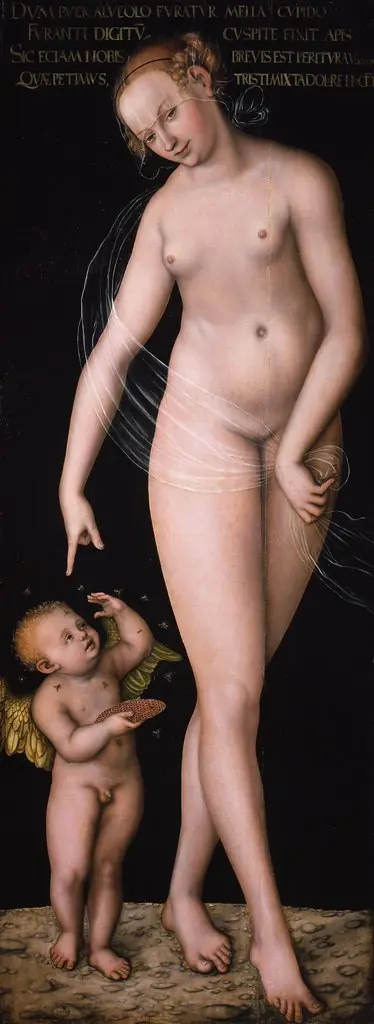
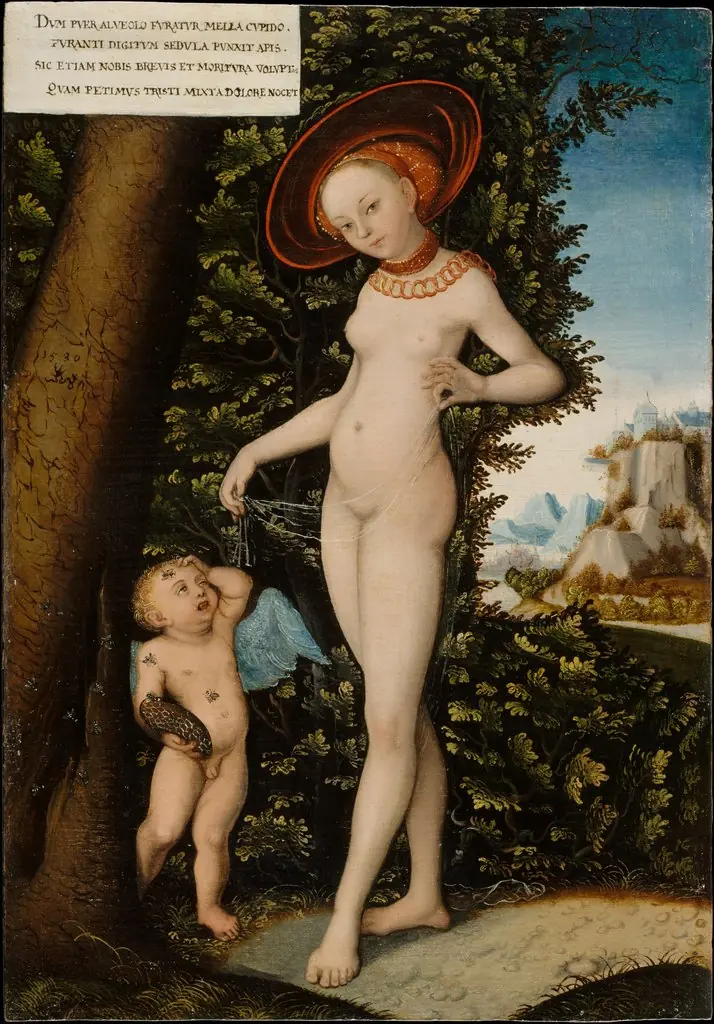
Venus and Cupid with a Honeycomb is an oil painting by the Northern Renaissance artist Lucas Cranach the Elder. It dates from 1531 and is held in the collection of the Galleria Borghese.
About this work
Overview
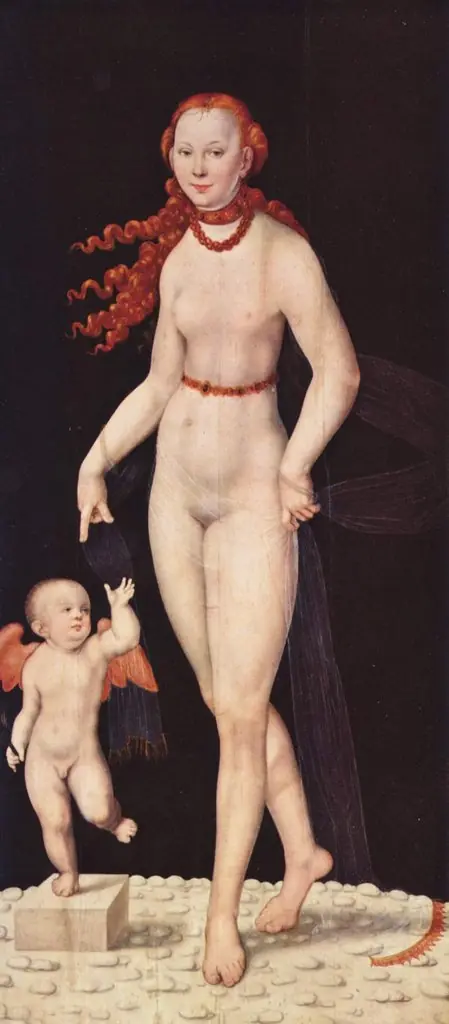
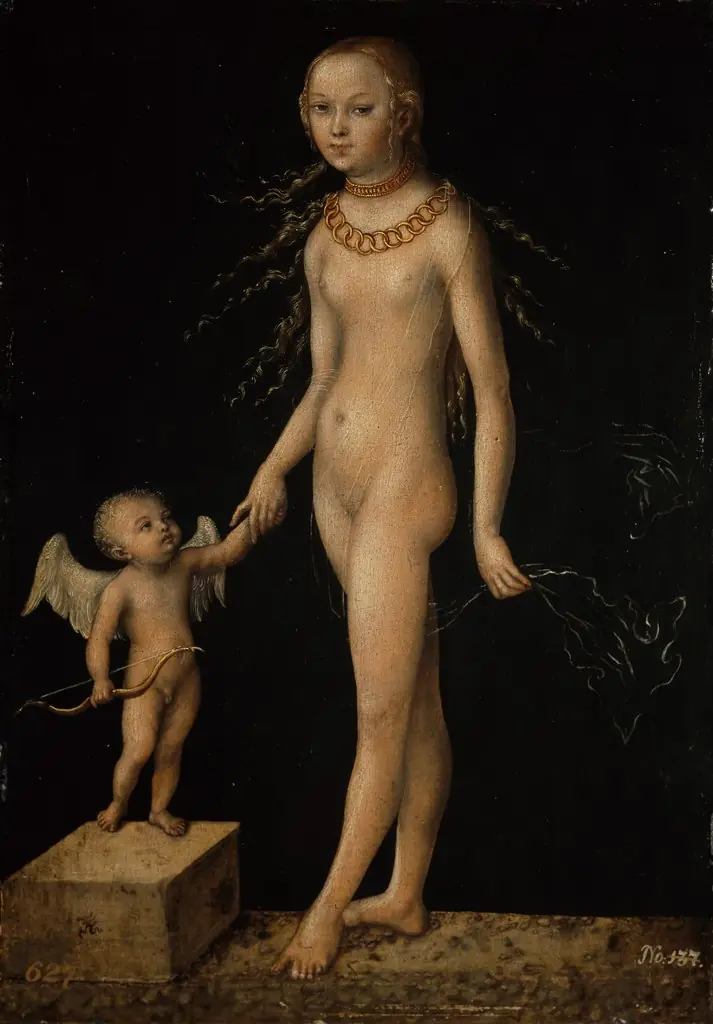
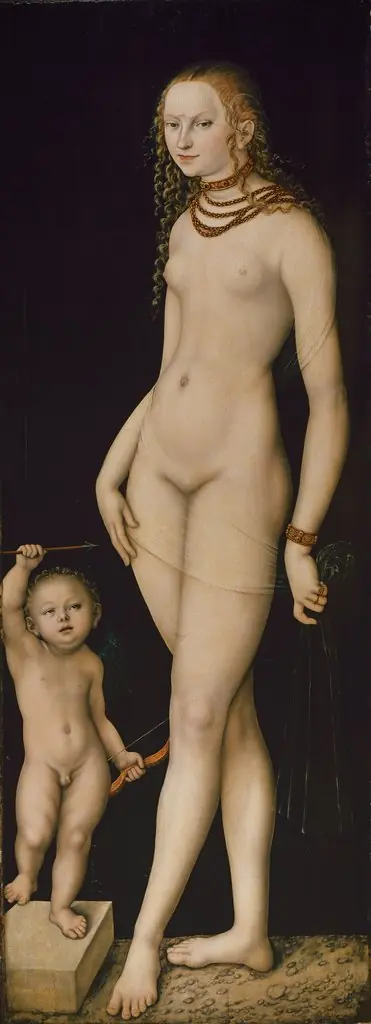
The work is part of a larger body of compositions featuring Venus and her son Cupid, often set in quiet natural environments.
Venus and Cupid with a Honeycomb is an oil painting by Lucas Cranach the Elder, created around 1531. It belongs to a recurring series of mythological scenes the artist produced over decades, beginning in 1509. The work is part of a larger body of compositions featuring Venus and her son Cupid, often set in quiet natural environments. This version is held in the Galleria Borghese in Rome, among several known variants by Cranach and his workshop.
Subject & Meaning
The painting depicts Venus, goddess of love, standing nude beside a tree, while Cupid, her winged son, offers her a honeycomb. The scene evokes classical themes of desire and pleasure, with the honeycomb symbolizing the sweet yet sticky nature of love. The calm interaction between the figures suggests a moment of tender contemplation rather than dramatic action, aligning with humanist interests in myth as moral allegory.
Technique & Style
Cranach employs oil paint with precise, linear detail, characteristic of his Northern Renaissance style. The figures are rendered with smooth, elongated forms and minimal modeling, emphasizing outline over volume. The background is sparse, with a single tree trunk and faint branches creating depth without distraction. Attention to textures—skin, fur, and honeycomb—demonstrates technical control, while the muted palette reinforces the painting’s quiet intimacy.
History & Provenance
The painting likely originated in Cranach’s Wittenberg studio, possibly influenced by his association with Georg Sabinus, a poet and academic connected to Martin Luther’s circle. Multiple versions of this composition were produced, indicating demand from private patrons. The Galleria Borghese version entered the collection in the early 17th century, likely through the acquisition of Cardinal Scipione Borghese’s extensive art holdings.
Context
Cranach’s mythological works emerged amid the Protestant Reformation, a time when religious imagery was being reevaluated. Rather than biblical scenes, secular classical subjects offered a safe outlet for artistic expression. These paintings appealed to educated patrons who valued humanist learning and allegorical nuance, blending pagan imagery with contemporary moral reflection without overt religious conflict.
Legacy
The recurring theme of Venus and Cupid with a honeycomb became one of Cranach’s most recognizable motifs, replicated by his workshop for over two decades. While not revolutionary in composition, the series reflects a shift toward intimate, secular narratives in Northern art. The persistence of these images underscores Cranach’s role in shaping a distinct German Renaissance aesthetic that prioritized elegance and symbolic subtlety over grandeur.
Artist & collection
Artist
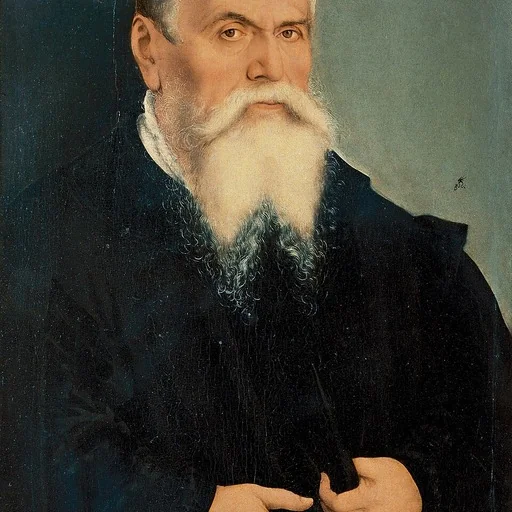
Lucas Cranach the Elder was a German Renaissance painter and printmaker in woodcut and engraving.