Artwork
Group of Five Figures
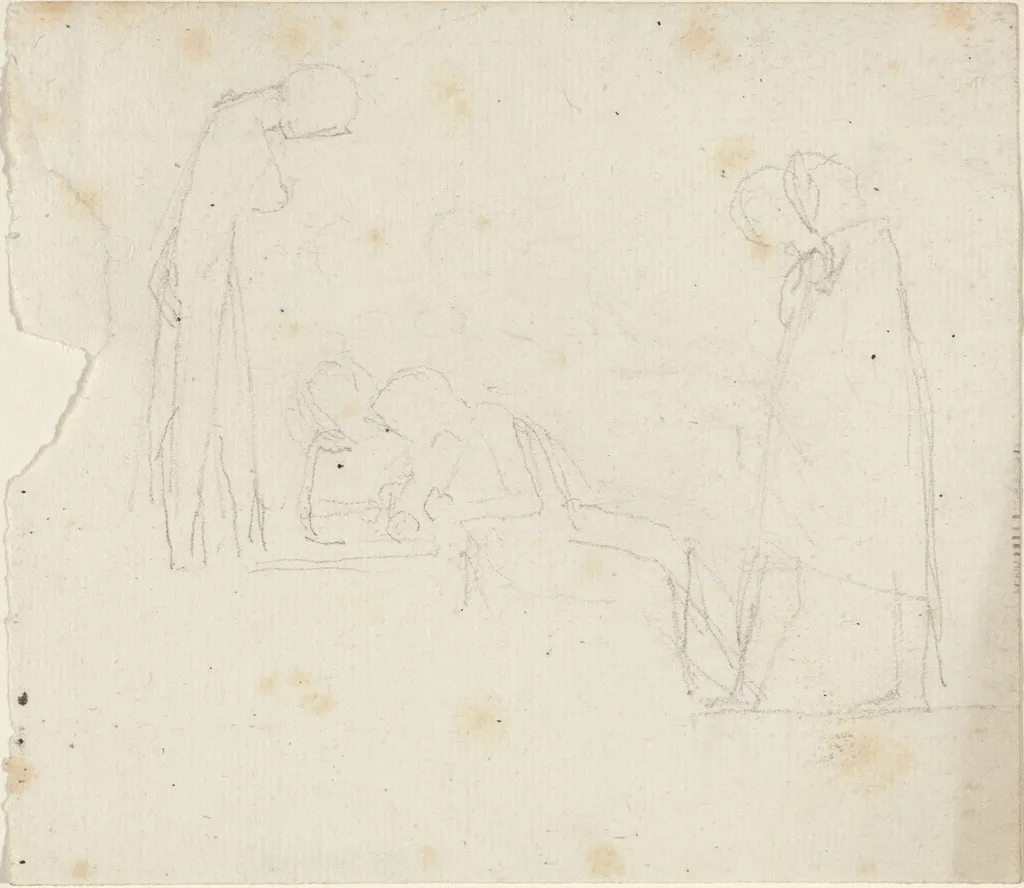
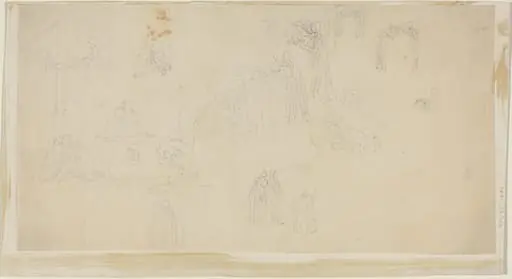
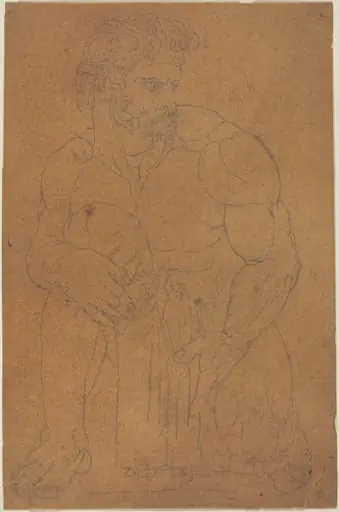
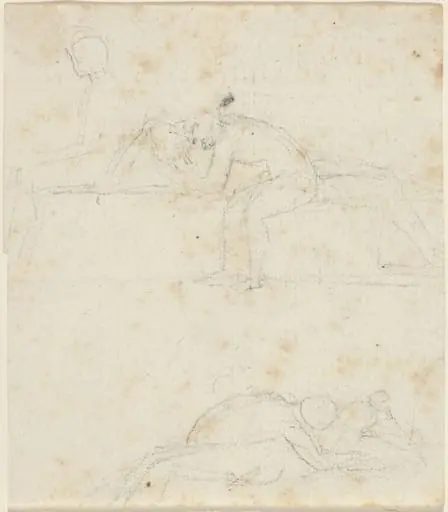
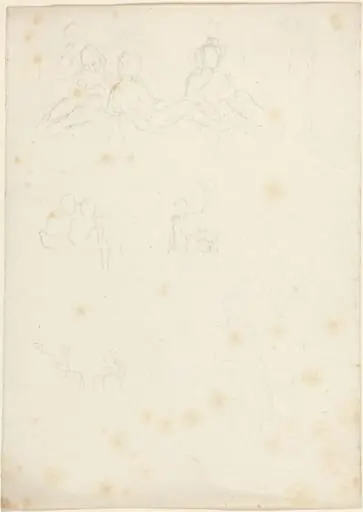
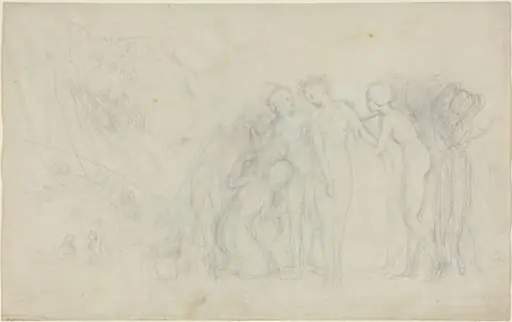
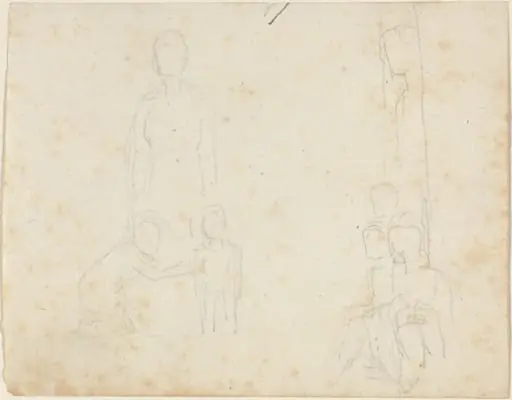
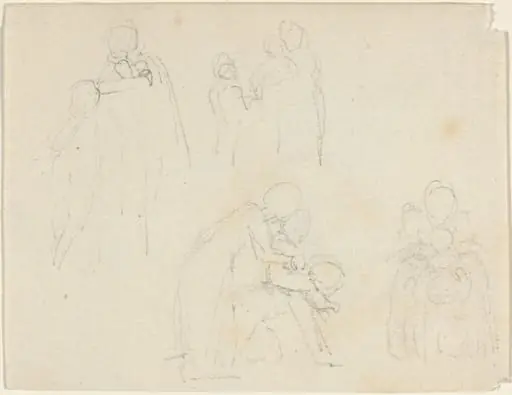
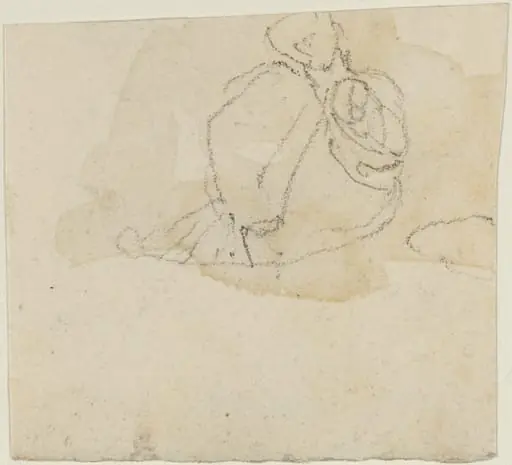
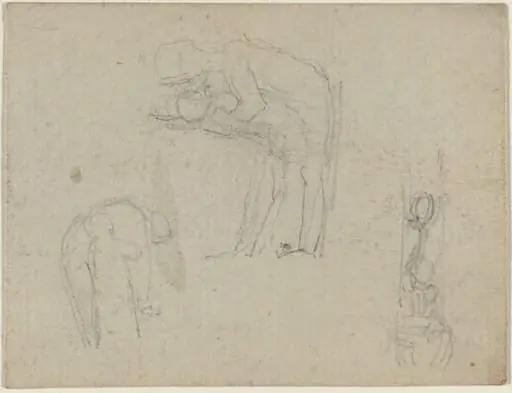
Group of Five Figures is a graphite drawing by the Romanticist artist John Flaxman. It dates from 1790 and is held in the collection of the National Gallery of Art.
About this work
Overview
Created in 1790, this graphite drawing by John Flaxman presents five human forms in varied poses, executed with restrained linework and minimal shading.
Created in 1790, this graphite drawing by John Flaxman presents five human forms in varied poses, executed with restrained linework and minimal shading. The work belongs to a series of preparatory studies Flaxman produced during his mature period, reflecting his deep engagement with classical ideals. Its modest scale and unpolished surface suggest it was made for personal exploration rather than public display.
Subject & Meaning
The figures, rendered without narrative context, evoke classical sculpture through their balanced proportions and simplified anatomy. Their poses suggest movement or ritual, possibly referencing ancient funerary or ceremonial scenes. Flaxman often drew from mythological and commemorative themes, and this group may represent an early stage in developing compositions for larger sculptural projects or illustrated texts.
Technique & Style
Flaxman employed fine, continuous graphite lines to define form, avoiding modeling or texture. The variation in detail—some figures fully rendered, others barely outlined—reveals his working process. The clean, uncluttered contours reflect his Neoclassical training, prioritizing clarity over ornament. The paper’s age-related discoloration and edge damage are incidental to the artist’s intent but confirm its historical passage.
History & Provenance
This drawing emerged during Flaxman’s post-Rome years, following his time studying antiquities in Italy and his earlier work designing relief patterns for Wedgwood ceramics. Likely part of a private sketchbook, it remained in the artist’s possession until after his death, eventually entering institutional collections. Its survival reflects its value as a record of his method rather than as a finished work.
Context
In late 18th-century Britain, Neoclassicism dominated artistic discourse, favoring rational form and ancient precedent. Flaxman’s drawings responded to this climate, aligning with scholarly interest in Greek and Roman art. Unlike contemporaries who painted grand histories, he focused on line and structure, influencing later illustrators and sculptors through his precise, austere aesthetic.
Legacy
Flaxman’s graphite studies, including this one, became foundational to the transmission of Neoclassical ideals in British art. Their emphasis on contour and economy of form influenced generations of draftsmen and illustrators, particularly in book design. Though not widely exhibited in his lifetime, these works later gained recognition as essential documents of his artistic philosophy.
Artist & collection
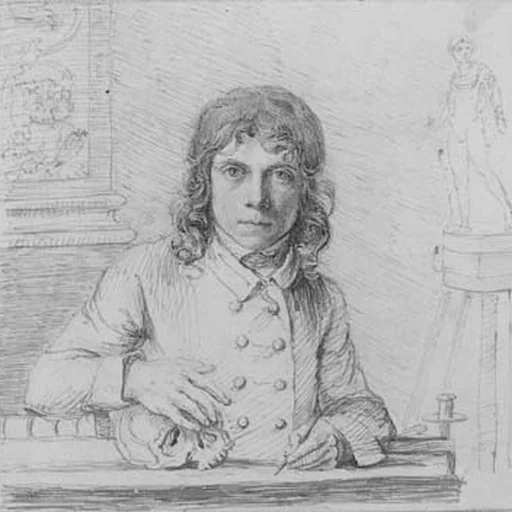
Artist
John Flaxman (6 July 1755 – 7 December 1826) was an English sculptor and draughtsman who was a leading figure in British and European Neoclassicism.