Artwork
Peisaj de munte
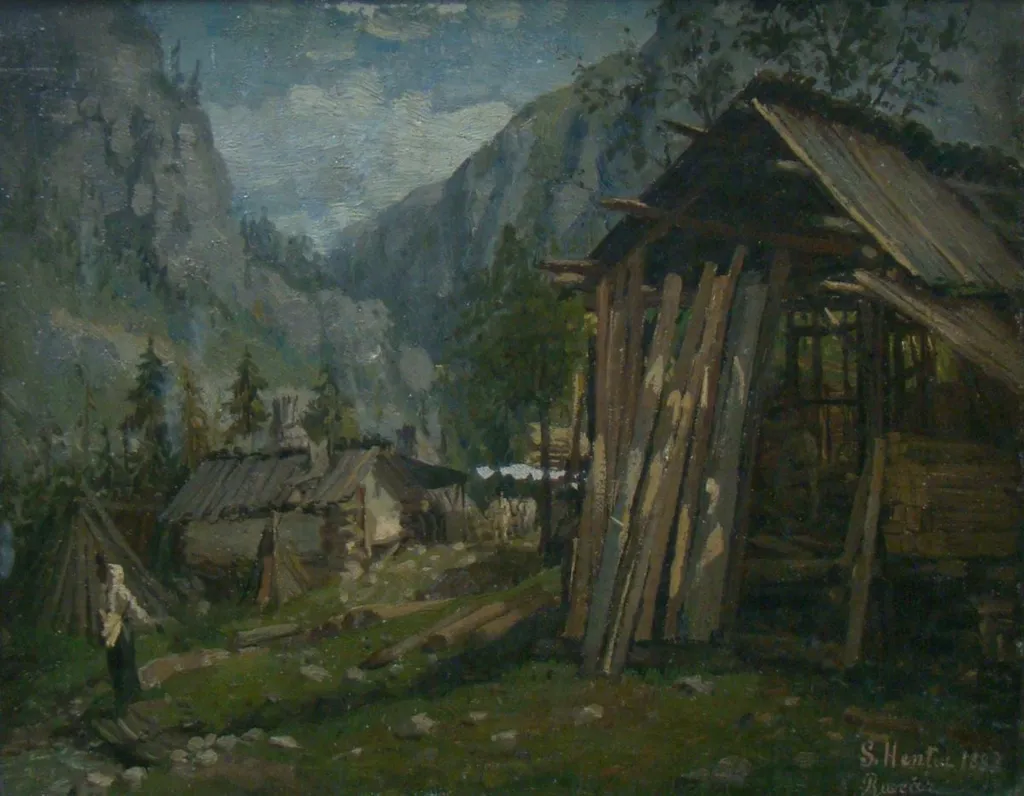
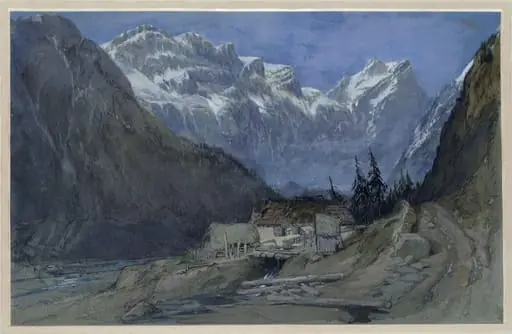
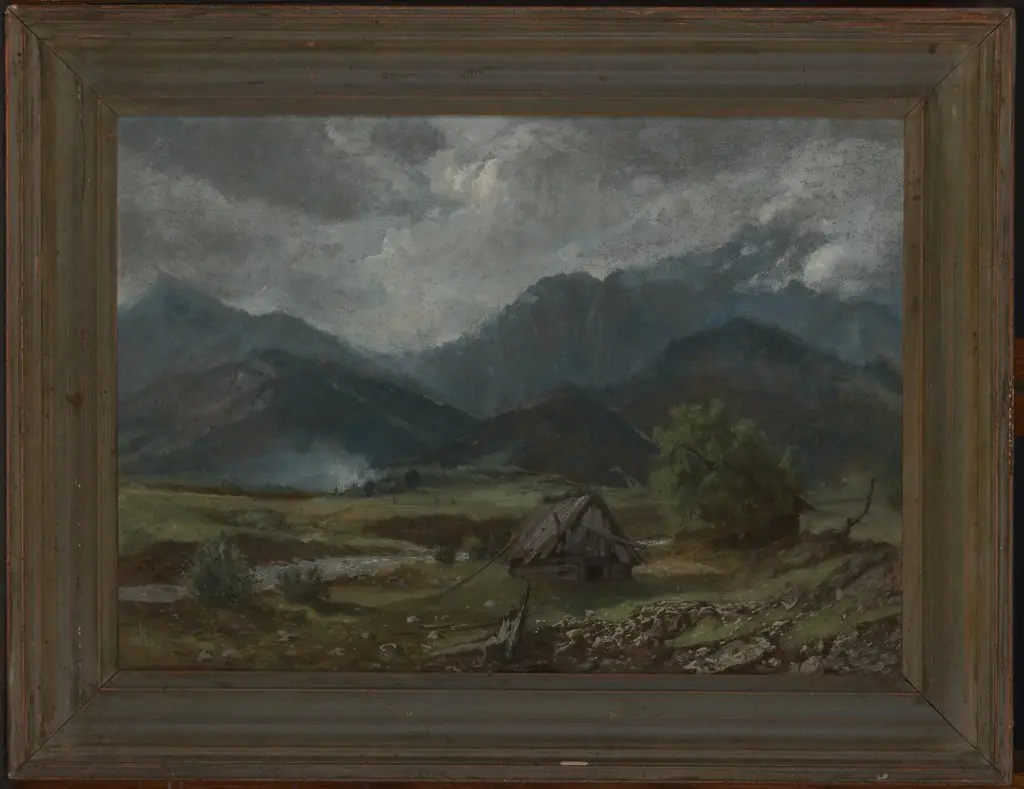
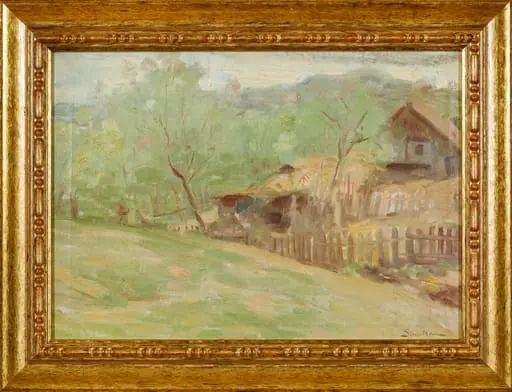
Peisaj de munte is a print by the Impressionist artist Sava Henția. It dates from 1882 and is held in the collection of the Iulian Antonescu Bacău Museum Complex.
About this work
Overview
Henția, born in the Austrian Empire but active in Romanian cultural circles, worked across painting, illustration, and decorative arts.
Painted in 1882 by Sava Henția, *Peisaj de munte* is a landscape depicting a secluded mountain village in Romania. Henția, born in the Austrian Empire but active in Romanian cultural circles, worked across painting, illustration, and decorative arts. The work is part of the Museum of Ethnography’s collection, reflecting its role in documenting rural life during a period of national identity formation in the late 19th century.
Subject & Meaning
The scene portrays a modest settlement nestled in a high valley, with wooden cottages and thatched roofs clinging to a grassy slope. A solitary figure in dark attire stands near the foreground, gazing toward the dwellings. This quiet presence suggests contemplation or solitude, reinforcing the painting’s emphasis on human harmony with remote natural surroundings rather than narrative drama.
Technique & Style
Henția employed loose, fluid brushwork to convey the immediacy of the landscape. Forms are suggested rather than meticulously defined, with soft transitions between sky, trees, and terrain. The muted palette and hazy distant peaks evoke atmospheric depth, aligning the work with emerging naturalist tendencies that prioritized observed light and texture over idealized composition.
History & Provenance
Created in 1882, the painting entered the collection of the Museum of Ethnography, where it remains today. Its preservation within an institution focused on cultural heritage underscores its value as a record of rural Romanian life during a time of modernization. Henția’s dual role as artist and illustrator likely influenced the work’s intimate, documentary quality.
Context
In late 19th-century Romania, artists increasingly turned to rural subjects as symbols of authentic national identity. *Peisaj de munte* reflects this trend, capturing a way of life that was rapidly changing due to urbanization and industrialization. Henția’s approach, though not formally Impressionist, shares an interest in transient effects of light and unidealized scenery common among contemporaries across Europe.
Legacy
Though not widely exhibited outside Romania, the painting contributes to the understanding of regional landscape traditions in Eastern Europe. Henția’s integration of observational realism with decorative sensibility helped bridge fine art and folk representation, influencing later generations interested in preserving visual records of rural communities.
Artist & collection
Artist
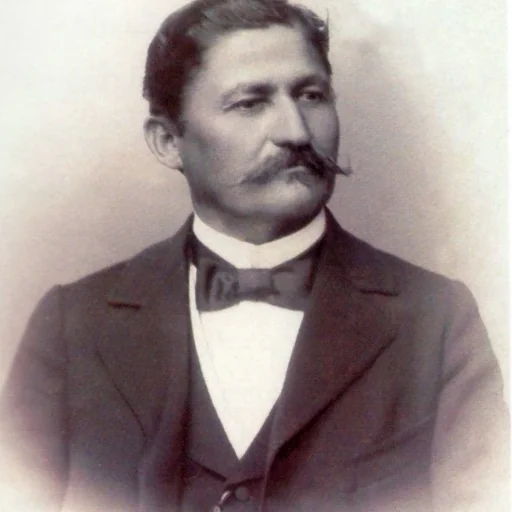
Sava Henția (1 February 1848, Sebeșel - 21 February 1904, Sebeșel) was an Imperial Austrian-born Romanian painter, decorator and illustrator.
Museum
Iulian Antonescu Bacău Museum Complex
Continue through works from the same source collection.