Artwork
The Passion: Christ of the Cross between the Two Thieves
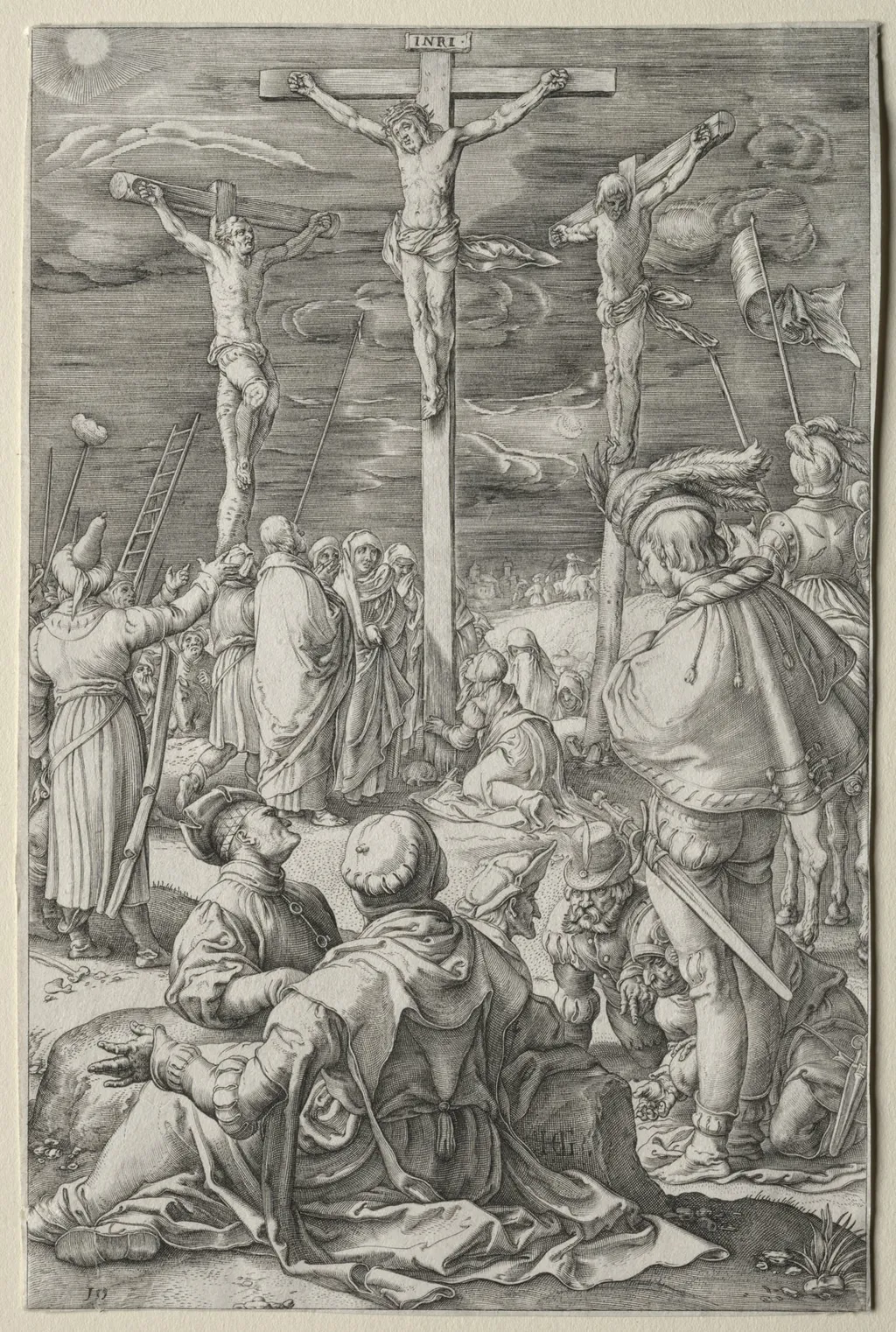
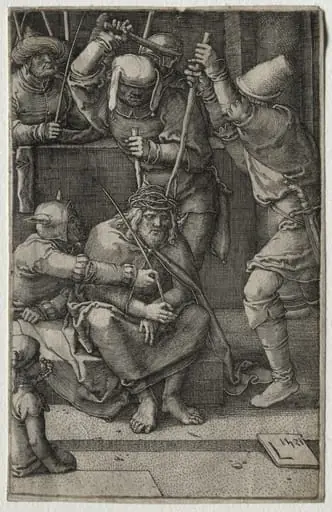
The Passion: Christ of the Cross between the Two Thieves is a print by the Renaissance artist Hendrik Goltzius. It dates from 1597 and is held in the collection of the Cleveland Museum of Art. Created in 1597 by Hendrick Goltzius, this print depicts the crucifixion of Christ flanked by the two thieves.
About this work
Overview
The work is part of the collection at The Cleveland Museum of Art, where it is recognized for its intense emotional tone and technical precision.
Created in 1597 by Hendrick Goltzius, this print depicts the crucifixion of Christ flanked by the two thieves. Executed in engraving, it belongs to a series illustrating the Passion of Christ. The work is part of the collection at The Cleveland Museum of Art, where it is recognized for its intense emotional tone and technical precision. Goltzius rendered the scene with meticulous detail, emphasizing the physical and spiritual gravity of the moment.
Subject & Meaning
The composition centers on Christ, upright and serene on the central cross, contrasting with the slumped figures of the thieves on either side. Below, Roman soldiers and onlookers react with varied expressions—some observe in silence, others gesture or kneel. The scene conveys the solemnity of Christ’s sacrifice, while the surrounding figures reflect human responses to divine suffering: awe, indifference, and grief.
Technique & Style
Goltzius employed engraving to achieve dramatic contrasts of light and shadow, a hallmark of chiaroscuro. Deeply incised lines create dense blacks, while carefully controlled hatching defines the illuminated surfaces of faces, hands, and armor. The figures emerge sharply from the darkened background, their musculature rendered with sculptural intensity. The technique amplifies the emotional weight of the scene without relying on color.
History & Provenance
The print was produced during Goltzius’s mature period, following his travels to Italy and exposure to Mannerist and classical forms. It entered the Cleveland Museum of Art’s collection in the 20th century, having passed through several private European collections. Its preservation in good condition reflects its early recognition as a significant work of Northern Renaissance printmaking.
Context
Made during the late 16th century, the print reflects the religious tensions of the Protestant Reformation and the Catholic Counter-Reformation. While Protestant regions discouraged overt religious imagery, prints like this circulated widely as devotional aids. Goltzius’s detailed style catered to educated audiences familiar with biblical narratives and artistic conventions of the time.
Legacy
Goltzius’s engraving influenced later Northern artists through its fusion of anatomical precision and emotional gravity. The work exemplifies how printmaking could convey complex theological themes with clarity and force. Its enduring presence in museum collections underscores its role as a benchmark in the evolution of religious graphic art in early modern Europe.
Artist & collection
Artist
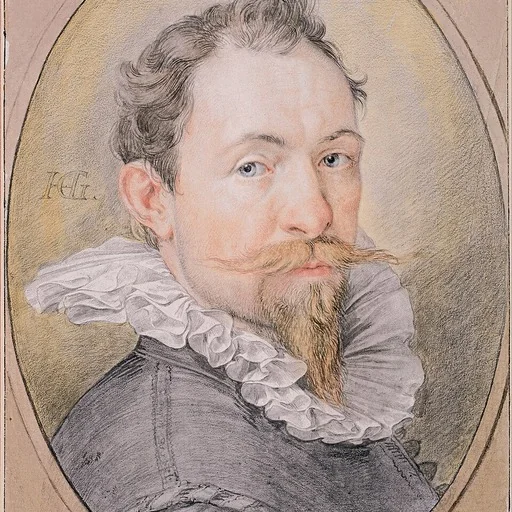
Hendrick Goltzius (German: , Dutch: ; né Goltz; January or February 1558 – 1 January 1617) was a German-born Dutch printmaker, draftsman, and painter.

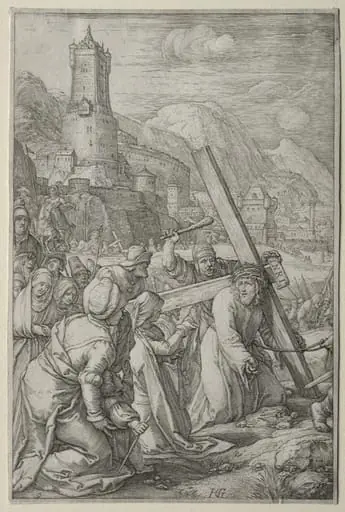 The Passion: Christ Carrying the Cross
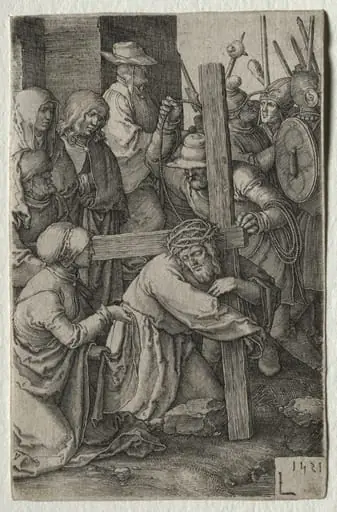 The Passion: Christ Carrying the Cross
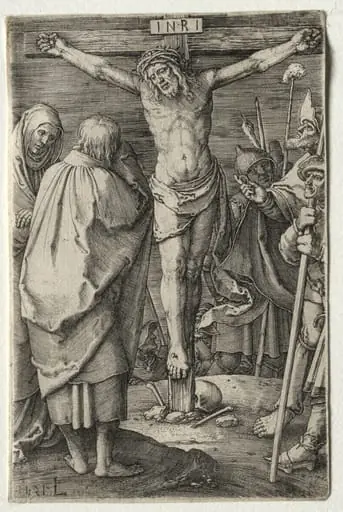 The Passion: The Crucifixion
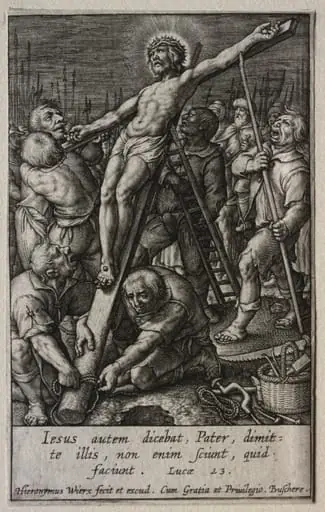 The Passion: The Raising of the Cross
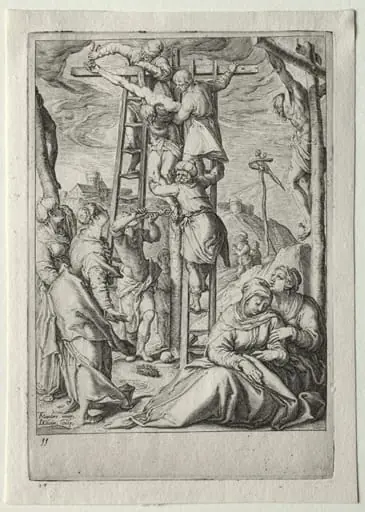 Passion Set: Descent from the Cross
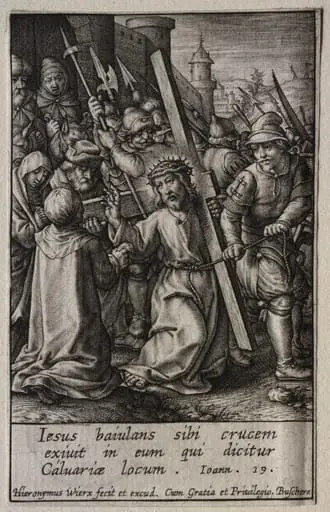 The Passion: Christ Carrying the Cross
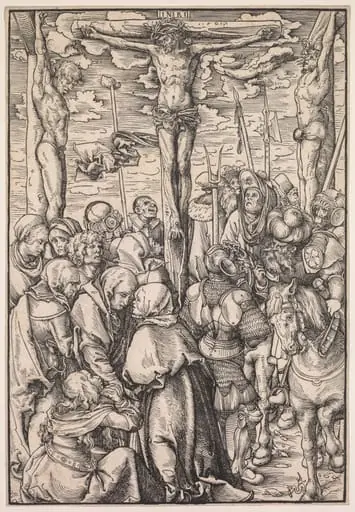 The Passion: Crucifixion
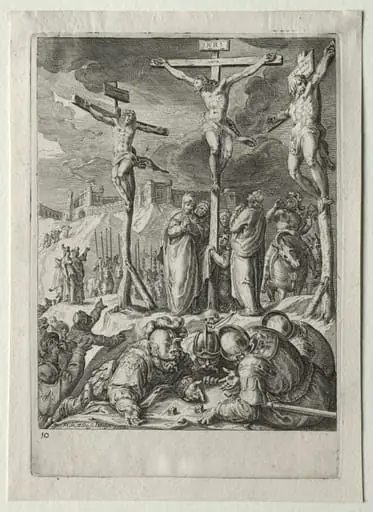 Passion Set: The Crucifixion
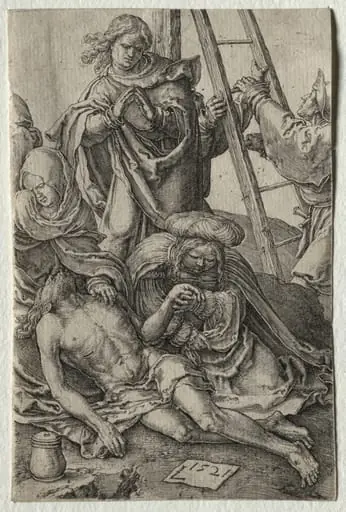 The Passion: Descent from the Cross
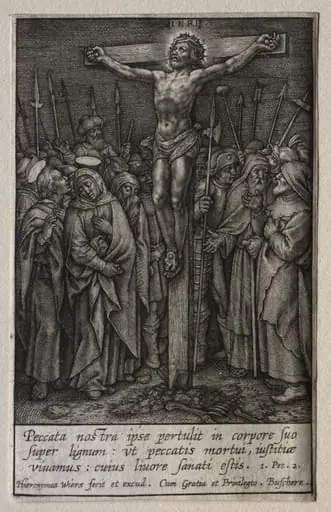 The Passion: Christ Crucified
 The Passion: Christ Crowned with Thorns