Artwork
Casamento Místico de Santa Catarina
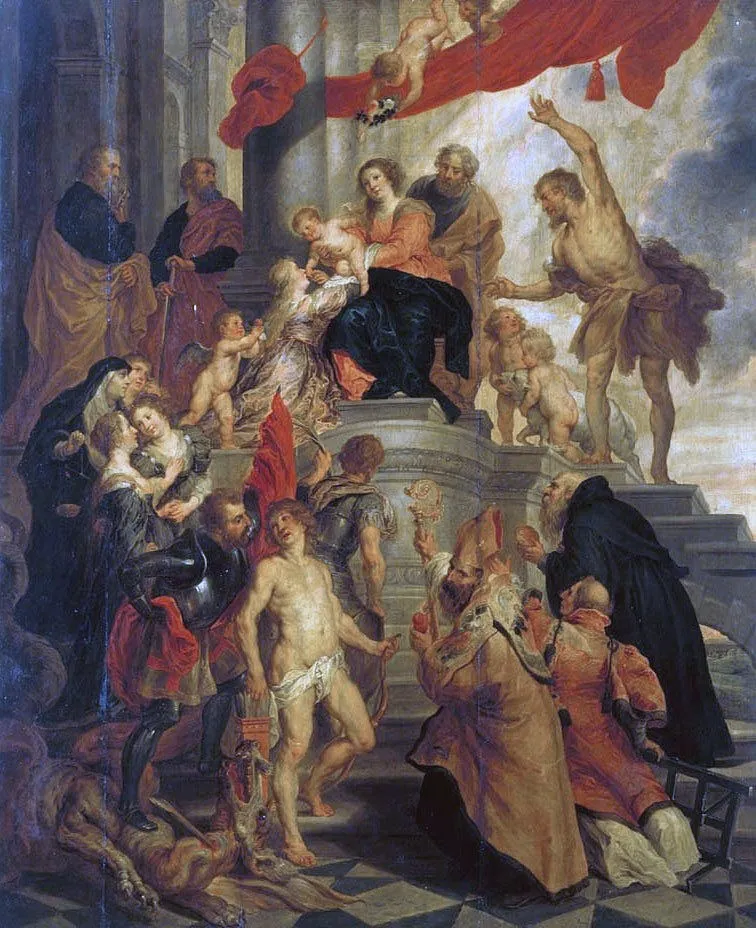
Casamento Místico de Santa Catarina is an oil painting by the Flemish Baroque painting artist Hendrick van Balen the Elder. It dates from 1628 and is held in the collection of the National Museum of Ancient Art.
About this work
Overview
Hendrick van Balen the Elder completed this oil-on-copper painting in 1628, part of a tradition of small-scale devotional works favored in Flemish courts.
Hendrick van Balen the Elder completed this oil-on-copper painting in 1628, part of a tradition of small-scale devotional works favored in Flemish courts. The medium allowed for fine detail and luminous color, suited to intimate religious imagery. Van Balen, active in Antwerp, was known for blending classical composition with Baroque energy, and this piece reflects his role in revitalizing Flemish painting during the early 17th century.
Subject & Meaning
The scene illustrates the mystical marriage of Saint Catherine of Alexandria, a vision in which she is spiritually wed to Christ, symbolized by a ring. This subject, popular in Counter-Reformation art, emphasized devotion and divine grace. Surrounding figures—clergy, angels, and witnesses—reinforce the sacred nature of the moment, while the inclusion of a child and a dynamic male figure introduces human presence into the celestial event.
Technique & Style
Van Balen employed chiaroscuro to sculpt forms and heighten drama, using sharp contrasts between light and shadow to guide the viewer’s eye toward the central figures. The palette—rich reds, deep blues, and warm yellows—creates spatial depth and emotional resonance. Fine brushwork on the copper support captures delicate textures in fabric and skin, reflecting his training in both painting and stained glass design.
History & Provenance
The painting has remained in institutional hands since at least the 19th century, entering the collection of the National Museum of Ancient Art in Lisbon. Its preservation on copper, a durable support, contributed to its survival in good condition. While its early ownership is undocumented, its presence in the museum reflects its recognition as a significant example of Flemish religious art from the period.
Context
Created during the height of the Flemish Baroque, the work aligns with Antwerp’s thriving artistic community, where religious themes were in demand following the Council of Trent. Van Balen’s role as a teacher to Anthony van Dyck situates him within a lineage of influential painters. His use of mythological and sacred subjects mirrored broader trends in Catholic Europe, where art served both devotion and doctrinal clarity.
Legacy
Though less widely known than his pupil van Dyck, van Balen’s contributions helped shape the visual language of Flemish religious painting. His mastery of small-format oil on copper influenced contemporaries and later artists seeking precision and luminosity. This painting endures as a testament to the quiet but vital role of specialized craftsmen in sustaining the religious art tradition during a transformative era.
Artist & collection
Artist
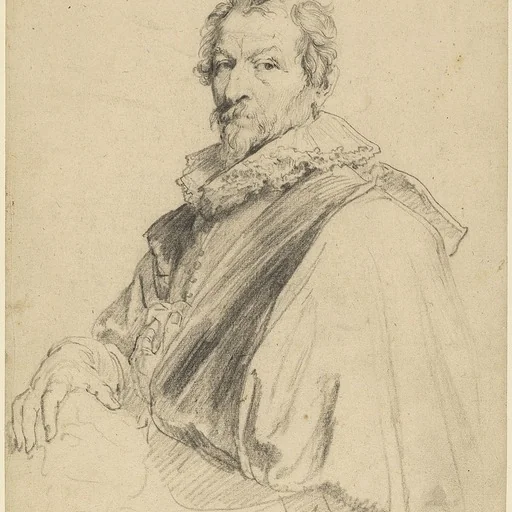
Hendrick van Balen or Hendrick van Balen I (c. 1573–1575 – 17 July 1632) was a Flemish Baroque painter and stained glass designer. Hendrick van Balen specialised in small cabinet pictures often painted on a copper…

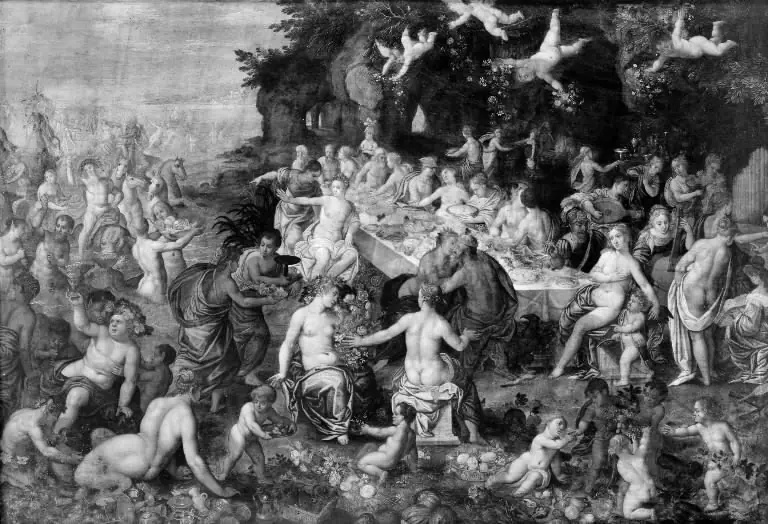 The Banquet of the Gods. The Wedding of Peleus and Thetis
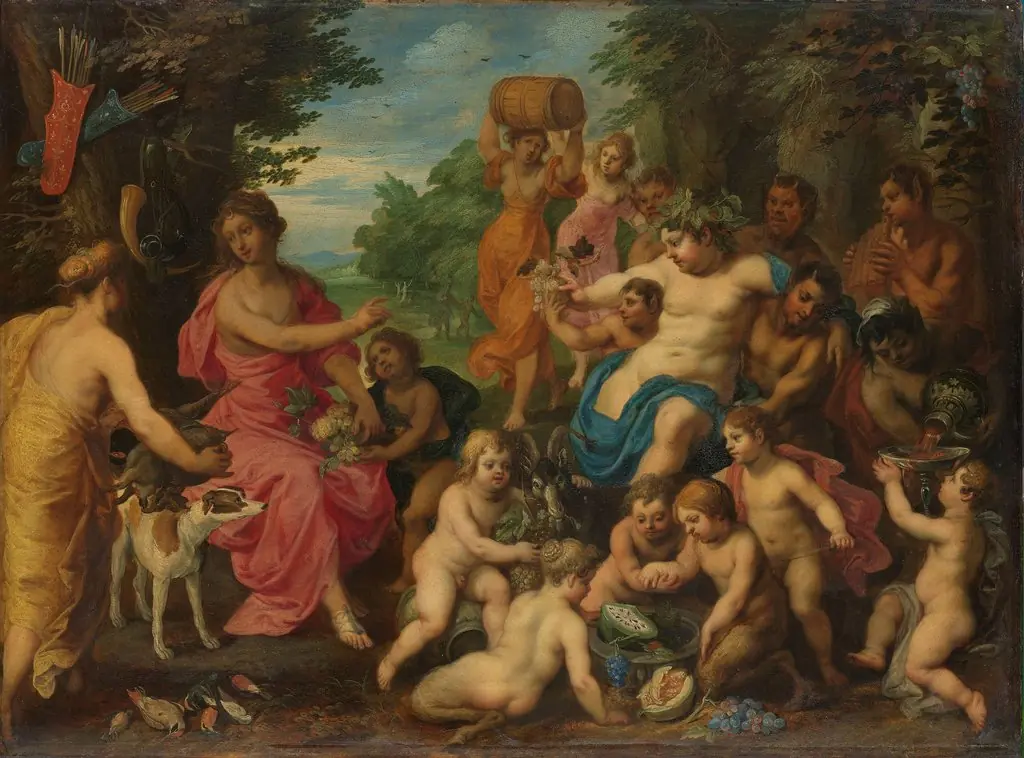 Diana Offered Wine and Fruit by the Young Bacchus and his Retinue
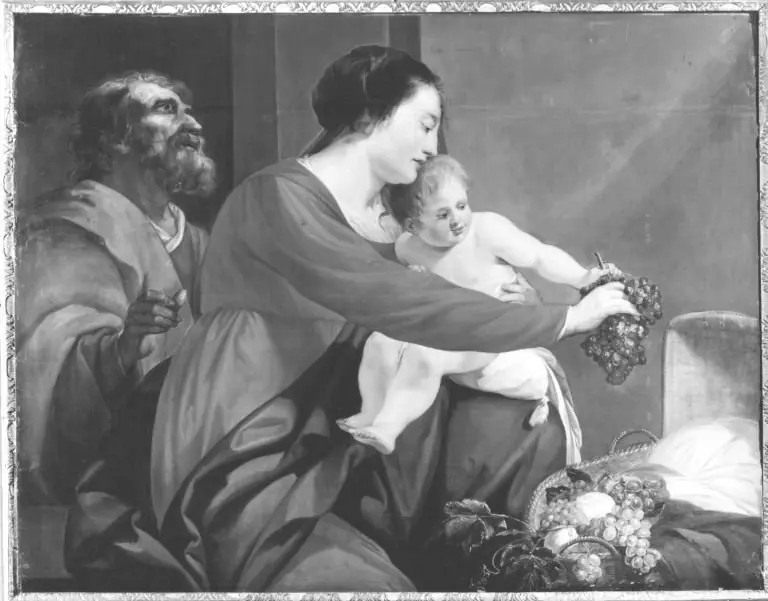 The Holy Family
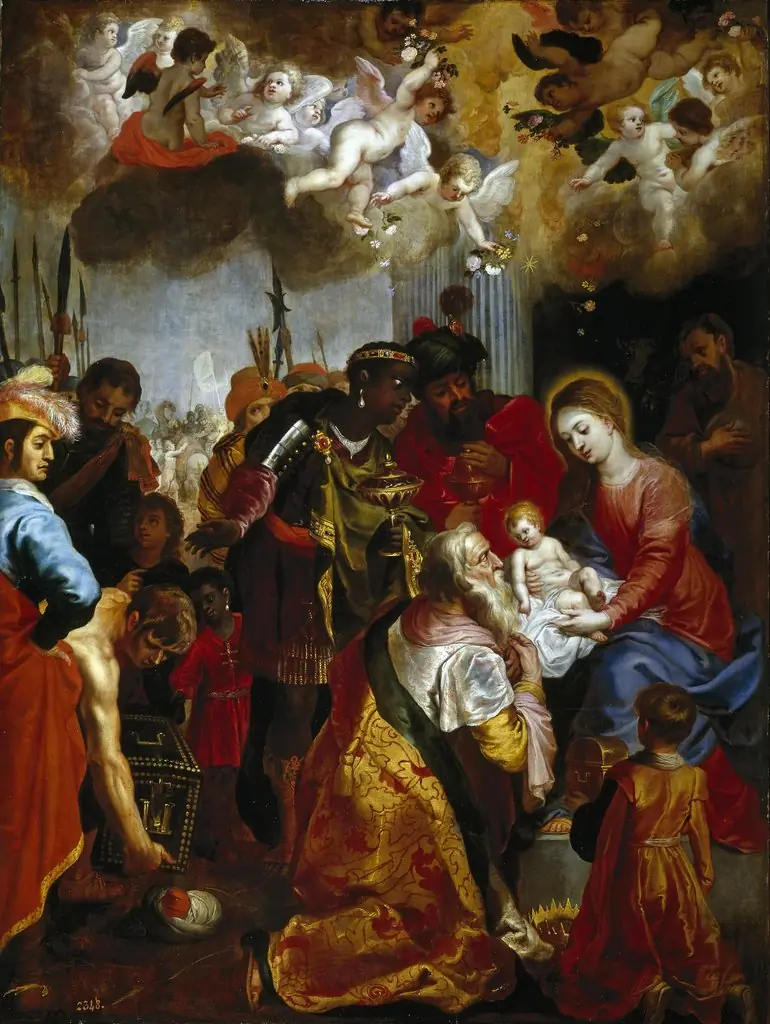 Adoration of the Magi
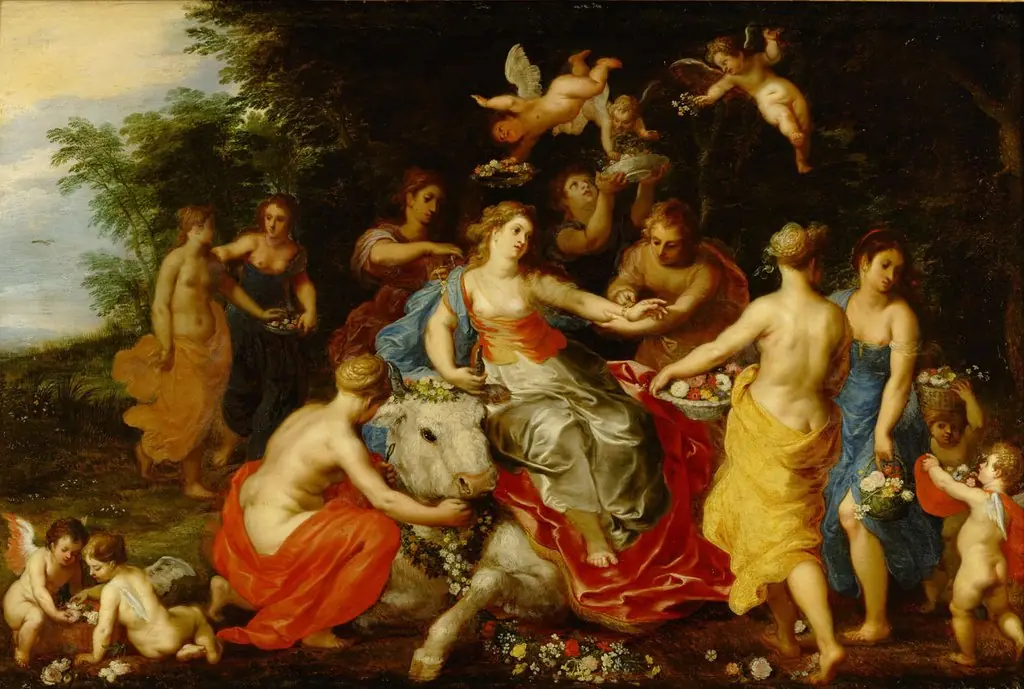 Europa riding the bull
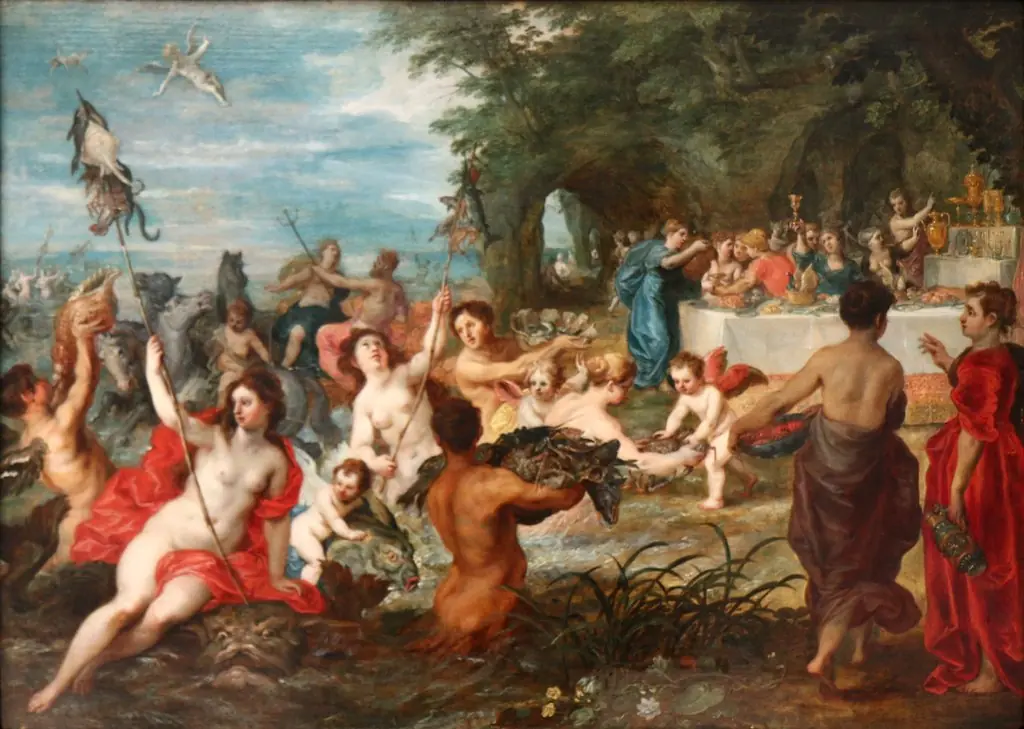 The wedding of Thetis and Peleus
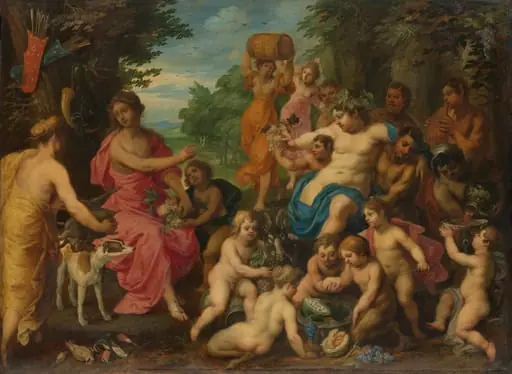 Diana Offered Wine and Fruit by Bacchus and his Retinue
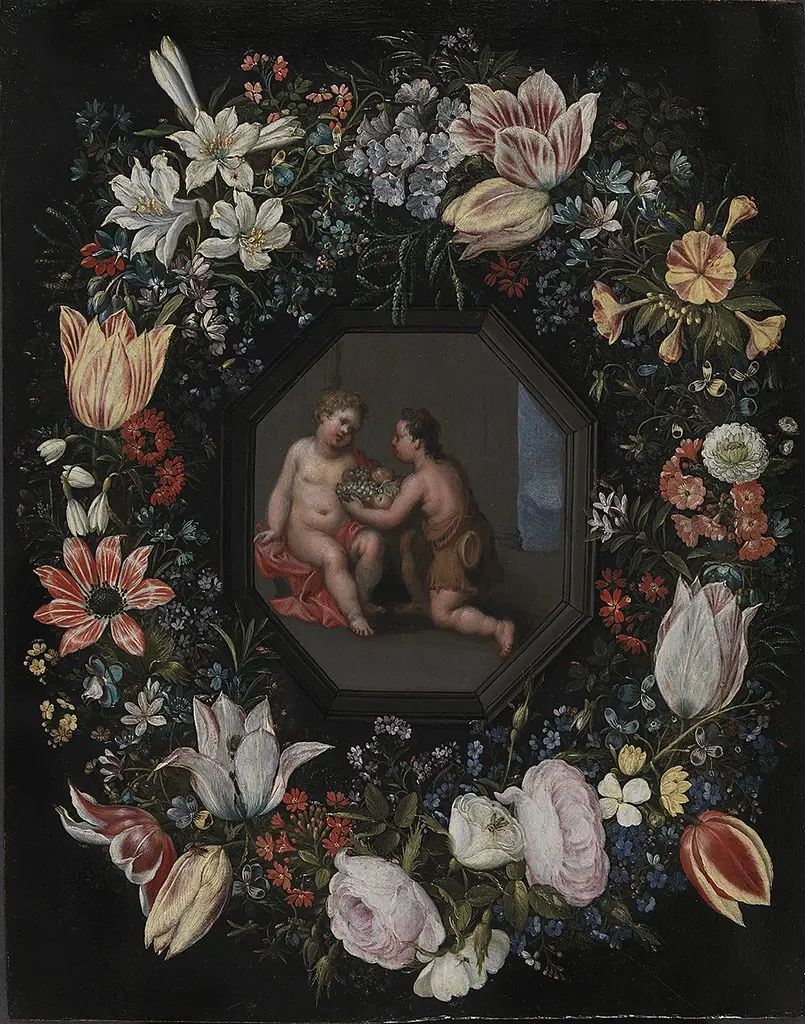 Blomsterkrans med Jesus og Johannes
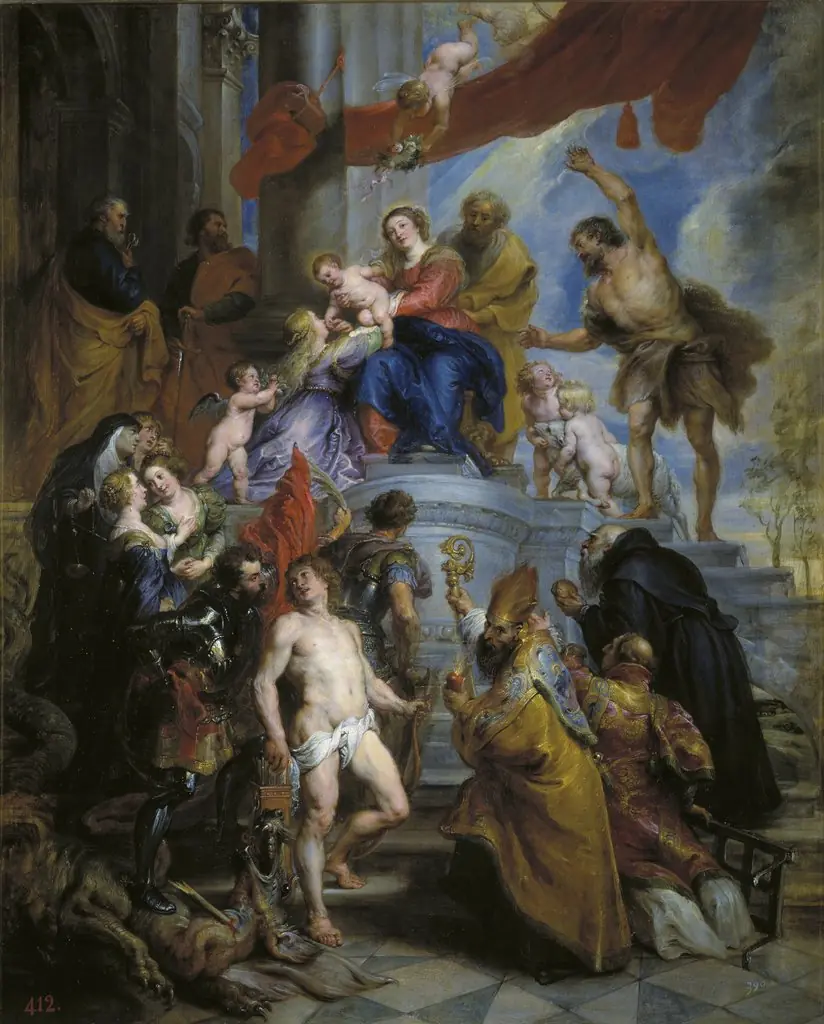 The Holy Family surrounded by Saints
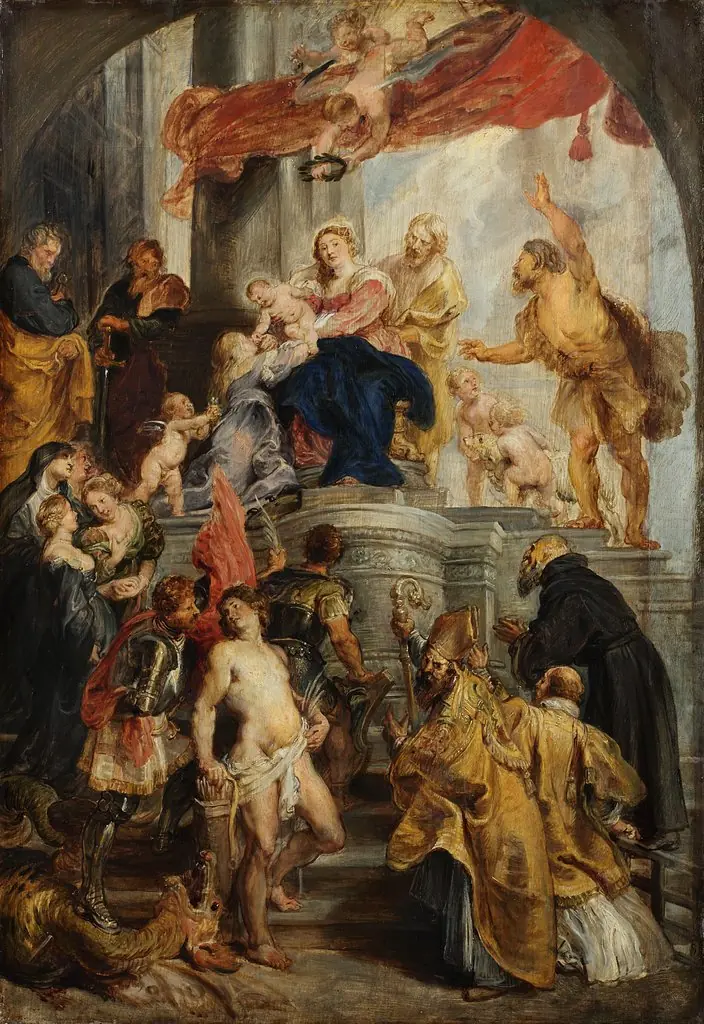 The Virgin and Child Enthroned with Saints by Peter Paul Rubens
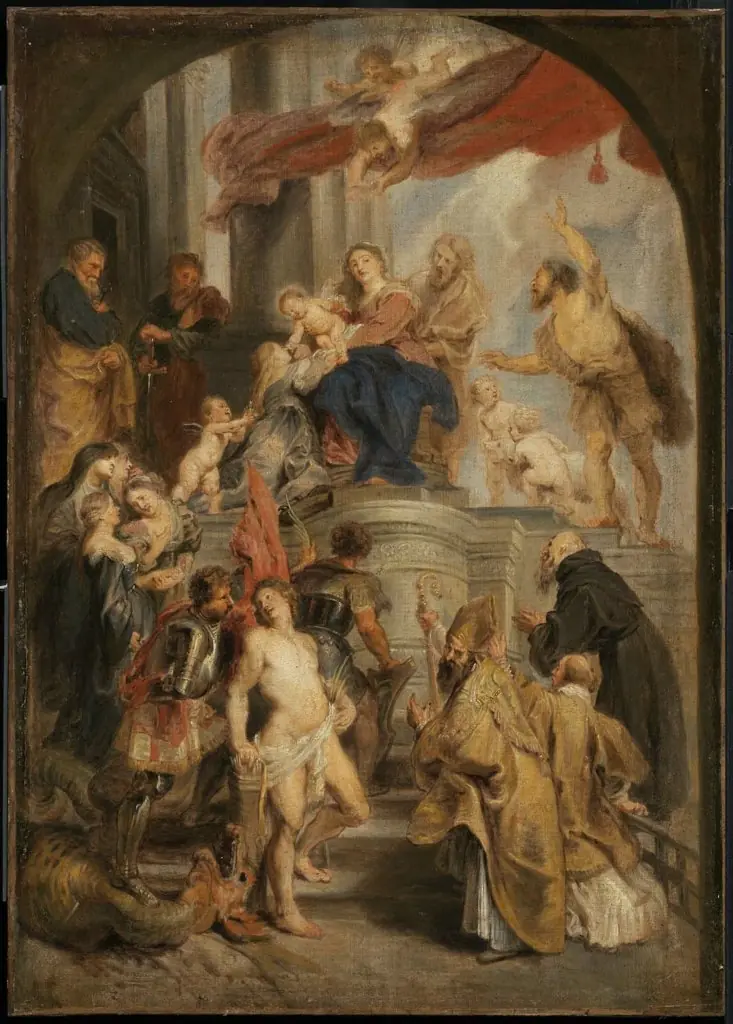 Virgin and Child Adored by Saints
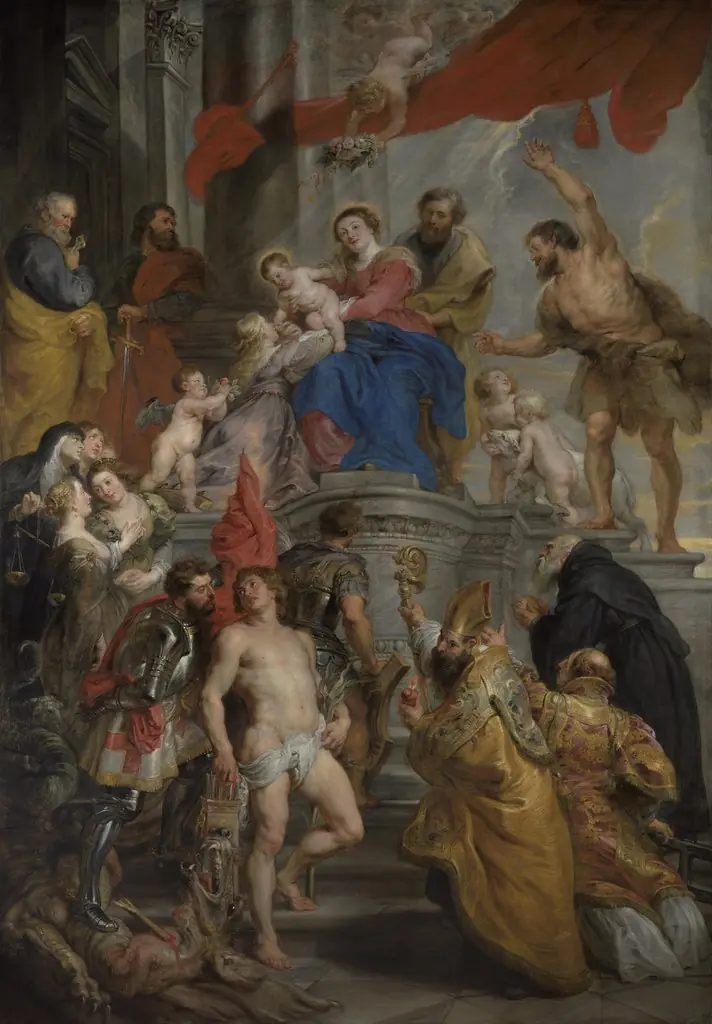 The Virgin and Child Enthroned with Saints
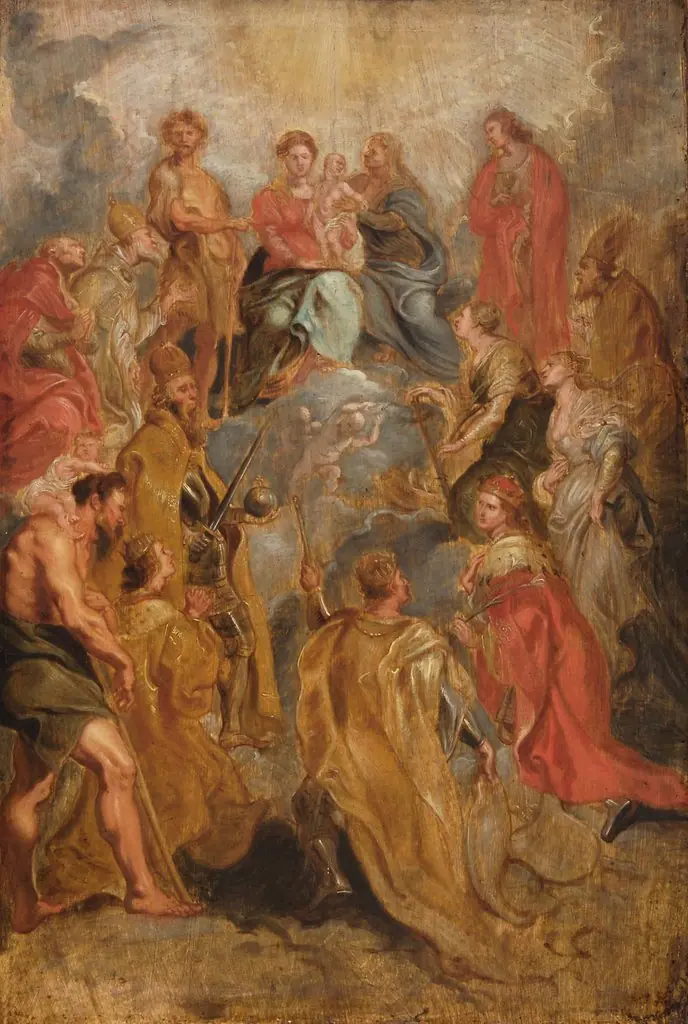 Madonna and Child with Saint Anne
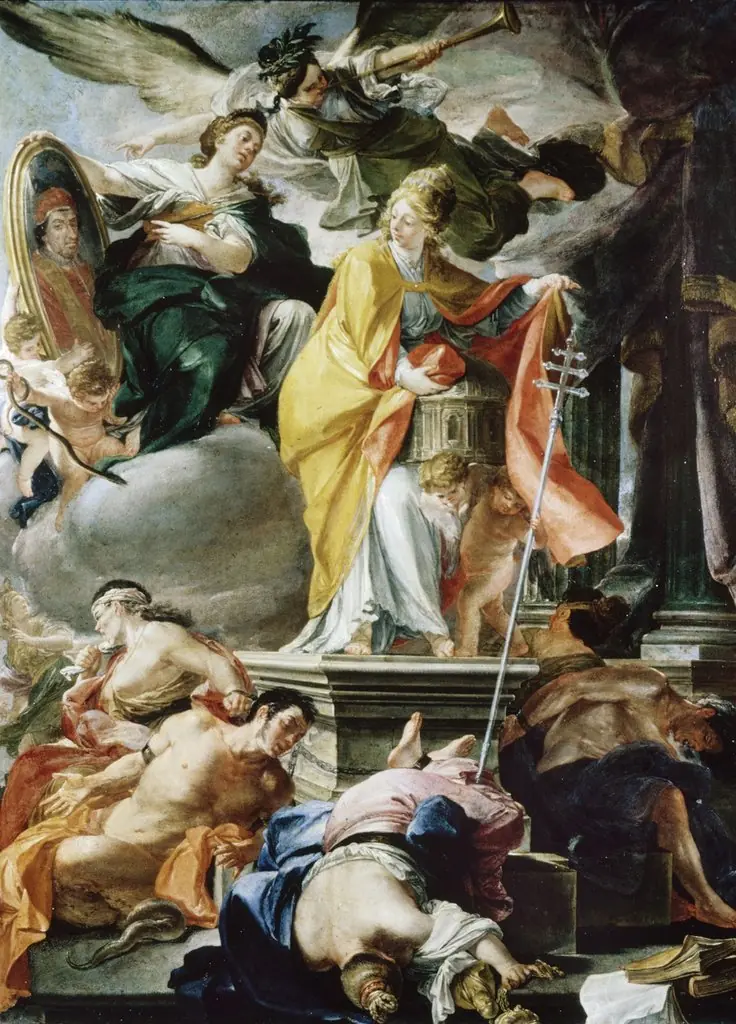 Allegory of the Papacy of Clement XI
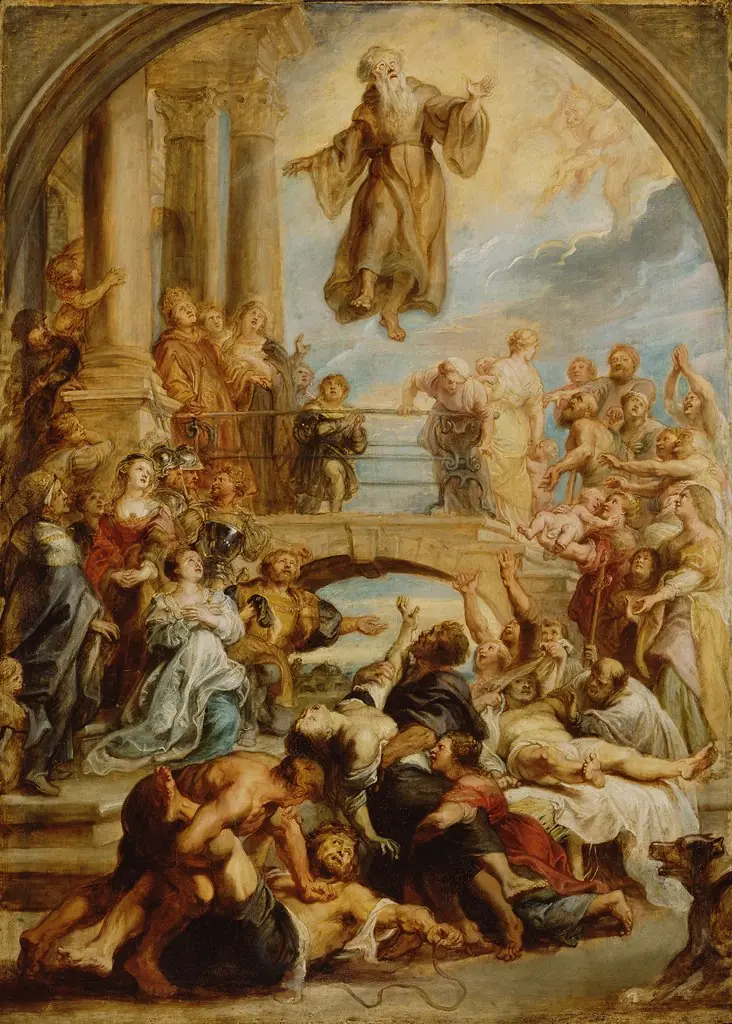 The Miracles of Saint Francis of Paola
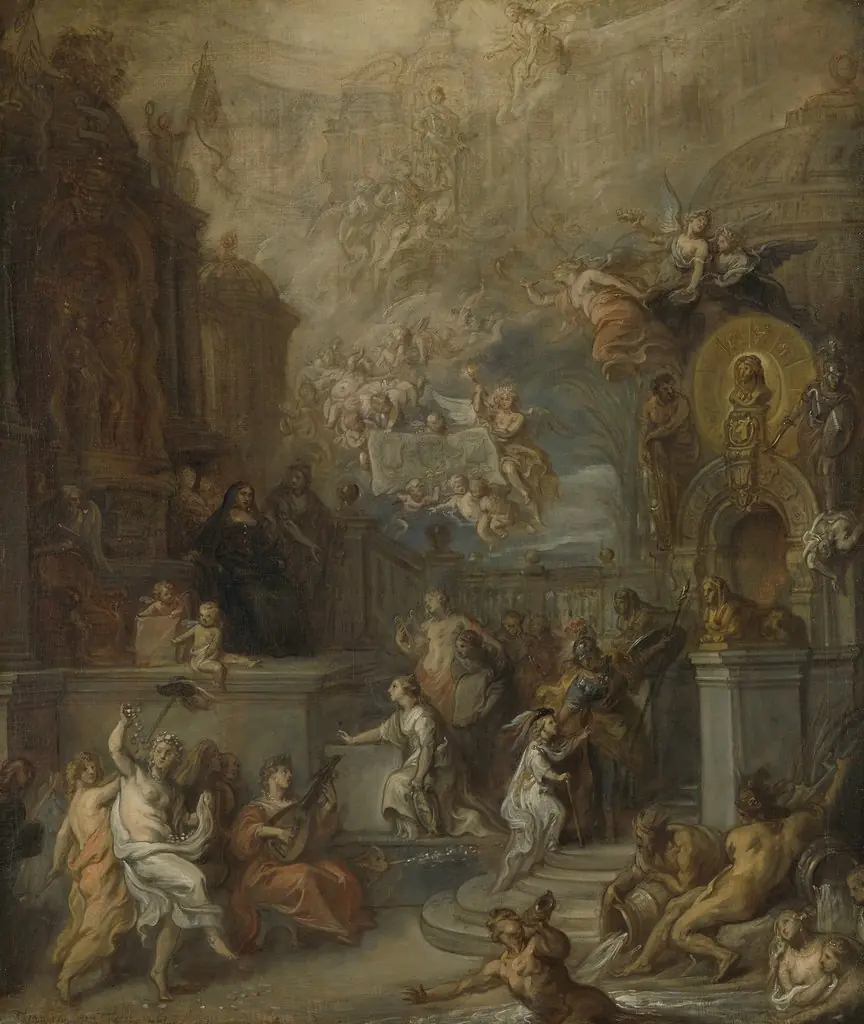 Allegory of William III's leavetaking from Alamia van Solms after the transferral of the regency to the statesgeneral
 Allegory of the Farewell of William III from Amalia van Solms following the transfer of Regency to the States General
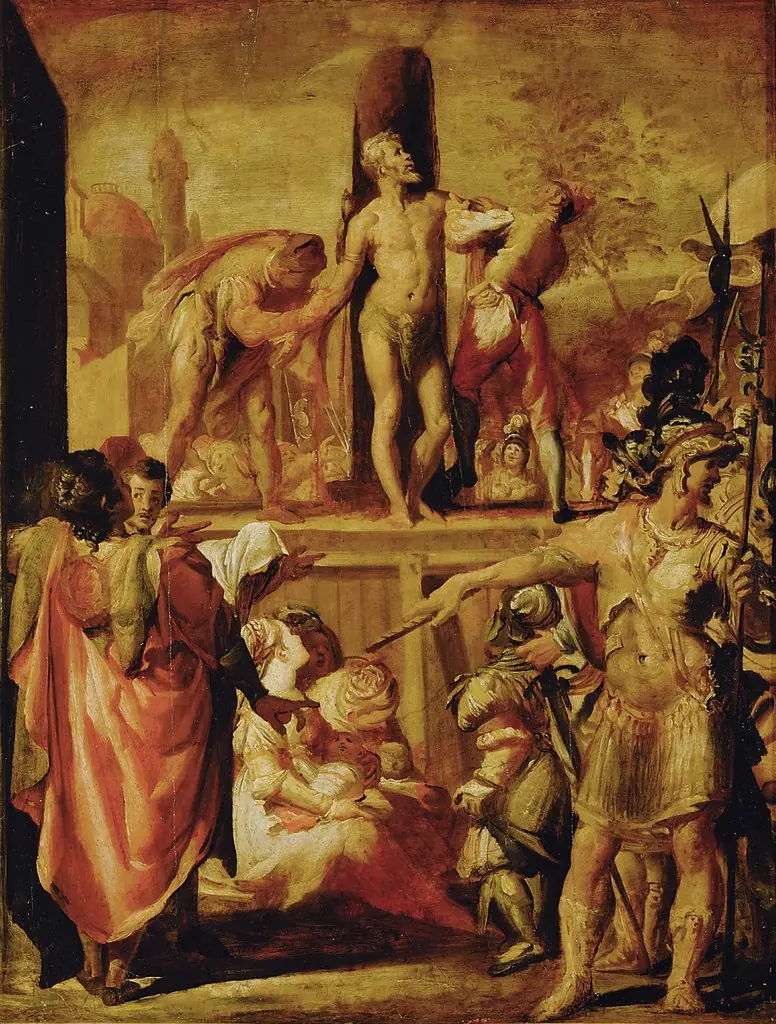 Marter des Hl. Bartholomäus
 The Glorification of Saint Odile
 Adoration of the Magi