Artwork
Mary Hamilton
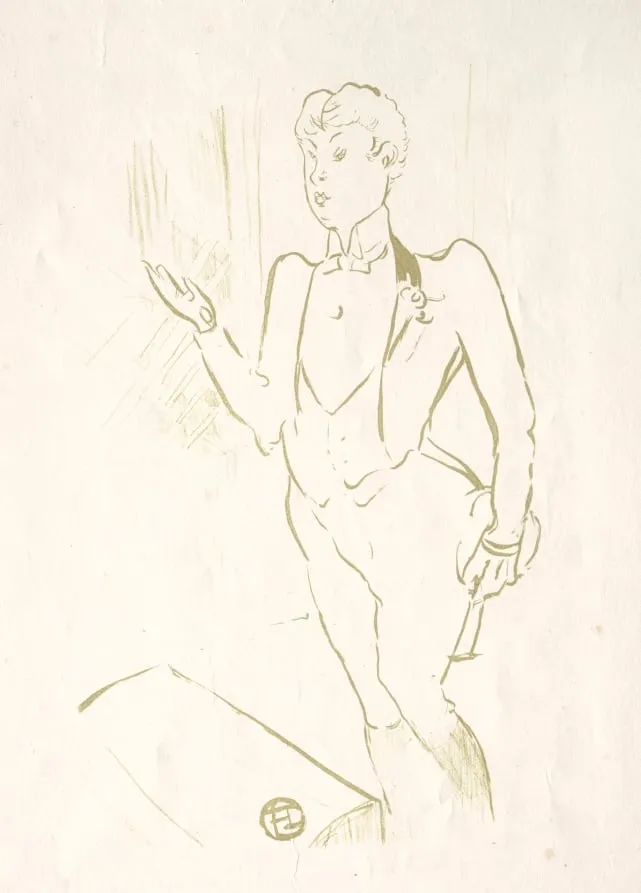
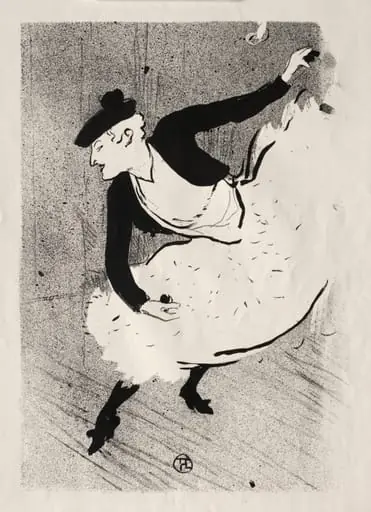
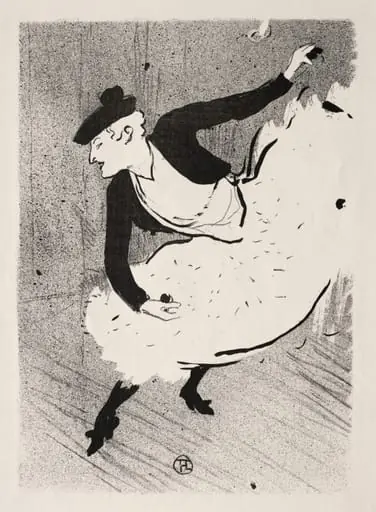
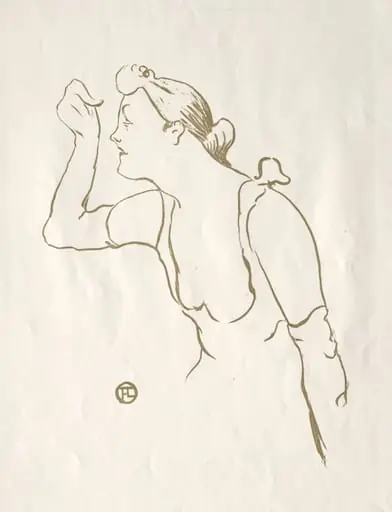
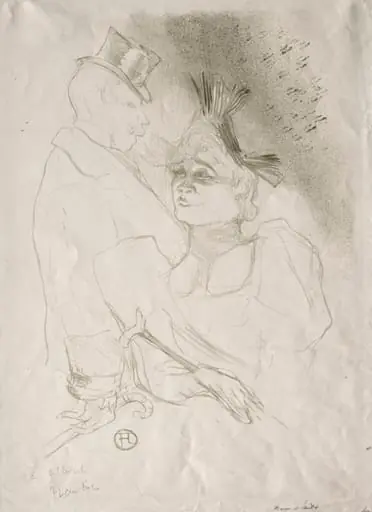
Mary Hamilton is a print by the Impressionist artist Henri de Toulouse-Lautrec. It dates from 1893 and is held in the collection of the Cleveland Museum of Art.
About this work
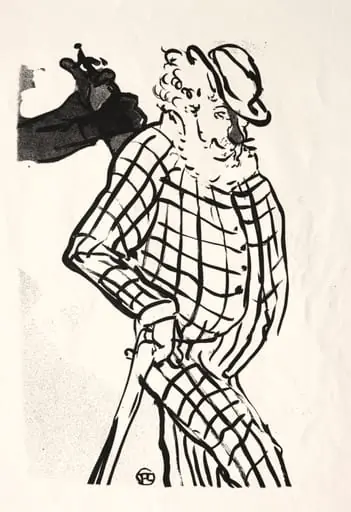
His left hand rests on his hip, right hand outstretched as if mid-gesture, and his bow tie is slightly askew.
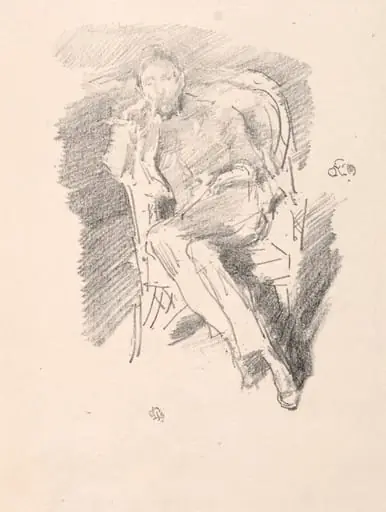
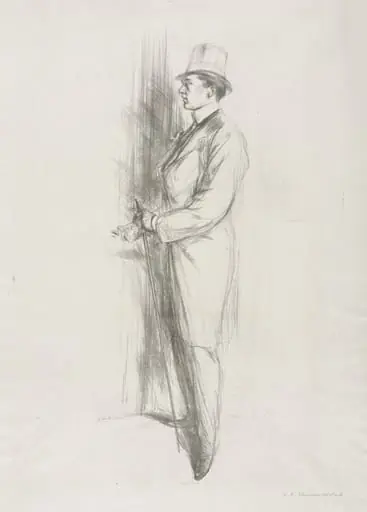
This sketch shows a bare-chested man in a tuxedo jacket, standing sideways on a small stage. His left hand rests on his hip, right hand outstretched as if mid-gesture, and his bow tie is slightly askew. The lines are loose and quick, with some areas left sketchy, like the background and his legs.
The artist used simple shapes and bold outlines to capture movement and personality. The mix of clothing and nudity feels playful, almost like a quick snapshot of a performer.
Next, check out Henri de Toulouse-Lautrec (French, 1864–1901) for more sketches like this.
Overview
Henri de Toulouse‑Lautrec’s 1893 lithograph titled *Mary Hamilton* presents a solitary figure on a modest stage. The subject, rendered in a side view, is bare‑chested beneath a tuxedo jacket, with a slightly askew bow tie, one hand on the hip and the other extended as if caught in a gesture. The composition is executed with swift, loose lines that leave portions of the background and legs sketchily suggested.
Subject & Meaning
The work captures a moment from the Parisian entertainment world, focusing on a performer whose blend of nudity and formal attire creates a playful tension. By juxtaposing the exposed torso with the remnants of a tuxedo, Toulouse‑Lautrec highlights the theatricality and marginality of nightlife figures, inviting viewers to consider the performer's dual identity as both entertainer and object of curiosity.
Technique & Style
Executed as a lithograph, the image relies on bold outlines and simplified shapes to convey movement and character. The artist’s hand is evident in the rapid, gestural strokes that define the figure’s posture while deliberately leaving other areas under‑rendered, a technique that emphasizes immediacy and the fleeting nature of a stage moment.
History & Provenance
Created during the artist’s most productive period, the print reflects Toulouse‑Lautrec’s immersion in the bohemian circles of late‑19th‑century Paris. While specific ownership records are scarce, the work forms part of the broader corpus of his prints that documented the city’s cabarets, brothels, and music halls, subjects that defined his reputation.
Context
The lithograph emerges from a time when Parisian nightlife was both celebrated and stigmatized. Toulouse‑Lautrec, himself an outsider due to his aristocratic background and physical disability, gravitated toward the city's marginal venues, documenting their patrons with a blend of empathy and observational detachment.
Legacy
*Mary Hamilton* exemplifies the artist’s capacity to distill complex social scenes into concise visual statements. Its economical line work and focus on a singular, ambiguous figure have influenced subsequent generations of printmakers and illustrators who seek to capture the vitality of urban performance spaces.
Artist & collection
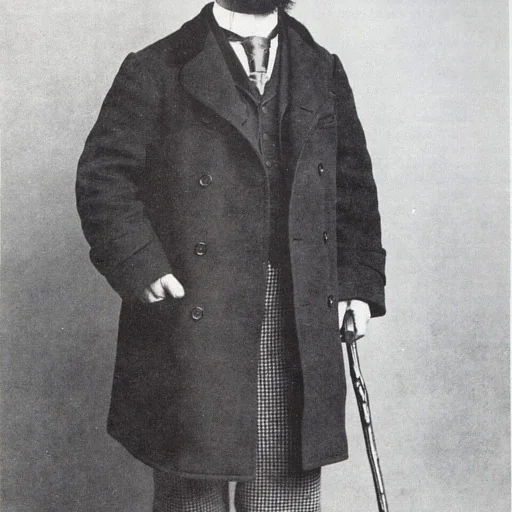
Artist
Comte Henri Marie Raymond de Toulouse-Lautrec-Montfa (24 November 1864 – 9 September 1901), known as Toulouse-Lautrec (French: ), was a French painter, printmaker, draughtsman, caricaturist, and illustrator.