Artwork
Woman with a Muff (La Dame au Manchon)
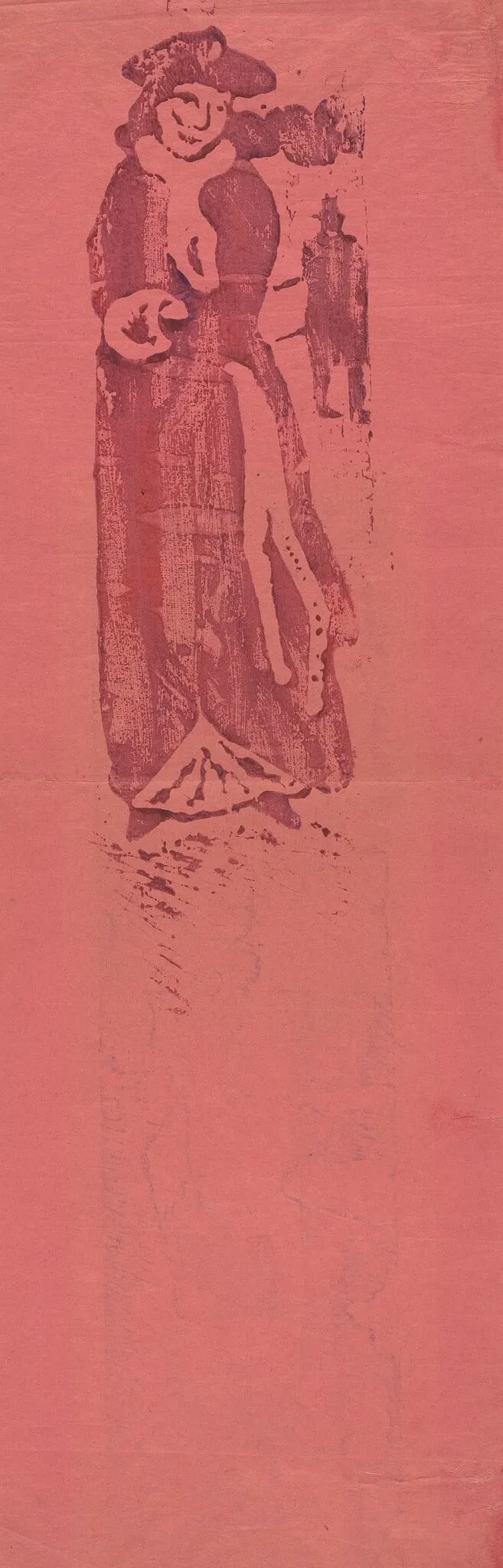
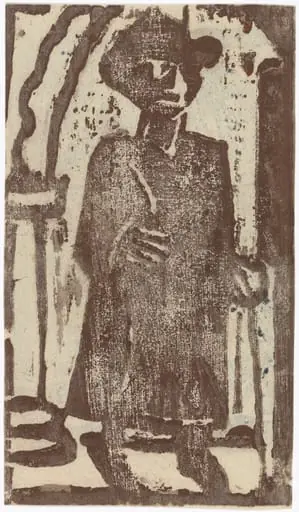
Woman with a Muff (La Dame au Manchon) is an ink print by the Impressionist artist Émile Bernard. It dates from 1892 and is held in the collection of the National Gallery of Art. Created in 1892, *Woman with a Muff* is a woodcut by French artist Émile Henri Bernard, printed in purple-red ink on dark pink wove paper.
About this work
Overview
Its restrained palette and flat planes reflect his interest in simplifying visual language, aligning with broader trends in late 19th-century avant-garde art.
Created in 1892, *Woman with a Muff* is a woodcut by French artist Émile Henri Bernard, printed in purple-red ink on dark pink wove paper. The work belongs to a period of intense experimentation in printmaking, during which Bernard moved beyond painting to explore graphic forms. Its restrained palette and flat planes reflect his interest in simplifying visual language, aligning with broader trends in late 19th-century avant-garde art.
Subject & Meaning
The print portrays a woman in profile, facing right, dressed in a dark gown with a pale collar and an ornate hat adorned with floral details. She holds a muff against her left arm, a gesture suggesting quiet composure. The absence of narrative context or environmental detail focuses attention on the figure’s stillness and dignity, evoking a sense of private contemplation rather than social performance.
Technique & Style
Bernard employed bold, simplified contours and a limited color palette to define form, characteristic of Cloisonnism. The dark pink background intensifies the contrast with the purple-red figure, enhancing the graphic impact. The woodcut’s flatness and lack of shading reject naturalism, instead emphasizing pattern and silhouette—hallmarks of Synthetist aesthetics that prioritized emotional resonance over optical accuracy.
History & Provenance
Produced during Bernard’s most active years in printmaking, the work emerged from his circle in Pont-Aven, where he collaborated with Paul Gauguin and others. While specific ownership records are sparse, the piece is documented in early 20th-century collections of French modernist prints. Its survival in relatively few impressions underscores its status as a personal, limited-run experiment rather than a commercial product.
Context
In the early 1890s, Bernard rejected Impressionist spontaneity in favor of structured, symbolic forms. His woodcuts responded to Japanese prints and medieval stained glass, favoring clarity over atmospheric effect. This work reflects a broader shift among Post-Impressionists toward abstraction and emotional economy, as artists sought new ways to convey inner experience through reduced visual elements.
Legacy
Though less widely known than his paintings, Bernard’s woodcuts influenced later generations of printmakers drawn to expressive line and symbolic simplification. *Woman with a Muff* exemplifies his role in bridging Symbolist ideals with modern graphic design. Its quiet intensity continues to be studied as a quiet but significant contribution to the evolution of printmaking beyond traditional reproductive methods.
Artist & collection
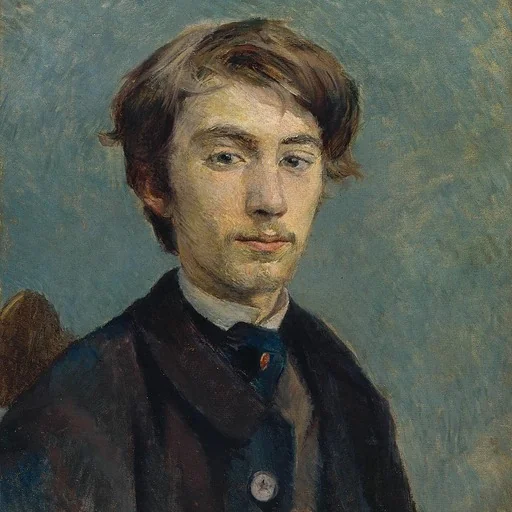
Artist
Émile Henri Bernard (French pronunciation: ; 28 April 1868 – 16 April 1941) was a French Post-Impressionist painter and writer, who had artistic friendships with Vincent van Gogh, Paul Gauguin and Eugène Boch, and at a later time, Paul…