Artwork
Le Café-concert: Edmée Lescot
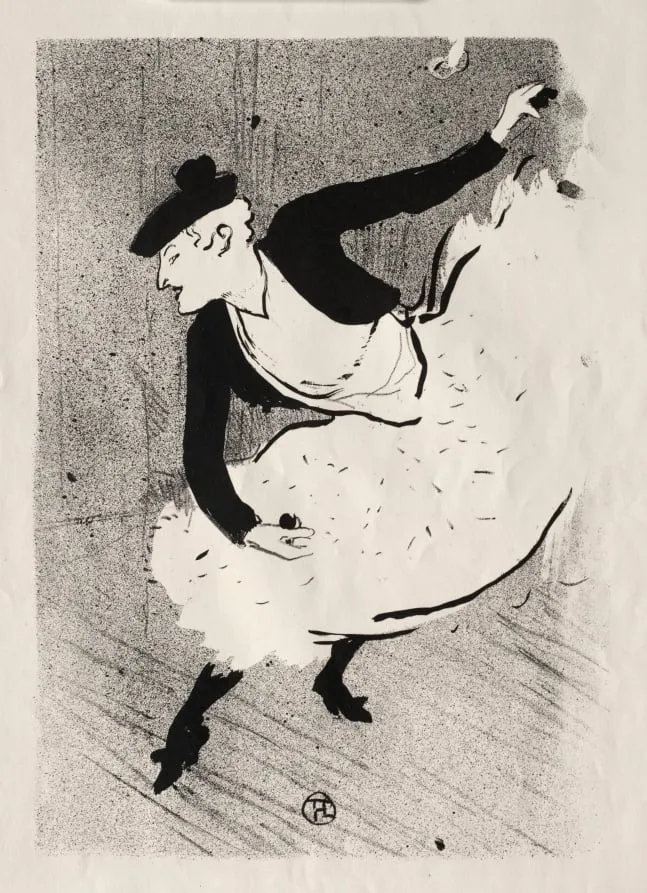
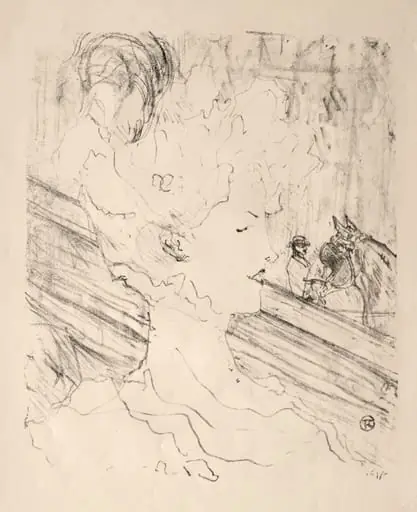
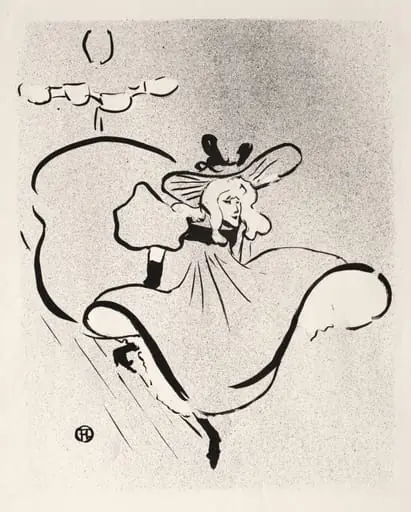
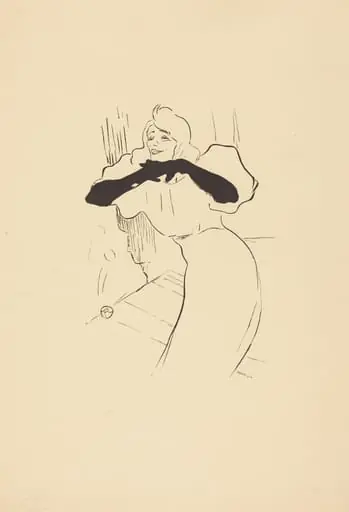
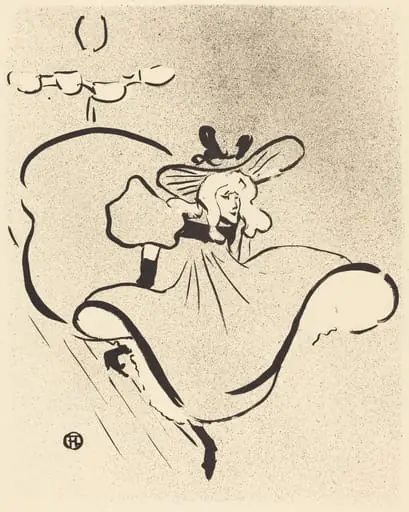
Le Café-concert: Edmée Lescot is a print by the Impressionist artist Henri de Toulouse-Lautrec. It dates from 1893 and is held in the collection of the Cleveland Museum of Art.
About this work
This painting shows a woman singing on a small stage. The room is dark. People sit at tables, watching. The singer wears a white dress with a black bow.
Toulouse-Lautrec painted this in 1893. He loved nightlife scenes. The light hits the singer’s face. The rest fades into shadow.
See how the edges blur? That’s called *sfumato*. It softens the scene.
Look up Henri de Toulouse-Lautrec (French, 1864–1901) next.
Overview
Toulouse-Lautrec, known for his intimate portrayals of urban entertainers, rendered this scene with a sensitivity to atmosphere rather than spectacle.
Created in 1893, this print by Henri de Toulouse-Lautrec captures a moment from a Parisian café-concert, a type of venue blending music, drink, and casual theater. It portrays Edmée Lescot, a performer of the era, mid-song on a modest stage. The composition emphasizes her presence through focused illumination, contrasting with the dim, indistinct audience. Toulouse-Lautrec, known for his intimate portrayals of urban entertainers, rendered this scene with a sensitivity to atmosphere rather than spectacle.
Subject & Meaning
Edmée Lescot, a real singer active in Montmartre’s nightlife, is depicted not as an idealized star but as a working performer in her element. The painting avoids romanticization, instead highlighting the quiet solitude of the artist amid the anonymous crowd. Her white dress and black bow stand out against the gloom, suggesting both vulnerability and professionalism. The scene reflects Toulouse-Lautrec’s interest in the lives of those who inhabited the margins of respectable society.
Technique & Style
Toulouse-Lautrec employed lithography to achieve a graphic immediacy, using bold outlines and selective tonal contrasts. Light falls sharply on the singer’s face and upper body, while the surrounding figures dissolve into shadowy silhouettes. The soft blending of tones at the edges, reminiscent of sfumato, creates a hazy, atmospheric depth. This technique directs the viewer’s attention without artificial detail, reinforcing the transient, fleeting nature of the performance.
History & Provenance
The print was produced during a period when Toulouse-Lautrec was deeply embedded in Montmartre’s entertainment scene, frequenting venues like the Moulin Rouge and Café-concerts. It was likely made for commercial distribution, as part of his broader effort to document the people and spaces of modern Paris. The work entered public collections in the early 20th century, preserved as an example of his graphic work rather than his paintings.
Context
Café-concerts were central to Parisian social life in the 1890s, offering affordable entertainment to a broad public. Performers like Lescot were often women from modest backgrounds, navigating a space between artistry and commodification. Toulouse-Lautrec’s choice to depict such settings reflected a broader artistic shift toward realism and the everyday, influenced by Japanese prints and the rise of mass media in urban culture.
Legacy
This print exemplifies Toulouse-Lautrec’s contribution to modern graphic art, influencing later illustrators and poster designers through its compositional clarity and psychological nuance. Rather than glorifying its subject, it preserves the quiet dignity of a working performer, offering a record of a transient social world. His approach helped redefine portraiture in the age of mass reproduction, grounding art in the rhythms of ordinary urban life.
Artist & collection
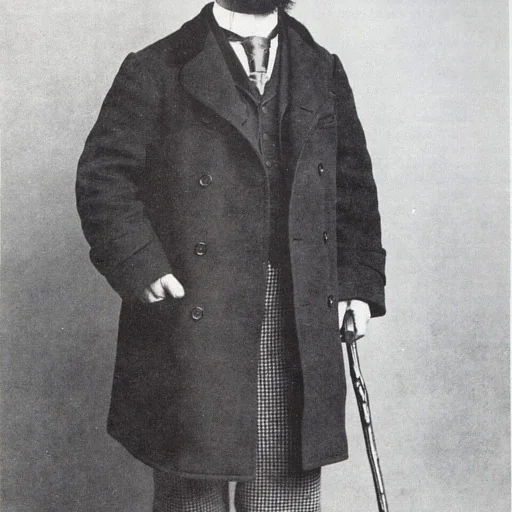
Artist
Comte Henri Marie Raymond de Toulouse-Lautrec-Montfa (24 November 1864 – 9 September 1901), known as Toulouse-Lautrec (French: ), was a French painter, printmaker, draughtsman, caricaturist, and illustrator.