Artwork
Duo des Troyens
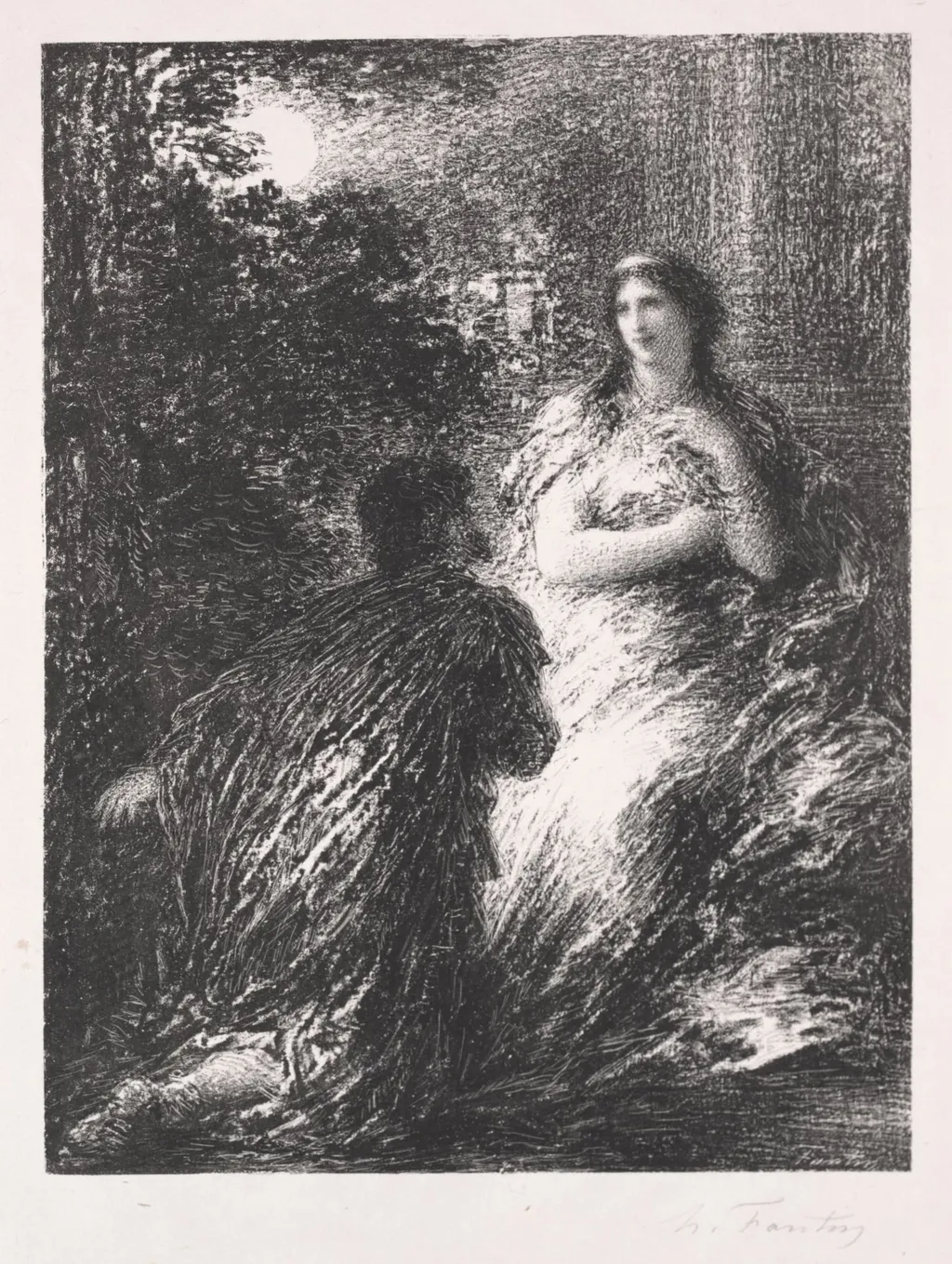
Duo des Troyens is a print by the Impressionist artist Henri Fantin-Latour. It dates from 1894 and is held in the collection of the Cleveland Museum of Art.
About this work
Overview
Duo des Troyens, created by French artist Henri Fantin-Latour in 1894, deviates from his typical still-life and group portrait works, instead capturing an intimate musical duet of two figures.
Subject & Meaning
The piece portrays two musicians in close proximity, their indistinct faces and blurred forms emphasizing emotional connection and shared activity over individual identity. The long-haired figure contrasts with the shorter-haired one, yet their unity in performance is the focal point.
Technique & Style
Fantin-Latour employed loose, expressive brushstrokes and a predominantly dark, swirling background to evoke a sense of shadowy intimacy. This technique, akin to chiaroscuro, uses strong contrasts of light and dark to suggest movement and emotional depth, drawing the viewer’s focus to the performers’ connection.
History & Provenance
Dating to 1894, the work belongs to Fantin-Latour’s later period. Specific provenance details are not provided in the available information.
Context
While Fantin-Latour was known for depicting Parisian artistic and literary circles, *Duo des Troyens* focuses on the universal language of music, suggesting a broader appeal beyond specific social portraits.
Legacy
The legacy of *Duo des Troyens* lies in its departure from the artist’s customary themes, highlighting Fantin-Latour’s exploration of capturing intimate, everyday moments through expressive, shadow-heavy techniques.
Artist & collection
Artist
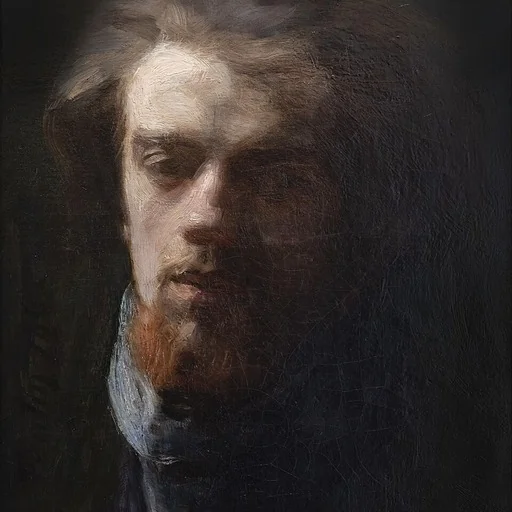
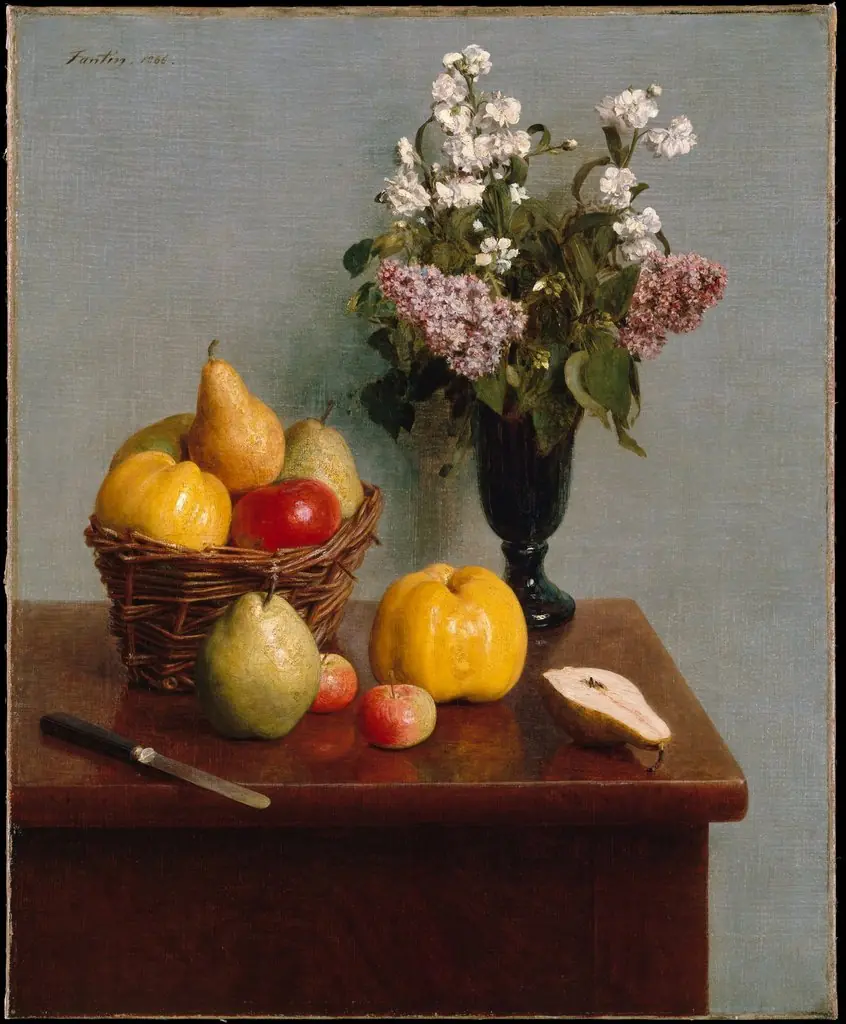
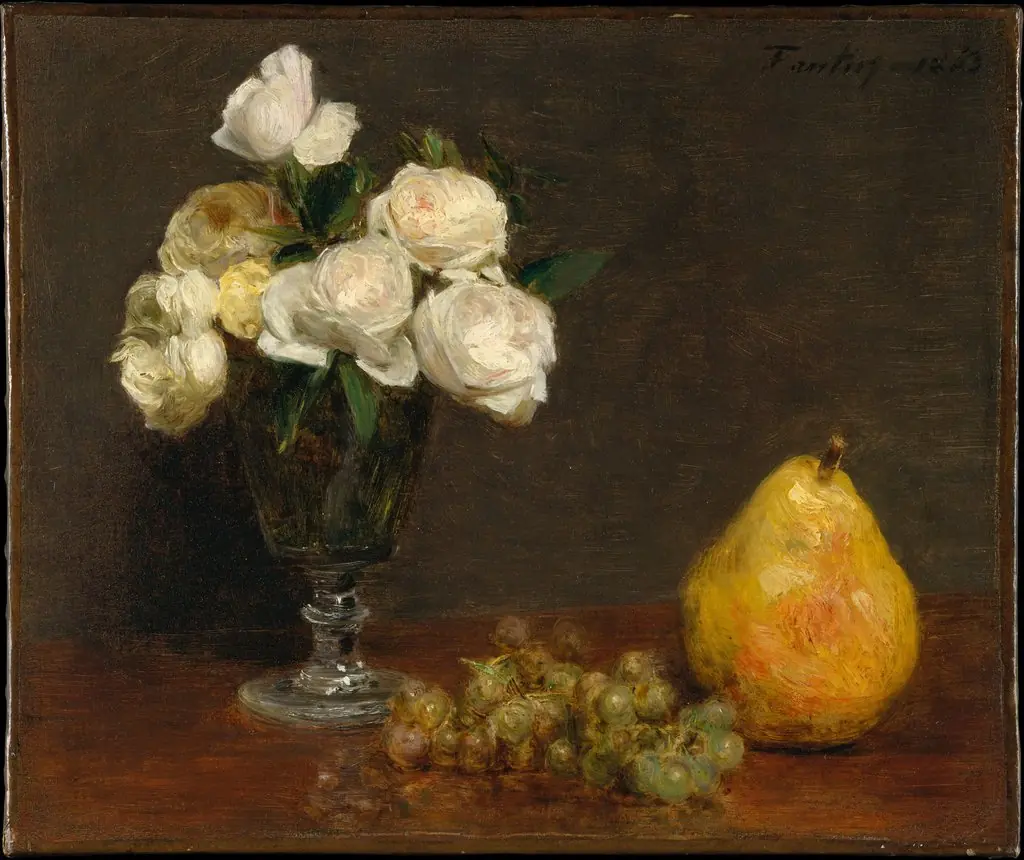
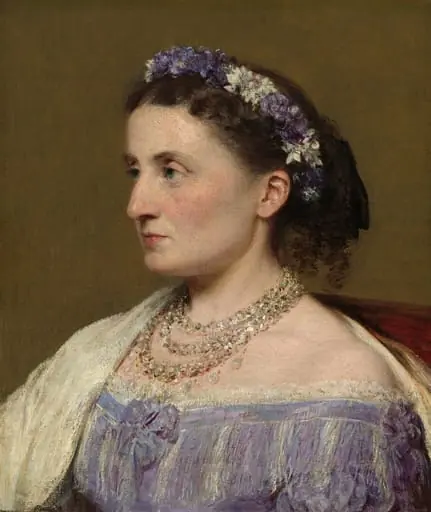
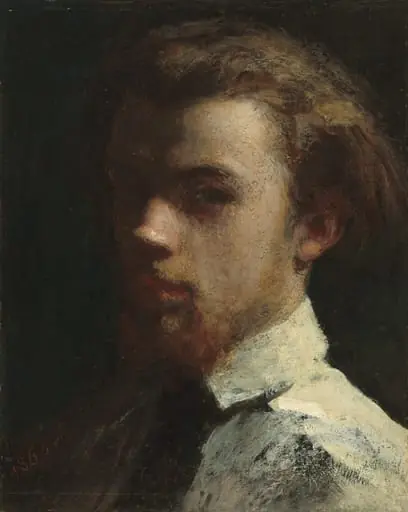
Ignace Henri Jean Theodore Fantin-Latour (French pronunciation: ; 14 January 1836 – 25 August 1904) was a French painter and lithographer best known for his flower paintings and group portraits of Parisian artists and writers.

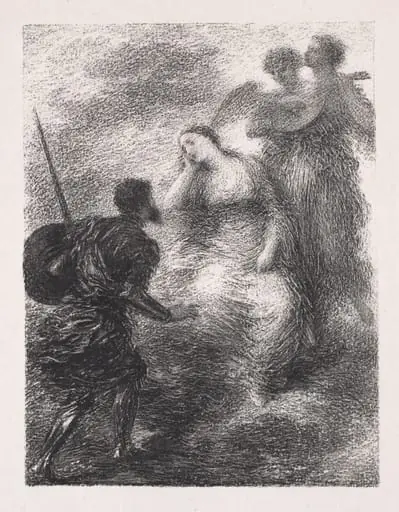 Vision
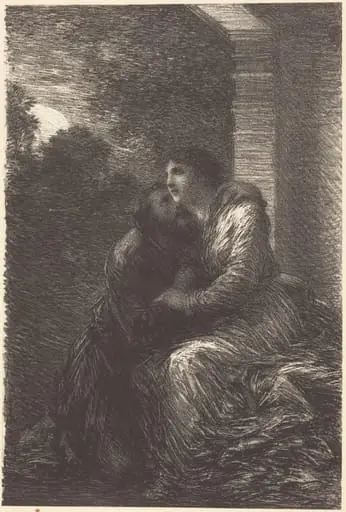 Love Scene from Act III of "Lohengrin"
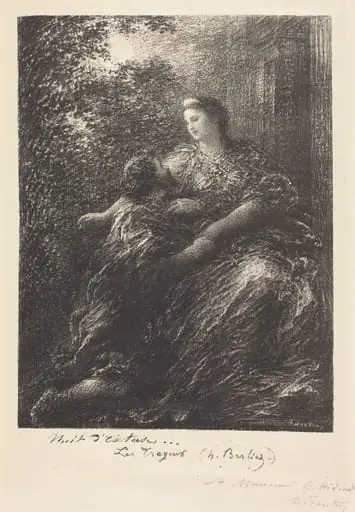 Duet from "The Trojans" (6th plate)
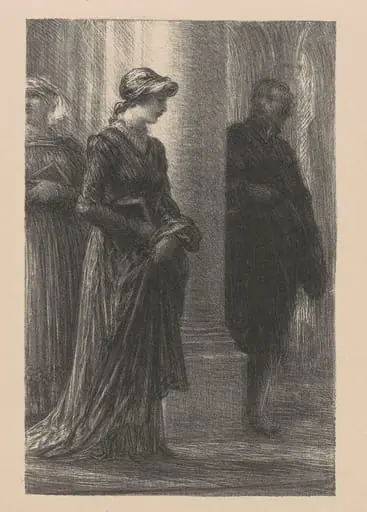 Richard Wagner and His Genius from Scenes of Rheingold
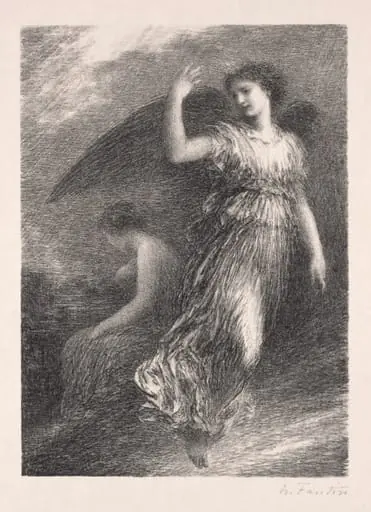 Le Paradis et la Peri - Debut
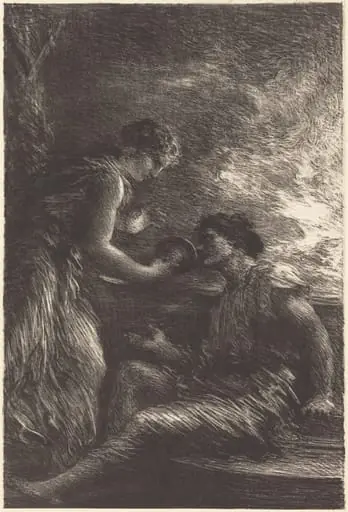 Sieglinde and Siegmund from Act I of "The Valkyrie"
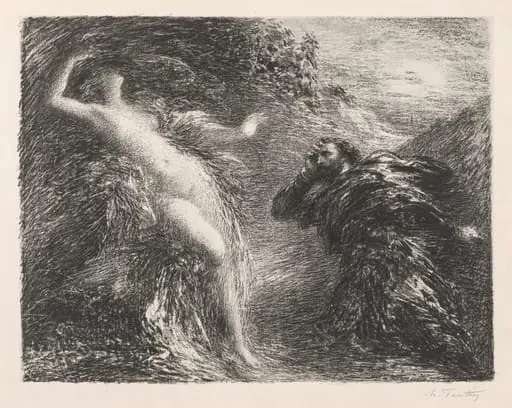 Manfred and Astarté
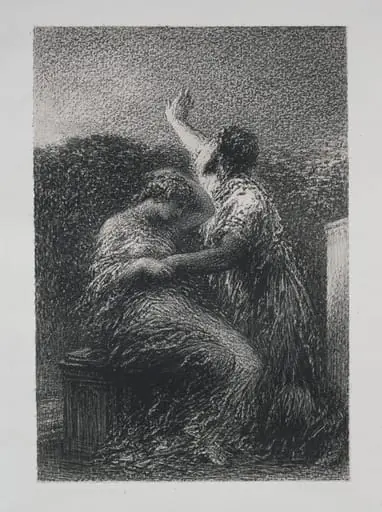 Le mage Baltajar et Fatime
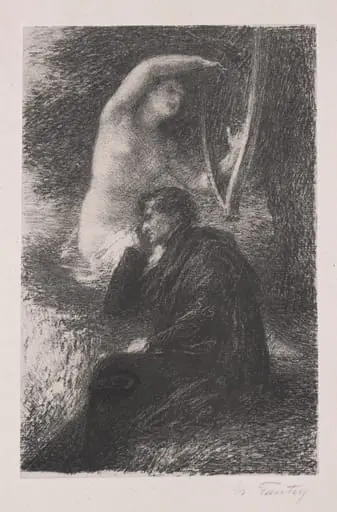 Lélio: The Aeolian Harp
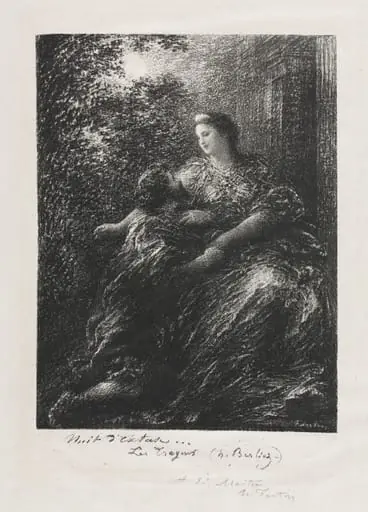 Duet of the Trojans