Artwork
Lélio: The Aeolian Harp
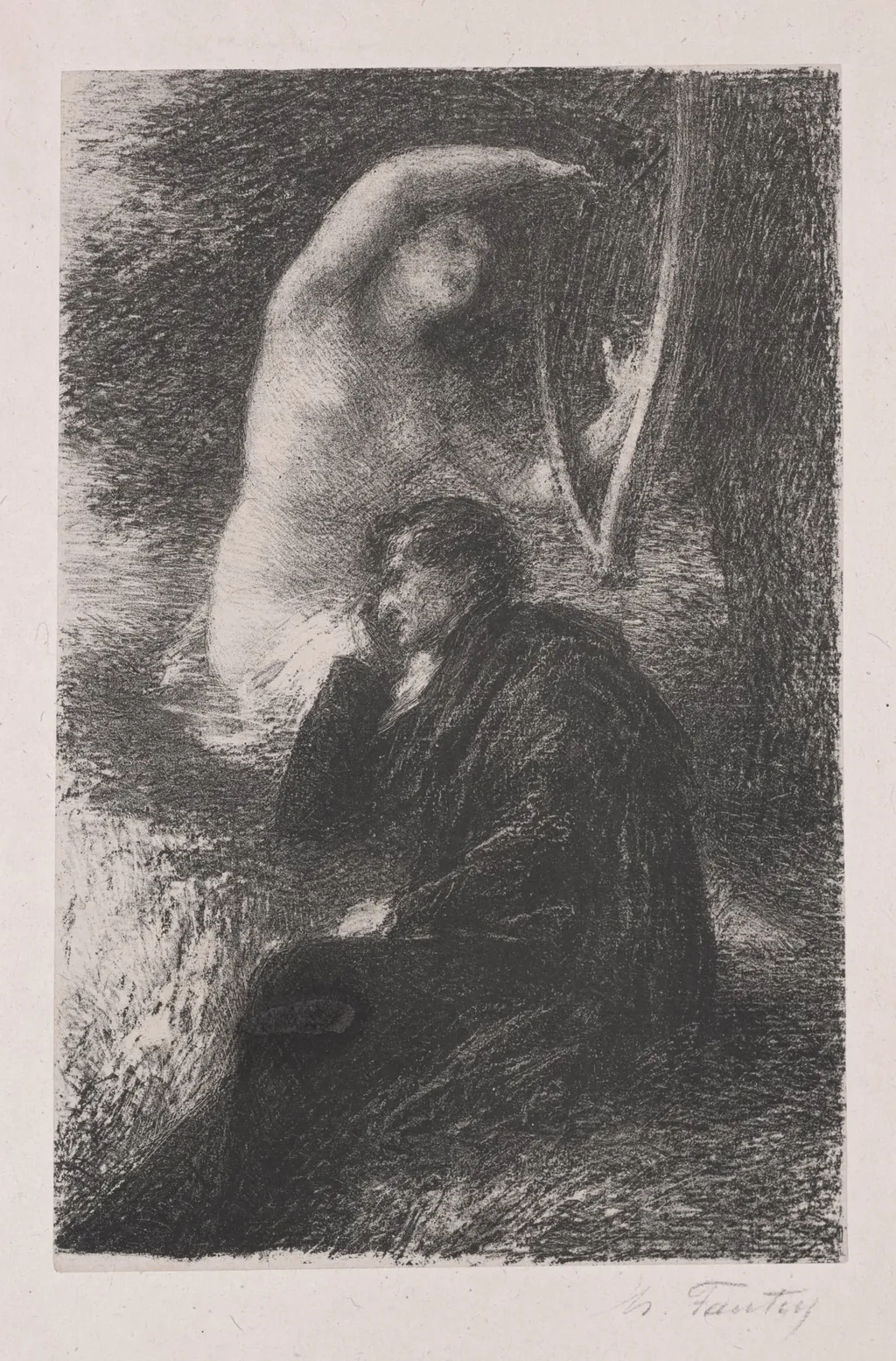
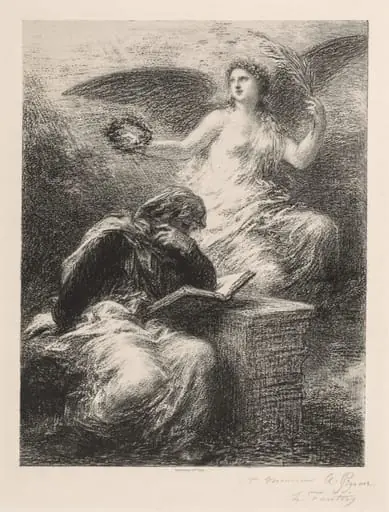
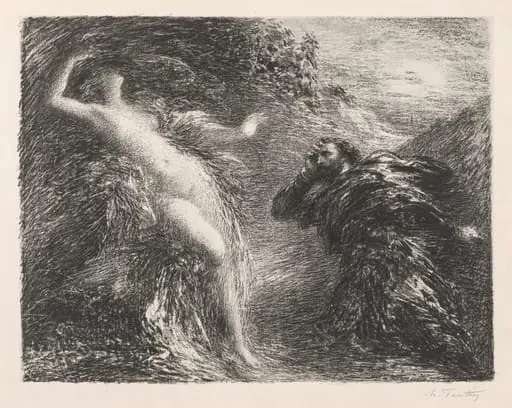
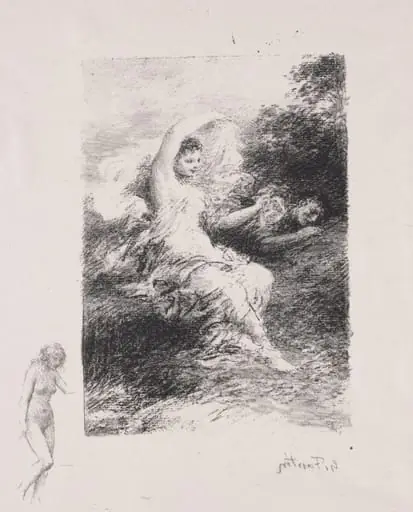
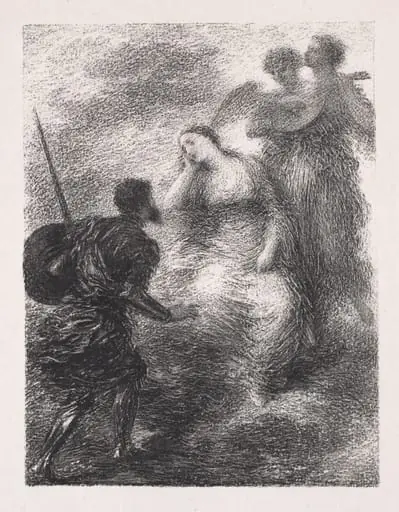
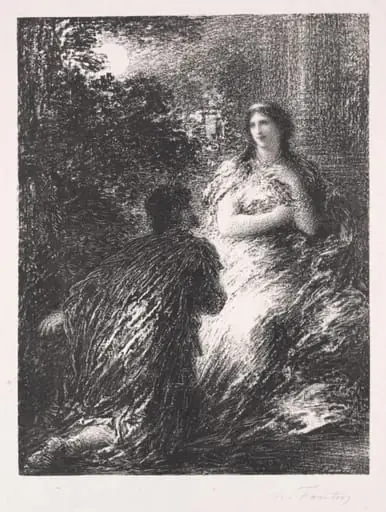
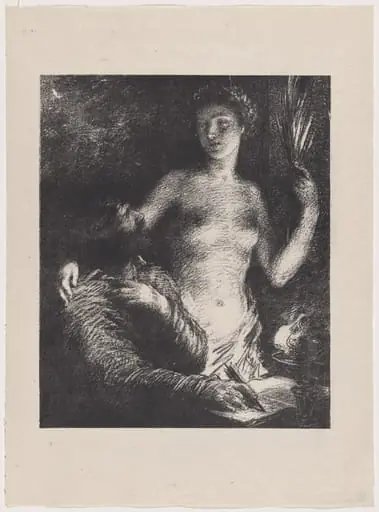
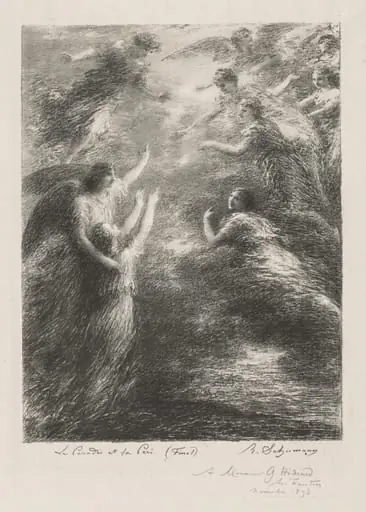
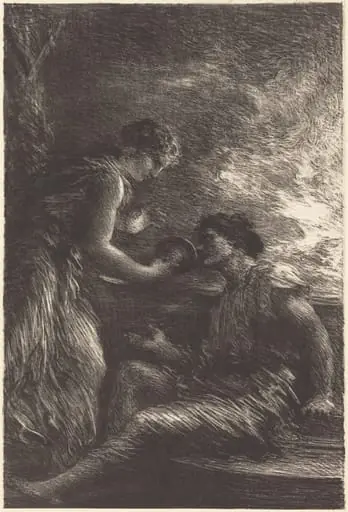
Lélio: The Aeolian Harp is a print by the Impressionist artist Henri Fantin-Latour. It dates from 1888 and is held in the collection of the Cleveland Museum of Art.
About this work
Overview
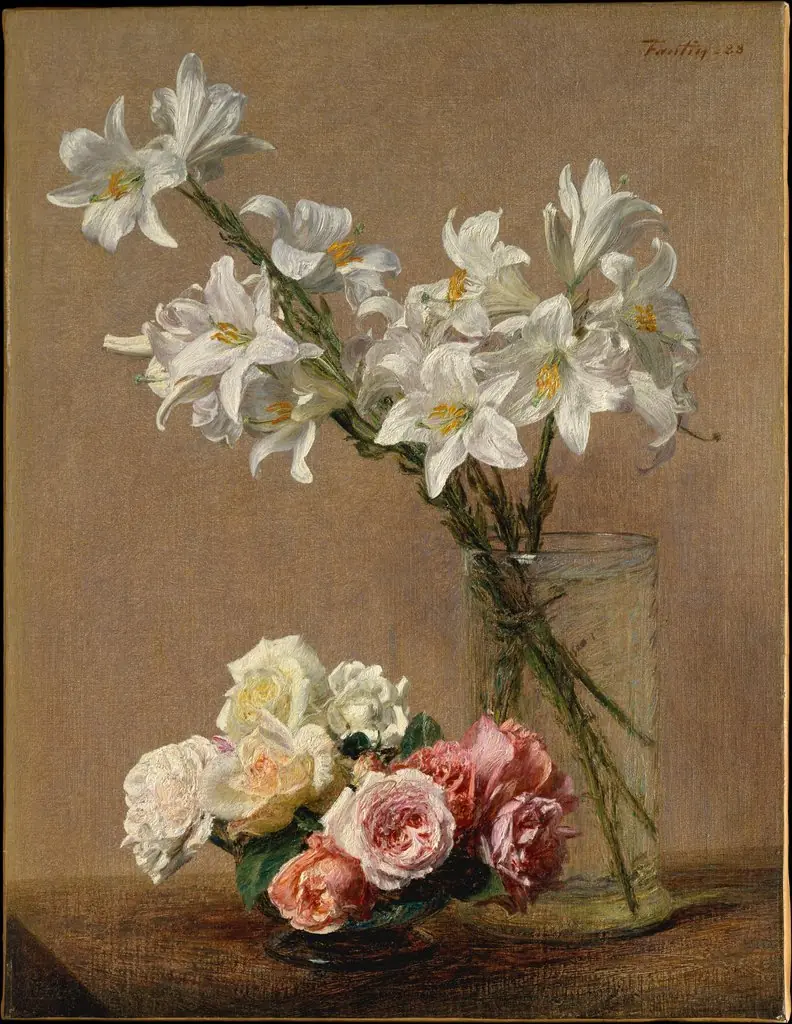
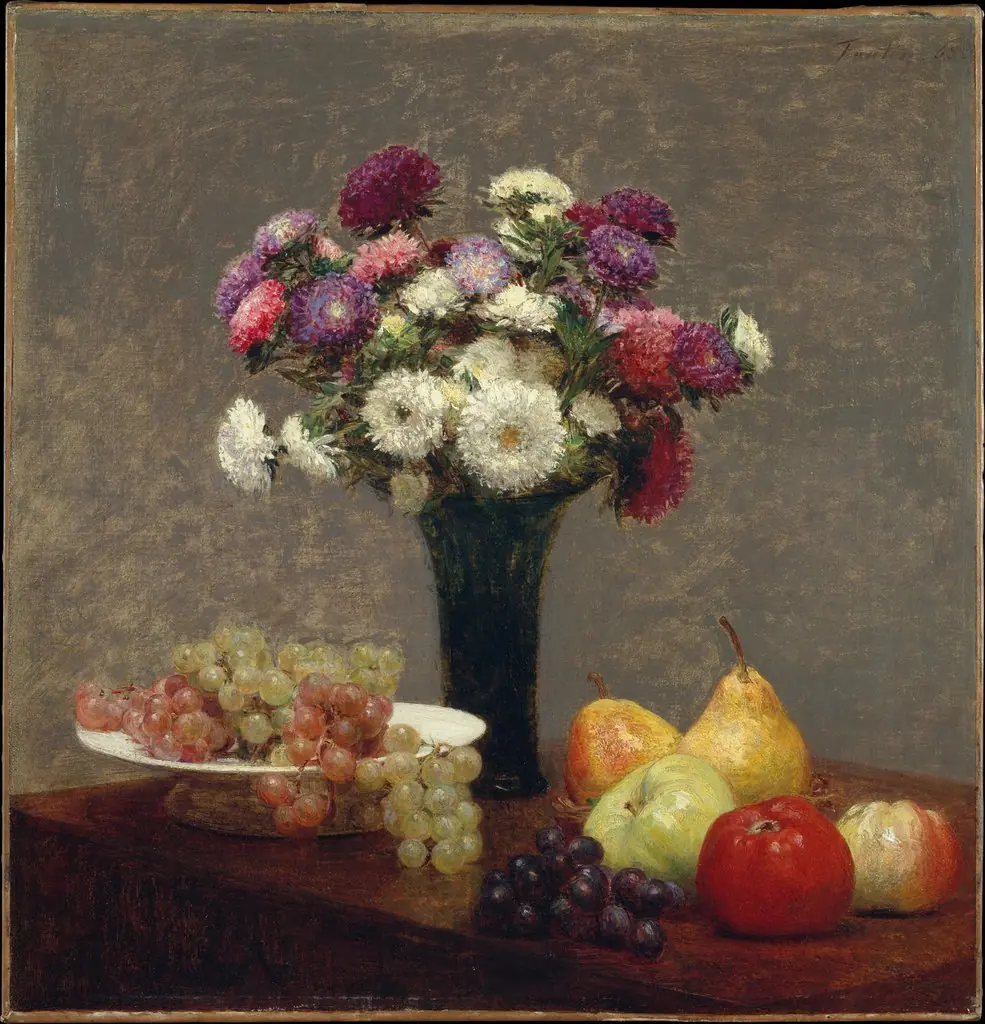
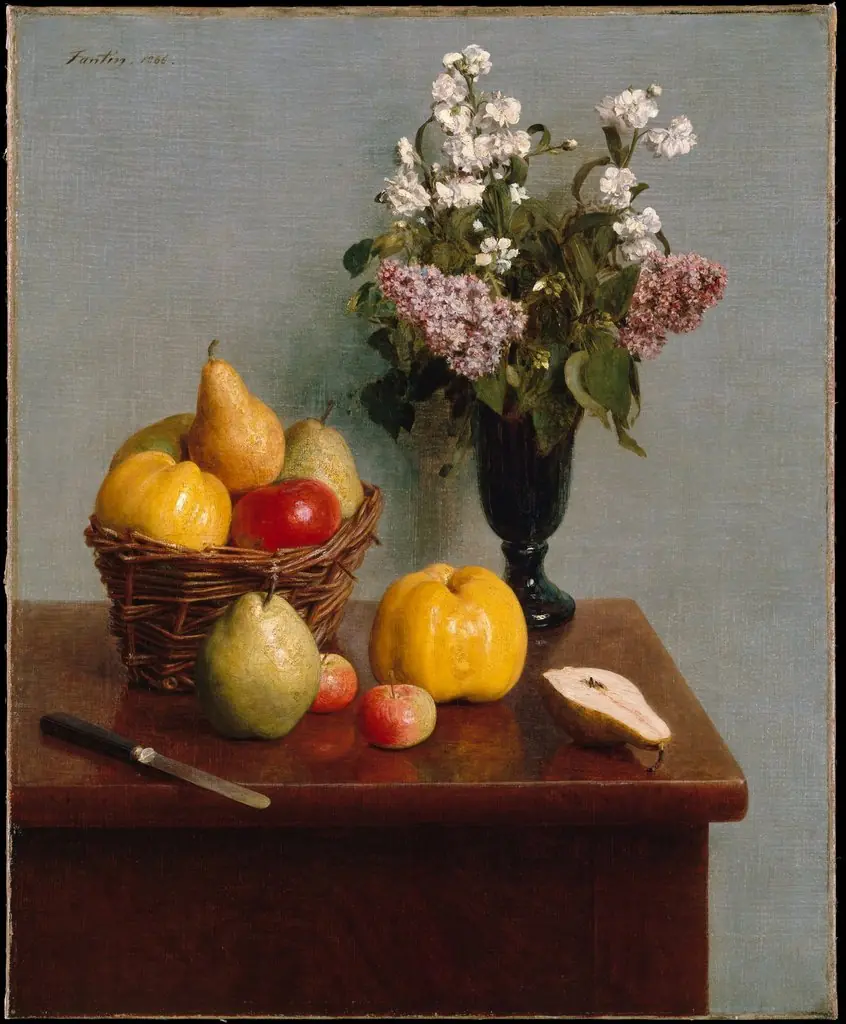
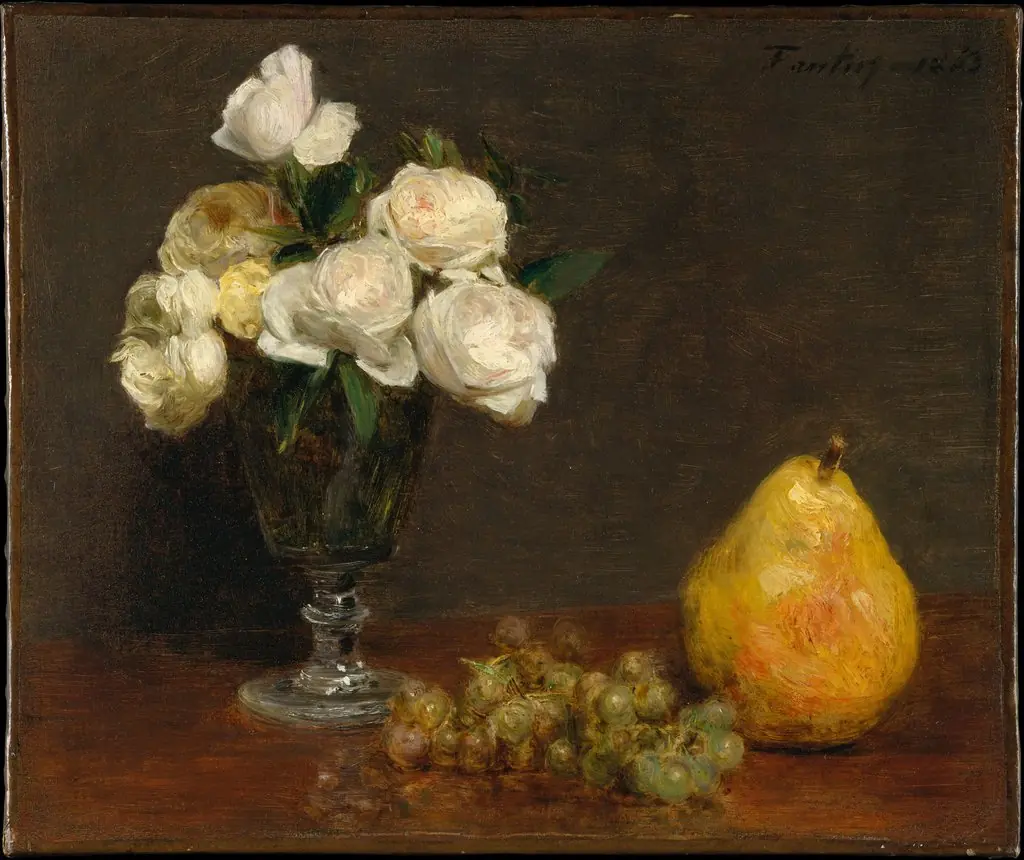
Lélio: The Aeolian Harp, created by French artist Henri Fantin-Latour in 1888, is a print that diverges from his typical oeuvre of still-life compositions and group portraits of Parisian cultural figures.
Subject & Meaning
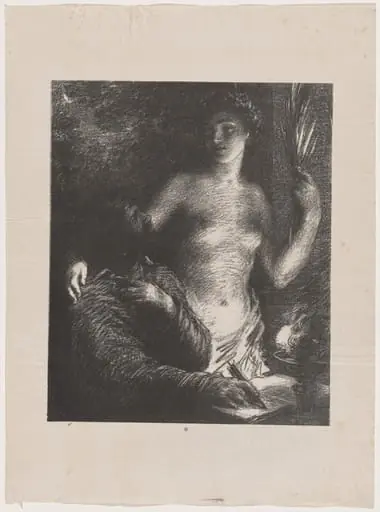
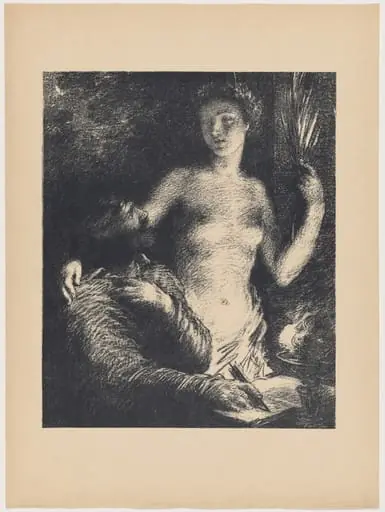
The print features a woman seated sideways, her back to the viewer, playing an aeolian harp. The composition conveys a sense of quiet contemplation and musical introspection, with the artist's deliberate shadowing of the subject's face emphasizing the overall mood over individual identity.
Technique & Style
Characterized by rough, dark lines akin to scratches, the work exhibits a distinctive, expressive technique. The use of shadow, particularly in the subject's face, and the loose, suggested forms (such as the woman's hair and the harp's placement against her shoulder) create a dreamy, subdued atmosphere.
Context
While Fantin-Latour is better known for his flower still-lifes and portraits of contemporary artists and writers, this piece reflects a broader interest in capturing moments of solitude and artistic expression, resonating with late 19th-century European themes of introspection and the emotional power of music.
Legacy
Lélio: The Aeolian Harp, though less representative of Fantin-Latour's popular themes, contributes to the artist's diverse portfolio, showcasing his capacity to evoke emotion through subtle, suggestive depictions of solitary figures engaged in creative pursuits.
Artist & collection
Artist
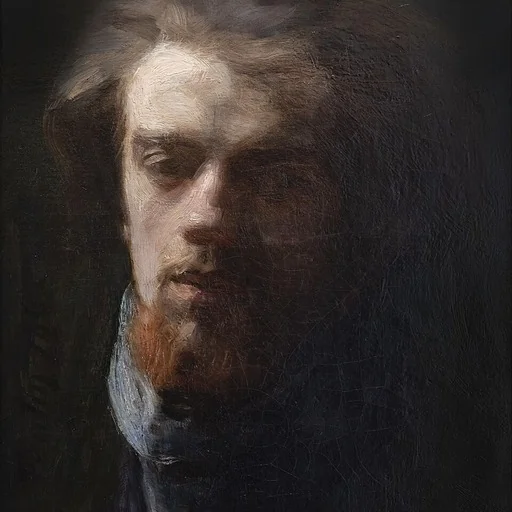
Ignace Henri Jean Theodore Fantin-Latour (French pronunciation: ; 14 January 1836 – 25 August 1904) was a French painter and lithographer best known for his flower paintings and group portraits of Parisian artists and writers.