Artwork
Spanish Still Life
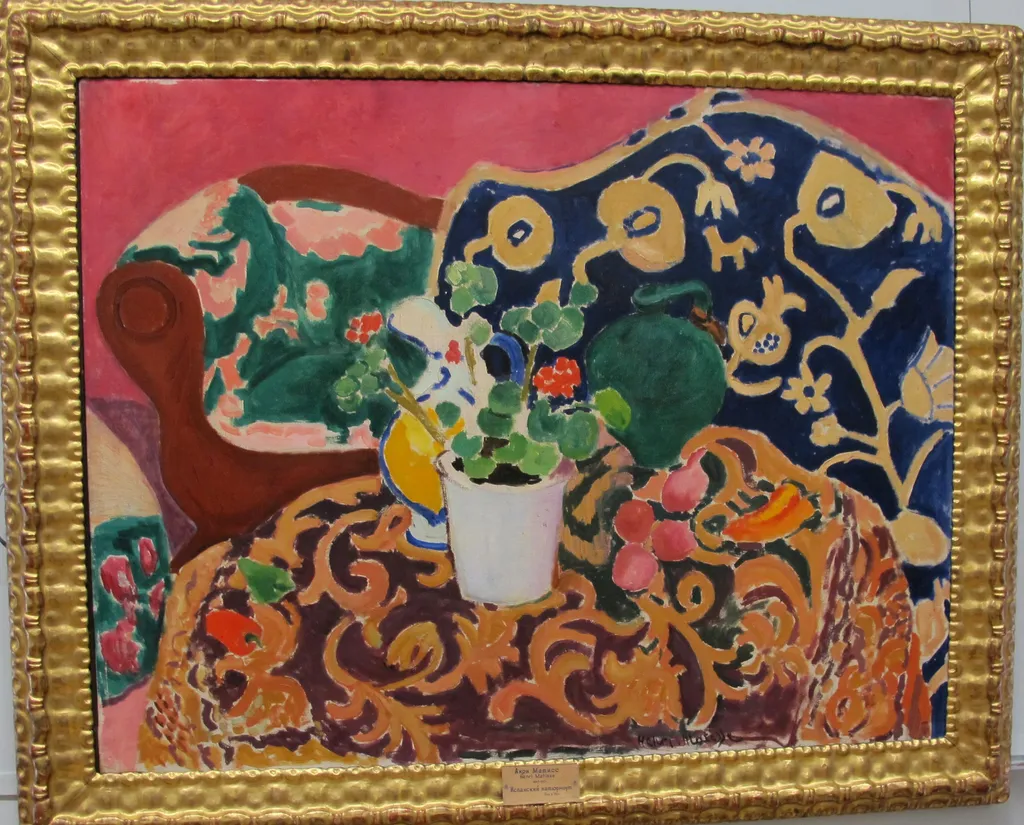
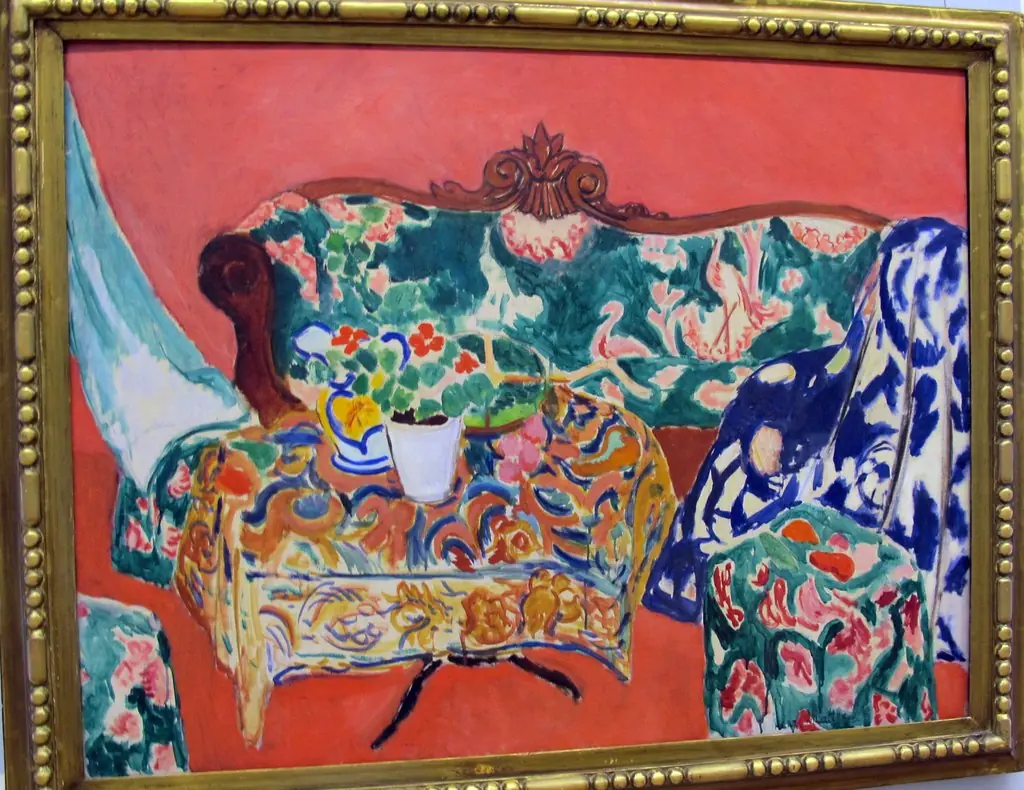
Spanish Still Life is an oil painting by the Post-Impressionist artist Henri Matisse. It dates from 1910 and is held in the collection of the Hermitage Museum.
About this work
Overview
The painting resides in the State Hermitage Museum’s collection, acquired as part of its broader 20th-century European holdings.
Painted in 1910, *Spanish Still Life* is an oil on canvas work by Henri Matisse, reflecting his engagement with post-impressionist principles during a period of formal experimentation. Though Matisse is best known for his later Fauvist innovations, this piece reveals an early exploration of color and structure that would define his mature style. The painting resides in the State Hermitage Museum’s collection, acquired as part of its broader 20th-century European holdings.
Subject & Meaning
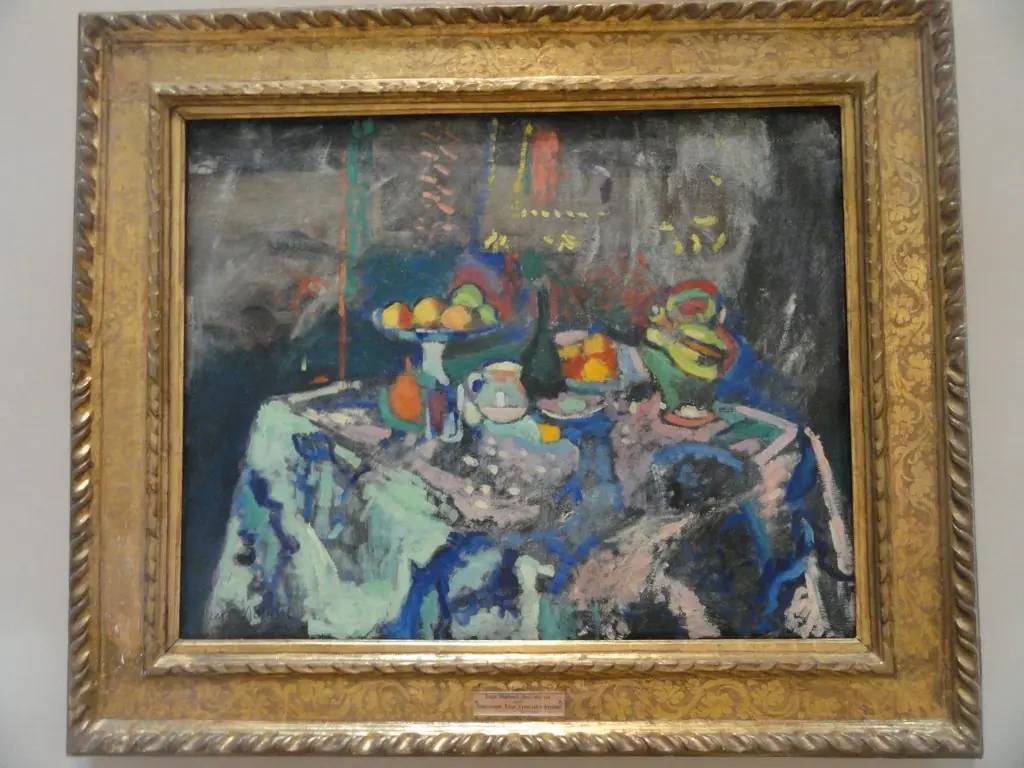
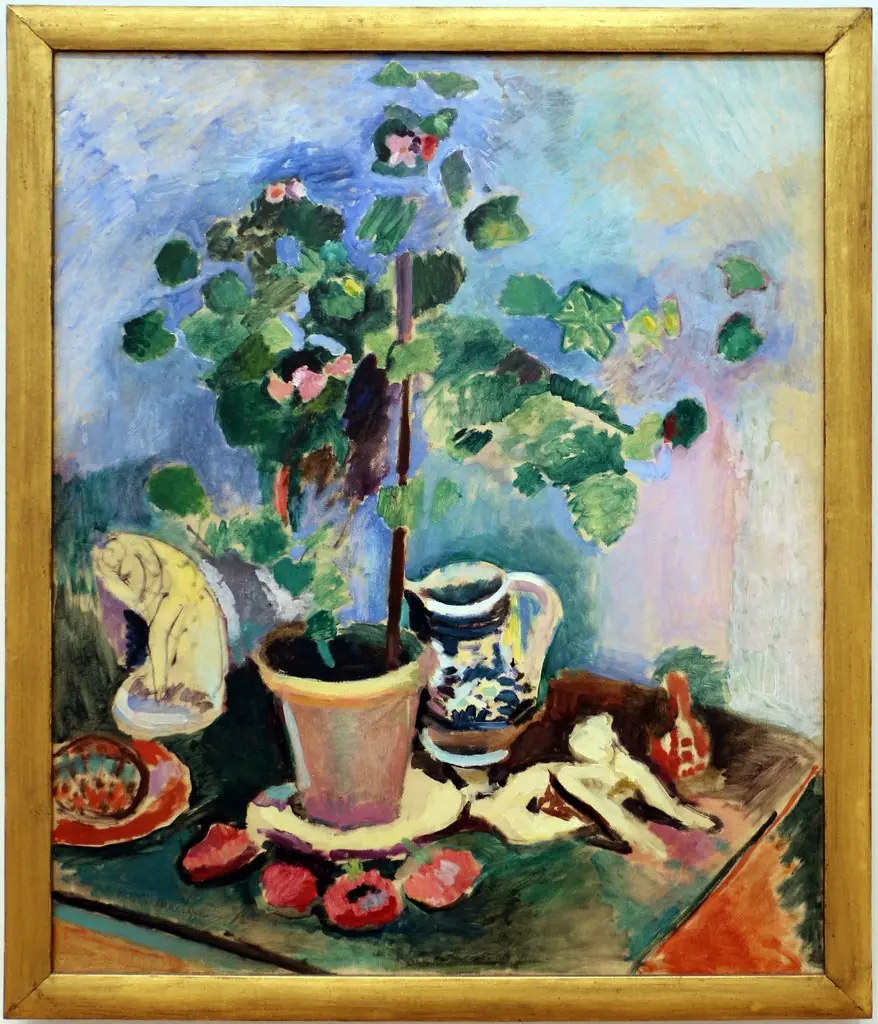
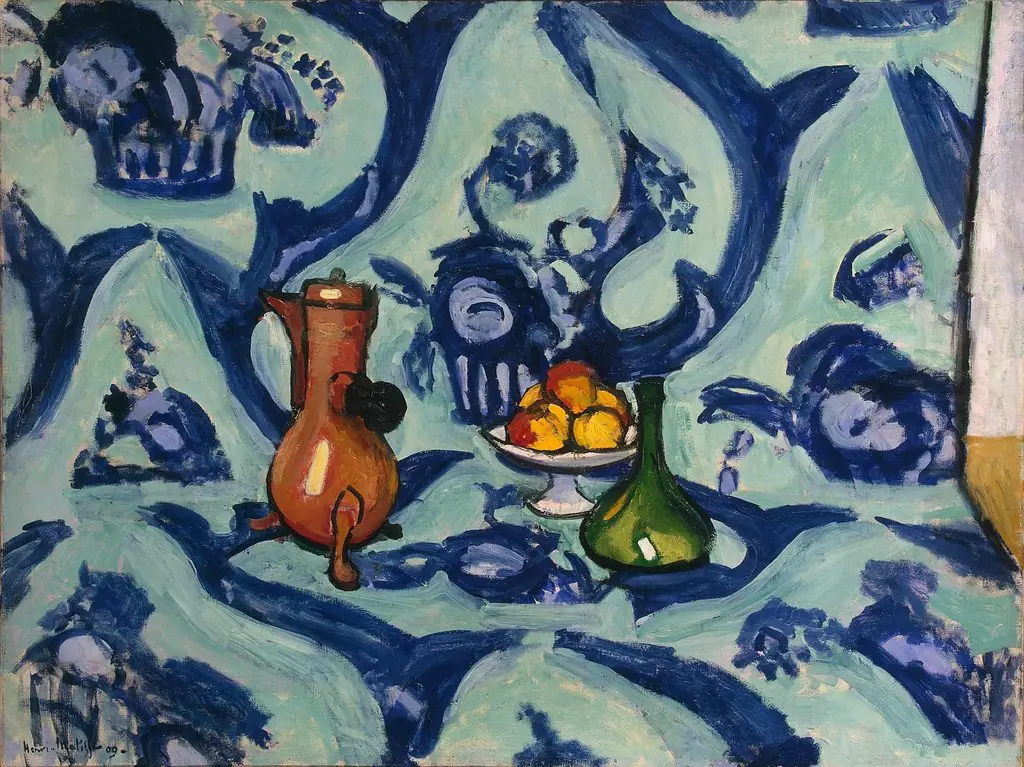
The composition presents a loosely arranged still life: a white vase with green foliage and blossoms anchors the center, flanked by a bowl containing fruit and berries. The objects are rendered with minimal detail, avoiding naturalism in favor of symbolic presence. The arrangement suggests a domestic setting, but its purpose is not narrative; instead, it serves as a vehicle for color relationships and spatial tension, emphasizing the act of seeing over literal representation.
Technique & Style
Matisse applied oil paint with energetic, uneven brushwork, building texture through thick impasto, particularly on the tablecloth. Colors—vibrant reds, oranges, and yellows—are applied in broad, swirling strokes, rejecting tonal modeling. The background’s flat pink wall and simplified blue vase shape flatten the space, reducing depth to a decorative plane. Forms are abstracted, prioritizing expressive gesture over anatomical or botanical accuracy.
History & Provenance
Created during Matisse’s transitional phase between post-impressionism and Fauvism, the painting entered the Hermitage collection in the early 20th century, likely through Russian collectors sympathetic to modern French art. Its acquisition reflects the museum’s early interest in avant-garde European painting, though it was not widely exhibited until later decades as modernism gained institutional acceptance.
Context
In 1910, Matisse was moving beyond the structured compositions of his earlier work, influenced by Cézanne and non-Western art. While his Fauvist peak was imminent, *Spanish Still Life* captures a moment of formal inquiry: color as structure, brushwork as emotion. The title, possibly assigned later, hints at exoticism common in European art of the time, though the scene lacks specific Spanish references.
Legacy
This work exemplifies Matisse’s evolving approach to still life as a laboratory for color and form. Though less celebrated than his later Fauvist canvases, it demonstrates his commitment to breaking from illusionism. Its presence in the Hermitage underscores its role in the broader acceptance of modernist painting in public collections, influencing how still life was reimagined in the 20th century.
Artist & collection
Artist
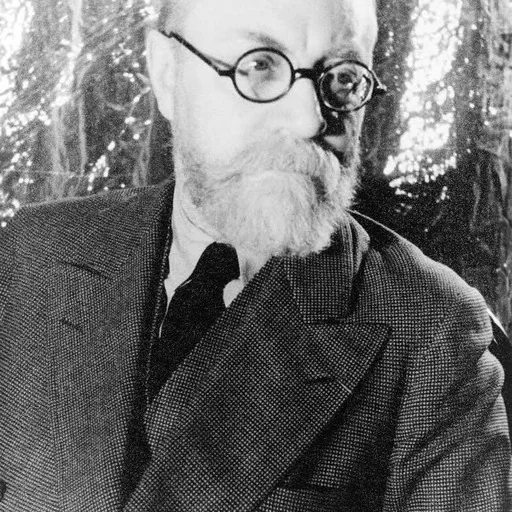
Henri Émile Benoît Matisse (French: ; 31 December 1869 – 3 November 1954) was a French visual artist, known for both his use of colour and his fluid and original draughtsmanship.