Artwork
Herodias
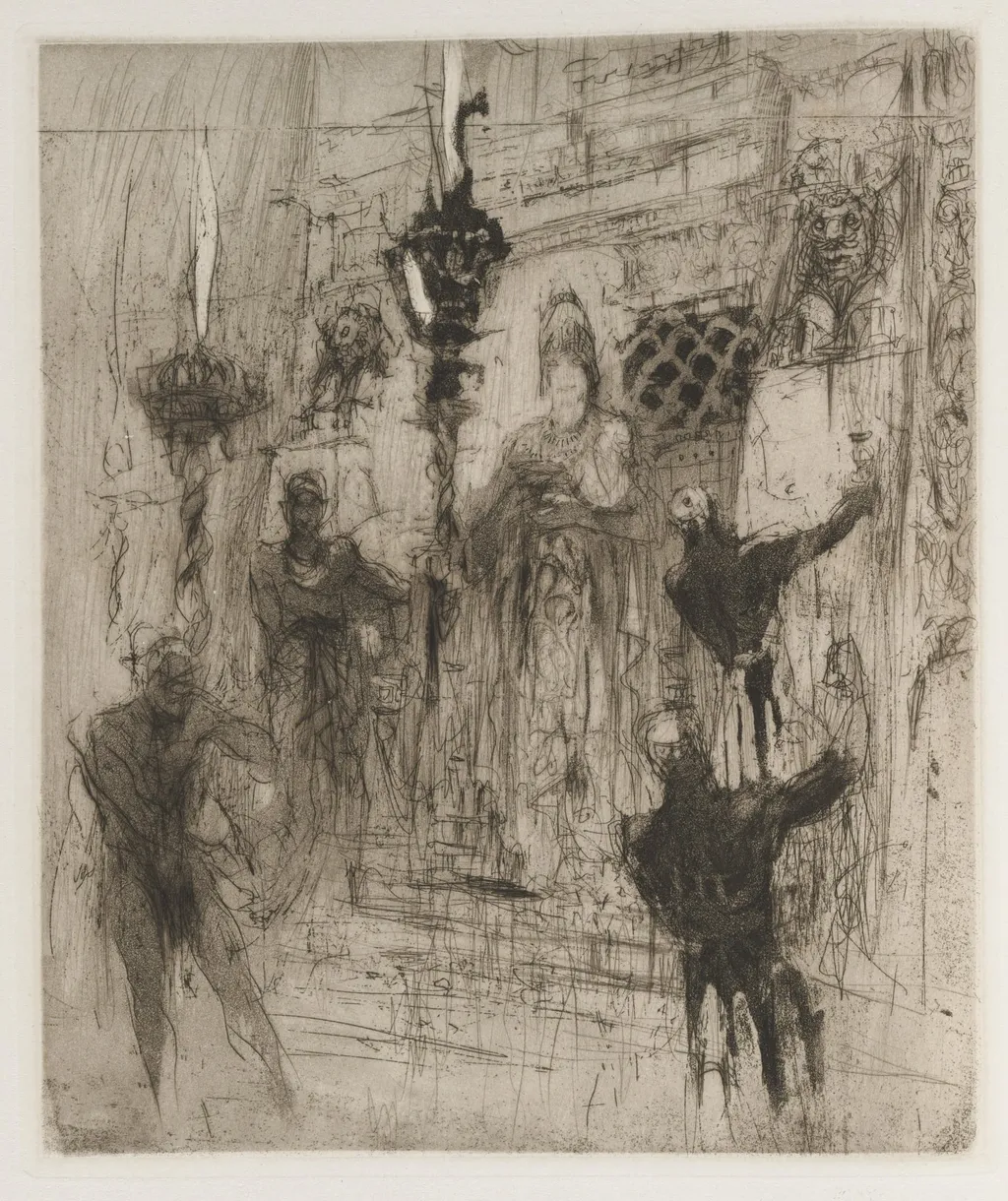
Herodias is a print by William Walcot. It dates from 1928 and is held in the collection of the Cleveland Museum of Art.
About this work
Overview
Created in 1928 by British architect‑artist William Walcot, Herodias is a print in the collection of the Cleveland Museum of Art. The work presents a composition of elongated, slender figures intertwined within a network of fluid, swirling lines that suggest movement and tension. The overall effect is one of instability, as the forms appear to dissolve into the surrounding scribbled background.
Subject & Meaning
The central figure stands with arms extended, surrounded by other bodies that clutch objects resembling a crown and a shield. The half‑rendered faces and the ambiguous gestures hint at a narrative of power and vulnerability, evoking the biblical Herodias story while remaining deliberately open to interpretation.
Technique & Style
Walcot employs dense black line work, combining bold strokes with smudged, hazy areas that blur the edges of the figures. The unfinished, almost ghost‑like treatment of the faces reinforces a sense of ephemerality. The print’s dynamic line quality aligns with the modernist interest in abstraction and expressive drawing of the late 1920s.
History & Provenance
Since its creation, the print has remained in the Cleveland Museum of Art’s holdings, where it is displayed as part of the museum’s early 20th‑century print collection. Its acquisition reflects the institution’s commitment to representing the experimental graphic practices of the interwar period.
Artist & collection

Artist
William Walcot RE was a Russian-Scottish architect, graphic artist and etcher, notable as a architect of refined Art Nouveau in Moscow, Russia.

 The Venice Set: The Library of St. Mark’s
 London Set: Horseguards
 London Set: Piccadilly Circus (with Criterion Theatre)
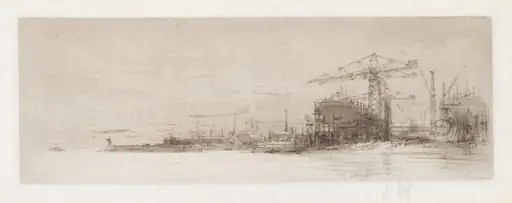 The Clyde from the series The Arteries of Great Britain
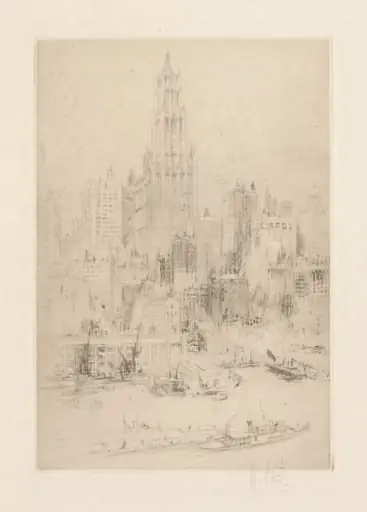 Downtown Manhattan from the East River, with the Woolworth Building
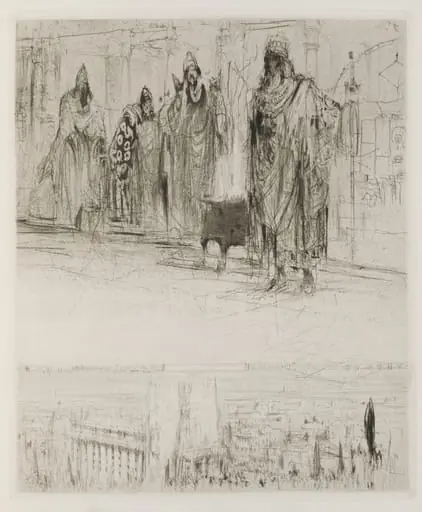 Herodias: Page 13, The tetrarch was awaited by several Galileans, the master of scribes, the chief of the land steward, the manager of the salt mines, and a Jew from Babylon commanding his troops on horse
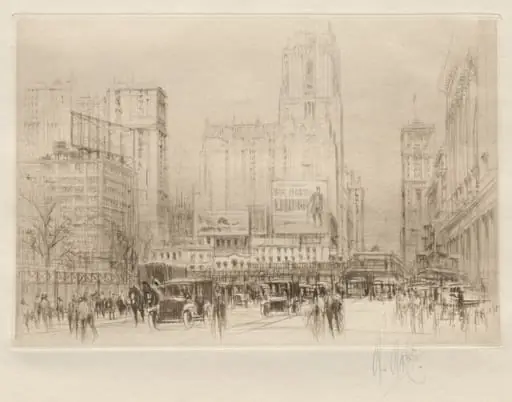 Forty-second Street NY
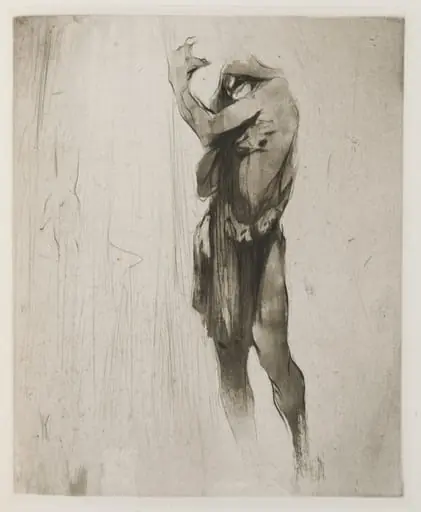 Herodias: Page 27, The voice rose: Woe to thee, Pharisees and Sadducees, race of vipers, bursting with pride!
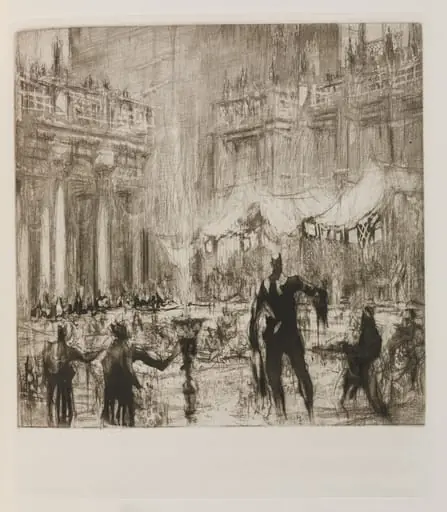 Herodias: Page 45, But now beginning at the farthest end of the banquet hall a murmur of surprise and admiration. A young girl began to enter
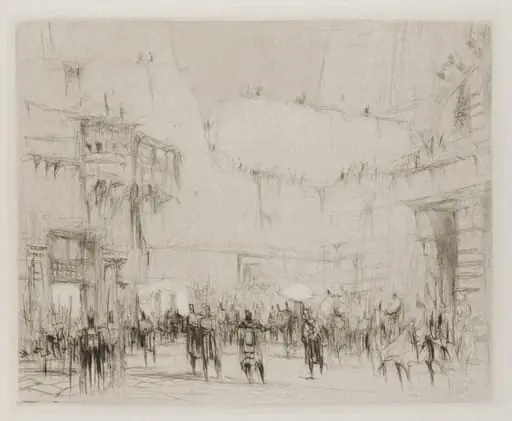 Herodias: Page 19, The ramparts were thronged with people when Vitellius entered the castle gates
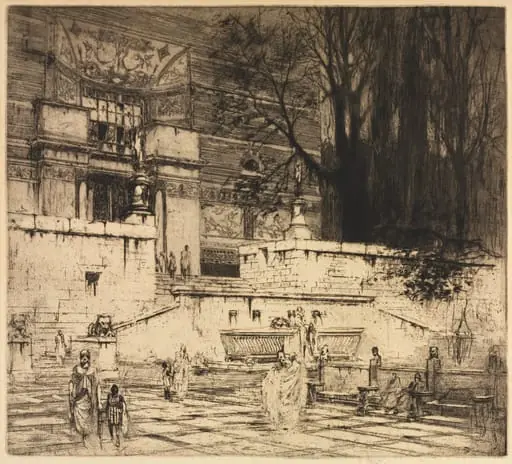 The Days of Ancient Rome: At the House of a Patrician
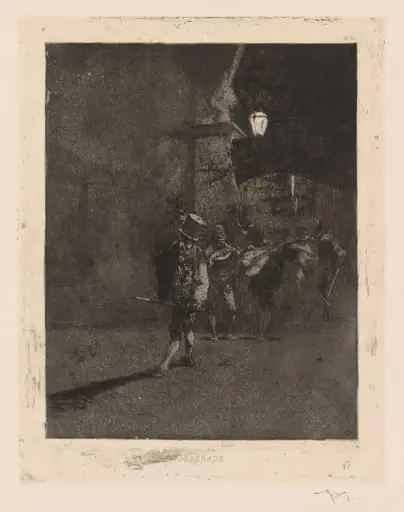 Serenade
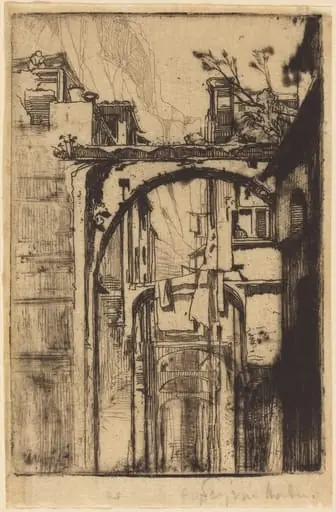 Amalfi
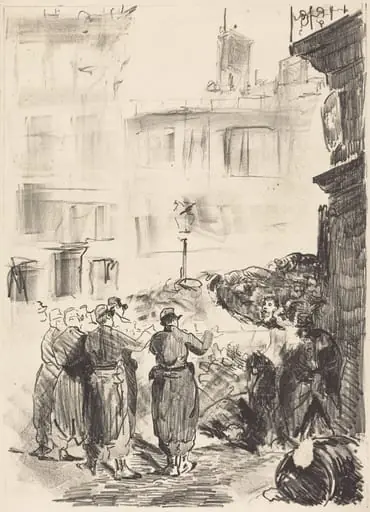 The Barricade (La barricade)
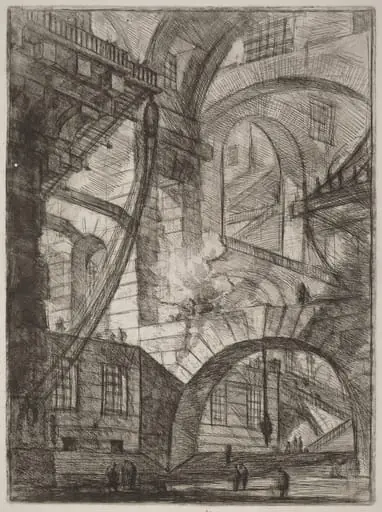 The Smoking Fire
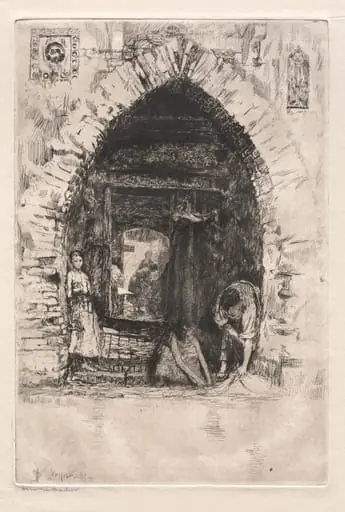 Etchings of Venice: Laundry
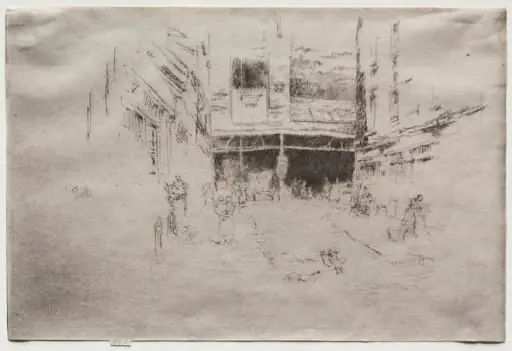 Clothes Exchange, No. 1
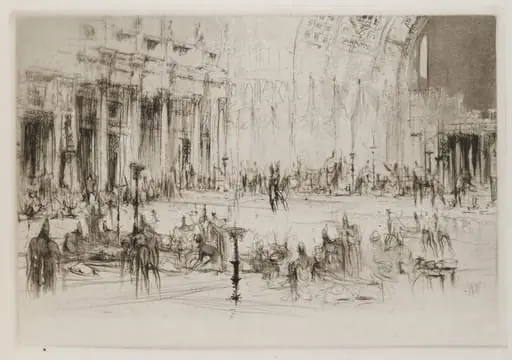 Herodias: Page 39, The guests filled the banquet hall
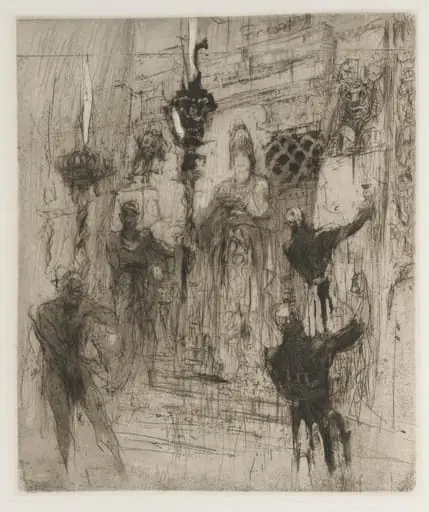 Herodias: Frontispiece, Herodias appeared, coiffed in an Assyrian mitre to which a chin strap was attached to the front