Artwork
Hawthorn Blossoms and Bird's Nest
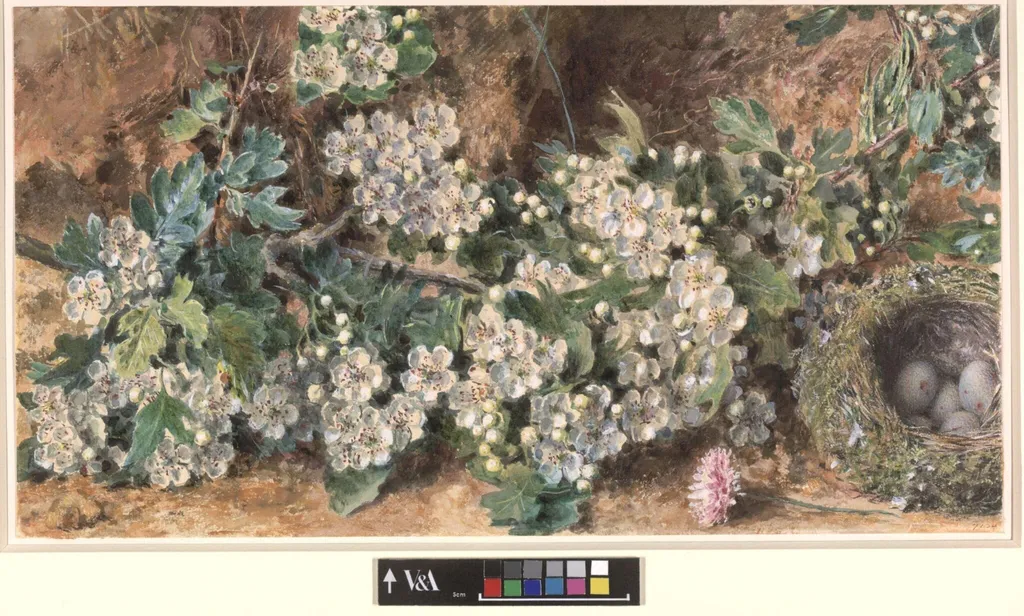
Hawthorn Blossoms and Bird's Nest is a watercolor work on paper by the British Romanticist artist Henry Hunt. It dates from 1810 and is held in the collection of the Victoria and Albert Museum.
About this work
Overview
Painted in 1810 by Henry Hunt, this watercolour depicts a naturalistic scene of hawthorn blossoms and a hidden bird’s nest.
Painted in 1810 by Henry Hunt, this watercolour depicts a naturalistic scene of hawthorn blossoms and a hidden bird’s nest. Executed in delicate washes, the work captures a moment of quiet botanical life on a rocky outcrop. The composition is intimate, with no human presence, emphasizing the quiet rhythms of the wild. The medium’s transparency allows subtle gradations of tone, enhancing the sense of light filtering through foliage.
Subject & Meaning
The painting centers on the hawthorn plant in full bloom, its white flowers and dense green leaves forming a natural frame for a nest nestled among the branches. The nest, containing eggs, suggests themes of reproduction and concealment in the wild. There is no overt symbolism; instead, the work honors the quiet dignity of ordinary natural phenomena, reflecting a close observation of seasonal cycles and animal behavior.
Technique & Style
Hunt employed fine, controlled brushwork to render the texture of leaves, the fragility of petals, and the woven structure of the nest. Watercolour’s translucency enabled layered glazes to suggest depth without heavy outlines. The palette is restrained—pale greens, soft browns, and muted whites—creating harmony with the earthy ground. The absence of sharp contours and the soft edges suggest an immediacy, as if observed directly in the field.
History & Provenance
Created in 1810, the work is one of several small-scale watercolours by Henry Hunt documenting British flora and fauna. Its survival suggests it was kept in private collections, likely among patrons interested in natural history. No public exhibition record from the period is known, and its early ownership remains undocumented, though its style aligns with amateur naturalist art of the early 19th century.
Context
In the early 1800s, detailed botanical and zoological studies flourished among amateur naturalists, often using watercolour for its portability and precision. Hunt’s work reflects this trend, paralleling the scientific interest in local ecosystems. While not part of a formal academy, such paintings contributed to a growing cultural appreciation for nature as something worthy of careful, unembellished study.
Legacy
Though Hunt was not a widely recognized artist, this watercolour endures as an example of quiet, observational art from the Romantic era. It represents a shift toward valuing the ordinary details of the natural world over grand narratives. Its preservation offers insight into how non-professional artists engaged with nature, contributing to a broader visual record of British rural life before industrialization.
Artist & collection

Artist
Henry Hunt (16 October 1923 – 13 March 1985) was a First Nations woodcarver and artist from the Kwakwaka'wakw (formerly "Kwakiutl") people of coastal British Columbia.

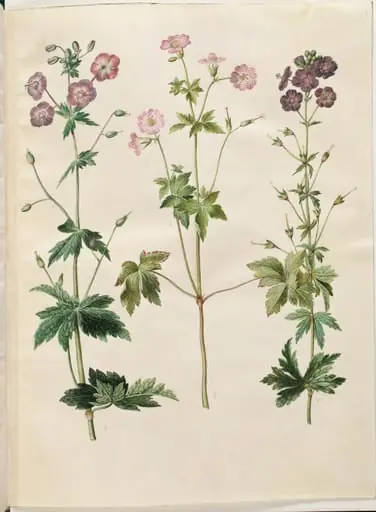 Geranium phaeum (bølgekronet storkenæb); Geranium versicolor (net-storkenæb)
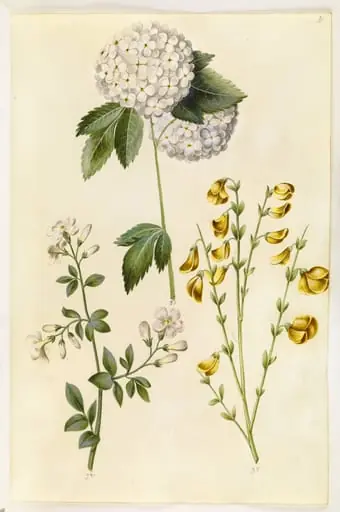 Viburnum opulus (almindelig snebolle); Jasminum officinale (læge-jasmin); Cytisus scoparius (almindelig gyvel)
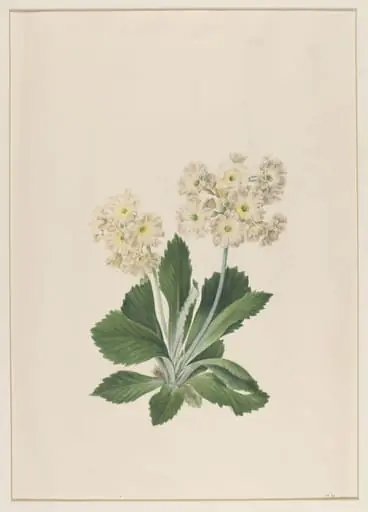 Primula Auricula
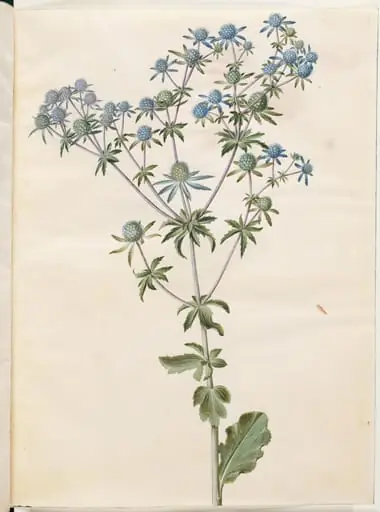 Eryngium planum (have-mandstro)
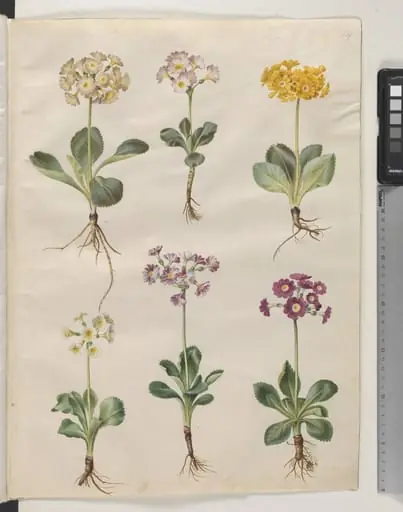 Primula ×pubescens Wulfen (have-aurikel)
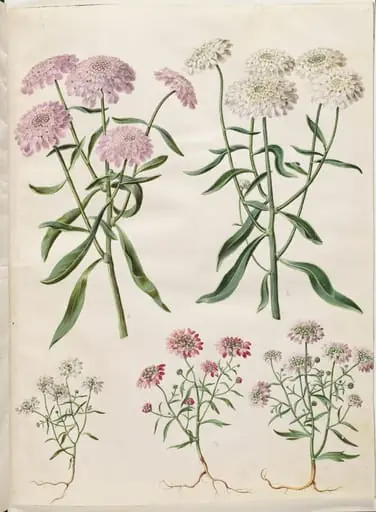 Iberis umbellata (skærm-sløjfeblomst); Iberis amara (bitter sløjfeblomst)
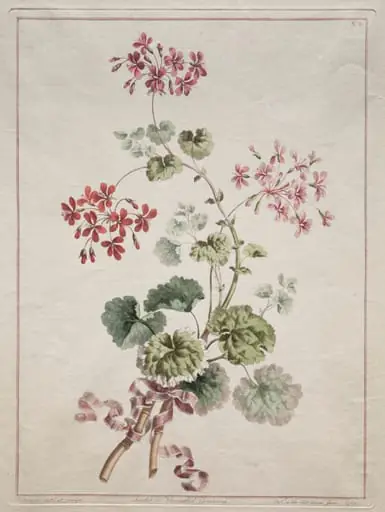 A Collection of Flowers Drawn from Nature: No. 6 - Scarlet and Variegated Geranium
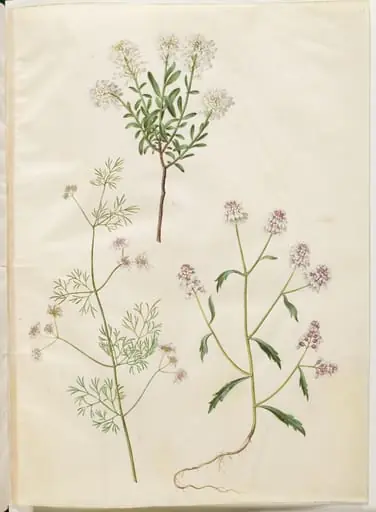 Iberis sempervirens (snepude); Coriandrum sativum (almindelig koriander); Iberis amara (bitter sløjfeblomst)
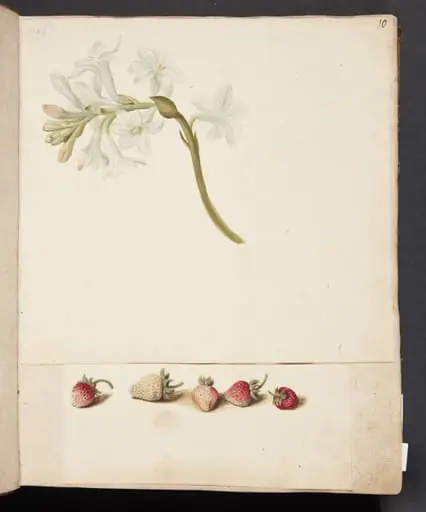 Studie af blomst og jordbær
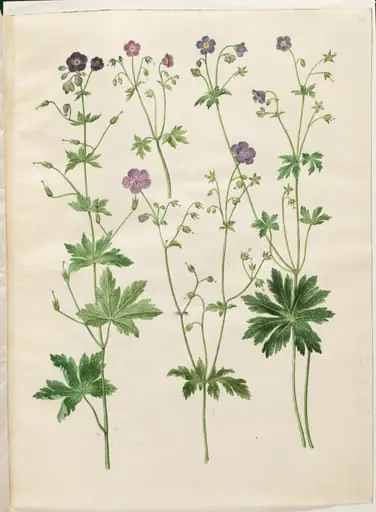 Geranium phaeum (bølgekronet storkenæb); Geranium sylvaticum (skov-storkenæb)
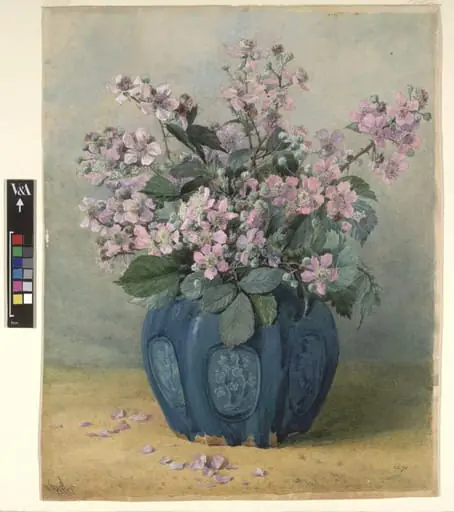 Blackberry Blossom
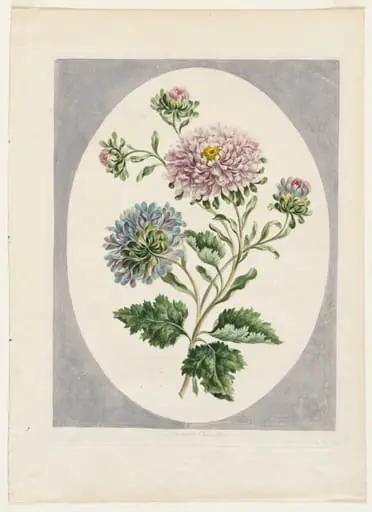 A Collection of Flowers Drawn from Nature: Large Double China Aster