Artwork
Pompon Rose
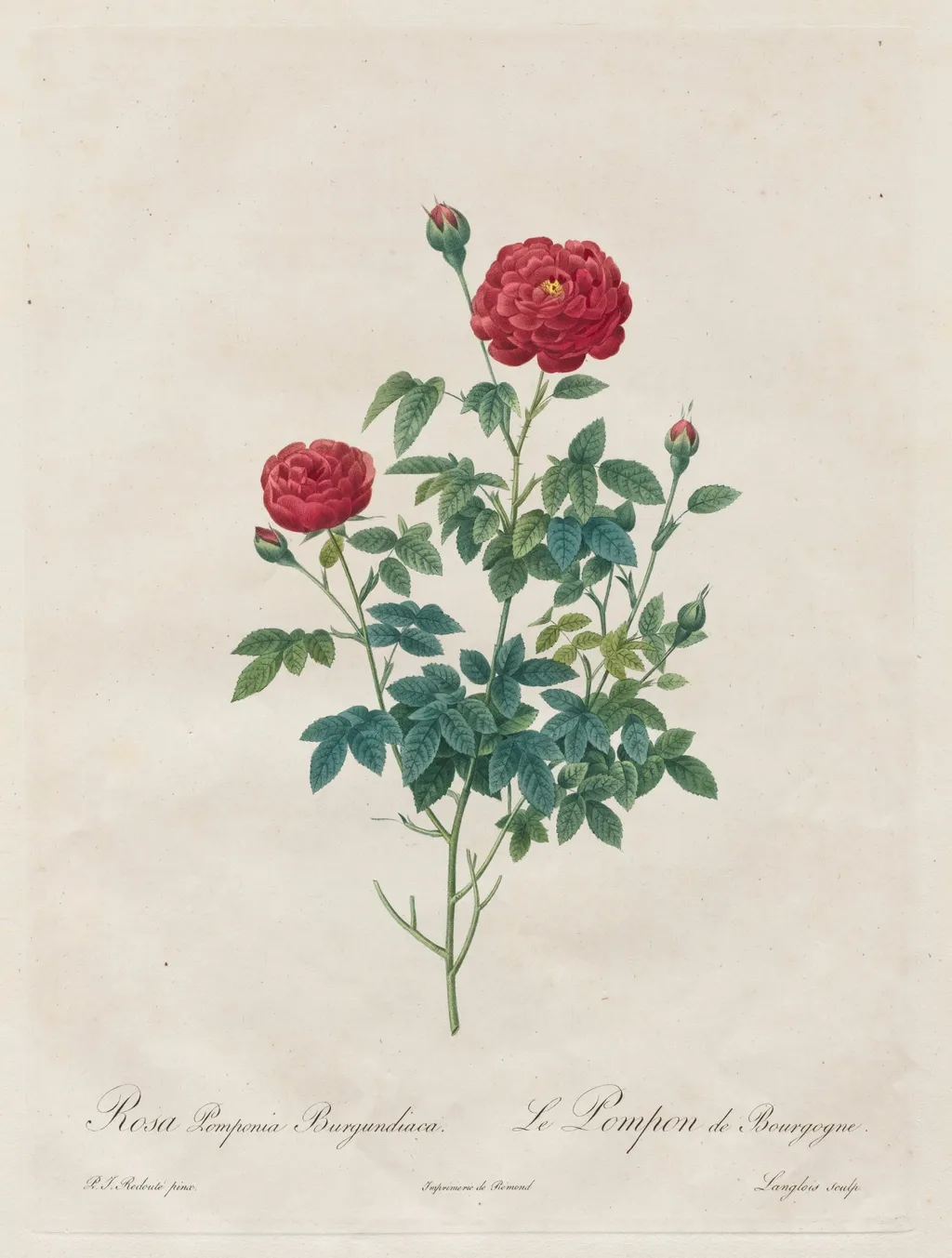
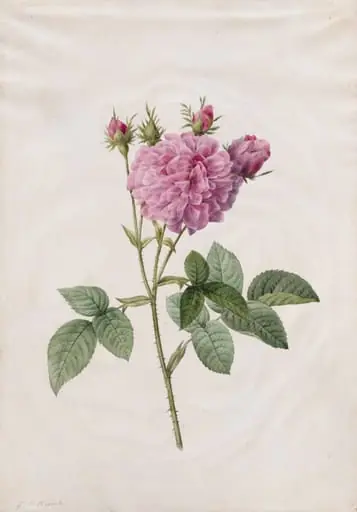
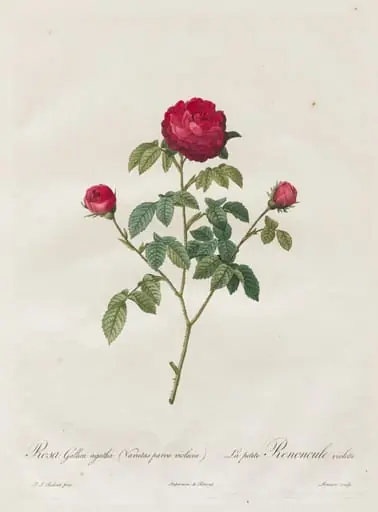
Pompon Rose is a print by the Romanticist artist Henry Joseph Redouté. It dates from 1820 and is held in the collection of the Cleveland Museum of Art.
About this work
Overview
The work is part of a broader tradition of scientific illustration, where precision served both aesthetic and educational purposes.
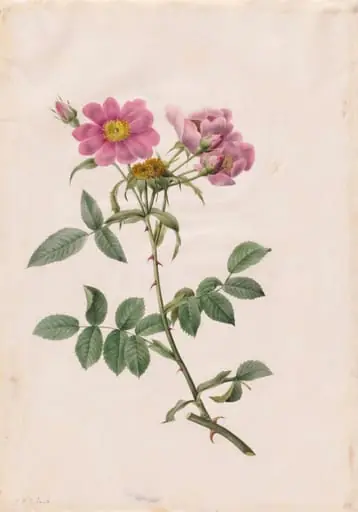
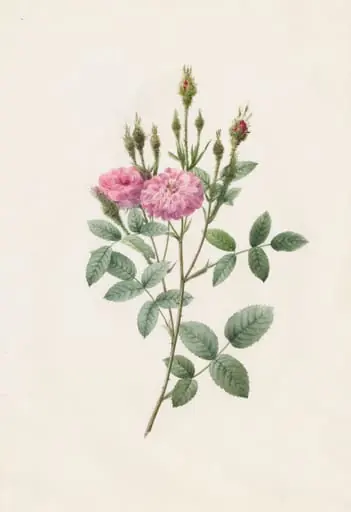
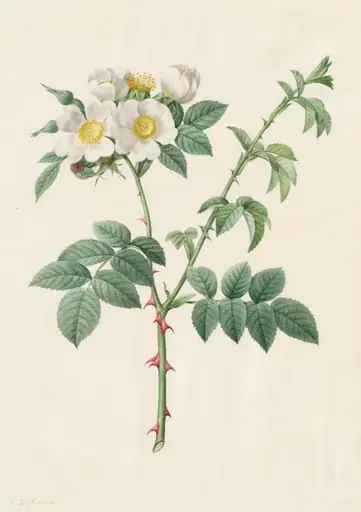
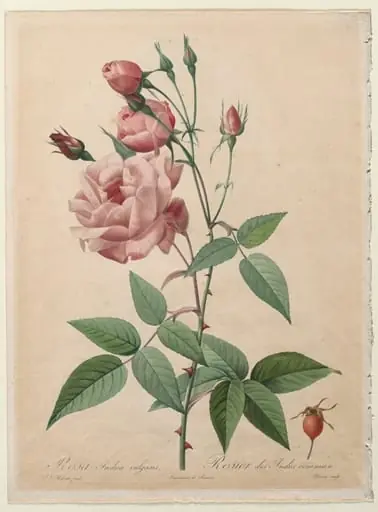
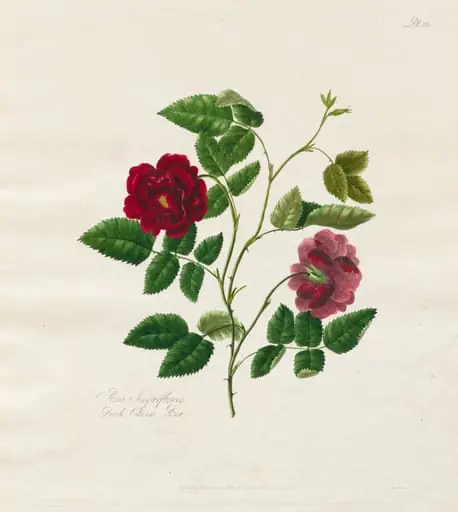
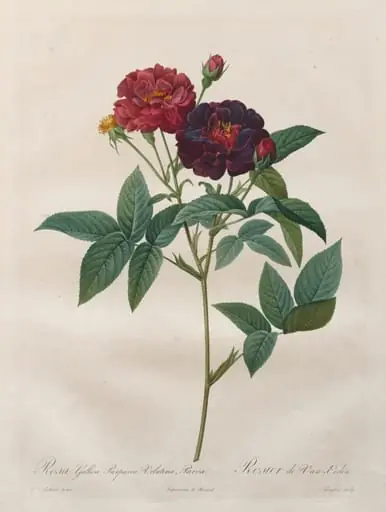
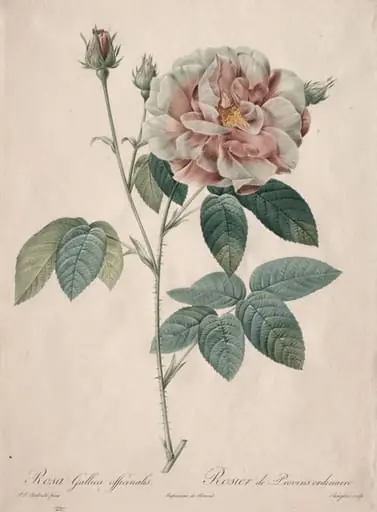
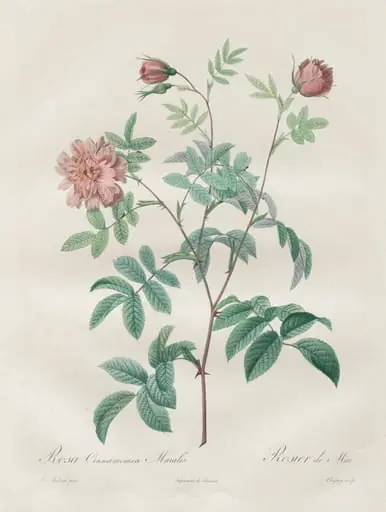
Pompon Rose is a botanical print created by Henry Joseph Redouté in 1820. It depicts a single rose stem bearing three buds, two of which are fully open, and one still tightly closed. Rendered on a plain white background, the composition emphasizes the plant’s form without distraction. The work is part of a broader tradition of scientific illustration, where precision served both aesthetic and educational purposes.
Subject & Meaning
The subject is a cultivated rose variety identified as Rosa Pomponia Burgundiaca, a name reflecting its pompon-like shape and deep red hue. Such illustrations were not merely decorative but functioned as botanical records, documenting horticultural developments in European gardens. The careful depiction of bud stages suggests an interest in the plant’s life cycle, aligning with 19th-century efforts to classify and preserve plant diversity.
Technique & Style
Redouté employed fine line work and subtle tonal gradations to capture the rose’s velvety petals and glossy leaves. The absence of shadow or ambient light creates a flat, almost diagrammatic clarity, typical of scientific illustration. The stem’s gentle curve organizes the composition spatially, guiding the viewer’s eye from closed bud to full bloom. Colors are restrained but accurate, prioritizing botanical fidelity over dramatic effect.
History & Provenance
The print was produced during Redouté’s tenure as a royal botanist in France, where he documented plants from the Jardin des Plantes and royal collections. It entered The Cleveland Museum of Art’s collection as part of a larger group of botanical prints acquired in the 20th century. Its provenance reflects the museum’s commitment to historical scientific imagery and European naturalist traditions.
Context
In the early 1800s, botanical illustration flourished alongside advances in horticulture and taxonomy. Redouté’s work emerged in a climate where aristocratic patrons and scientific institutions sought accurate visual records of exotic and cultivated species. His images bridged art and science, serving as references for gardeners, botanists, and publishers across Europe.
Legacy
Redouté’s prints remain valued for their technical precision and enduring visual clarity. While no longer used for scientific classification, they continue to inform contemporary understandings of 19th-century botanical art. Institutions like The Cleveland Museum of Art preserve them as cultural artifacts that reflect the intersection of observation, craftsmanship, and the natural world.
Artist & collection
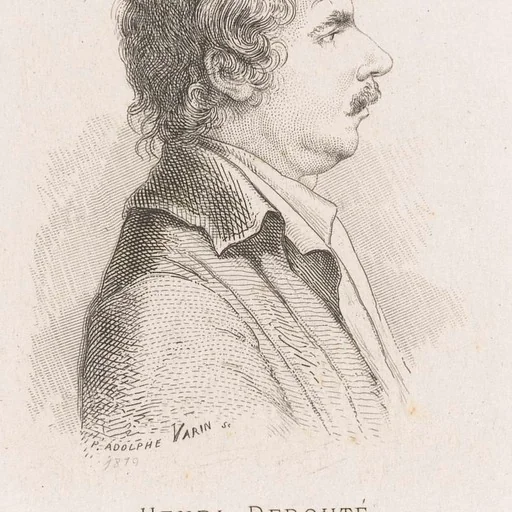
Artist
Henry Joseph Redouté (1766–1852) was a French artist, born in Saint-Hubert.