Artwork
Primula auricula
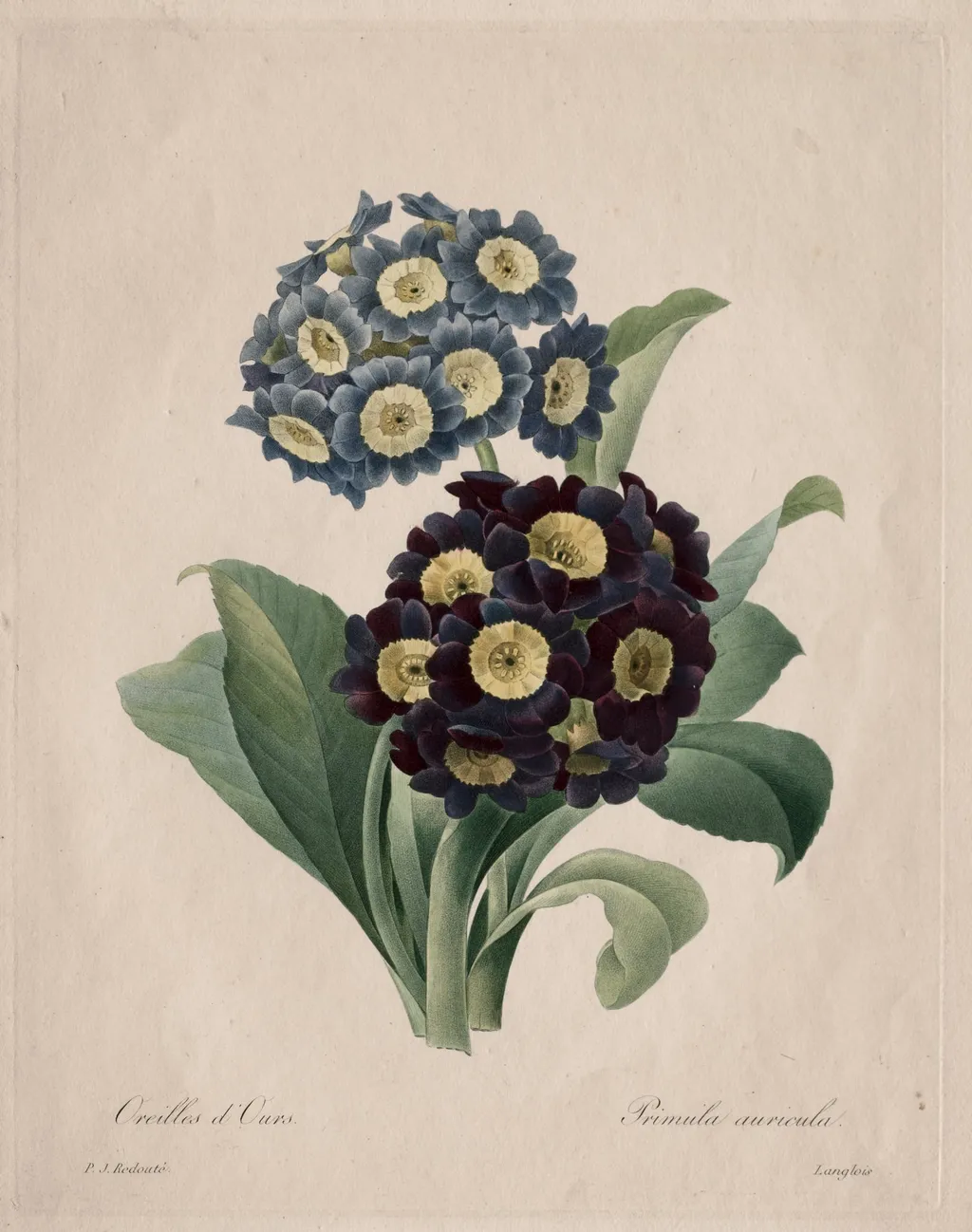
Primula auricula is a print by the Romanticist artist Henry Joseph Redouté. It dates from 1827 and is held in the collection of the Cleveland Museum of Art.
About this work
Overview
Created in 1827 by Henry Joseph Redouté, this print depicts a naturalistic arrangement of Primula auricula flowers. It is part of a broader tradition of botanical illustration that prioritized scientific accuracy alongside aesthetic grace. The work resides in the collection of The Cleveland Museum of Art, where it contributes to the institution’s holdings of 19th-century botanical art.
Subject & Meaning
Rendered with precision, the flowers are shown in varying angles—some facing forward, others in profile—to capture their structural complexity.
The subject is the Primula auricula, a species of primrose native to alpine regions of Europe. Rendered with precision, the flowers are shown in varying angles—some facing forward, others in profile—to capture their structural complexity. The composition reflects a scholarly interest in plant morphology rather than symbolic or decorative intent, aligning with the era’s botanical documentation efforts.
Technique & Style
Redouté employed fine line work and subtle tonal gradations to convey the delicate texture of petals and the soft curvature of leaves. The muted green stems and the deep blue petals with yellow centers are rendered without bold outlines, relying instead on nuanced shading to suggest volume. The loose, asymmetrical arrangement avoids artificial symmetry, enhancing the sense of observed naturalism.
History & Provenance
The print originates from Redouté’s later period, following his renowned work for the French royal court. While specific ownership prior to its acquisition by The Cleveland Museum of Art is not documented, its presence in the museum’s collection suggests it was selected for its technical excellence and alignment with the institution’s focus on scientific illustration.
Context
In the early 19th century, botanical illustration flourished as science and art intersected. Redouté’s work emerged amid a surge in plant classification and herbarium compilation, particularly in Europe. His prints served both academic and public audiences, bridging the gap between empirical study and visual culture during a time of expanding natural history collections.
Legacy
Redouté’s prints, including this one, remain referenced for their fidelity to botanical form. Though not widely exhibited, such works continue to inform contemporary understandings of historical plant depiction. Their quiet precision endures as a model of observational discipline in natural history art, valued more for their scholarly contribution than for public acclaim.
Artist & collection
Artist
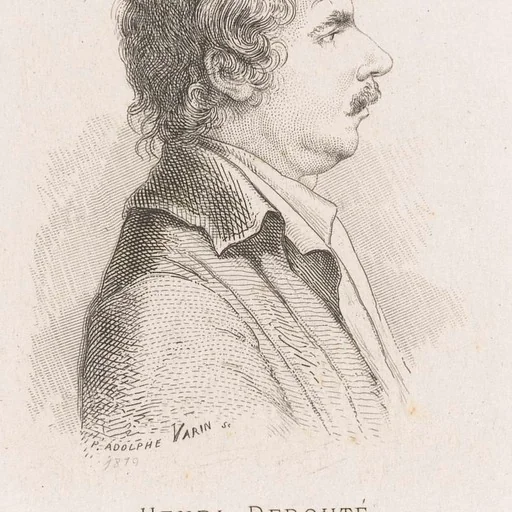
Henry Joseph Redouté (1766–1852) was a French artist, born in Saint-Hubert.

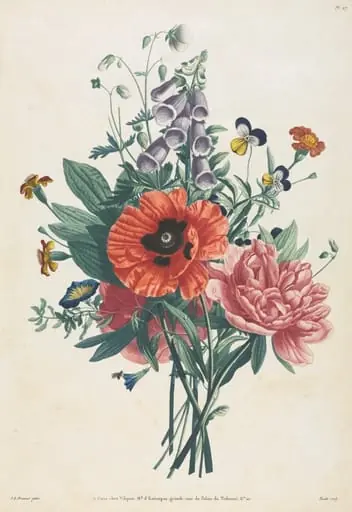 Collection of Flowers and Fruits Painted after Nature: Bouquet of Foxglove, Clematis, Pansy, Peony, Poppy, and Yellow Day Lily
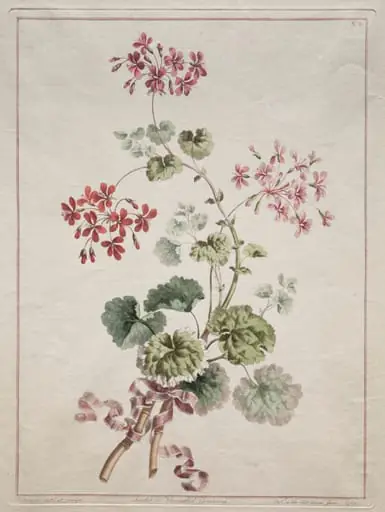 A Collection of Flowers Drawn from Nature: No. 6 - Scarlet and Variegated Geranium
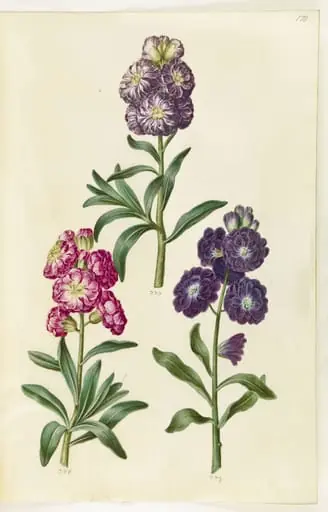 Titelblad. Blomsterkrans
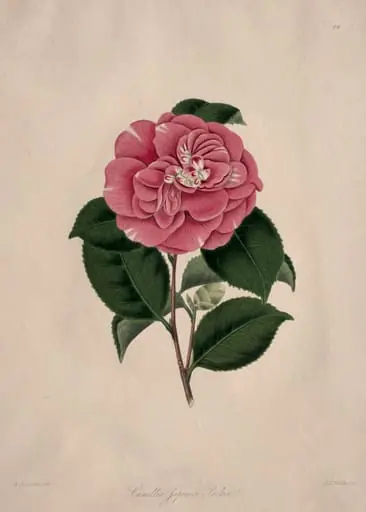 Illustrations and descriptions of...the Natural Order Camellieae: No. 44
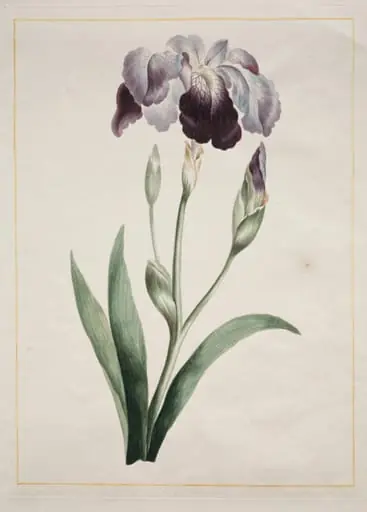 Japanese Iris (Large Blue Iris)
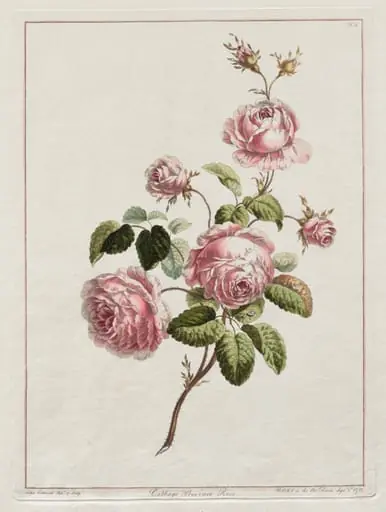 A Collection of Flowers Drawn after Nature - Cabbage Province Rose
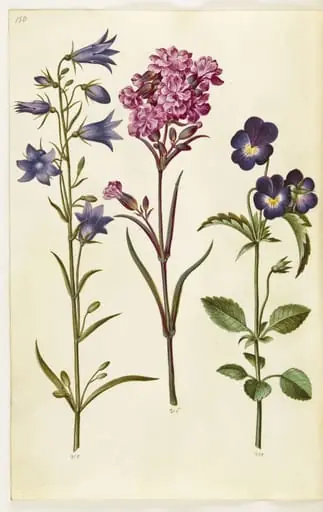 Campanula rotundifolia (liden klokke); Silene viscaria (almindelig tjærenellike); Viola tricolor (almindelig stedmoderblomst)
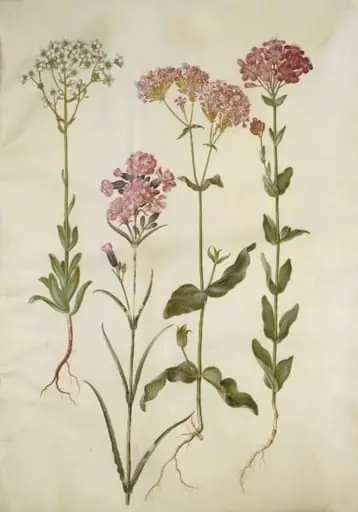 Saxifraga paniculata (klippe-stenbræk); Silene viscaria (almindelig tjærenellike); Silene armeria (knippe-limurt);
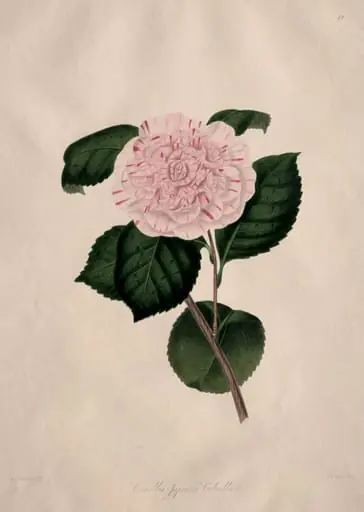 Illustrations and descriptions of...the Natural Order Camellieae: No. 41